
I remember the panic when I first woke up and my left arm felt like a cold, heavy log of wood. I tried to shake it out, but that familiar “static” of pins and needles just wouldn’t quit. It’s a terrifying sensation, isn’t it? You start wondering if it’s your heart, or if you’ve just finally broken your body after years of hunched-over desk work. Most of us just ignore it until we can’t. I was that neighbor who’d just rub my forearm and hope for the best. I even tried following essential tips for managing back pain through healthy lifestyle choices thinking it was all connected to my spine, but the arm numbness stayed. Today, I want to show you exactly how to stop that buzzing once and for all with a technique that feels like magic but is actually just smart biology.
Your nerves are more like guitar strings than rubber bands
Nerves are delicate. They don’t have the elasticity of your hamstrings or your quads. When they get stuck in the “tunnels” of your muscles and joints, they start sending those frantic SOS signals—numbness, tingling, and weakness. Early on, I made the huge mistake of trying to “stretch” the numbness out. I’d pull my head to one side and my arm to the other, thinking more tension meant more relief. I was essentially playing tug-of-war with my median nerve, and believe me, the nerve always wins. That tension actually inflamed the sheath around the nerve, making the “dead arm” feeling happen even more often.
Is this whole nerve flossing thing actually worth the hype?
I get the skepticism. It sounds a bit strange to say you can “floss” your insides. But this isn’t some random hack; it’s a clinical staple used in professional sports rehab. Research published in the Journal of Manual & Manipulative Therapy shows that neural mobilization—what we call gliding—is significantly more effective at reducing nerve sensitivity than traditional static stretching. It’s about creating space and movement without adding stress. If you’ve ever wondered how to identify if your back pain is muscular or nerve related, the same logic applies to your arms. Nerves need blood flow and space, not a violent yank.
The simple shift from stretching to sliding
When I finally stopped yanking on my arm and started using gentle gliding routines, the change was almost immediate. It’s not about how hard you pull; it’s about the rhythm. You’re essentially sliding the nerve back and forth through its pathway like a thread through a needle. This helps flush out inflammation and restores the normal “slide and glide” that we lose when we spend eight hours a day typing. Have you ever felt that weird zing in your elbow when you reach for something in the backseat of your car? That’s your nerve telling you it’s stuck. Before we dive into the specific movements, it’s worth checking if why your headaches start at the computer might be a related symptom of the same postural tension. Let’s get into the actual routine that finally let me sleep through the night.
How to glide your nerves without making things worse
The first time I tried this properly, I was sitting in my car before a long commute, feeling that familiar tingle starting in my pinky and crawling up my forearm. Instead of the usual aggressive neck-cracking I’d seen on generic fitness forums—which is a massive mistake—I followed a protocol closer to what you’d find in professional sports rehab. Think of your nerve like a piece of dental floss caught in a tight tooth gap. You don’t just yank it; you gently slide it back and forth to clear the debris. If you pull too hard, you just irritate the gums. The same applies to your nervous system.
Set your shoulders before you start moving
Before you even touch your arm, you have to address the kink in the hose at your neck. If your spine is out of whack, the nerve is already under tension before you even begin the exercise. I used to think I could just fix the arm in isolation, but the science behind chiropractic adjustments for back pain relief shows that distal symptoms in the limbs often start at the central pillar of the body. Sit tall, tuck your chin slightly as if you’re making a double chin, and pull your shoulder blades down toward your back pockets. This opens up the thoracic outlet, the narrow tunnel where the nerves pass from your neck into your arm. If this tunnel is collapsed, no amount of arm movement will help. 
The waiter with a tray technique
This is the bread and butter for the median nerve, which is usually the culprit behind carpal-tunnel-like symptoms. Hold your hand out to the side like you’re carrying a heavy tray of drinks, palm facing up. Now, here’s the trick that most people miss: as you extend your wrist back to drop the tray, tilt your head toward that shoulder. As you bring your wrist back to a neutral position, tilt your head away. This creates the slack on one end while the other end pulls, allowing the nerve to slide through the muscle tissue without being stretched like a rubber band. I remember one Tuesday morning when I was particularly flared up. I got greedy and tried to hold the stretch for thirty seconds. Bad idea. My arm went completely cold and felt heavy for hours. I learned the hard way that nerves aren’t muscles. If you feel a zing or a sharp spark, you’ve gone way too far. You want a two out of ten on the intensity scale. It should feel almost like nothing is happening, which is the hardest part for us to accept.
Why ten reps is your magic number
Don’t overcomplicate the volume. Ten slow, rhythmic glides are usually enough to flush out the area and encourage blood flow to the nerve sheath. If you’re wondering how to identify if your back pain is muscular or nerve related, this movement is a great diagnostic tool. If the tingling subsides or moves closer to your neck after ten reps, you’re dealing with a nerve entrapment that is responding well to mobilization. If it gets worse, you need to stop and look at your postural foundation. Often, these issues are compounded by the way we sit. I found that learning how to fix the forward shoulder slump from cell phone use was the missing piece that kept my nerves from getting stuck again the next day. Flossing is the cure for the moment, but alignment is the long-term solution.Most people think a chiropractic adjustment is just about cracking a bone back into place like a puzzle piece. This is the biggest myth in the industry. Your spine isn’t a stack of loose Legos that just fall out of alignment. In reality, that pop is more about a neurological reset than a mechanical shift. When we look at the science behind chiropractic adjustments for back pain relief, it becomes clear that the benefit comes from stimulating the mechanoreceptors in your joints, which tells your brain to relax the surrounding muscles. If you go into an appointment expecting a permanent structural weld, you’re missing the point. This is also the truth about why your adjustments don’t seem to last—it’s because if you don’t change the movement patterns that triggered the neurological lockdown in the first place, your brain will just flip the panic switch again. 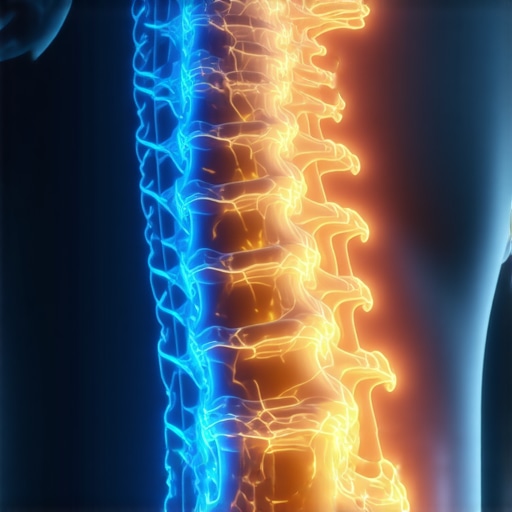
Why does my back still feel stiff even after the perfect adjustment?
It’s a question I hear all the time from people who feel like they are doing everything right. The nuance lies in the difference between joint mobility and regional stability. A study published in the Journal of Orthopaedic & Sports Physical Therapy highlights that stiffness is often a protective strategy used by the brain to guard an unstable area. If your core isn’t firing correctly, your brain will lock your back up to prevent you from injuring your spinal cord. This is why why most core exercises actually make lower back pain worse; they focus on movement rather than the stability required to earn the right to move. You can’t just stretch your way out of a stability problem. In fact, many people fall into the trap of stretching the pain, which actually irritates the nerve further. I’ve seen so many people double down on their yoga routines, not realizing why stretching your hamstrings won’t fix your chronic tightness when the real culprit is a lack of pelvic control. If you keep pulling on a nerve that is already under tension from a structural imbalance, you’re just pouring gasoline on a fire. Have you ever fallen into this trap of trying to stretch away a problem only to have it come back worse an hour later? Let me know in the comments.
I used to spend a fortune on every new gadget that promised a pain-free back, only to realize that most of them were collecting dust within a month because I didn’t understand the mechanics behind them. If you want to stop the cycle of chronic flare-ups, you need a minimalist toolkit that actually addresses the root cause of your movement dysfunction. For me, that journey started with learning how to use a lacrosse ball to melt away mid-back knots without overdoing it. A common mistake is thinking more pressure is always better. In fact, if you get too aggressive in the wrong areas, you can cause a protective spasm. This is precisely why you should stop rolling your lower back on a tennis ball—your lumbar spine requires stability and support, not direct, pointed pressure that can irritate the sensitive nerve roots exiting your vertebrae.
How do I keep my spine healthy between adjustments?
The secret to strategic chiropractic solutions for long-term back health isn’t just showing up for your appointment; it’s what you do in the 167 hours a week you aren’t on the table. Dr. Stuart McGill, a world-renowned spine biomechanist from the University of Waterloo, emphasizes the ‘Big Three’ exercises to build a ‘stiff’ core that protects the discs from shearing forces. I’ve integrated these into my daily routine because they prioritize the health of the joint over the aesthetics of the muscle. If you use a massage gun, remember it is a tool for blood flow and neurological down-regulation, not a jackhammer for your bones. I’ve found that knowing the proper way to use a massage gun on your quads can actually take the pressure off your lower back by loosening the anterior chain that pulls your pelvis into a painful tilt.

I predict that in the next few years, we are going to see a massive shift toward wearable biofeedback sensors that alert you the second your posture begins to fail. We already have apps that track steps, but soon we will have haptic-integrated clothing that gently vibrates when your thoracic spine rounds too much or your pelvis shifts off-center. Until then, you have to be your own sensor. Learning how to safely adjust your own posture throughout the day is a mental skill, not a one-time fix. It’s about checking in with your breath and your pelvic position every time you sit down at your desk or pick up your phone.
Before you go back to your usual routine, I want you to try one specific advanced tip. Most people lose their spinal integrity during heavy lifts or even just reaching for a heavy grocery bag because their rib cage flares out, breaking the kinetic chain. Use the simple drill to stop your ribs from flaring during deadlifts the next time you pick something up from the floor. Keeping your ribs ‘tucked’ toward your pelvis creates a natural weight belt of muscle that protects your lower back better than any external brace ever could.
Lessons from the Training Table: What Actually Cured My Nerve Pain
The biggest shift in my perspective happened when I realized that my body isn’t a machine with broken parts, but an ecosystem that needs the right environment to heal. First, I stopped viewing every ‘twinge’ as a catastrophe and started seeing it as data. I learned why heat is often the wrong choice for a sudden back spasm because acute inflammation usually needs space and stability, not more blood volume. Second, I realized that my sleep environment was sabotaging my daytime progress. Identifying the 3 signs your mattress is destroying your spinal alignment was a game-changer for waking up without that heavy, ‘stiff-neck’ feeling. Finally, the most humbling lesson was that consistency beats intensity every single time. Doing five minutes of nerve gliding daily is worth more than a grueling two-hour gym session once a week.
My Professional Recovery Toolkit
If I had to start my recovery journey over from scratch, these are the three specific resources I would lean on immediately. I highly recommend picking up a copy of The Back Mechanic by Dr. Stuart McGill; it is the definitive guide to understanding spinal hygiene. For physical tools, I never travel without a standard lacrosse ball for targeted release, and I am meticulous about my desk ergonomics, specifically learning how to sit without compressing your l5-s1 disc while I’m working. Lastly, I advocate for regular maintenance through strategic chiropractic solutions for long-term back health to catch minor misalignments before they turn into full-blown nerve entrapments.
Your Path Toward Lasting Relief
You don’t have to live with the constant buzzing of nerve pain or the dread of a looming back spasm. By combining the immediate relief of nerve flossing with the long-term structural benefits of chiropractic care, you are giving your nervous system the best possible chance to thrive. Start small, be patient with your progress, and remember that every movement you make is an opportunity to reinforce your health. Have you ever tried to stretch away a ‘zinging’ nerve only to have it feel worse the next morning? Let me know your experience in the comments below!