
I’ll never forget the first time I felt like a total skeptic on the chiropractic table. My lower back was screaming after a weekend of heavy lifting, yet my chiropractor was focused entirely on my heels. He grabbed my shoes, pulled them slightly, and muttered, “Right side is short today.” I remember thinking, “Is this a magic trick or am I paying for a shoe fitting?” It felt visceral, almost intrusive, to have my feet tugged when my spine was the one in agony. But that realization—that my legs were the “canary in the coal mine” for my nervous system—changed everything about how I view my health. Today, we are going to demystify this common practice so you can finally see why that 10-second check is the secret to the science behind chiropractic adjustments for back pain relief.
Your legs are the dashboard for your spine
Think of your body like a high-performance car. If the alignment is off, the tires wear out unevenly. In the human body, the “tires” are your joints, and the “alignment” starts at the pelvis. I made a huge mistake early on by ignoring these leg checks. I actually fired a chiropractor because I thought it was a gimmick. I went to a different guy who just “cracked” whatever hurt, and guess what? My pain came back twice as fast. I learned the hard way that the truth about why your adjustments don’t seem to last usually boils down to an unaddressed pelvic tilt. When one leg appears shorter than the other, it’s often because your hip is hiked up or rotated. This creates a chain reaction that can lead to the real reason your sciatica flares up when you sit or even chronic neck tension.
Is this leg length thing just a chiropractic gimmick?
It’s a fair question to ask, especially when you’re lying there wondering why no one is touching your actual sore spot yet. But it’s backed by solid neurology. According to research published in the Journal of Manipulative and Physiological Therapeutics, pelvic asymmetry is a primary indicator of neuromuscular compensation. Your brain is constantly trying to keep your eyes level with the horizon. If your pelvis is tilted, your spine has to curve to compensate, and your leg length is the most visible sign of that struggle. It’s not about your bones being different sizes; it’s about your muscles pulling your hips out of whack. This is why the hidden link between your ankles and lower back health is so vital to understand. Have you ever noticed one of your pant legs dragging more than the other, or is this “short leg” news totally new to you?
Why the short leg isn’t actually short
In about 90% of cases, you don’t actually have one leg longer than the other. It’s what we call a “functional” short leg. This happens because the muscles in your lower back or hip—like the psoas—are in a state of hyper-contraction. This pull-up effect makes the leg look shorter. If your doctor just adjusted your back without checking this, they’d be flying blind. By checking your leg length, they can determine which side of the pelvis is rotated and which specific segment of the spine needs help. This is the difference between a “pop” and a real correction. If you’re struggling with this, you might also want to look into the hip hinge secret for people with chronic lumbar issues to help keep those hips level between visits.
The process usually starts with you lying face down. It seems passive, but your body is actually screaming data to the practitioner. When your chiropractor looks at your heels, they aren’t looking for shoe size; they are looking for the ‘Functional Short Leg.’ I remember a specific session where my left heel looked nearly two inches higher than the right. I panicked, thinking one leg had suddenly shrunk. My doc just laughed and said, ‘Your psoas is just acting like a winch, pulling your hip up.’ He showed me how my body was trying to protect a jammed SI joint by shortening the limb to avoid weight-bearing pressure. This is a crucial part of the role of chiropractic care in effective sports injury recovery because it identifies the ‘why’ before the ‘where.’
The simple knee bend that explains your back pain
Once the initial check is done, the ‘Derefield Test’ usually follows. This is where the chiropractor bends your knees to a 90-degree angle. If the short leg suddenly becomes ‘long’ or stays short, it tells the brain-to-body story. It’s like checking the tension on a suspension bridge. If one cable is too tight, the whole bridge leans. By observing how the legs change position when the knees flex, the chiropractor can pinpoint whether the issue is in your pelvis, your sacrum, or higher up in the lumbar spine. If you are a runner, this is why the foot exercise that prevents plantar fasciitis in runners often fails if your hips aren’t level first—you’re just reinforcing a crooked foundation.
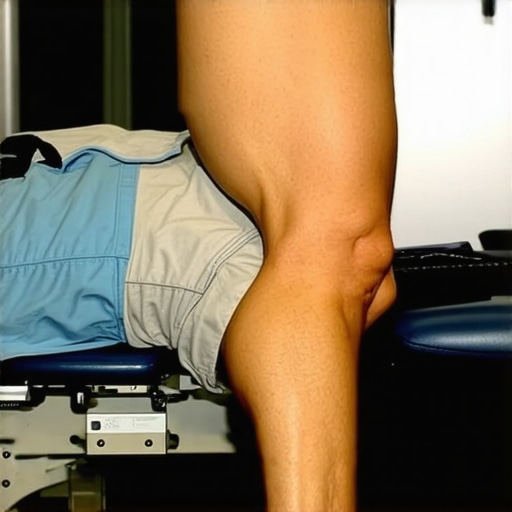
Why targeting the psoas changes your leg length
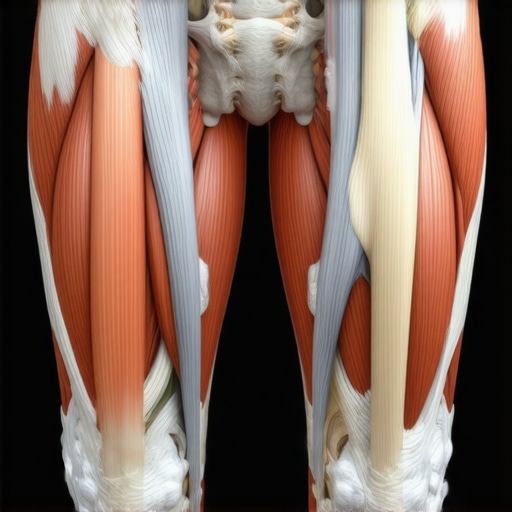
The adjustment itself isn’t always a ‘crack’ in the back. Sometimes, it’s a gentle release of the soft tissue holding that hip captive. In my case, once the psoas was released, my legs magically leveled out without a single spinal ‘pop.’ This showed me that the correct way to stretch your psoas without hurting your spine is about precision, not power. If your leg length is off, your body will compensate by rotating your upper back, leading to that feeling where why your upper back feels like it needs to pop constantly. Instead of chasing the pop, we have to address the pelvic tilt that’s pulling the rest of the spine out of gear.
The neurological feedback loop in your heels
Every time your chiropractor touches your feet, they are checking your nervous system’s tone. If an adjustment is successful, those legs should stay even. If they ‘slip’ back into a short-leg position immediately, it’s a sign of a deeper neurological pattern or a lifestyle habit—like how you sit at your desk—that is overriding the correction. This is why learning how to safely adjust your own posture throughout the day is the only way to make these professional adjustments ‘stick’ for the long haul. You can’t expect twenty minutes on a table to undo eight hours of slouching. By focusing on strategic chiropractic solutions for long-term back health, you move from temporary relief to a state where your ‘dashboard’—your legs—stays level consistently.
People often assume that if a muscle feels tight, the solution is to stretch it until it yields. But here’s the contrarian truth: that ‘tightness’ is often your nervous system’s protective mechanism. It is creating stability where your joints are currently failing. If you have a functional short leg caused by a tilted pelvis, your hamstrings will feel like steel cables. Stretching them might provide five minutes of relief, but you are actually pulling on an already over-tensioned system. This is one of the biggest reasons why stretching your hamstrings won’t fix your chronic tightness. In fact, aggressive stretching in this state is often one of the 3 stretching mistakes that make sciatica worse because it irritates the nerve further rather than addressing the pelvic rotation.
The trap of over-resting your injury
The most common ‘oops’ factor I see in sports rehab is the over-reliance on total rest. For decades, we were told to stay in bed for back pain, but we now know that immobilization is the enemy of spinal alignment. A landmark study published in the journal Spine highlights that early, controlled movement is far superior to bed rest for maintaining the integrity of the intervertebral discs. When you stop moving because your leg check was off, your brain hardwires that compensation pattern into your ‘body map.’ You need discover how chiropractic adjustments can alleviate chronic back pain specifically because the adjustment resets the joint’s mechanoreceptors, giving your brain the green light to move safely again.
Why does my ‘short leg’ return after a perfect adjustment?
It is incredibly frustrating to leave the clinic feeling level, only to feel ‘lopsided’ again within forty-eight hours. This isn’t usually a failure of the adjustment; it’s a conflict between your new alignment and your old muscle memory. Your brain has spent months—maybe years—believing that a tilted pelvis is ‘straight.’ When we level you out, your brain perceives this as a threat and tries to pull you back into your old, crooked comfort zone. This is precisely why most core exercises actually make lower back pain worse if you haven’t first addressed the neurological firing order. Without professional guidance, you might just be strengthening a crooked foundation. Have you ever fallen into this trap of ‘fixing’ a problem only to have it bounce back? Let me know in the comments below.
Precision beats power every single time
In my experience, the more ‘advanced’ the patient’s understanding, the less they care about the volume of the ‘pop.’ They start to value the precision of the leg check. If your practitioner can’t explain exactly why your leg length changed after the adjustment, they are likely just ‘global’ manipulating—cracking everything and hoping for the best. For long-term results, you need unlocking back pain relief expert chiropractic adjustments that work by targeting the specific segment that is causing the pelvic hike. This level of nuance is what separates a temporary fix from a permanent lifestyle change. It’s time we stop chasing the symptoms and start listening to what our ‘dashboard’—our legs—is trying to tell us about our spinal health.
I used to think that once my legs were even on the chiropractic table, my work was done for the month. I was wrong. The real battle for your back happens in the 167 hours of the week when you aren’t with your practitioner. To stop the ‘rebound’ effect where your pelvis tilts back into its old, painful rut, you have to implement specific tools and drills that act like an invisible brace for your nervous system. If you want strategic chiropractic solutions for long-term back health, you have to treat your environment like an extension of the treatment room. For me, that meant finally learning how to set up your laptop for better neck alignment because my eight-hour workday was systematically undoing every adjustment I paid for.
How do I maintain my spinal alignment over time?
It comes down to what I call ‘spinal hygiene.’ I’m a huge advocate for using a lacrosse ball for targeted release. If you haven’t tried how to use a lacrosse ball to melt away mid-back knots, you’re missing out on the most cost-effective physical therapy tool in existence. I also keep a massage gun nearby, but rarely for my spine itself—I use it to keep my hip flexors from pulling my pelvis forward. Knowing the proper way to use a massage gun on your quads can actually save your lower back by relaxing the muscles that tug on your pelvis. According to a study published in the Journal of Bodywork and Movement Therapies, myofascial trigger point release combined with spinal manipulation significantly improves the duration of pain relief compared to passive care alone. This is the key to enhancing athletic performance with targeted chiropractic care.

I predict that in the next few years, we’ll see a massive shift toward AI-powered biofeedback integrated into our clothing. Instead of waiting for your back to hurt, wearable sensors will vibrate the second your pelvis starts to tilt or your shoulders slump. We are moving away from reactive ‘fixing’ and toward proactive ‘tuning.’ This shift will revolutionize your rehab chiropractic techniques for faster recovery because practitioners will have real-time data on your movement patterns. Until then, you need to rely on essential tips for managing back pain through healthy lifestyle choices like the ’10-second posture reset’ to keep your foundation solid. Ready to stop the slump? Set a timer for every 60 minutes today and perform the 10-second posture reset you can do at your desk. It is the single most effective way to tell your brain that staying level is the new normal.
Hard Truths I Learned While Chasing a Level Pelvis
Over the years, I’ve realized that symmetry is a journey, not a destination. One of the biggest eye-openers was discovering that my brain’s version of ‘straight’ was actually completely crooked. When you finally get leveled out through strategic chiropractic solutions for long-term back health, it can actually feel wrong at first because your proprioception has been calibrated to your dysfunction. I also learned that the leg check isn’t just for the doctor; it’s visual proof for you to see how your internal nervous system is responding in real-time. Finally, I realized that ignoring your footwear is the fastest way to ruin a good adjustment. If your shoes are worn down in a pattern that supports your old, tilted pelvis, they will pull you right back into misery the moment you stand up.
My Personal Toolkit for Lasting Alignment
To ensure my foundation stays solid between visits, I rely on a few non-negotiables. First, I stopped using soft, mushy chairs and shifted toward firm surfaces that support my sit-bones. I also integrated essential tips for managing back pain through healthy lifestyle choices, such as never crossing my legs at the knee, which is a silent killer for pelvic alignment. I also learned how regular adjustments can lower your resting heart rate by reducing the overall stress on the nervous system. For daily maintenance, a high-density lacrosse ball for glute release and a dedicated routine for hip mobility are my go-to’s for keeping that ‘short leg’ from returning.
#IMAGE_PLACEHOLDER_E#
Taking the First Step Toward True Balance
Deeply understanding the science behind chiropractic adjustments for back pain relief changes how you move through the world. You stop seeing your body as a collection of isolated parts and start seeing it as a dynamic, connected system where the heels and the neck are in a constant conversation. Whether you are focused on enhancing athletic performance with targeted chiropractic care or just trying to survive a workday without a flare-up, staying level is the ultimate goal. Don’t wait for your body to scream before you check your dashboard. Have you ever noticed your pant legs dragging unevenly, or did you realize your ‘short leg’ was actually just a tight hip? Let me know in the comments below!