
I was halfway through a set of reverse lunges when my right knee let out a sharp, indignant zip of pain. It wasn’t a dull ache; it felt like a lightning bolt was trying to exit through my kneecap. For weeks, I blamed my age, the hard gym floor, and even my old running shoes. But the real culprit wasn’t my knee at all. It was my foot. Specifically, my arch was pancaking into the floor every time I stepped back, dragging my knee into a precarious inward dive. If you’ve ever felt that weird, unstable pinch while trying to build your lower body, you aren’t alone. We often look at the spot that hurts, but the body is a kinetic chain, and your feet are the literal foundation of every movement you make. [image_placeholder]
The Ground-Up Reason Your Knees Are Screaming
When you drop into a lunge, your foot is the only thing connecting you to the earth. If that arch collapses—what we call overpronation—it creates a domino effect. The shin bone rotates inward, the thigh bone follows, and suddenly your knee is trackng toward your big toe instead of staying safely over your mid-foot. I see this constantly in sports rehab. It’s the hidden reason your knees cave during heavy squats and lunges alike. I made the classic mistake of buying every knee brace on the market, thinking I just needed more support around the joint. I was wrong. I was just putting a bandage on a structural leak. According to the Journal of Athletic Training, even minor deviations in foot posture can significantly alter the load distribution across the patellofemoral joint, leading to chronic wear and tear that feels like an injury but is actually a mechanical failure. Have you ever felt like your balance just vanishes the moment you try to do a split squat?
Is a ‘Lazy’ Arch Really Worth This Much Trouble?
You might be thinking that your feet have been flat your whole life and you’ve been fine until now. I thought the same thing until the cumulative stress finally caught up with me. It isn’t just about the ‘flatness’ of the foot; it’s about the active control of those muscles under pressure. If you aren’t careful, you might end up wondering how to know if your orthotics are making your feet weaker by doing the work your muscles should be doing. Understanding the hidden link between your ankles and lower back health is the first step toward moving without that nagging fear of a ‘pop.’ Today, we are going to dive into how to wake up those arches so your knees can finally do their job without the extra drama.
Build a Tripod with Your Feet
Think of your foot not as a flat slab of meat, but as a three-legged stool. To create a stable base, you need three points of contact: the center of your heel, the base of your big toe, and the base of your pinky toe. If one of those legs lifts or collapses, the stool tips. When I first tried this while holding a 50-pound kettlebell, I realized I was putting almost zero pressure on my pinky toe. My foot was literally rolling inward, which explained why your knee clicks every time you squat and how to stop it starts with ground contact. By consciously rooting those three points into the floor, you create a natural arch without even trying. This tension travels up the leg, locking the knee into a track that follows the hip rather than falling into the void. #IMAGE_PLACE_HOLDER_B#
The Short Foot Drill for Real-Time Arch Support
The best way to train this is a move called the short foot exercise. Imagine trying to pull the ball of your foot toward your heel without curling your toes. You aren’t scrunching; you are shortening the distance of the foot by pulling the arch upward. I practiced this while brushing my teeth for a week. It felt awkward, like I was trying to learn a new language with my toes, but the payoff was immediate. If your arches are currently lazy, this is often why your glutes won’t fire during your workout. Your brain is essentially muting the glutes to protect the unstable knee joint.
Address Your Ankle Range of Motion
Even if your arches are active, stiff ankles can still sabotage you. If your ankle can’t bend forward, your body will find that range somewhere else—usually by collapsing the arch to cheat its way deeper into a lunge. I have found that using the 45-second drill to improve your ankle dorsiflexion before your sets can clear the path for your knees. It is like clearing a jammed hinge before trying to swing the door wide open. When the ankle moves freely, the foot can stay grounded and the knee stops taking the brunt of the force.
Why Manual Adjustments Speed Up the Process
Sometimes the bones of the foot and ankle get stuck in a sub-optimal position from years of bad habits. This is where chiropractic techniques for faster recovery come into play. A specific adjustment to the talus or the navicular bone can feel like someone finally oiled a rusty machine. I remember a specific session with a client who could not lunge without a sharp pinch. After a quick manual mobilization of their midfoot, the block was gone. You cannot always out-exercise a joint that is not moving through its full natural track. Addressing these mechanical locks allows your arch-strengthening work to actually stick rather than fighting against a jammed joint.But here is where most people—and even some seasoned athletes—get it wrong. We are collectively obsessed with the idea that ‘tightness’ equals a need for more stretching. I spent years trying to touch my toes to fix my back pain, only to realize my hamstrings weren’t actually short; they were just terrified. My brain was using them as emergency stabilizers because my core couldn’t find its ‘off’ switch. This is a classic example of how the truth about no-pain-no-gain in sports rehab is often completely flipped on its head. If you force a stretch on a muscle that is actively protecting a joint, you aren’t fixing the problem; you’re just disabling the security system. 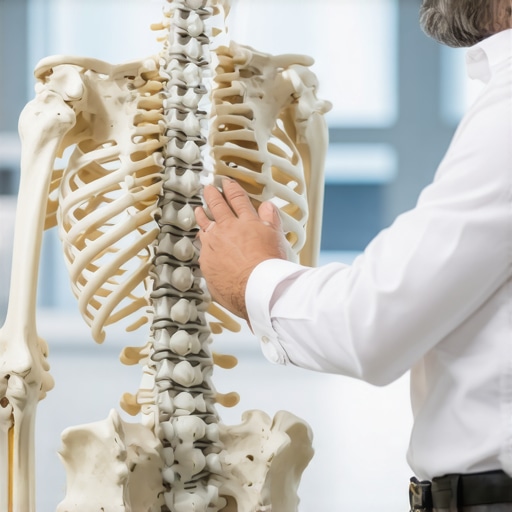
Stop Stretching Your Tight Hamstrings
In my clinical experience, what feels like a ‘tight’ muscle is usually a neurological ‘brake.’ According to a 2019 study published in the Journal of Electromyography and Kinesiology, muscle tightness is frequently a protective response to perceived instability elsewhere in the kinetic chain, rather than a structural shortening of the tissue. When your arches collapse or your pelvis is out of alignment, your brain locks down the surrounding muscles to prevent further movement that might cause injury. If you keep pulling on those ‘tight’ muscles, you are likely making the instability worse. This is why many people find themselves making the 3 stretching mistakes that make sciatica worse without even realizing it. Instead of stretching, we need to provide the brain with a sense of safety through stability and proper alignment.
Why Do Your Adjustments Only Last Forty-Eight Hours?
This is the most common question I get from patients who have tried every therapist in town. You get adjusted, you feel like a million bucks for two days, and then the old familiar ache creeps back in. The ‘Oops’ factor here is ignoring the ‘why’ behind the misalignment. A chiropractic adjustment for chronic back pain provides a massive input to the nervous system, but if you go right back to sitting in a bucket seat or lunging with collapsed arches, your brain will revert to its old, protective patterns. You have to pair the manual release with corrective movement to ‘save’ the new range of motion. This is precisely why the truth about why your adjustments don’t seem to last usually boils down to a lack of follow-up stability work.
Perfect Symmetry is a Performance Trap
Another nuance that elite movers understand is that perfect symmetry is a myth. We are told that if our left side doesn’t look exactly like our right, we are broken. However, humans are internally asymmetrical—your liver is on the right, your heart is on the left, and your diaphragm is literally shaped differently on each side. Chasing ‘perfect’ posture can sometimes lead to rigid, robotic movement that actually increases injury risk. The goal isn’t to be a mirror image of both sides; it is to ensure each side can access the necessary positions for the task at hand. Utilizing chiropractic techniques for faster recovery isn’t about making you look like a statue; it is about restoring the fluid, adaptable movement your body was designed for. Have you ever fallen into this trap of over-stretching or chasing perfect symmetry? Let me know in the comments.
Grab a Lacrosse Ball for Your Gym Bag
After you have addressed the mechanics of the foot tripod, you need the right tools to keep those tissues responsive. I don’t mean a five-thousand-dollar recovery pod or a complicated electrical stimulation unit. I mean a simple five-dollar lacrosse ball and a pair of silicone toe spacers. I personally use a lacrosse ball every single morning for two minutes under each arch. I don’t do this to ‘break up’ scar tissue—that is a common myth—but to provide high-threshold sensory input to the nervous system. This tells my brain exactly where my feet are in space before I even put on my shoes. It is a vital part of my personal routine for strategic chiropractic solutions for long-term back health because when the feet are awake, the spine does not have to overcompensate.
How can I keep my back and knees healthy for the long haul?
Maintenance is not about doing a two-hour rehab session every day; it is about the small, invisible choices. I have learned that why your running shoes might be the cause of your shin splints often boils down to excessive cushioning that mutes your ground feel. In my own training, I have moved toward flatter, wider footwear that allows my toes to splay. If you spend all day in narrow dress shoes, your brain loses the ability to control the arch, which eventually leads to that knee cave we discussed. Beyond footwear, I frequently look at my environment. I’ve even spent time learning how to optimize your car seat for lumbar support because a thirty-minute commute in a slumped position can undo all the stability work you did at the gym. According to Dr. Kelly Starrett, founder of The Ready State and author of ‘Becoming a Supple Leopard,’ the ability to maintain a neutral spine under load is directly tied to the torque you can generate from the ground up. If your feet are ‘leaking’ stability, your lower back will eventually pay the price in the form of shear force. 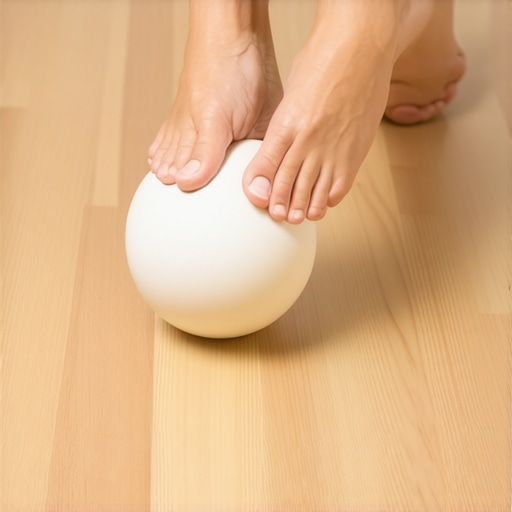
Ditch the Padded Shoes for Better Ground Feel
I predict that in the next five to ten years, the fitness industry is going to move away from the ‘maximalist’ shoe trend and return to sensory-rich training. We are already seeing elite athletes prioritize barefoot warm-ups to prime their nervous systems. When you can feel the floor, your glutes fire faster, and your knees stay in a safer track. This is consistent with essential tips for managing back pain through healthy lifestyle choices—it is about removing the barriers between your body and its natural environment. If you are dealing with an acute flare-up, knowing the specific way to tape a sprained ankle for stability can help, but long-term success comes from building an arch that doesn’t need tape to stay upright. My challenge to you this week: Spend at least ten minutes a day barefoot on a hard surface, practicing that ‘short foot’ drill. You will be shocked at how much more stable your next leg day feels.
The Hardest Lessons I Learned Managing My Own Joint Pain
After years of working with athletes and dealing with my own “mystery” injuries, three things became crystal clear. First, local pain is rarely the local problem. If your knee hurts, look at the hip or the foot. Second, your nervous system is the ultimate gatekeeper. If it doesn’t feel safe, it will lock your muscles down, no matter how much you stretch. Finally, mechanical fixes require movement follow-up. An adjustment opens the door, but your habits decide if it stays open.
The Simple Gear That Actually Works for My Patients
I don’t believe in expensive gadgets, but I do swear by a few basics. A standard lacrosse ball is the best tool for waking up the soles of your feet. I also recommend checking out ‘Becoming a Supple Leopard’ by Dr. Kelly Starrett for anyone serious about movement mechanics. For those who need professional help, you can boost your sports rehab journey with proven chiropractic strategies to bridge the gap between injury and peak performance. If you’re recovering from an injury, understanding the role of chiropractic care in effective sports injury recovery is a game-changer for getting back to the gym faster.
Reclaiming Your Movement from the Ground Up
You don’t have to live with the fear that your knee is going to “go” every time you lunge. By focusing on the tripod foot and staying consistent with enhancing athletic performance with targeted chiropractic care, you can build a foundation that supports your entire body. Remember, the science behind chiropractic adjustments for back pain relief shows that we are working with the nervous system just as much as the bones. Your journey to pain-free movement starts with that first barefoot step.
Have you ever noticed your balance gets worse when your feet feel tired? Let me know your experience in the comments below!