
I was bent over, trying to muscle a heavy cooler into the back of my SUV for a weekend trip, when it happened. Snap. Not a bone break, thank goodness, but that soul-crushing lower back spasm that immediately locks you into a stiff, C-shaped posture. For a few minutes, I couldn’t even stand up straight to look my wife in the eye. I felt like an old man before my time. In my early days of dealing with this, I would have reached for one of those massive, velcro-strapped lumbar supports that make you look like you’re wearing a Victorian corset. I learned the hard way that leaning on those bulky braces is a trap, because the truth about back braces and muscle atrophy is that they eventually make your core stop doing its job. I also used to make the amateur mistake of using heat when it was actually a sudden back spasm, which only made the inflammation worse. But then, a sports rehab specialist introduced me to kinesiology tape, and honestly, it changed the game for me. Today, I want to share exactly how I use this stretchy, neon tool to get back on my feet without losing mobility. [image_placeholder_1]
Stop Treating Your Spine Like It Is Made of Glass
When your back goes out, your first instinct is to stop moving entirely. You freeze up. You protect the area. But complete immobilization is often the enemy of recovery. Kinesiology tape (often called KT tape) works differently than a rigid brace because it provides what we call proprioceptive feedback. It’s not physically holding your spine in place like a steel rod; instead, it gently lifts the skin. A study published in the Journal of Bodywork and Movement Therapies found that this lifting action can actually improve blood flow and decrease pressure on the sub-dermal pain receptors, giving your brain the green light to move again. I remember the first time I tried it; I applied it incorrectly and practically taped my skin into a bunch of itchy folds. It was a mess. But when I finally got the technique down, it felt like having an extra set of internal muscles supporting my lumbar. It gave me the confidence to discover how chiropractic adjustments can alleviate chronic back pain as part of a larger plan, rather than just masking the symptoms.
Is This Neon Sticker Actually Worth the Hype?
I know what you’re thinking because I thought it too: “How is a strip of cotton and acrylic glue supposed to fix a structural issue?” It sounds like snake oil. But the magic isn’t in the tape itself—it’s in how the tape changes your movement patterns. If you are currently doing 3 exercises that are actually hurting your herniated disc, you’re constantly re-injuring yourself. The tape acts as a constant, gentle reminder to keep your spine neutral. Have you ever felt that weird ‘loose’ or ‘unstable’ sensation in your lower back when you’re just standing in line at the grocery store? That’s the specific problem we are going to solve today. I’m going to walk you through the ‘H-pattern’ and the ‘I-strips’ that I swear by. It’s not about being a doctor; it’s about being a smart neighbor who wants to help you get back to your life.First things first, you need to prep your skin like you’re preparing a high-end canvas. If you’ve got lotion, sweat, or—heaven forbid—a lot of back hair in the way, that tape is going to peel off before you even get your shoes on. I usually use a quick swipe of rubbing alcohol. It’s a simple step, but it’s part of those strategic chiropractic solutions for long-term back health that focus on the small details that yield big results.
Set the Foundation with Vertical I-Strips
To start what pros call the ‘H-pattern,’ you’ll need two long strips of tape. Think of these as the vertical pillars of a suspension bridge. You want to measure them from just above your belt line to about mid-back. Here is the critical trick: you must apply these while you are in a slight forward lean. This stretches the skin naturally over the muscle. If you apply them while standing perfectly straight, the moment you bend over to pick up a pencil, the tape will yank on your skin and drive you crazy with irritation.
The Zero Tension Rule for Anchors
When you lay down the first two inches of the tape at the bottom near your sacrum, do not stretch it at all. This is your anchor. Give it a good rub to activate the adhesive. Then, as you smooth the tape upward along the thick paraspinal muscles on either side of your spine, give it a very light stretch—maybe 15% to 25% of its total capacity. If you go full-throttle with the stretch, you’ll end up with skin blisters by lunchtime. Trust me, I’ve been there. I once tried to ‘super-support’ my back before a long flight, only to find that why your lower back throbs after sitting on soft couches is often made worse when your skin is being physically stressed by over-tensioned tape. 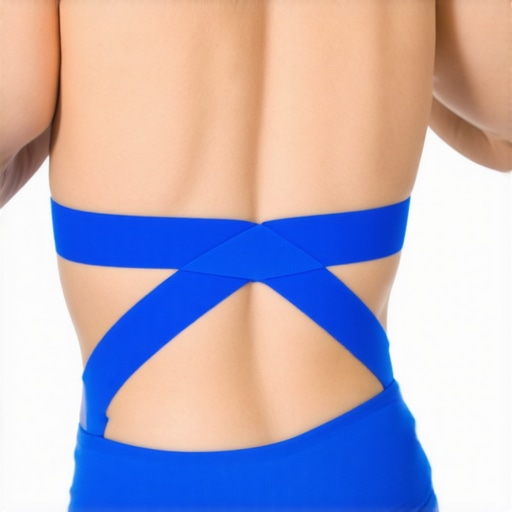
Add the Cross-Brace for Targeted Relief
Now for the ‘meat’ of the H-pattern: the horizontal strip. This is the piece that provides that signature ‘lifting’ sensation over the exact spot where it hurts. This is where the science behind chiropractic adjustments for back pain relief meets practical at-home care. Take a shorter strip, tear the paper backing in the middle, and pull it from the center with about 50% to 75% tension. Lay that middle section directly over your primary pain point—usually right across the L4-L5 junction.
Locking Your Support in Place
Once the middle of that cross-strip is down, lay the two ends down with absolutely zero stretch. Rub the whole configuration vigorously for about thirty seconds. The friction creates heat, which makes the medical-grade acrylic glue bond securely to your skin. If you’ve done it right, when you stand up straight, you should see small ripples or ‘convolutions’ in the tape. That is the lifting action working its magic, creating space for blood flow. It’s similar to how what your chiropractor wishes you knew about heavy lifting involves creating internal stability; the tape creates a superficial decompression. If your back still feels tight even after a perfect tape job, you might need to look further down the kinetic chain and try the 30-second foot massage for instant lower back relief to loosen up the entire posterior line.Most people think of a chiropractic adjustment as a simple mechanical ‘pop’ that physically shoves a bone back into its slot. It’s a catchy visual, but in my experience, it’s actually a myth. The bone was never ‘out’ of place like a lego brick—if it were, you’d be in the emergency room, not a clinic. The ‘pop’ is just gas releasing from the joint capsule, but the real value lies in what research in the Journal of Manipulative and Physiological Therapeutics calls a ‘neurological reset.’ You are essentially rebooting the communication between your spine and your brain, which signals your muscles to stop guarding the area like a frantic security detail. This is why revolutionize your rehab chiropractic techniques for faster recovery focuses on nervous system input rather than just clicking joints. 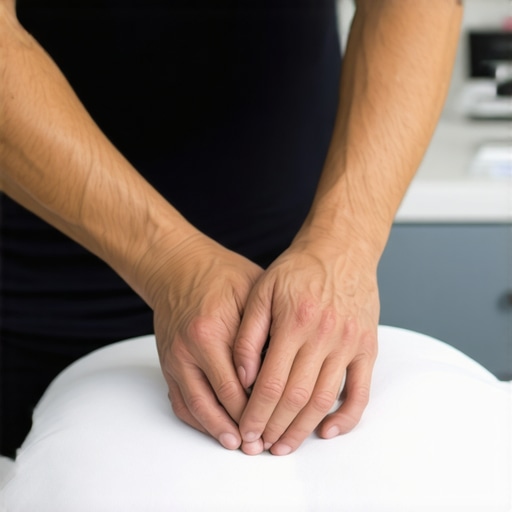
Stop Chasing the Crack
One of the biggest traps in sports rehab is becoming an ‘adjustment junkie.’ This is the ‘oops’ factor I see most often: people get a quick fix, feel great for forty-eight hours, and then the pain returns because they haven’t changed the underlying movement patterns. I’ve seen athletes rely solely on the role of chiropractic care in effective sports injury recovery while ignoring the boring stability work that actually keeps the spine safe. If you are constantly getting the same spot ‘clicked’ every two weeks, you aren’t fixing a problem; you’re just silencing an alarm.
Why Does Your Back Keep Catching After You Feel Better?
The nuance most people miss is that your brain has a ‘movement memory.’ Even after the sharp pain is gone, your body might still be moving as if it’s injured to protect itself. For instance, why stretching your hamstrings wont fix your chronic tightness is often because your brain is keeping those muscles taut to provide secondary stability to a weak lower back. If you don’t combine your manual therapy with essential tips for managing back pain through healthy lifestyle choices, like improving your sleep posture or workspace ergonomics, the inflammation cycle never truly ends. I used to think I could ‘out-adjust’ my bad habits, but that’s like trying to bail out a sinking boat with a spoon. You have to stop the water from coming in. Have you ever fallen into this trap where you feel better for a week and then crash again? Let me know in the comments.
Break the Cycle of Passive Recovery
Another common mistake is the belief that total rest is the best medicine. While you shouldn’t be hitting personal records during a flare-up, complete immobilization leads to localized stiffness and muscle wasting. The goal of boost your sports rehab journey with proven chiropractic strategies is to find your ‘threshold of tolerable movement.’ If you just sit on the couch waiting for the pain to hit zero, you’re losing the very muscle tone you need to support your vertebrae. You must also be wary of 3 exercises that are actually hurting your herniated disc, as many traditional ‘core’ moves can actually increase the sheer force on your spine. True recovery is a partnership between the skilled work done on the table and the discipline you show in your daily movement.While kinesiology tape is a fantastic bridge for immediate recovery, true long-term scaling requires moving from external support to internal mastery. I’ve spent thousands of dollars on high-tech recovery gadgets, from vibrating foam rollers to expensive inversion tables, but the one tool I never travel without is a simple, five-dollar lacrosse ball. Why? Because most tools are too blunt. When you are trying to reach the deep multifidus muscles—those tiny stabilizers that live right next to your vertebrae—a foam roller is like trying to do surgery with a hammer. I use the lacrosse ball because it allows for a precision release that mimics a manual therapist’s thumb, helping to maintain the space created during your sessions. If you are dealing with that nagging tightness between your shoulder blades, learning how to use a lacrosse ball to melt away mid-back knots is the most cost-effective self-care habit you can adopt. 
Stop Relying on Your Chiropractor for Every Single Ache
A common mistake I see is patients treating their doctor like a mechanic—dropping the car off for a fix and then driving it recklessly until the next breakdown. Real results happen in the 167 hours of the week when you aren’t on the adjustment table. Dr. Stuart McGill, a world-renowned spine biomechanist at the University of Waterloo and author of Back Mechanic, points out that the foundation of a resilient back is muscular endurance and stiffness in the core, rather than excessive flexibility. This aligns perfectly with strategic chiropractic solutions for long-term back health which emphasize building a biological corset of muscle to protect your discs. If you are only chasing the ‘pop,’ you’re missing the forest for the trees.
How do I maintain my progress between clinical adjustments?
The secret lies in auditing your environment. You can receive a perfect adjustment, but if you spend the next eight hours slumped in a bucket seat, you are essentially training your spine to fail again. I used to struggle with constant relapses until I mastered how to sit without compressing your l5-s1 disc by using a simple lumbar roll at the level of my beltline. This small adjustment keeps the natural curve of the lower back intact and prevents the ligaments from overstretching. Combining these environmental changes with the thoracic extension move that saves your shoulders ensures that your upper body isn’t pulling your lower back out of alignment. This holistic approach is what leads to enhancing athletic performance with targeted chiropractic care, allowing you to train harder without the constant fear of a sudden spasm.
Smart Wearables Will Soon Solve Your Posture Problems
Looking toward the future, I believe we are entering an era of proactive biofeedback. Within the next few years, I expect to see wearable sensors that are integrated directly into our clothing. Instead of a bulky brace, you’ll wear a shirt that gently vibrates the moment your shoulders round or your lumbar spine loses its neutral position. This will make following essential tips for managing back pain through healthy lifestyle choices almost automatic, as the reminder is built into your daily life. Until then, the responsibility remains ours. I want you to try one thing today: take a lacrosse ball and spend two minutes on each side of your spine while leaning against a wall. It is the first step toward becoming your own best therapist.
Hard Truths from the Rehab Trenches
After years of navigating the ups and downs of spinal health, I’ve realized that the tape is just a tool, not a cure-all. First, don’t ignore your skin; if you feel an itch under the kinesiology tape, take it off immediately to avoid a rash that will keep you from taping for weeks. Second, remember that movement is medicine. If you are afraid to move, you are actually slowing down your healing. Finally, the best tape job in the world can’t compensate for a lack of essential tips for managing back pain through healthy lifestyle choices like staying hydrated and getting quality sleep.
My Personal Back-Saving Toolkit
I don’t just rely on tape; I’ve built a system around unlocking back pain relief expert chiropractic adjustments that work to keep me functional. Beyond the clinic, I always keep a high-density lacrosse ball in my gym bag. I also highly recommend the book Back Mechanic by Dr. Stuart McGill—it’s the bible for anyone trying to understand why their spine behaves the way it does. If you find yourself on the road often, knowing the best way to handle a flare-up while traveling is an absolute necessity to prevent a vacation from turning into a nightmare.
Take Your First Pain-Free Step
Recovering from a back injury is rarely a straight line. There will be days when you feel invincible and days where you feel like you’ve regressed. But by combining the support of kinesiology tape with the role of chiropractic care in effective sports injury recovery, you are giving your body the best possible environment to heal. You aren’t ‘broken’; you’re just in a temporary state of protection. Focus on the one muscle you arent strengthening for better posture—your brain—and stay consistent with your rehab. You’ve got this.
Have you ever tried using kinesiology tape for a back spasm, and did it actually help you get back on your feet? Let me know in the comments below!