
I remember the exact moment I thought I had ‘fixed’ my back, only to realize I had actually made everything ten times worse. I was lying on the living room floor after a heavy leg day, sweating through my t-shirt, and trying to iron out a dull ache in my lumbar spine. I grabbed my high-density foam roller, positioned it right in the small of my back, and leaned my full body weight into it. I felt a muffled ‘pop’ followed by a wave of nausea. I didn’t realize it then, but I was forcing my lumbar vertebrae into an unnatural extension that they simply weren’t designed to handle. I ended up horizontal for three days, unable to even reach for a glass of water without a sharp stab of pain. We often treat our foam rollers like a magic wand for recovery, but when it comes to your lower back, you might as well be rolling over a landmine. Today, I’m going to break down why that ‘good’ pain is actually a warning sign and how strategic chiropractic solutions for long-term back health are the real answer to your discomfort.
Your Lumbar Spine Lacks the Protection Your Mid-Back Enjoys
It is a common misconception that every inch of your spine should be treated the same way. Your thoracic spine (the middle part) is reinforced by your rib cage, which acts like a built-in cage of armor. It can take the pressure of a roller. Your lower back, however, is significantly more vulnerable. It consists of five large vertebrae supported only by muscles and ligaments. When you put a foam roller under that gap, you are essentially crushing your soft tissue against your spine without any structural support. This is a classic foam roller mistake that I see athletes and office workers make constantly. Instead of releasing tension, your muscles often go into a protective ‘guarding’ phase, which makes your stiffness even more stubborn the next day. Have you ever spent twenty minutes rolling out a ‘knot’ in your lower back only to wake up feeling like your spine was made of glass?
Is rolling my lower back actually dangerous?
Yes, and the science backs this up. The National Academy of Sports Medicine (NASM) explicitly warns against rolling the lumbar spine because direct pressure can cause the surrounding muscles to contract in a spasm, potentially aggravating existing disc issues or nerve sensitivity. I learned this the hard way during my early days of training. I thought I was being proactive about managing back pain through healthy lifestyle choices, but I was actually ignoring the basic mechanics of my body. If you are dealing with chronic tightness, you need to look at what is happening above and below that area rather than attacking the lumbar spine directly. We are going to dive into the safer alternatives that actually provide relief without the risk of a trip to the emergency room.Instead of attacking the pain site directly, think of your spine as a series of connected gears. If the gear in the middle—the thoracic spine—is rusted shut, the gear below it—the lumbar—has to work twice as hard to pick up the slack. By rolling your mid-back, you restore mobility that allows your lower back to stay stable, which is its primary job.
Attack the Stiff Zones Above and Below
To find relief without the risk, you need to migrate your foam roller upward. Place the roller at the base of your shoulder blades, not your waist. Support your head with your hands to avoid straining your neck, and gently lean back. You are looking for a ‘melting’ sensation, not a sharp jab. This the thoracic extension move that saves your shoulders also creates a ripple effect of decompression down to your L5-S1 discs. 
Target Your Thoracic Spine for Indirect Relief
When I finally stopped rolling my lower back and spent five minutes a day on my mid-back instead, the ‘perpetual tightness’ in my lumbar simply vanished. It was like I had finally oiled the hinges on a heavy door. If you are a golfer or a runner, you might find that the hip mobility drill every golfer needs to stop lower back tweaks is far more effective than any direct massage. Your hips are the anchors of your spine; if they are locked up, your lower back is the first thing to twist and snap.
Stop Stretching Your Hamstrings and Fix Your Pelvic Tilt
Here is a hard truth: your ‘tight’ hamstrings might actually be overstretched. In 2019, I spent months doing toe touches to fix my back pain. I felt like I was making progress because I could reach further, but the dull ache in my sacrum stayed. My chiropractor eventually pointed out that my pelvis was tilted forward, putting my hamstrings on a constant stretch. By trying to stretch them further, I was actually destabilizing my pelvis. This is why the pelvic tilt fix for chronic tight hamstrings is a game changer. You need to focus on strengthening the glutes and core to pull the pelvis back into a neutral position, which slackens the tension on the lower back naturally.
Why Professional Adjustments Bridge the Gap
While self-care is vital, there is a limit to what a foam roller or a stretch can do for a joint that is physically stuck. This is where unlocking back-pain relief expert chiropractic adjustments that work comes into play. Think of an adjustment like a reset button for your nervous system. When a segment of your spine isn’t moving correctly, the brain sends a signal to the surrounding muscles to ‘clamp down’ for protection. You can roll those muscles until you are blue in the face, but if the joint underneath isn’t moving, the brain will just keep sending the signal to tighten up. Learning why stretching your hamstrings won’t fix your chronic tightness helps you realize that the issue is often neurological or structural, not just a ‘tight muscle.’
Why More Flexibility Often Makes Back Pain Worse
Most people I talk to assume that back pain is a sign of being ‘too tight.’ The logic seems sound: if it feels stiff, stretch it. However, the hidden nuance that elite practitioners focus on is that stiffness is frequently a protective mechanism—a ‘functional splint’ created by your nervous system. If you force a stretch on a muscle that is trying to stabilize a vulnerable joint, your brain will simply double down on the tension. This is precisely why stretching your hamstrings won’t fix your chronic tightness if the root cause is actually an unstable pelvis. Dr. Stuart McGill, a world-renowned expert in spine biomechanics, often argues that ‘stiffness’ is actually a requirement for spinal health and athletic performance. When you ignore this, you’re not fixing the problem; you’re just fighting your own reflexes.
The Danger of Chasing the ‘Pop’ Without a Plan
One of the biggest ‘traps’ in sports rehab is becoming addicted to the sound of a cavitation—that audible ‘pop’ during an adjustment. While it feels great in the moment, chasing that sound without addressing your movement patterns is a recipe for long-term instability. It is a classic mistake to think the adjustment is the end of the journey. In reality, you can boost your sports rehab journey with proven chiropractic strategies by using that window of mobility to retrain your muscles. I have seen athletes who can self-manipulate their own necks or backs ten times a day, yet they still suffer from chronic spasms. This is because they are moving the segments that are already hypermobile, rather than the ones that are actually stuck. Have you ever fallen into this trap of constant self-cracking? Let me know in the comments.

Can hypermobility be the secret reason your back always hurts?
For some, the issue isn’t that they are too stiff, but that they are actually too flexible. This is a common nuance in yoga practitioners and gymnasts. If your ligaments are lax, your muscles have to work overtime to keep your spine from shearing. If you then apply aggressive foam rolling to these already loose areas, you are essentially removing the only support system your spine has left. This is where enhancing athletic performance with targeted chiropractic care becomes about stability rather than just mobility. We look for the real reason your si joint keeps shifting out of place, which often isn’t a lack of range of motion, but a lack of strength in the deep stabilizers. Instead of hammering the area with a tool, you might need to learn the proper way to use a massage gun on your quads to release tension in the legs that is pulling your pelvis out of alignment. Truly unlocking back-pain relief expert chiropractic adjustments that work requires identifying whether your body needs more ‘give’ or more ‘brace.’ If you have spent years stretching with no results, it is time to stop pulling on the rope and start building the anchor.
Invest in the Right Tools to Protect Your Progress
Once you’ve moved past the acute phase of pain, the game changes from ‘fixing’ to ‘maintaining.’ I’ve spent thousands of dollars on gadgets that promised to revolutionize my recovery, but I keep coming back to a few specific items that provide the best ROI for my spine. If you spend significant time commuting, you already know that why your lumbar spine hates your car seat and how to fix it is a vital piece of the puzzle. I personally use a firm, cylindrical lumbar roll rather than those soft mesh supports. The density matters because it forces your spine into a natural lordotic curve rather than allowing it to collapse into a ‘C’ shape. This is a foundational element of managing back pain through healthy lifestyle choices that most people overlook until they are already in a flare-up.
Why Density Matters When You Are Pinpointing Muscle Knots
I stopped using tennis balls years ago. They have too much ‘give.’ When you are trying to release a specific trigger point in your glutes or mid-back, a tennis ball deforms under your weight, diffusing the pressure. I switched to a standard lacrosse ball for its high density and grip. In his book Becoming a Supple Leopard, Dr. Kelly Starrett, a doctor of physical therapy, emphasizes that ‘all human beings should be able to perform basic maintenance on themselves.’ He advocates for ‘tacking’ the tissue down with a dense object and then moving the limb through its range of motion. This is precisely why you should stop rolling your lower back on a tennis ball and start using something that actually reaches the deeper fascia. 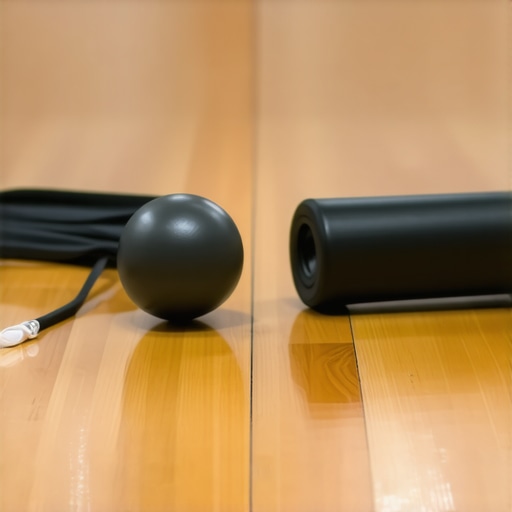
How do I maintain my progress between professional adjustments?
Maintenance isn’t about one long session on Sunday; it’s about ‘movement snacks’ throughout the day. I tell my clients to set a timer for every 45 minutes of desk work. During these breaks, I focus on opening the hips and resetting the shoulders. For those who drive often, knowing the best way to support your lumbar spine while driving long distances can prevent the cumulative fatigue that leads to a Monday morning ‘stuck’ neck. These small habits provide strategic chiropractic solutions for long-term back health by ensuring your adjustments actually hold. If you aren’t changing the environment that caused the subluxation, you are just running on a treadmill of temporary relief.
The Future of Recovery Involves Real-Time Biofeedback
I predict that the next five years will see a massive shift toward wearable biofeedback that monitors spinal shear and pelvic tilt in real-time. Instead of guessing if you are standing correctly, haptic feedback in your clothing will gently vibrate when you slouch or lose your neutral pelvis. This will change the way we approach enhancing athletic performance with targeted chiropractic care, turning every workout into a coached session. Until those sensors are mainstream, you have to be your own coach. I want you to try one thing tonight: perform three sets of how to use a wall slide to fix rounded shoulders to reset your scapular position before bed. You will be amazed at how much lighter your head feels the next morning.
Three Myths About Back Pain That Kept Me Hurting
If I could go back to that afternoon on my living room floor, I would take that foam roller and throw it out the window. My recovery journey only truly started when I stopped treating my body like a piece of dough to be rolled and started treating it like a complex mechanical system. Here are the lightbulb moments that finally stuck: First, stop mistaking ‘more range’ for ‘better health’—if that range isn’t stable, it’s just a vulnerability. Second, realize that your pain is a messenger, not a mistake; it’s often telling you that something upstream or downstream is failing. Third, consistency in small ‘movement snacks’ beats an hour of aggressive stretching once a week. To truly boost your sports rehab journey with proven chiropractic strategies, you must embrace these boring but effective basics.
#IMAGE_PLACEHOLDER_E#
A Personal Toolkit for Spine Longevity
For those looking to build their own recovery arsenal, I highly recommend picking up ‘Becoming a Supple Leopard’ by Dr. Kelly Starrett to learn the mechanics of your joints. Pair that with a high-density lacrosse ball and learn how to use a lacrosse ball to melt away mid-back knots safely without the risks of lumbar rolling. Most importantly, find a practitioner who looks at your movement, not just your symptoms, to find strategic chiropractic solutions for long-term back health. These are the tools that actually move the needle and provide lasting results.
Reclaim Your Strength Starting Now
This isn’t just about avoiding a ‘pop’ in your lumbar; it’s about reclaiming the way you move through the world. By integrating chiropractic adjustments that can alleviate chronic back pain with daily mobility habits, you stop being a victim of your own anatomy. Your spine was built for strength and resilience, not just for rolling over a piece of foam. Start today by ditching the lower back roll and focusing on the stability your body actually craves. Have you ever felt worse after a long session on the foam roller? Let me know below.