
Three o’clock in the afternoon, and my neck felt like it was made of dry concrete. I was hunched over my keyboard, chin practically touching my sternum, and a dull ache was throbbing right between my shoulder blades. I used to think this was just the price of being productive. I was wrong. I wasted years thinking I needed a standing desk or a expensive ergonomic chair to feel better, but the real issue was how I lived in my own skin for hours on end. I made the early mistake of trying to hold myself in a rigid, military-style posture that only caused more muscle fatigue and tension.
Stop Forcing a Rigid Military Stance and Try This Instead
For a long time, I thought I could just will myself into sitting straight. It was exhausting. My muscles would tire out in ten minutes, and I’d collapse back into a worse slump than before. It wasn’t until I started focusing on stopping that mid-back burning sensation with tiny, frequent movements that things finally changed. Today, I’m going to show you a reset that takes less time than a sip of coffee but actually tells your nervous system to let go of the tension. We are going to fix that heavy-head feeling and stop the cycle of headaches that start right at your computer. Have you ever felt like your spine was literally compressing as the day went on? It is a miserable feeling, but you are not stuck with it.
Does a 10-second movement actually work for long-term pain?
You might be skeptical. I certainly was. How could such a small window of time counteract hours of typing? The secret lies in micro-loading and neurological resets. According to research published in the journal Applied Ergonomics, taking very brief, frequent micro-breaks to change your physical orientation is significantly more effective at reducing muscle fatigue than taking one long break every few hours. It’s about interrupting the creep—that is the actual clinical term for when your ligaments start to stretch and sag under constant load. If you don’t interrupt it, you eventually end up needing targeted exercises for forward head posture just to stand up straight. Learning how to safely adjust your own posture throughout the day isn’t about being perfect; it’s about being mobile. Let’s look at the exact movement that saved my sanity during 8-hour spreadsheets.
Reset Your Upper Back Without Leaving Your Chair
I call it the ‘Blade Drop,’ and it’s far more effective than just trying to sit up straight. I remember finishing a 12-hour coding sprint where I literally couldn’t turn my head to the left to see my coffee mug. It was pathetic. The move that fixed it isn’t a massive stretch; it’s a neurological reset. Think of your shoulder blades like window shutters. If they stay jammed open (slumped forward), the mechanism wears out. You need to pull them down and back—not toward your ears—but toward your back pockets. This thoracic extension move that saves your shoulders acts as a circuit breaker for the tension building in your traps. When I do this, I feel a physical “whoosh” of blood flow back into the muscles that were being strangled by my slouch. 
The Hidden Link Between Your Pelvis and Your Neck
Most people think neck pain starts in the neck, but your spine is a closed system. If your pelvis is tucked under like a scared dog, your head has to jut forward to balance you out. It’s basic physics. I used to wonder why my head felt so heavy after a long day at the computer, and it turned out I was sitting on my tailbone instead of my sit-bones. To fix this, you need to reach under your glutes and feel for those two hard bumps. Sit directly on top of them. This simple shift is the foundation of sitting without compressing your L5-S1 disc, which is where most office-related back issues start.
Stop Staring Your Way into a Headache
There is a weird neurological trick involving your eyes that most people ignore. Your suboccipital muscles at the base of your skull are hardwired to your eye movements. If your eyes are fixed on a screen in a “death stare,” those muscles lock up. Every 20 minutes, you must look at something 20 feet away and trace the outline of a window or a picture frame. This forces your neck to micro-adjust. If you don’t do this, you’re essentially asking for tension headaches that won’t go away without pills. When I started doing these “eye circles,” the pressure behind my eyes vanished within three days.
Why Your Deep Core Matters More Than a Fancy Chair
You can buy a $2,000 chair, but if your deep stabilizers are asleep, you’ll still hurt. You need to learn how to breathe through your belly for instant lower back relief. Most of us “chest breathe” when we are stressed, which keeps our ribcage in a state of constant flare. This puts massive pressure on the mid-back. By taking a breath into your lower ribs, you create internal pressure that supports the spine from the inside out. This is a core component of strategic chiropractic solutions for long-term back health. It’s like inflating a tire; the structural integrity comes from the air pressure, not just the rubber.Let’s dig deeper into why you might still be feeling that nagging ache despite doing all the ‘right’ things. Most people fall into the trap of thinking that more flexibility is always the answer. In my experience, the opposite is often true. We need to talk about the ‘stretching myth.’ People think muscle tightness is always a length problem, but usually, it is a stability problem.
Stop Stretching Your Tight Hamstrings
If your hamstrings feel like steel cables, your first instinct is likely to touch your toes. But why stretching your hamstrings won’t fix your chronic tightness is simple: your nervous system is using that tension as a ‘parking brake’ to protect a vulnerable lower back. If you pull on that brake through aggressive stretching, your body will only grip harder to compensate. This is one of the 3 stretching mistakes that make sciatica worse because it creates friction on the nerve rather than relief. 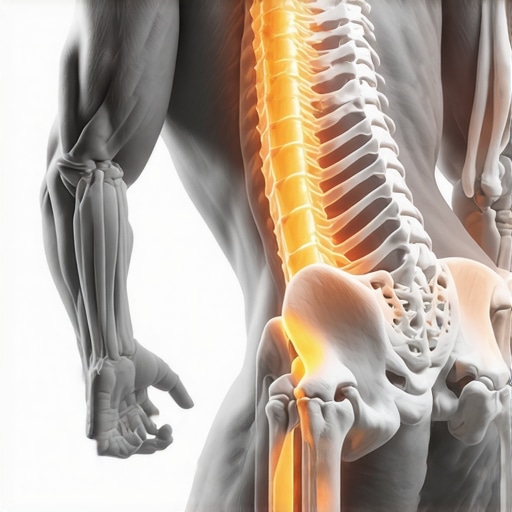
Your Adjustment Won’t Stick Without This
Another hard truth is that an adjustment is only half the battle. I see patients who get adjusted, feel great for an hour, and then revert to their old posture, essentially undoing the work. The truth about why your adjustments don’t seem to last is often a lack of active integration. You have to ‘save’ the new range of motion with movement. Research in the Journal of Electromyography and Kinesiology points out that passive spinal manipulation provides a critical ‘window of opportunity’ by reducing muscle inhibition, but it doesn’t permanently change motor patterns unless followed by active loading. This is why strategic chiropractic solutions for long-term back health must involve moving immediately after the treatment.
Why does your back feel ‘stuck’ even after a professional session?
Advanced readers often ask this when they feel like they are hitting a plateau. The answer usually lies in ‘the creep’ of your ligaments. If you have spent years in a slumped position, your connective tissues have physically remodeled. A single adjustment cannot instantly reverse five years of desk-bound adaptation. This is where the science behind chiropractic adjustments for back pain relief becomes vital; it’s about the cumulative effect of resetting the joint and then reinforcing it with strength.
Put Down the Foam Roller for a Second
Here is a specific ‘oops’ factor to avoid: stop rolling your lower back. I know it feels good in the moment, but why you should never roll your lower back on a foam roller comes down to anatomy. Your lumbar spine lacks the protective cage of the ribs that your upper back has. Pushing a roller into that arch can cause your muscles to spasm in a protective reflex. Similarly, why your foam roller is useless for IT band syndrome is because the IT band is a thick piece of connective tissue that doesn’t ‘melt’ under pressure. You’re just bruising the underlying nerve. To truly boost your sports rehab journey with proven chiropractic strategies, you must stop treating every pain like a tight knot and start treating it like a communication error between your brain and your joints. This holistic view is the core of the role of chiropractic care in effective sports injury recovery. Have you ever fallen into this trap of over-stretching or over-rolling? Let me know in the comments.Maintenance isn’t just about doing your exercises once a day; it’s about the environment you inhabit for the other 23 hours. For me, the biggest breakthrough came when I looked at my car seat. Most modern cars have ‘bucket’ seats that look sporty but actually force your lumbar spine into a rounded position, which is exactly why your lumbar spine hates your car seat. I personally started using a firm, D-shaped lumbar roll because it provides a mechanical block that keeps my L5-S1 disc from bulging outward during long drives. Research in the Journal of Manipulative and Physiological Therapeutics suggests that maintaining the natural lordotic curve while sitting reduces intradiscal pressure significantly compared to slumped sitting. This is one of the most essential tips for managing back pain through healthy lifestyle choices that actually works for people who spend hours on the road. 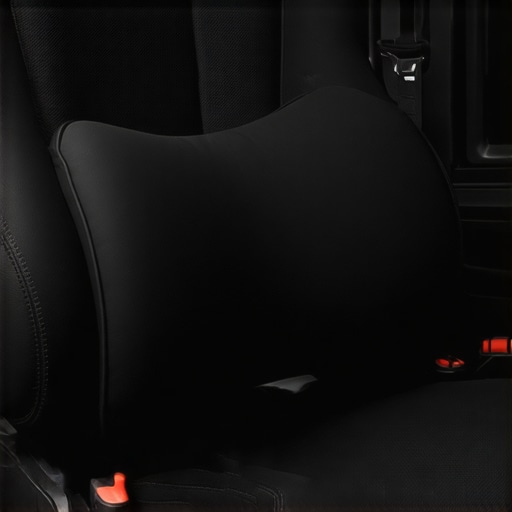
Stop Fighting Your Car Seat
If you aren’t ready to buy a new car, you need to learn the best way to support your lumbar spine while driving long distances by adjusting the angle of your seat pan. I’ve found that tilting the front of the seat slightly down prevents the ‘pelvic tuck’ that causes so much grief. It’s a game-changer for those of us who have dealt with chronic back pain and need to stay functional for the gym or the field. Keeping your progress isn’t just about what you do in the clinic; it’s about strategic chiropractic solutions for long-term back health that integrate into your commute.
How do I maintain my spinal health over time?
It’s about ‘stacking’ small habits rather than waiting for a crisis. For example, I’ve stopped focusing solely on my back and started looking at my hands. It sounds counterintuitive, but why your grip strength predicts your shoulder longevity is due to the kinetic chain; if your grip is weak, your rotator cuff has to overwork to stabilize your shoulder. By integrating targeted chiropractic care and simple daily hanging drills, I’ve managed to scale my gym volume without the usual ‘old man’ aches. This holistic approach is exactly how spinal alignment directly impacts your athletic performance. Looking ahead, I predict we’ll see a shift toward biofeedback wearables that track spinal ‘creep’ in real-time, moving us away from static ergonomic chairs and toward active, movement-based workstations. If you’ve been feeling plateaued, I challenge you to try the 20-minute eye reset I mentioned earlier during your next work block—I bet it clears your afternoon brain fog better than a third espresso.
The Hardest Lesson I Learned About Chronic Tension
For years, I treated my back like a broken machine that just needed a professional to ‘fix’ it once a week. I eventually realized that even the most effective expert chiropractic adjustments that work are only as good as the habits you practice at home. The biggest ‘lightbulb moment’ for me was understanding that muscle tightness is often my brain’s way of protecting a joint it perceives as unstable. Instead of fighting that tightness with endless stretching, I had to start building stability. Another hard-earned truth is that consistency beats intensity every single time. A ten-second reset done twelve times a day will change your nervous system much faster than a grueling one-hour yoga session once a week. It’s about teaching your body that it is safe to move again without pain.
Tools That Keep My Spine Happy During Long Work Weeks
You don’t need a gym full of equipment to maintain your progress, but a few specific items can make a world of difference. First, a firm D-shaped lumbar roll is non-negotiable if you spend any time driving; knowing how to optimize your car seat for lumbar support can save you from a weekend of stiffness. I also recommend keeping a simple lacrosse ball in your desk drawer to gently release trigger points in your mid-back before they turn into full-blown spasms. For my fellow readers who want to dive deeper into the mechanics of movement, I highly suggest exploring essential tips for managing back pain through healthy lifestyle choices. These small adjustments to your environment act as a ‘mechanical insurance policy’ for your spine.
Build a Body That Supports Your Ambition
You are not destined to live with a ‘bad back’ or a ‘stiff neck’ just because you work at a computer. By integrating these micro-movements and seeking strategic chiropractic solutions for long-term back health, you are investing in your future self. Physical freedom is the foundation for everything else—your productivity, your mood, and your ability to enjoy life outside of work. When you move better, you feel better, and that ripple effect touches every part of your day. Start today with just one eye-reset or one ‘Blade Drop’ and watch how your body responds. We are focused on enhancing athletic performance with targeted chiropractic care because everyone deserves to move like an athlete, even in the office. Have you noticed a specific time of day when your posture starts to crumble? Let me know in the comments below!