
I remember the first time it happened. I was three hours into a deep-work session, leaning slightly forward, when a sharp, localized heat bloomed right between my spine and my right shoulder blade. It didn’t feel like a normal muscle ache; it felt like a lit cigarette was being pressed into my rhomboids. I tried to twist, I tried to reach back and rub it, and I even spent a small fortune on a massage gun that did absolutely nothing but bruise my ribs. The truth is, I was treating the smoke, not the fire. If you are sitting there right now, constantly shrugging your shoulders or wondering why your upper back feels like it needs to pop constantly, I have been exactly where you are. We’re going to stop the guesswork today and find you some actual relief.
That Hot Knife Feeling Between Your Blades Isn’t Just Stress
For the longest time, I told myself I just needed a better chair or a longer vacation. But the reality is that the burning sensation is often a mechanical protest from your thoracic spine. When your mid-back loses its ability to move, the muscles around it have to work overtime just to keep your head upright. I made the massive mistake early on of thinking I could just stretch the pain away. I’d pull my arm across my chest for minutes at a time, not realizing I was actually overstretching muscles that were already over-lengthened and weak. In fact, I even fell for the trap of rolling my lower back on a foam roller, hoping it would somehow magically reset my alignment. It took a real understanding of rib mobility and spinal mechanics to finally find peace. Have you ever felt that localized hot spot that just won’t quit no matter how much you rub it? According to the Mayo Clinic, this type of persistent discomfort is often linked to myofascial pain syndrome, where trigger points in the muscle stay ‘locked’ in a state of contraction. [IMAGE_PLACEHOLDER]
Can a Simple Adjustment Really Fix a Problem This Deep?
I used to be the biggest skeptic. I thought my back was just ‘broken’ from years of sports and desk work. But once I understood what to expect during your first thoracic adjustment, I realized that the burning wasn’t a permanent injury—it was a signal. The ‘fire’ is usually your nerves reacting to a lack of space and movement in the rib cage and spine. To truly put it out, you need to learn how to use a lacrosse ball to melt away mid-back knots the right way, rather than just smashing the tissue. We aren’t just looking for a temporary numbing effect; we are looking to restore the natural glide of your joints so the burning never has a reason to return. It’s about moving from a state of constant irritation to a body that actually supports your daily life without screaming at you by 2:00 PM. Once you realize that the pain isn’t actually the problem—but rather a loud, burning ‘check engine’ light—you can finally start the real work of fixing your mechanics.
To put out the fire, you have to realize that your rib cage isn’t a static cage—it is a dynamic series of joints. Most people with burning mid-back pain are ‘chest breathers’ who have completely forgotten how to expand their lower ribs. I spent years trying to stretch my rhomboids when the issue was actually my diaphragm being locked up. I started using the lung drill that instantly lowers your stress and back tension every morning, and the change was almost immediate. It is like greasing a rusty hinge; once the ribs can expand, the muscles between your blades do not have to work nearly as hard just to let you inhale. I learned this the hard way after a particularly brutal gym session where I felt like my lungs were constricted. I eventually realized why your ribs feel stuck after heavy overhead pressing is almost always a failure of the thoracic spine to extend properly during the lift.
Stop Fighting Your Rib Cage and Start Breathing
When you breathe high into your chest, you use your neck and upper back muscles to lift the whole rib cage, which is incredibly inefficient. Instead, focus on lateral rib expansion. I remember sitting at my desk, feeling that familiar burn, and simply placing my hands on the sides of my ribs to feel them move outward as I inhaled. This ‘reset’ takes the tension off the rhomboids and traps. If you do not fix the breath, no amount of massage will ever give you more than an hour of relief. You have to teach the nervous system that it is safe to let those mid-back muscles relax. By focusing on the 360-degree expansion of the lungs, you essentially mobilize the thoracic joints from the inside out, providing a gentle stretch that external tools simply cannot reach.
The Right Way to Pin and Stretch Those Knots
When the knots are already there, you have to be tactical. Do not just roll around aimlessly on a foam roller, as that often just irritates the nerves further and creates more inflammation. You need to understand how to use a lacrosse ball to melt away mid-back knots by finding a trigger point, pinning it against a wall, and then moving your arm through its full range of motion. This creates a ‘shear’ force that actually breaks up the adhesions between the muscle layers. #IMAGE_PLACE_HOLDER_B# I once spent a whole week ‘smashing’ my back with a hard roller only to find the pain got sharper and more localized. It was not until I switched to this targeted pinning method—staying on one spot for 90 seconds while performing slow, controlled arm circles—that the ‘hot knife’ feeling finally turned into a dull, manageable ache and then vanished entirely.
Fix Your Foundations Before You Lift Again
Your shoulder blades should glide like ice on a skating rink, but for many, they are stuck to the rib cage with metaphorical glue. Before you jump back into your workout, you need to master the scapular setting trick for pain-free pull-ups. This simple engagement creates a stable platform for your neck and mid-back. Finally, we have to look at the ‘why’ from a structural perspective. While self-care is vital, the science behind chiropractic adjustments for back pain relief shows that restoring actual joint play is what allows these soft-tissue changes to stick. If the bone is mechanically restricted, the muscle will always tighten back up to protect it. You are essentially resetting the nervous system so it stops sending that burning alarm signal to your brain every time you sit down at your laptop.
Most people think that if a muscle feels tight, it needs to be stretched until it gives up. I fell for this for years, spending my mornings hanging off doorframes and pulling my arms across my chest, only for that searing burn to return before my first cup of coffee was cold. Here is the contrarian truth that most rehab influencers miss: your rhomboids are likely already too long. They are ‘locked long’ because your shoulders are perpetually slumped forward. Stretching a muscle that is already over-extended is like pulling on the ends of a frayed rope; it only makes the structural tension worse. This is exactly why stretching your hamstrings won’t fix your chronic tightness either. You don’t need more length; you need stability and tension in the right places to hold your skeleton upright without effort. When your joints have been restricted for years, your brain literally forgets how to ‘read’ the signals from those nerves. It starts to rely on the surrounding muscles to act as a splint. When a chiropractor introduces motion to that restricted segment, it is like rebooting a frozen computer. But if you do not ‘save your work’ through corrective exercise, the system defaults to the last known stable state—which was your painful posture.
Why do my adjustments seem to wear off within forty-eight hours?
It is the most common frustration I hear from athletes and desk workers alike. You get adjusted, you feel like a new person for two days, and then the ‘ghost’ of the old pain starts creeping back in. This happens because your brain has a ‘proprioceptive blueprint’ of how it thinks your body should sit. If you have years of poor mechanics, your nervous system will fight to return to that old, dysfunctional baseline because it feels ‘safe’ there. This is the truth about why your adjustments don’t seem to last—it isn’t that the adjustment failed to move the bone, but that your soft tissue hasn’t been retrained to support the new alignment. You need strategic chiropractic solutions for long-term back health that include heavy loading and motor control exercises, not just passive popping. In fact, the science behind chiropractic adjustments for back pain relief shows that the real benefit is a temporary ‘window’ of neurological clarity. If you do not use that window to move differently, the door simply shuts again.
The Self-Cracking Trap That Keeps You Stuck
I also have to warn you about the ‘self-adjuster’s trap.’ We have all done it—twisting our necks or mid-backs until we hear a loud ‘crack’ to get that fleeting rush of endorphins. But when you do this, you are almost always moving the joints that are already too mobile, while the truly stuck segments stay locked in place. This creates a dangerous cycle where why your upper back feels like it needs to pop constantly becomes a daily obsession because you have made the surrounding segments hypermobile and unstable. According to research published in the Journal of Manual & Manipulative Therapy, true clinical results come from specific, high-velocity thrusts targeted only at the hypomobile segments. This restores the balance the nervous system is craving rather than just creating more loose joints. 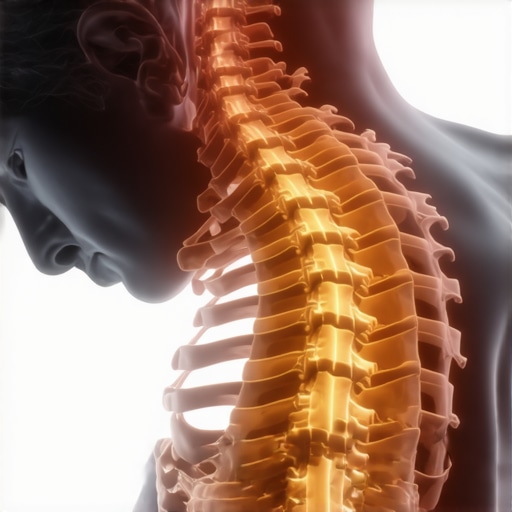 This is the difference between true sports rehab and just chasing a sound. Have you ever fallen into this trap of constant self-cracking or endless stretching? Let me know in the comments.
Why Your $400 Massage Gun is Collecting Dust
I have a closet full of ‘back-saving’ gadgets that failed me. The high-tech percussive massagers felt great for ten minutes, but they never addressed the underlying structural instability. These days, my toolkit is stripped down to the essentials. I rely heavily on a standard lacrosse ball for targeted release and a simple doorway for chest expansion. The reason I’ve moved away from the complex gear is simple: you cannot vibrate a joint back into alignment. Real change happens when you apply specific pressure to the soft tissue while simultaneously moving the joint. This is why I focus on how to safely adjust your own posture throughout the day using somatic awareness rather than external force. By learning to feel where your weight is distributed on your sit-bones, you stop the ‘slump’ before it even starts, preventing the need for aggressive interventions later. 
How do I maintain these results over time?
Maintenance isn’t a thirty-minute routine you do once a week; it’s a series of micro-habits that protect your progress. I’ve found that the most successful way to keep my spine moving is by integrating the 10-second posture reset you can do at your desk every time I finish an email. This prevents the ‘creeping’ stiffness that eventually leads to a flare-up. Furthermore, long-term health requires strategic chiropractic solutions for long-term back health that prioritize functional movement over passive care. If you are only getting adjusted without changing how you sit, stand, and breathe, you are just spinning your wheels. Dr. Stuart McGill, a world-renowned expert in spine mechanics and author of Back Mechanic, often points out that ‘proximal stiffness leads to distal mobility.’ In other words, if you don’t build a stable core, your back will never feel truly free to move. I’ve learned that essential tips for managing back pain through healthy lifestyle choices, like staying hydrated to keep spinal discs plump and walking frequently to lubricate the joints, are just as important as any clinical adjustment.
The Data-Driven Future of Spinal Health
As we look forward, the trend is shifting away from ‘fixing’ pain and toward ‘predictive’ mobility. I suspect we are nearing a point where wearable tech will provide real-time biofeedback on our spinal load, warning us before a disc even gets irritated. Until then, we have to be our own biofeedback loops. This involves using chiropractic techniques for faster recovery as a way to clear the path, while we do the heavy lifting of retraining our nervous systems. We are moving toward a ‘prehab’ model where we treat the body like a high-performance machine rather than an old car we only take to the shop when it breaks down. By understanding the science behind chiropractic adjustments for back pain relief, you can see that the adjustment is simply the starting line, not the finish. If you want to stop the cycle of recurring pain, I challenge you to try this today: set a timer for every 30 minutes and perform one ‘scapular reset’ to keep your shoulders from winning the war against your spine. It’s the smallest hinges that swing the biggest doors.
What I Learned After Years of Chasing the Wrong Knots
I wasted so much time pulling on my shoulder blades when I should have been looking at my ribs. First, your rhomboids are almost never ‘short’; they are screaming because they are being pulled apart. If you keep stretching them, you are just making the problem worse. Second, mobility without stability is a recipe for a flare-up. You need to learn how to identify if your back pain is muscular or nerve related before you start digging into your tissue. Finally, the biggest ‘aha’ moment for me was realizing that my gym habits, specifically why your bench press is wrecking your thoracic mobility, were feeding the fire every single Monday.
My Bare-Bones Toolkit for a Pain-Free Spine
You do not need a thousand-dollar home gym to find relief. I swear by these three essentials: a simple lacrosse ball for targeted pinning, the book Back Mechanic by Dr. Stuart McGill to understand spinal hygiene, and a basic standing desk converter to vary your positions. These tools work because they address the root cause—static posture and poor joint mechanics—rather than just masking the symptoms. By combining these with strategic chiropractic solutions for long-term back health, you create an environment where your body can actually stay adjusted and resilient. [IMAGE_PLACEHOLDER_FINAL]
Your Journey Back to Effortless Posture
Healing is not a straight line, but once you stop fighting your own anatomy, the progress happens faster than you would expect. Focus on that 360-degree breath and use essential tips for managing back pain through healthy lifestyle choices to keep your momentum. You do not have to live with that burning sensation as your ‘new normal.’ By leaning into the science behind chiropractic adjustments for back pain relief and taking ownership of your daily movement, you are not just fixing a back problem—you are reclaiming your quality of life. Have you noticed that your mid-back pain flares up more during stress or after a specific workout? Let me know in the comments below!