
I’ll never forget the Tuesday afternoon I sat in my car, knuckles white on the steering wheel, wondering why my lower back felt like it was being squeezed by a vice. I wasn’t in a wreck. I hadn’t even worked out that day. I was just… existing. For years, I’d been chasing relief through every stretch and adjustment in the book, yet my body stayed in a constant state of “fight or flight.” It wasn’t until a mentor pointed out that my chest was moving like a bellows while my belly stayed frozen that I realized I was literally suffocating my own recovery. I was a professional “chest breather,” and it was ruining my life.
Stop Fighting Your Body and Start Feeding Your Nerves
We often treat our nervous system like a wayward child we need to discipline, but usually, it’s just reacting to the signals we’re sending. When you take shallow breaths into your upper chest, you’re essentially telling your brain there’s a saber-toothed tiger in the room. This triggers the sympathetic nervous system, leading to that “wired but tired” feeling we all know too well. I made the mistake of thinking I could out-stretch this tension, but most core exercises actually make lower back pain worse when your diaphragm is locked up. Today, I’m going to show you exactly how to flip the switch from panic to peace. We aren’t just talking about “deep breathing” in a generic sense. We are talking about the mechanical recruitment of the diaphragm to stimulate the vagus nerve. According to research published by the National Institutes of Health, slow, deep breathing (around 6 breaths per minute) significantly increases heart rate variability, which is a gold-standard marker for a resilient nervous system. If you’ve been feeling like your adjustments don’t seem to last, your breathing pattern might be the missing piece of the puzzle.
Does Belly Breathing Actually Work for Real Stress?
I get it. You’re skeptical. You’ve been told to “just breathe” before and it probably felt like a giant waste of time. I used to think the same thing until I learned how to breathe through your belly for instant lower back relief. It’s not a magic spell; it’s biomechanics. When you use your diaphragm correctly, you create intra-abdominal pressure that stabilizes your spine and signals to your brain that the “emergency” is over. It’s the difference between trying to fix a leak with duct tape versus actually turning off the water main. Have you ever felt like no matter how much you rest, your muscles still feel like they’re on high alert?
The Early Blunder That Cost Me Months of Progress
When I first started trying to fix my breathing, I did it entirely wrong. I would force my belly out with my muscles, creating even more tension. It felt performative and exhausting. I didn’t realize that diaphragmatic breathing is an act of *release*, not an act of *force*. This nuance is why so many people give up before they see the benefits. Once I stopped trying to “work” at it and started letting the air do the job, my resting heart rate dropped, and that nagging ache in my mid-back finally started to dissipate. You can even use simple tools like the lung drill that instantly lowers your stress to jumpstart this process without overthinking it.
Ditch the Ego and Get Low to the Ground
To fix your breathing, you have to stop fighting gravity. You can’t learn this while standing in a stressful meeting or hunched over a laptop. I want you to get on the floor in what we call the 90/90 position—lying on your back with your feet flat against a wall so your knees and hips both form 90-degree angles. This position tilts your pelvis slightly and flattens your lower back, removing the need for your “emergency” stabilizer muscles to fire. When you’re in this state, your diaphragm finally has the space to move. If you’ve been searching for ways to discover how chiropractic adjustments can alleviate chronic back pain, this position is the perfect home-based supplement to that work. It’s like hitting the reset button on a computer that’s been running too many background programs.
The Umbrella Trick for 360-Degree Expansion
Most people think belly breathing means just pushing your stomach out like you’re five months pregnant. That’s only half the story. I want you to visualize your lower rib cage as an umbrella. When you inhale, that umbrella shouldn’t just push forward; it should open in every direction—front, sides, and even into the floor behind you. Place your hands on the very bottom of your ribs. As you breathe in through your nose, feel your ribs widen into your palms. If your shoulders move up toward your ears, you’re still using those “stress muscles.” This lateral expansion is crucial because it creates the intra-abdominal pressure needed to support the spine from the inside out. I’ve seen patients combine this with the thoracic extension move that saves your shoulders to completely overhaul how their upper body carries tension. 
Why Your Exhale is More Important Than the Inhale
The inhale is the “on” switch, but the exhale is the “relax” switch. To truly stimulate the vagus nerve and lower your heart rate, your exhale needs to be longer than your inhale. I tell my clients to imagine they are blowing out a candle through a tiny straw. This resistance keeps the airways open longer and forces the diaphragm to stay engaged as it slowly ascends. When you master this, you’ll notice that how regular adjustments can lower your resting heart rate becomes even more effective because you aren’t immediately re-stressing your system the moment you leave the clinic. Aim for a 4-second inhale and an 8-second exhale.
When This Breath Saved Me During a Heavy Lift
I vividly remember a heavy deadlift session about three years ago. I was chasing a personal record, but my mid-back felt “gridlocked,” and my ribs were flaring out like a startled bird. I knew if I pulled that weight with a shallow chest breath, I’d be horizontal on a heating pad for a week. I stepped back, got into that 90/90 mindset, and focused on that “umbrella” expansion. I used the simple drill to stop your ribs from flaring during deadlifts right there on the gym floor. When I went back to the bar, the pressure was in my core, not my spine. The weight came up smoothly because I was finally using my internal hydraulics correctly. It wasn’t about strength; it was about the air.
Stop Chasing the Pop and Start Chasing Function
Most people walk into a clinic expecting a mechanic to “pop” a bone back into place like a loose bolt on a car. This is perhaps the most persistent myth in the world of spinal health. The reality is that your bones aren’t usually “out of place” in the way you imagine. If they were, you’d be in the emergency room, not a chiropractic office. The audible release you hear during an adjustment is simply a pressure change within the joint, but the real magic happens in your brain. A study published in the Journal of Orthopaedic & Sports Physical Therapy (JOSPT) suggests that the primary benefits of spinal manipulation are neurophysiological, meaning we are essentially “rebooting” the nervous system’s communication with your muscles. If you’ve ever wondered the truth about why your adjustments don’t seem to last, it’s often because you’re treating the session as a passive fix rather than a neurological reset. 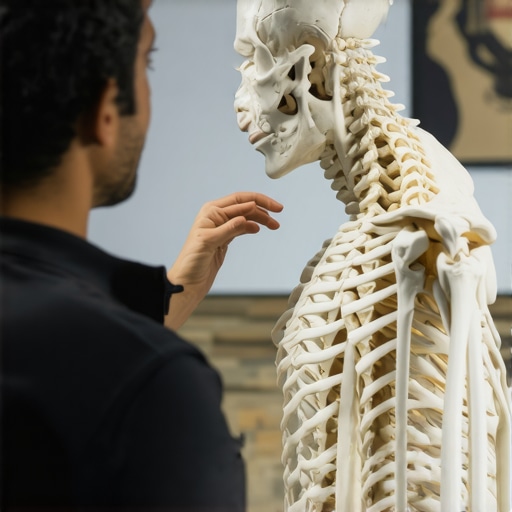
Why do your symptoms return the moment you stop fixing your posture?
This is the question that separates the beginners from the pros. I see it all the time: someone spends forty minutes doing perfect exercises, only to revert to a slumped, shallow-breathing mess the second they check their phone. The “trap” here is thinking that a few minutes of “correct” movement can outweigh twenty-three hours of poor mechanics. You might think you’re helping yourself by aggressively stretching, but in many cases, why stretching your hamstrings won’t fix your chronic tightness is because your brain is keeping those muscles tight to protect a perceived instability elsewhere. When you force a stretch on a muscle that is tight for protection, your nervous system actually screams louder, increasing your pain sensitivity.
The Passive Care Trap That Stalls Your Progress
One of the biggest mistakes I see in sports rehab is an over-reliance on passive care. Tools like massage guns, scrapers, and even adjustments are incredible at opening a “window” of decreased pain and increased mobility. However, if you don’t climb through that window by performing active, loaded movements, the window slams shut. This is where you can revolutionize your rehab with chiropractic techniques that prioritize active participation. The goal isn’t just to feel better on the table; it’s to use that temporary relief to rewire how you move under load. Have you ever fallen into this trap where you felt great for an hour after a session only to have the pain roar back by evening? Let me know in the comments.
Ditch the Search for the Perfect Alignment
We’ve been conditioned to think that there is one “perfect” way to sit or stand. The truth is much more nuanced: your best posture is your next posture. The human body is designed for variability, not static perfection. When we focus too much on “holding” a position, we create more tension. Instead, focusing on strategic chiropractic solutions for long-term back health means building a body that is resilient enough to handle multiple positions. Advanced recovery is about expanding your body’s capacity to handle stress, not just avoiding it. If you’re ready to stop looking for a quick fix and start building a resilient system, it’s time to look at the intersection of breathing, neurology, and movement.Once you’ve accepted that your body isn’t a collection of loose bolts, the conversation shifts to maintenance. I used to be the guy who only thought about my back when it hurt. Now, I use data to tell me when I’m redlining. I wear an HRV monitor—specifically the Oura Ring—not just for sleep, but to see if my nervous system is actually recovering from my training sessions. If my HRV is low, I know my diaphragm is likely tight and my risk of a flare-up is high. This data-driven approach is a game-changer for enhancing athletic performance with targeted chiropractic care because it takes the guesswork out of intensity.
The Two-Dollar Tool That Saves My Spine
One tool I swear by isn’t a thousand-dollar machine; it’s a simple lacrosse ball. I keep one in my gym bag and one in my car. If I feel that familiar “hitch” in my gait, I’ll spend three minutes on the floor. It’s about precision rather than power. If you know how to use a lacrosse ball to melt away mid-back knots, you can stop a minor irritation from becoming a week-long setback. For deeper issues, I use specialized tools like the Pso-Rite, which is aggressive but effective if you know the correct way to stretch your psoas without hurting your spine. These tools are the bridge between your visits to the clinic, ensuring that your mobility doesn’t regress the moment you walk out the door. 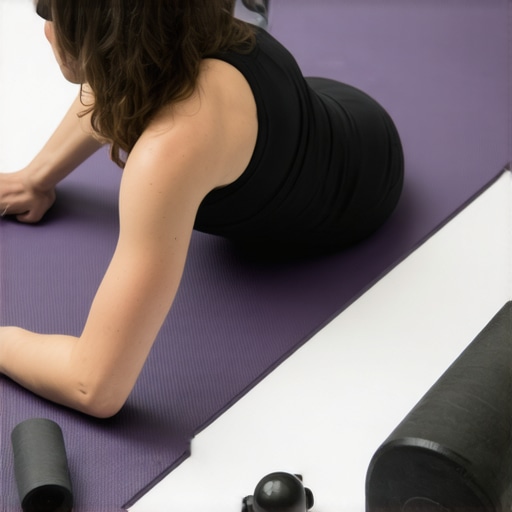
How can you keep these results for years instead of days?
The secret isn’t in a harder workout; it’s in the integration of movement into your everyday life. You need to view your rehab as part of your identity, not a chore on a checklist. This means implementing essential tips for managing back pain through healthy lifestyle choices like frequent walking and varying your sitting positions throughout the day. According to Dr. Stuart McGill, a world-renowned expert on spine biomechanics and author of Back Mechanic, the “cumulative load” on your spine is what determines your long-term success. By spreading out the stress and avoiding peak loads when you’re tired, you allow the role of chiropractic care in effective sports injury recovery to actually take root and build a foundation of strength.
Postural AI is the Next Frontier
Looking ahead, I predict that in the next five years, we will see widespread use of AI-powered postural sensors that integrate with our smartwatches. These sensors will likely vibrate when your breathing patterns shift into chest-breathing mode or when your pelvic tilt exceeds a certain threshold—essentially a “chiropractic coach” in your pocket at all times. Until then, you have to be your own advocate. My challenge to you is simple: Tonight, before you scroll through social media in bed, get in that 90/90 position for five minutes. Focus on strategic chiropractic solutions for long-term back health by simply breathing into your lower ribs. Don’t wait for the pain to return before you prioritize your mechanics.
The Hard Truths I Learned While Fixing My Own Spine
After years of working with athletes and battling my own injuries, I’ve realized that the biggest barrier to recovery isn’t a lack of strength, but a lack of awareness. One of the most vital lessons I learned is that pain is a messenger, not a life sentence. When my back would flare up, I used to treat it like a mechanical failure. In reality, my nervous system was just sounding an alarm because I had forgotten how to breathe and move with ease. Another lightbulb moment was realizing that more effort doesn’t always equal better results. In the world of rehab, forcing a stretch or grinding through a ‘core’ workout often reinforces the very tension you’re trying to break. If you really want to boost your sports rehab journey with proven chiropractic strategies, you have to learn when to push and when to let the air do the work. Finally, I had to accept that the clinic is for the reset, but my home is where the transformation happens. You cannot out-adjust a lifestyle that ignores basic human mechanics.
My Essential Toolkit for Staying Supple and Strong
To keep my progress on track, I rely on a few specific resources that go beyond the typical gym equipment. First and foremost is the book Back Mechanic by Dr. Stuart McGill. It is the gold standard for anyone trying to understand the load-bearing capacity of their spine. For daily maintenance, I never go anywhere without a simple lacrosse ball; it’s the most cost-effective way to manage tissue quality between professional sessions. I also recommend tracking your heart rate variability (HRV) with a tool like the Oura Ring. This data provides a direct window into your autonomic nervous system, helping you decide if today is a day for a heavy lift or a day for restorative breathing. If you’ve been curious about the science behind chiropractic adjustments for back pain relief, these tools help bridge the gap between theory and your daily reality.
Take the First Step Toward a More Resilient You
You don’t need to be an elite athlete to benefit from better mechanics. Whether you’re a parent picking up a toddler or a professional sitting at a desk, your body thrives on the same principles of pressure and stability. My hope is that you stop viewing your body as a collection of parts that need fixing and start seeing it as a dynamic system that needs nurturing. By integrating these breathing techniques and prioritizing unlocking back pain relief through intentional movement, you’re not just avoiding injury—you’re building a foundation for a higher quality of life. The road to recovery isn’t always linear, but it is always worth the effort. Have you ever noticed your breathing get shallow and ‘chesty’ during a stressful work call? Let me know in the comments below.