
I was staring at a messy spreadsheet on a rainy Tuesday when the pressure in my neck became physically unbearable. It felt like a rusted hinge was wedged right below my skull. Without even thinking, I gripped my chin, yanked my head to the left, and—POP—a series of satisfying cracks echoed through my quiet home office. For about thirty seconds, I felt like a brand-new man. But then, the tightness crawled back in, even more aggressive than before. I realized I was stuck in a cycle of self-sabotage that was actually making my spine more unstable. [image_placeholder]
Stop Treating Your Neck Like a Glow Stick
I spent years as a serial self-cracker. I thought I was being my own chiropractor, saving time and money, but I made the classic mistake of chasing the sound rather than the solution. By forcing that pop, I was mostly just moving the joints that were already too loose, while the stuck ones stayed frozen. This is often why your upper back feels like it needs to pop constantly despite your best efforts. Today, I’m going to show you how to break the habit and actually address the root cause of that heavy head sensation. We will dive into better habits like a 10-second posture reset and why your laptop setup is the real villain in this story.
Is this habit actually going to wreck my spine?
It is the question everyone asks when they get caught mid-twist by a coworker. According to the Journal of Manipulative and Physiological Therapeutics, repetitive, non-specific self-manipulation can lead to ligamentous laxity, which essentially means you are over-stretching the ‘rubber bands’ that hold your neck together. This habit often triggers tension headaches because your muscles have to work double-time to stabilize the joints you just loosened. Do you find yourself needing to crack your neck every twenty minutes just to stay focused? Let me know in the comments if you feel like you’re addicted to that pop. It is a sign that you might be dealing with why your headaches start at the computer. We are going to fix that today by looking at better ways to find relief without the ‘crack’ addiction.
Shift Your Focus From Mobilizing to Stabilizing
If you keep stretching a rubber band that is already loose, it eventually loses its snap. That is exactly what happens when you compulsively crack your own neck. You are hyper-mobilizing joints that are already moving too much, while the truly ‘stuck’ segments remain locked. To break the cycle, you have to prioritize stability. This is where strategic chiropractic solutions for long-term back health come into play. Instead of seeking that quick release, we need to wake up the deep neck flexors—the tiny muscles that actually hold your head up. 
Reset Your Neck with the Subtle Chin Tuck
Think of your neck like a stack of dinner plates. If the top plate (your head) is sliding forward, the whole stack becomes unstable. To fix this, sit tall and imagine a string pulling the crown of your head toward the ceiling. Gently tuck your chin straight back as if you are making a double chin, without tilting your head down. Hold for five seconds. When I first started doing these, I realized how weak my neck actually was; I could barely hold it for three seconds without my jaw tensing up. This simple move is the foundation for how to safely adjust your own posture throughout the day.
Engage the Scapular Powerhouse
Your neck does not live on an island. It sits on the foundation of your upper back and shoulders. If your shoulders are slumped, your neck has no choice but to strain forward. This is a primary reason why you might feel like you need your first thoracic adjustment to find real relief and why your burning sensation between your shoulder blades persists.
The Wall Slide That Changed Everything
I remember the first time I committed to a week of wall slides. I was in my home office, frustrated by a nagging pinch near my shoulder blade. I stood against the wall, heels and head pressed back, and tried to slide my arms up in a ‘W’ shape. It felt like my mid-back was on fire within ten repetitions. It was messy, my ribs kept flaring out, and I felt incredibly weak. But after three sets, the urge to ‘pop’ my neck simply disappeared. Using a wall slide to fix rounded shoulders forces your nervous system to engage the muscles that counteract the ‘laptop slouch.’
Optimize Your Tech to Save Your Spine
You can do all the drills in the world, but if you go right back to looking down at a screen, you are pouring water into a leaky bucket. This is where laptop setup becomes your best friend. Raise your screen so the top third is at eye level. This prevents the ‘forward head’ drift that leads to forward head posture issues. When I finally bought a cheap laptop stand and a separate keyboard, my daily tension headaches dropped by about eighty percent.
Master the Art of Nerve Flossing
Sometimes the ‘tightness’ you feel isn’t muscle at all—it is a nerve that is being tugged. When your neck is out of alignment, the nerves traveling down your arms can get ‘snagged’ like a fishing line in weeds. Instead of cracking the joint to ‘free’ it, try a nerve gliding routine that helps relieve arm numbness. By gently moving the nerve back and forth through its path, you reduce the ‘threat’ signal to your brain, which naturally relaxes the surrounding muscles without any high-velocity cracking or risk of sciatica-like flares in other parts of your nervous system.
When most people think about a chiropractic visit, they envision a high-force ‘crack’ that instantly resets their body like a computer reboot. But here is the contrarian truth I learned after years of trial and error: the loudest pop is rarely the most effective one. In fact, if you are chasing that auditory release as your primary metric of success, you might be falling for the ‘cavitation trap.’ The sound is just gas bubbles popping in the joint fluid, and while it feels great, it is not always a sign of a corrected alignment. This is often the truth about why your adjustments dont seem to last—you are focusing on the noise rather than the neurological shift.
Why does my back feel tight again just hours after a session?
This is the question that separates the beginners from the experts. If your practitioner is simply ‘cracking’ whatever is tight without assessing your global movement patterns, they are just treating a symptom. Real progress happens when you combine the science behind chiropractic adjustments for back pain relief with active stabilization. If you have ever felt like you were ‘addicted’ to being adjusted, you are likely dealing with hypermobility in certain segments while the real culprits remain dormant. Have you ever fallen into this trap of thinking more force equals more healing? Let me know in the comments.

Another major ‘oops’ factor I see in the gym and the clinic is the obsession with icing every little ache. We’ve been told since the 1970s to follow the RICE (Rest, Ice, Compression, Elevation) protocol, but modern research is pivoting. According to a landmark study published in the British Journal of Sports Medicine, the updated ‘PEACE & LOVE’ protocol suggests that ice might actually delay the healing process by inhibiting the natural inflammatory response needed for tissue repair. You should often stop icing new injuries and try this instead to ensure blood flow actually reaches the damaged area. This is a game-changer for enhancing athletic performance with targeted chiropractic care because it focuses on long-term recovery rather than just temporary numbing.
The Stretching Mistake That Keeps You Stiff
I see it every morning at the gym: someone with a stiff back aggressively pulling their knees to their chest or performing deep forward folds. This ‘aggressive’ flexibility work is often the reason why your morning stretching routine is making you stiffer by noon. When you over-stretch a joint that is already unstable, your nervous system responds by ‘braking’—it tightens the surrounding muscles even harder to protect the spine. Instead of mindless stretching, you need strategic chiropractic solutions for long-term back health that prioritize controlled movement over sheer range of motion. By shifting your focus from ‘opening up’ to ‘locking in,’ you stop the cycle of self-inflicted instability and start building a spine that can actually handle the demands of your daily life.
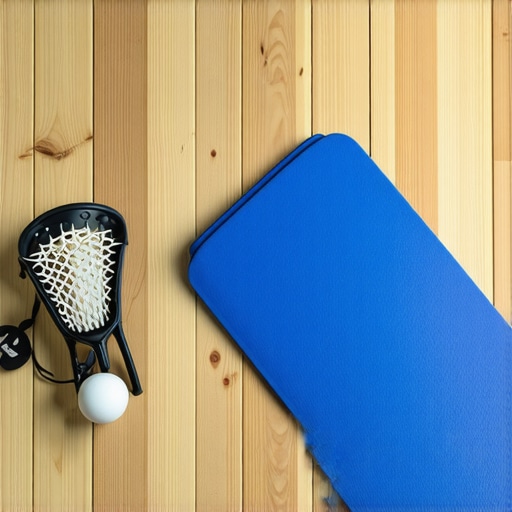
Once you stop the self-cracking cycle and start stabilizing, the real question becomes: how do you keep the engine running smoothly? I spent years thinking a single session would ‘fix’ me forever, but I’ve learned that spinal health is more like brushing your teeth than getting a haircut. It requires daily maintenance. My first non-negotiable tool is a simple lacrosse ball. I use it specifically to pin down the tissue between my shoulder blade and spine. If you have ever wondered how to use a lacrosse ball to melt away mid-back knots, the secret is not just rolling around aimlessly; it is about finding that one ‘hot spot’ and breathing through the pressure for ninety seconds. This small habit has done more for my mid-back mobility than almost any expensive gadget I’ve bought.
Stop Freezing Your Recovery and Start the Flow
For a long time, I was the guy who had an ice pack permanently attached to my lower back. I thought I was ‘killing the fire’ of inflammation. But as I mentioned earlier, the shift toward heat is a game-changer for chronic stiffness. When you use heat, you’re encouraging vasodilation—bringing oxygen-rich blood into the area to actually repair the fibers. You should why you should stop icing old injuries and use heat instead if you want to break out of that morning ‘tin-man’ feeling. I now use a high-quality heating pad for fifteen minutes before my morning mobility work, and the difference in my range of motion is night and day.
How do I maintain these results for the long haul?
Consistency beats intensity every single time. You don’t need a grueling hour-long routine; you need five minutes of ‘spine hygiene.’ As Dr. Stuart McGill, a world-renowned expert in spine biomechanics and author of the Back Mechanic series, points out, the way you move during the ‘non-exercise’ hours of your day often dictates your pain levels more than your actual workout does. This means looking at essential tips for managing back pain through healthy lifestyle choices, such as how you stand in line at the grocery store or how you sit during your commute. I even went as far as learning how to optimize your car seat for lumbar support because I realized my forty-minute drive was undoing all my progress. Small, cumulative changes are the bedrock of strategic chiropractic solutions for long-term back health.
The Next Decade of Rehab Tech
Looking ahead, I predict we are moving away from passive recovery and toward ‘active biofeedback.’ We are already seeing wearable sensors that gently vibrate when your shoulders slump, but soon, this tech will integrate with our phones to track how how spinal alignment directly impacts your athletic performance in real-time. We won’t just guess if our form is off during a squat; our gear will tell us exactly when our lumbar spine starts to round. This shift will make us our own best advocates for prevention. My challenge to you: pick one ‘hot spot’ in your back today and spend two minutes on it with a lacrosse ball or a tennis ball. Don’t wait for the pain to become unbearable again before you act.
The Truth About Why My Neck Felt Locked Even After I Cracked It
After a decade of chasing the loudest crack, I finally realized that the joints making the most noise were actually the ones that were already too loose. The segments that were truly stuck stayed silent and stubborn. This was my biggest lightbulb moment: chasing the sound was actually making my instability worse. I had to learn that chiropractic adjustments can alleviate chronic back pain far more effectively when I stopped fighting my own progress with constant, amateur self-manipulation. My neck didn’t need more movement; it needed better control. I also discovered that my ‘tightness’ was often just my nervous system sounding an alarm, and by forcing a pop, I was merely hitting the snooze button instead of fixing the problem.
Tools That Actually Made a Difference in My Daily Comfort
I don’t go anywhere without my spine hygiene kit, and I recommend you build one too. My first essential is a standard lacrosse ball—it’s the most cost-effective way to address mid-back knots without needing a professional massage every week. Second, I transitioned away from the old RICE method and embraced the PEACE & LOVE protocol. It’s a major reason why you should stop icing new injuries and try this instead to ensure your tissues actually heal. Lastly, I cannot stress enough how much a simple laptop stand and a separate mouse changed my life. Elevating your screen is the only way to truly fix the forward shoulder slump that comes from modern desk work. These aren’t just gadgets; they are investments in your structural integrity.
Start Your Journey to a Tension-Free Life Today
Your spine is incredibly resilient, but it requires the right input to thrive. By choosing stability over the temporary high of a quick pop, you are building a foundation that will serve you for years to come. Whether you are seeking expert chiropractic adjustments that work or simply trying to survive your 9-to-5 without a headache, remember that every small postural reset counts. You have the power to break the cycle of tension and reclaim your mobility. Don’t be afraid to take it slow; long-term strategic chiropractic solutions for long-term back health are built on consistency, not intensity. Which of the stability drills we discussed today felt the most challenging for you to hold? Let me know in the comments below.