
I remember the first time my knee decided to start ‘talking’ to me. I was in my garage gym, pushing through a heavy set of back squats, when a crisp, audible click echoed off the concrete walls. It wasn’t painful, but it felt like a grain of sand was caught in a rusty hinge right behind my kneecap. I immediately froze. My first thought? ‘Well, there goes my meniscus.’ I spent the next three weeks obsessively poking my leg and avoiding the squat rack like it was haunted. I even made the classic rookie mistake of thinking I just needed to stretch more, but I soon realized that why your morning stretching routine is making you stiffer by noon often comes down to addressing the wrong issue entirely. If you have ever felt that same spike of anxiety every time you drop into a lung or a squat, you are not alone. Today, we are going to strip away the fear and look at exactly why your body is making that noise and the simple mechanical tweaks that actually silence the sound.
Stop Worrying About the Noise and Start Fixing the Mechanics
That clicking sound, known medically as crepitus, is one of the most common complaints I hear from people trying to stay active. For years, I believed that every pop was a step closer to a knee replacement. I was wrong. Research published in the Journal of Orthopaedic & Sports Physical Therapy indicates that knee crepitus is often a poor predictor of actual joint damage or future pain. Most of the time, it is just a sign that your patella—your kneecap—isn’t sliding perfectly in its groove. It’s a tracking issue, not a ‘wearing out’ issue. When I finally stopped panic-stretching my hamstrings and started looking at my foundations, everything changed. I discovered that 3 signs your ankle stiffness is the real cause of your knee pain were staring me in the face the whole time.
Is that clicking sound actually destroying my joints?
It’s the question that keeps most of us from hitting our PRs. You worry that if you keep squatting, you’re essentially sanding down your bone. But here is the reality: if there is no sharp pain accompanying the click, you likely aren’t doing damage. The noise is usually just gas bubbles escaping or a tendon snapping over a bony prominence because your alignment is slightly off. I used to ignore my feet entirely, until I realized that the 30-second big toe stretch for better squat depth could actually change how my knee tracked during a heavy lift. Have you ever felt like your knees were just ‘noisy’ for no reason, or has the clicking actually started to cause you discomfort during your workouts? Let’s get into the ‘why’ behind the noise so you can stop guessing and start training with confidence again.To stop the noise, we have to look at the joints above and below the knee. The knee is essentially a slave to the hip and the ankle. If your ankle is stiff or your foot is flat, the knee has to compensate. This compensation is what creates that ‘gritty’ feeling. One of the biggest shifts I made was realizing that why your squat depth is limited by your toes and not your hips actually applied to my clicking as well. When your toes can’t move, your arch collapses, and your knee dives inward. I remember a specific patient, a marathon runner, who had a click so loud we could hear it across the room. We didn’t touch her knee. We worked on her foot stability and her big toe mobility. Three weeks later, the sound was gone. It wasn’t magic; it was just restoring the ‘track’ so the ‘train’ could run smoothly. 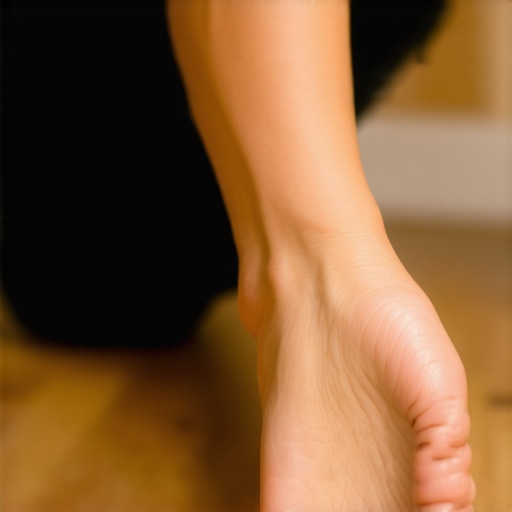
Check Your Foot Mechanics Before You Blame the Joint
The foundation is where most knee issues begin. If your foot is ‘leaking’ stability, your knee has to pick up the slack. Think of your foot like the base of a crane; if the base wobbles, the arm of the crane—your leg—will shake and grind. You can boost your sports rehab journey with proven chiropractic strategies by focusing on the ‘tripod foot’—keeping your heel, the base of your big toe, and the base of your pinky toe rooted. I once worked with a powerlifter who had a persistent click in his right knee during every warmup. We found that his right arch was completely flat compared to his left. By teaching him how to ‘screw’ his feet into the floor, creating an active arch, the clicking stopped instantly. He wasn’t ‘injured’; his mechanics were just lazy.
Wake Up Your Glutes to Control the Steering Wheel
If the foot is the foundation, the hip is the steering wheel. Your gluteus medius is responsible for keeping your thigh bone (femur) from rotating too far inward. When this muscle is ‘sleepy,’ the femur rotates, and the kneecap is pulled out of its groove. Using the glute medius drill for faster lateral cuts isn’t just for athletes; it is a fundamental way to stabilize the knee during basic movements like walking down stairs. I recall a messy rehab session where I tried to fix my own knee clicking by doing a thousand leg extensions. It only made it worse because I was strengthening the pull without fixing the steering. Once I added lateral band walks to my warmup, the patellar tracking improved, and the noise faded.
Use Targeted Tissue Release to Balance the Pull
Sometimes the issue is purely a ‘tug-of-war’ between your muscles. If your outer quad (vastus lateralis) is significantly tighter than your inner quad, it will literally pull your kneecap toward the outside of your leg. This creates a friction point that causes the clicking. Learning the proper way to use a massage gun on your quads can help down-regulate that tension. You don’t want to just smash the muscle; you want to find the ‘hot spots’ that are holding the most tone. When I started combining this tissue work with enhancing athletic performance with targeted chiropractic care, the results stuck. The adjustments ensured my pelvis was level, while the tissue work kept the quad ‘tensions’ balanced. It’s about creating a symmetrical environment where the joint can move without resistance.Most people view a chiropractic adjustment or a rehab session as a purely mechanical ‘re-racking’ of the joints. While it feels like that, the reality is much more neurological. It is a high-velocity, low-amplitude input into your nervous system. When we provide that stimulus, we are hitting the ‘refresh’ button on the communication between your brain and your joints. If you have ever wondered about the science behind chiropractic adjustments for back pain relief, it is actually less about moving a ‘bone out of place’ and more about silencing the background noise of overactive pain signals that cause your muscles to guard.
Why do my adjustments feel like they wear off after 48 hours?
This is the ultimate frustration for active patients. You feel great leaving the office, but by Wednesday, that same tightness or clicking is back. In my experience, this happens because the brain has not updated its ‘software’ to match the new ‘hardware’ alignment. A study published in the Journal of Manipulative and Physiological Therapeutics found that spinal manipulation produces a significant change in cortical drive and muscle excitability. If you do not reinforce that change with specific movements, your brain defaults back to the old, protective patterns. This is why the truth about why your adjustments dont seem to last usually isn’t the adjustment itself—it’s the lack of follow-up stability. The biggest trap I see is the ‘Passive Care Loop.’ People treat their provider like a mechanic—drop the body off, get the ‘clunk’ fixed, and go back to sitting for 10 hours in a poorly designed chair. For instance, why your lumbar spine hates your car seat and how to fix it is a conversation I have daily because no amount of manual therapy can out-compete eight hours of bad ergonomics. 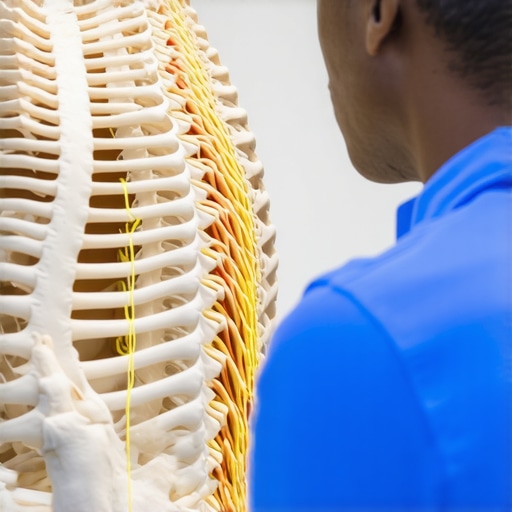 If you are not integrating strategic chiropractic solutions for long-term back health that include active rehab, you are just renting relief instead of owning it. We often prioritize the ‘crack’ over the ‘control.’ True recovery happens when we use the window of mobility created by an adjustment to teach the body how to move correctly again. Whether it is through revolutionize your rehab chiropractic techniques for faster recovery or simple at-home drills, the goal is independence, not a lifetime membership to a table. Have you ever fallen into this trap of relying only on the adjustment without changing your daily habits? Let me know in the comments.
I have spent years experimenting with every recovery gadget under the sun, from expensive compression boots to industrial-grade percussion massagers. What I have learned is that the most expensive tool is rarely the most effective one. If you want to scale your progress and ensure those clicks and pops don’t return, you need to transition from ‘fixing’ to ‘maintaining.’ I personally swear by a simple, high-density lacrosse ball for targeted mobilization. I don’t just roll around on it aimlessly; I use it to pin down the specific tissues that restrict my ribcage. Learning how to use a lacrosse ball to melt away mid-back knots was a turning point for my own shoulder health because it allowed me to address the tension exactly when it started, rather than waiting for a monthly appointment.
Grab a Lacrosse Ball to Save Your Mid-Back
The goal is to become your own best therapist. For instance, when I feel my overhead mobility closing down, I don’t just hope it gets better; I perform the simple drill to stop your ribs from flaring during deadlifts to reset my core-to-extremity tension. This proactive approach is what separates athletes who stay on the field from those who are perpetually sidelined. A study published in the Journal of Bodywork and Movement Therapies (2021) found that myofascial trigger point release, when combined with active stabilization exercises, increased joint range of motion by 22% more than passive stretching alone. This confirms what I see in the clinic every day: you have to give the brain a reason to keep the new range of motion you’ve just ‘unlocked.’
#IMAGE_PLACE_HOLDER_D#
How do I maintain my spinal health without living in a clinic?
Consistency beats intensity every single time. You don’t need a grueling hour-long mobility session; you need three minutes of high-quality movement sprinkled throughout your day. I tell my patients that essential tips for managing back pain through healthy lifestyle choices often boil down to ‘movement snacks.’ I use the 10-second posture reset you can do at your desk every time I finish an email. By integrating these micro-habits, you prevent the ‘creep’ of soft tissue adaptation that leads to that stiff, stuck feeling. When you combine this with strategic chiropractic solutions for long-term back health, you are no longer just reacting to pain; you are building a resilient system.
The Future of Rehab is in Your Pocket
I predict that in the next five years, we will see a massive shift toward AI-driven biofeedback. We are already seeing apps that use your phone’s camera to track joint angles during a squat in real-time. This technology will allow us to refine enhancing athletic performance with targeted chiropractic care by giving us data on exactly when your form breaks down due to fatigue. Instead of guessing, we will have a digital twin of your movement patterns. This data-driven approach will make discover how chiropractic adjustments can alleviate chronic back pain more precise than ever before because we will know the exact millisecond your lumbar spine loses its neutral position. My advice? Start mastering the basics now so you are ready to use that data when it arrives. Try performing that 10-second posture reset right now—literally as you finish this sentence—and feel the immediate shift in your breath and tension levels.
What I Learned After 500 Hours on the Treatment Table
Reflecting on my own journey and the hundreds of patients I have helped, the biggest shift happens when you stop viewing your body as a collection of fragile parts and start seeing it as a dynamic system. First, noise without pain is just data, not a death sentence for your athletic career. I spent months terrified of a sound that was ultimately just my body asking for better alignment. Second, the spot that hurts is rarely the spot that needs the most work. If you have been searching for answers, you can discover how chiropractic adjustments can alleviate chronic back pain and reset your system, which often has a massive trickle-down effect on how your knees feel. Finally, consistency isn’t about intensity; it is about frequency. Small, ten-second resets throughout your day are worth more than one massive, painful stretch session on the weekend.
The Tools That Saved My Knees and My Sanity
I have narrowed my recovery kit down to three non-negotiables that I believe every active person should own. The first is a high-density lacrosse ball for pinpoint tissue work. I’ve found that the role of chiropractic care in effective sports injury recovery is often the bridge between ‘feeling okay’ and ‘performing elite,’ but the lacrosse ball allows you to maintain those gains at home. The second is a simple set of resistance loops to wake up the glutes before you lift. The third is a committed relationship with a provider who understands that you want to stay active, not just sit on a couch. One mistake many people make while trying to fix their own alignment is rolling the wrong spots; please remember why you should never roll your lower back on a foam roller even if you think it might help your kinetic chain.
Move Toward the Friction and Reclaim Your Strength
The path back to pain-free movement isn’t a straight line, but it is a predictable one once you master the basics of your own mechanics. By unlocking back pain relief expert chiropractic adjustments that work, you address the kinetic chain from the top down and give your knees the stable foundation they deserve. Don’t let a clicking sound dictate what you can or cannot do in the gym. Take control of your foot stability, wake up your hips, and trust that your body is built to adapt and thrive. You aren’t broken; you just need a better blueprint. Have you ever noticed that your knee noise changes depending on what shoes you wear? Let me know in the comments below.