
I’ll never forget the morning I tried to “fix” my tight hips by doing the deepest lunge known to man. I was training for a local 5k, feeling like my legs were made of lead, and I thought, “If I just push a little further, that tightness will finally let go.” Instead, I felt a sickening thwack in my lower back and spent the next three days crawling to the bathroom. It was a classic rookie mistake. I was trying to help my psoas, but I was actually just shearing my lumbar spine. Most people treat their psoas like a stubborn rubber band that just needs more tension, but that’s exactly the wrong way to stretch your psoas. Today, I want to show you how to find relief without the risk. We’re going to fix your hip mobility while keeping your spine rock-solid.
Stop Cranking Your Lower Back to Fix Your Hips
Years ago, I thought “no pain, no gain” applied to flexibility. I’d lean so far forward in a lunge that my back arched like a scared cat. My chiropractor later pointed out that I wasn’t even stretching my hip; I was just hanging on my ligaments. It’s a trap many of us fall into. When the psoas is tight, it pulls directly on your vertebrae. According to research published in the Journal of Orthopaedic & Sports Physical Therapy, the psoas major has a massive influence on lumbar loading and stability. If you don’t stabilize the pelvis, you’re just inviting a disc bulge. Have you ever felt like your “hip stretch” was actually just making your lower back feel pinched or “stuck”?
Is stretching even the answer if it always hurts?
One of the biggest mistakes I made early on was ignoring my breathing and core tension. I used to hold my breath and grit my teeth, thinking I could “muscle” my way into flexibility. Now, I know that breathing through your belly is the only way to get the nervous system to let go of that muscle tension. If you’ve been struggling with what feels like chronic tight hamstrings or a constant ache in your low back, it’s time to stop the aggressive lunging and start being strategic. We need to master the hip hinge secret and proper pelvic positioning before we ever think about “going deep” into a stretch. This isn’t just about feeling loose; it’s about making sure your spine stays protected while you regain your range of motion.
Tuck Your Tailbone Like a Scared Dog
The secret to a safe psoas stretch isn’t about how far you can lean; it’s about the angle of your pelvis. Think of your pelvis as a bucket full of water. When your psoas is tight, it tips the bucket forward, spilling water out the front. To fix this, you have to perform a posterior pelvic tilt. I remember coaching a high school sprinter who was convinced he needed ‘deeper’ lunges. I had him drop into a half-kneeling position and simply tuck his tailbone under as if he were a dog that just got caught eating the Thanksgiving turkey. Within seconds, he felt an intense burn in the front of his hip without moving an inch forward. This simple shift is the foundation of strategic chiropractic solutions for long-term back health. If you skip the tuck, you’re just arching your back and compressing your facet joints. 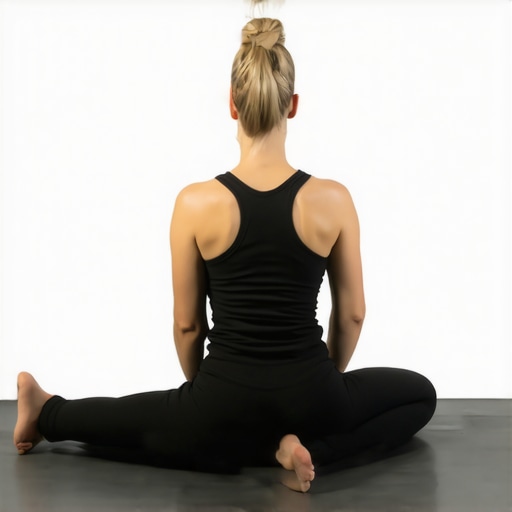
Keep the Movement Micro to Get Macro Results
Once you have the tuck, you only need to move forward about one or two inches. Most people try to lunge halfway across the room, which immediately breaks the pelvic position. When I finally stopped ‘lunging’ and started ‘shifting,’ my chronic morning back stiffness vanished. You want to feel a gentle pull, not a ripping sensation. This controlled range of motion is how how spinal alignment directly impacts your athletic performance. If you can’t maintain the tuck, you’re not stretching the muscle; you’re just pulling on the lumbar spine.
Squeeze the Glute to Force the Psoas to Relax
There is a biological cheat code called reciprocal inhibition. Basically, when one muscle contracts, its opposite muscle has to relax. Since the glutes and the psoas are opposites, squeezing your butt cheek on the stretching side forces the psoas to let go. I used to struggle with why your glutes won’t fire during your workout, but using them during a stretch actually ‘wakes’ them up. While you are in that tucked position, squeeze your glute as hard as you can for five seconds, then relax. You’ll find you can sink just a tiny bit deeper into the stretch without losing your spinal integrity.
Brace Your Abs as if a Toddler is About to Punch You
To keep your spine rock-solid, you need ‘the brace.’ I’m not talking about sucking your stomach in; I’m talking about creating 360-degree tension around your midsection. This protects the vertebrae while the hip flexor is being lengthened. Combining this with how chiropractic adjustments can help your breathing ensures that your diaphragm isn’t being used as a stabilizer instead of a breathing muscle. When I started bracing my core during hip work, the ‘pinchy’ feeling in my low back disappeared instantly. It turns out my back wasn’t weak; it was just unprotected. Using the hip hinge secret in conjunction with these micro-adjustments will redefine how your lower body feels during and after exercise.Most people assume their psoas is ‘short’ because they sit at a desk all day, but here is the contrarian truth: many of my patients actually have ‘long’ psoas muscles that are simply in a state of constant, protective tension. If your pelvis is already tilted too far forward—a common posture known as anterior pelvic tilt—the psoas is actually being pulled taut like a bowstring. When you try to stretch a muscle that is already overextended, your nervous system panics and tightens it even further to prevent it from snapping. This is a primary reason the truth about why your adjustments don’t seem to last for more than a few hours is often rooted in neurological guarding rather than a physical length issue. You aren’t dealing with a muscle that needs a hammer; you’re dealing with a brain that needs a safety signal.
Your Psoas Might Actually Be Too Long
When we talk about ‘tightness,’ we are often describing a sensation, not a measurement of tissue length. I’ve seen athletes with incredible range of motion who still feel ‘tight.’ This paradox occurs because the brain uses tension to create stability where it feels vulnerable. If your core is weak, your brain recruits the psoas to act as a secondary stabilizer for the spine. If you keep stretching that stabilizer away, the brain just clamps down harder the moment you stand up. This is why why stretching your hamstrings won’t fix your chronic tightness either—it’s the same protective loop. You have to prove to your nervous system that your spine is supported before it will let the psoas relax. 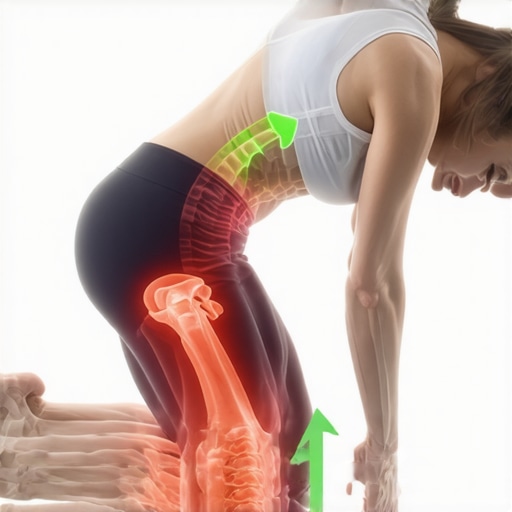
Why does your hip feel tighter after you just stretched it?
This is the classic sign of femoral acetabular impingement or a labral issue rather than a simple muscular tight spot. If you feel a sharp ‘pinch’ in the front of the hip crease during a lunge, stop immediately. You are likely jamming the head of your femur into the hip socket, irritating the joint capsule. According to research published in the Journal of Orthopaedic & Sports Physical Therapy, aggressive stretching in the presence of joint instability can actually increase the rate of labral wear and inflammation. It is vital to learn how to identify if your back pain is muscular or nerve related before you continue. If you are tugging on a nerve, your body will fight you every inch of the way.
The Dangerous Lunge That Shears Your Spine
One massive ‘oops’ I see in the clinic is the ‘sagging’ lunge. This is where you let your hips sink toward the floor and your lower back arch excessively. This doesn’t help your psoas; it just creates a shearing force on your L4-L5 discs. To get real results, you need strategic chiropractic solutions for long-term back health that focus on local stabilization. Without a stable spine, the brain will never grant you the permanent mobility you’re chasing. Understanding the science behind chiropractic adjustments for back pain relief shows us that resetting the joint’s position is what allows the muscle to finally stop overworking. Have you ever fallen into the trap of stretching a ‘tight’ muscle for weeks only to have it feel worse? Let me know in the comments below.
Stop Guessing With Your Recovery Tools
I’ve spent a small fortune on gadgets that promised to ‘release’ my psoas. Most were just glorified rolling pins that didn’t have the depth or the angle to actually make a difference. However, I eventually found that specificity wins every time. I personally use a psoas release tool—a hard, U-shaped device—that mimics the pressure of a manual therapist’s thumb. This isn’t just about the ‘feel’; it’s about reaching the iliacus and psoas major without bruising the organs in your abdominal cavity. If you aren’t ready to invest in a dedicated tool, a simple lacrosse ball can work, but you have to know how to use a lacrosse ball to melt away knots without irritating your femoral nerve. I recommend starting with the ball just inside your hip bone, using the ‘tuck and breathe’ method we discussed earlier to sink deep into the tissue. 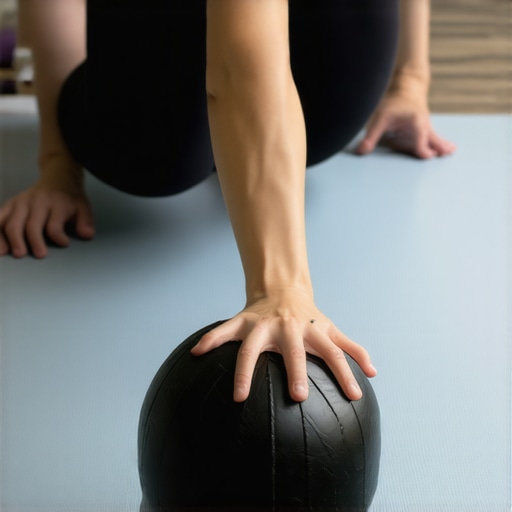
How do I keep my hips from locking up during the work week?
The reality is that one 10-minute session on Sunday won’t save you from 40 hours of sitting. Maintenance is about ‘greasing the groove.’ I keep a small yoga block under my desk to periodically perform the half-kneeling tuck throughout the day. This integrates the 5-minute mobility routine for desk workers with stiff hips into my actual workflow. Consistency is what signals the nervous system that it’s safe to stay loose. When I skip this for more than two days, I immediately feel my stride shorten and that familiar ‘tweak’ returning to my lower spine. You have to treat your mobility like dental hygiene—brushing once a month won’t prevent cavities, and stretching once a week won’t prevent a disc flare-up. Incorporating essential tips for managing back pain through healthy lifestyle choices like walking more frequently will do more for you than any single ‘magic’ adjustment.
Wearable Tech is the Next Frontier for Spine Safety
Looking ahead, I predict we are going to see a massive shift toward wearable sensors that provide real-time haptic feedback on pelvic tilt. Imagine a belt that vibrates the moment your psoas pulls you into an anterior tilt during a heavy squat or a long walk. This will take the guesswork out of boost your sports rehab journey with proven chiropractic strategies by providing objective data instead of relying on subjective ‘feel.’ Dr. Stuart McGill, a leading expert in spine biomechanics and author of Back Mechanic, notes that ‘the secret to a resilient back is maintaining a stiff core while allowing the hips to be the primary movers.’ This technology is finally catching up to this philosophy. I’m already experimenting with basic posture apps that use the phone’s camera to check my alignment, and the results are eye-opening. If you want to get ahead of the curve, start by learning how to safely adjust your own posture throughout the day using visual cues in your environment. My advanced tip for you today: next time you’re stuck in a meeting, try the ‘glute squeeze’ trick I mentioned while sitting. It sounds silly, but it keeps the psoas from entering that ‘hibernation’ mode that leads to a painful wake-up call when you finally stand up. This proactive approach is the core of strategic chiropractic solutions for long-term back health.
The Hard Lessons That Changed How I Move
One major lightbulb moment was realizing that identifying if your back pain is muscular or nerve related is the first step toward any real change. If you feel a ‘zing’ or ‘numbness’ during a stretch, your nervous system is actually sounding an alarm, and pushing further will only cause more guarding. Another insight involves the full-body connection: why your clicking jaw is linked to your neck alignment—and yes, even your hip tension. Tension is systemic, and you cannot expect your psoas to fully relax if your jaw is clenched or your neck is misaligned. Finally, I learned that the truth about why your adjustments don’t seem to last is often because we fail to reinforce that new range of motion with stability work like the glute squeeze and core brace. Stability is what keeps the mobility permanent.
My Daily Toolkit for Better Alignment
I personally swear by the book Back Mechanic by Dr. Stuart McGill; it is the ultimate resource for anyone wanting to grasp the science behind chiropractic adjustments for back pain relief and spine hygiene. For daily tissue work, I keep a high-density lacrosse ball in my gym bag, but I only use it after mastering how to use a lacrosse ball to melt away knots without irritating the nerves. Lastly, for the busy workweek, the 5-minute mobility routine for desk workers with stiff hips has been my non-negotiable tool for preventing the psoas from locking up during long hours at the computer.
Move Like You Mean It Again
You do not have to live with the constant sensation of your lower back being ‘held hostage’ by tight hips. By shifting your focus from aggressive, spine-shearing lunges toward strategic chiropractic solutions for long-term back health, you give your body the safety signals it needs to release old tension. Your hips were designed to be powerful movers and your spine was designed to be a stable anchor. When they work together, the pain finally fades away. Have you ever felt that sharp ‘pinch’ in the front of your hip crease during a lunge? Let me know in the comments below.