
I was lying flat on my living room floor, staring at a crack in the ceiling, with a bag of frozen peas wedged under my lumbar spine. I’d just tweaked my back trying to move a heavy oak dresser, and like a “good” patient, I reached for the cold. I thought I was doing everything right. But three days later, I was stiffer than a board and my recovery felt like it was moving in slow motion. That was my “lightbulb moment.” I realized that for years, I had been treating my body like a cooler instead of a living, breathing machine that needs blood flow to heal. If you’re currently clutching an ice pack hoping for a miracle, we need to talk. We’re going to dive into why that sub-zero habit might be the very thing keeping you on the sidelines, and I’ll promise you this: we are going to get you moving again without the freezer burn.
Stop Chilling the Healing Process
The old-school RICE protocol—Rest, Ice, Compression, Elevation—is practically a religion in sports rehab circles. I followed it religiously for years. But here’s the kicker: even the man who coined the term RICE, Dr. Gabe Mirkin, publicly recanted his advice back in 2015, noting that ice actually delays recovery by preventing the release of IGF-1. When you freeze your lower back, you aren’t just numbing the pain; you are essentially putting a “stop work” order on your body’s internal repair crew. Inflammation is the first stage of healing. It brings the white blood cells and the nutrients your tissues desperately need. By forcing those blood vessels to constrict, you’re creating a traffic jam. I learned this the hard way after a particularly nasty flare-up where the science behind chiropractic adjustments finally clicked for me: movement and blood flow beat stagnation every single time. Have you ever felt like your back gets tighter the more you ice it? You aren’t alone, and I’d love to hear your story in the comments.
Wait, isn’t ice supposed to bring the swelling down?
Yes, it does. But “down” isn’t always “gone.” Swelling is part of the inflammatory cascade. When we ice, we stop the lymphatic system from draining the debris from the injury site. Think of it like this: if you want to clean a dirty floor, you don’t freeze the mop water; you keep it moving. Instead of reaching for the freezer, I’ve found that focusing on essential tips for managing back pain that involve gentle mobility and heat works much better for long-term health. I used to think heat was only for “old” injuries, but the truth is you should often stop icing new injuries almost immediately if you want to see real progress. When I finally made the switch to active recovery and stopped treating my back like a frozen steak, my “week-long” episodes started resolving in forty-eight hours. It’s time to rethink the ice pack and look toward strategies like using heat instead to actually encourage your body to do its job.
Flip the Switch from Preservation to Performance
To get off the floor and back into your life, you have to treat your injury like a plumbing issue rather than a frozen dinner. When you ice, you are effectively turning off the tap and letting the dirty water sit in the pipes. To recover, we need to flush the system. This starts with gentle, non-threatening movement. Think of your joints as hinges that have started to rust; if you leave them still and cold, that rust sets in. If you move them slightly, you generate heat and friction that keeps things fluid. I remember a rainy Tuesday last October when I felt that familiar, sickening ‘pop’ in my lower back during a set of deadlifts. In the past, I would have spent the evening immobilized with a bag of ice. This time, I chose a different path. I spent fifteen minutes walking at a very slow pace on a flat surface, then moved to the floor to work on how to breathe through your belly for instant lower back relief. By the next morning, the sharp ’emergency’ pain had subsided into a manageable dull ache. Had I iced it, I would have been locked in a protective spasm for at least three days.
Turn Up the Heat to Flush Out Waste
If you are past the first few hours of an acute tweak, you should stop icing new injuries and try this instead: apply moist heat for 15-20 minutes. Heat is a vasodilator, meaning it opens up the ‘highways’ of your circulatory system. It invites fresh, oxygenated blood to the area and helps the lymphatic system carry away the byproducts of tissue damage. It’s the difference between trying to bend a frozen garden hose and one that’s been sitting in the sun. 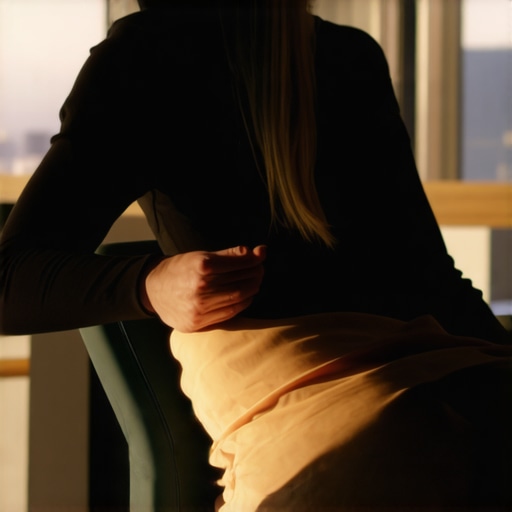
Reset the Mechanics with an Adjustment
Sometimes the reason your back feels ‘stuck’ isn’t just about the muscles; it’s about the communication between your brain and your spine. When a joint is restricted, your nervous system goes into a high-alert state, tightening everything around it to prevent further ‘damage.’ This is where unlocking back pain relief expert chiropractic adjustments that work becomes your best tool. An adjustment provides a quick, controlled stimulus to those restricted joints, essentially hitting the ‘reset’ button on your nervous system. It tells your brain that it’s safe to let those muscles relax. I’ve seen athletes go from hobbling into a clinic to walking out with a 50% increase in range of motion just by addressing these mechanical blocks. Once the joint moves, the blood flows, and the healing truly begins.
Master the Hip Hinge to Protect the Work
Once you’ve used heat and movement to calm the area, you have to move correctly to keep it that way. Most people aggravate their back because they round their spine every time they reach for a coffee mug or tie their shoes. You need to learn the hip hinge secret for people with chronic lumbar issues. This technique shifts the load from your vulnerable spinal discs to your massive, powerful glute muscles. When I finally mastered this, my flare-ups didn’t just get shorter—they stopped happening altogether. You are essentially building a biological corset that protects your spine while it heals. Combine this with a solid understanding of the science behind chiropractic adjustments, and you stop being a victim of your ‘bad back’ and start becoming the architect of your own recovery.The biggest misconception I see—and I fell for it myself for years—is the idea that a joint is literally “out of place” like a misplaced Lego brick. People often walk into a clinic saying their L5 is out and just needs to be popped back in. But the human body is remarkably resilient. If your spine were truly dislocated, you would be in an emergency room, not a chiropractic office. The real power behind the science behind chiropractic adjustments is neurophysiological rather than just mechanical. We aren’t simply moving bones; we are providing a high-velocity, low-amplitude stimulus to the nervous system. According to a landmark study by Bialosky et al. (2009), the clinical benefits of spinal manipulation result from a complex interaction of neurophysiological effects. This is why you feel that immediate “release”—your brain just received a massive data update that the area is safe to move again.
Why do your adjustments seem to wear off so fast?
This is the question that separates long-term recovery from a lifetime of clinic visits. If you find yourself needing a “crack” every three days just to function, you aren’t actually rehabilitating; you are chasing a temporary neuro-chemical high. The reason for this cycle is often a lack of stability. If we open up a joint’s range of motion but you do not have the motor control to support it, your brain will tighten those muscles right back up to protect you. This is where most people fail in the role of chiropractic care in effective sports injury recovery. You must pair the adjustment with specific loading and movement patterns. Without that secondary step, you are just a loose hinge on a shaky doorframe. It is worth investigating the truth about why your adjustments don’t seem to last to bridge that gap between temporary relief and permanent structural change. 
The Stretching Trap That Keeps You Stiff
Here is a contrarian truth: most people with lower back pain should stop stretching their hamstrings immediately. I know it sounds counterintuitive. Your back hurts, your hamstrings feel like tight guitar strings, so you naturally try to stretch them out. But often, that “tightness” is actually protective tension because your pelvis is unstable or your nerves are being tugged. When you stretch a nerve that is already irritated, you actively increase the inflammation. I have seen countless patients realize that why stretching your hamstrings won’t fix your chronic tightness is because the issue is originating from the lumbar spine or a core that isn’t managing intra-abdominal pressure correctly. Instead of reaching for your toes, you should focus on how your breathing mechanics are sabotaging your core strength. Have you ever fallen into this trap? Let me know in the comments. To truly revolutionize your rehab, you have to address the “Oops” factors of modern life, like the glute amnesia caused by long-term sitting. By adopting strategic chiropractic solutions for long-term back health, you transition from being a passive patient to a high-performer who understands how to maintain their own equipment.
Stop Being a Passive Patient and Start Tuning Your Own Machine
I’ve spent thousands of dollars on specialized gadgets, massage guns, and ergonomic chairs, but I’ve learned that the most effective tools for long-term health are usually the simplest. The goal of any recovery plan isn’t just to get out of pain—it’s to build a body that doesn’t break every six months. I personally carry a lacrosse ball in my gym bag everywhere I go. It is the single most effective tool for self-myofascial release, specifically when you learn how to use a lacrosse ball to melt away mid-back knots that accumulate from hours of computer work. However, tools are useless without a strategy. You need to transition from reactive care to strategic chiropractic solutions for long-term back health. This means understanding that your spine is a dynamic system. As Dr. Stuart McGill notes in his seminal work Back Mechanic, the goal of rehabilitation isn’t just to remove pain, but to build enough ‘super-stiffness’ in the core to allow the spine to handle unexpected loads without buckling.
How do I keep my spine healthy between office visits?
Maintaining the progress we make in the clinic happens in the mundane moments of your day. It’s about how you sit, how you sleep, and how you drive. For instance, I spent years wondering why my back flared up after every road trip until I learned how to optimize your car seat for lumbar support. It’s a five-minute fix that changes your entire spinal load during long commutes. Similarly, you spend a third of your life in bed; if you aren’t checking the 3 signs your mattress is destroying your spinal alignment, you are fighting an uphill battle every single morning. 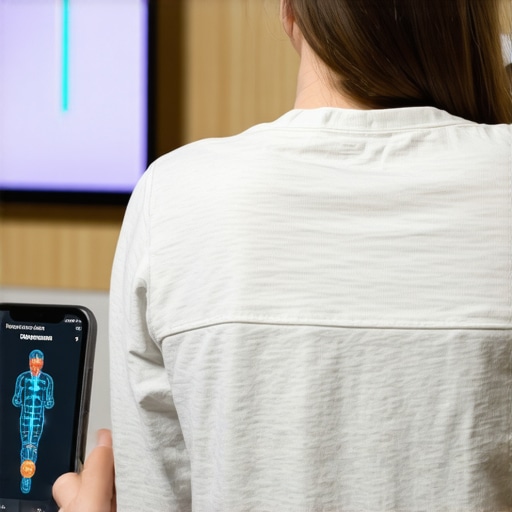
The Future of Rehab Lives in Your Pocket
I predict that within the next five years, the biggest trend in sports rehab will move away from physical clinics and toward real-time biofeedback. We are already seeing the rise of wearable sensors that track pelvic tilt and spinal curvature in real-time. This shift will allow us to boost your sports rehab journey with proven chiropractic strategies that are data-driven rather than based on ‘how you feel’ that day. Until that tech is perfected, your best bet is to master the basics of essential tips for managing back pain through healthy lifestyle choices. My advanced tip for you today: Try performing the ‘McGill Big 3’ core routine (the bird-dog, side plank, and modified curl-up) every single morning for seven days. You’ll likely find that your back feels more robust and less ‘fragile’ than it has in years. When you combine this internal stability with professional care, you stop being a victim of your biology.
What I Finally Figured Out About Chronic Stiffness
After years of lying on ice packs and hoping for a miracle, I had several lightbulb moments that changed how I view my body. First, I realized that pain isn’t an enemy to be silenced, but a messenger telling me that my movement patterns were broken. I used to think a “tweak” meant I was fragile, but the science behind chiropractic adjustments taught me that my spine is remarkably resilient when it has the right neurological input. Second, I discovered the “Stretching Trap.” I spent years trying to loosen up my legs, only to find out that stretching your hamstrings won’t fix your chronic tightness if your pelvis is fundamentally unstable. Finally, I learned that recovery is active, not passive. Waiting for the pain to go away while staying still is just an invitation for rust to set in.
The Toolkit I Use to Keep My Spine Happy
If you are ready to move away from the freezer and back into the gym, here are the resources I trust implicitly. I never travel without a simple lacrosse ball; knowing how to use a lacrosse ball to melt away mid-back knots has saved me from dozens of office-related flare-ups. For those looking for a long-term plan, I always point people toward strategic chiropractic solutions for long-term back health rather than just chasing symptoms. #IMAGE_PLACEHOLDER_E# I also highly recommend the work of Dr. Stuart McGill, specifically his “Big 3” routine, which builds the internal corset your spine needs to handle real-world loads. These tools shift the power back to you, the patient, rather than leaving you dependent on a bag of frozen peas.
The Future of Your Back Starts Today
You don’t have to be a victim of a “bad back” forever. By choosing blood flow over stagnation and movement over immobilization, you are giving your body the environment it needs to thrive. It is time to revolutionize your rehab and start treating your spine like the high-performance machine it is. When you combine proper mechanics with chiropractic adjustments that reset your nervous system, the results aren’t just temporary—they are life-changing. Have you ever felt like your back actually got tighter the more you iced it? Let me know your experience in the comments below!