
I’ll never forget the morning I tried to step off a curb and my left knee simply gave out. It wasn’t a pop or a snap; it was a searing, white-hot friction that radiated from my hip down to my shin. I spent the next three miles limping home, convinced my running days were over. Like any good DIY athlete, I grabbed the densest, knobbiest foam roller I could find and went to war with my leg. I thought if I could just break up the scar tissue, I’d be back on the trail by Monday. I was so wrong. In fact, that specific mistake—rolling directly on the painful spot—is why most people never actually fix their lateral knee pain. Today, I’m going to share the lightbulb moment that changed my recovery forever and show you how to get back to your miles without the agony. [image_placeholder]
Stop Brute-Forcing Your Way Through Knee Pain
For the longest time, I believed the lie that more pain equals more recovery. I’d grit my teeth, roll right over that tender bone on the side of my knee, and wonder why I was limping even worse the next day. It took a session with a specialist to realize that the Iliotibial (IT) band isn’t just a muscle you can tenderize like a steak. It’s a thick, fibrous piece of connective tissue. According to research from Harvard Medical School, the IT band is so incredibly strong that it requires massive amounts of force—far more than a foam roller provides—to actually stretch it. My lightbulb moment came when I stopped attacking the symptom and started looking at the neighbors. If you’ve ever wondered why your knee clicks every time you squat, you’re likely dealing with the same tension issues I was. Today, I want to show you how to bypass the agony and use that roller to actually release the muscles pulling on the band, rather than the band itself. Have you ever spent twenty minutes on a roller only to feel stiffer than when you started? It’s a frustrating loop, but we’re breaking it today.
Is Grinding Your IT Band Actually Helping?
The short answer is: probably not in the way you think. When I first started my sports rehab journey, I treated my foam roller like a steamroller. I ignored the fact that the IT band sits right over the lateral femoral epicondyle—a fancy word for the bony part of your outer knee. Rolling over that bone just creates inflammation. The real secret to the correct way to use a foam roller on your it band is focusing on the TFL (tensor fasciae latae) and the glutes. These are the engines driving the tension. By the way, if you’re also struggling with other stiff areas, you might find that managing back pain through healthy lifestyle choices often involves this same logic: stop poking the fire and start looking for the gas leak. In this case, the gas leak is usually a tight hip or a weak glute that’s forcing the IT band to do work it was never meant to do.
Target the Tensioners Not the Tissue
To fix the friction at your knee, you have to stop looking at the knee. Think of your IT band like a guitar string. If the string is tuned too high and is about to snap, you don’t fix it by rubbing the middle of the string; you turn the tuning pegs at the headstock. Your hip muscles—specifically the Tensor Fasciae Latae (TFL) and the Gluteus Medius—are the tuning pegs for your IT band. When these get locked up, they pull the band taut, which then grinds against your knee bone. This is a foundational concept when you aim to boost your sports rehab journey with proven chiropractic strategies. Focus on the attachments, not the bridge.
Find the Pocket Muscle
The TFL is a tiny muscle that packs a massive punch. It sits right where your front pocket would be. To hit this, don’t lie flat on your side. Instead, lie on the roller and tilt your body forward about 45 degrees. I remember the first time I found this spot; I was shimmying around like a clumsy seal, and suddenly I hit a point that felt like a hot wire. It was intense, and my leg actually kicked out involuntarily. But after breathing through the discomfort for sixty seconds, I stood up and the ‘snapping’ feeling in my knee had vanished. This kind of targeted work is more effective than any generic stretch, similar to how the 5-minute mobility routine for desk workers with stiff hips targets specific deep-seated tension. 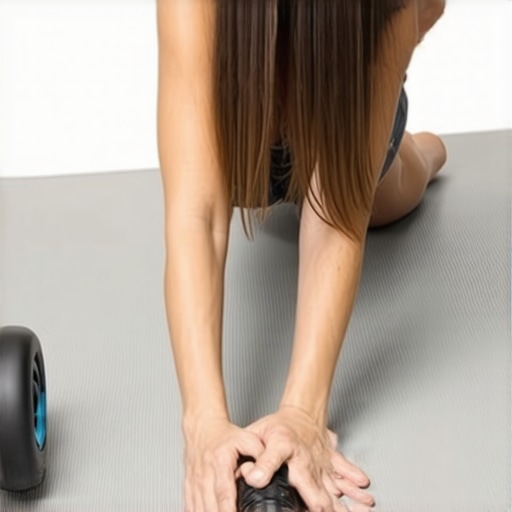
Unstick the Lateral Quad
One of the biggest reasons the IT band feels ‘tight’ is because it’s actually stuck to the muscle underneath it—the vastus lateralis, or your outer quad. These two tissues should slide past each other like silk. When they get ‘glued’ together with adhesions, the band cannot move freely. Instead of rolling the band itself, roll the very edge of the quad where it meets the band. Use short, cross-friction strokes to break that bond. If you find this too painful with a roller, you might find relief by learning the proper way to use a massage gun on your quads to pin and stretch the tissue.
Reactivate Your Lateral Stabilizers
If your hip isn’t doing its job, the IT band has to work overtime to stabilize your leg. This is usually a sign of ‘sleepy glutes.’ When I was recovering, I realized I was rolling my legs for an hour a day but never actually strengthening my hips. The moment I started focusing on glute activation, the knee pain stayed away for good. If you’ve noticed why your glutes won’t fire during your workout, you’re essentially leaving your knee unprotected. Strengthening the gluteus medius ensures the IT band doesn’t have to act as a primary stabilizer.
Check the Control Center
Finally, remember that your hips and legs take their orders from your lower back. If your pelvis is tilted or your spine is out of alignment, the tension in your legs will never truly balance out. This is why understanding how spinal alignment directly impacts your athletic performance is non-negotiable. A misaligned pelvis can ‘lengthen’ one leg, putting a permanent stretch on that IT band that no amount of rolling will fix. Integrating these steps with essential tips for managing back pain through healthy lifestyle choices creates a holistic environment for recovery.
Stop Chasing the Symptom and Start Challenging the System
In my early days of rehab, I was a devotee of the ‘rest and ice’ church. I thought if I just froze the side of my knee long enough, the inflammation would vanish. But here is the contrarian truth: for many athletes, you should stop icing old injuries and use heat instead. Chronic lateral knee pain isn’t usually an acute inflammatory event; it’s a mechanical friction problem caused by poor loading. By icing it constantly, you’re actually slowing down the metabolic waste removal in the area. The real ‘oops’ factor I see most often is athletes trying to aggressively stretch the IT band itself. You physically cannot stretch this tissue—it’s more like a steel cable than a rubber band. When you yank on it, you’re often just irritating the bursa underneath. Instead, you need to revolutionize your rehab with chiropractic techniques for faster recovery that address the neurological tone of the muscles pulling on that cable.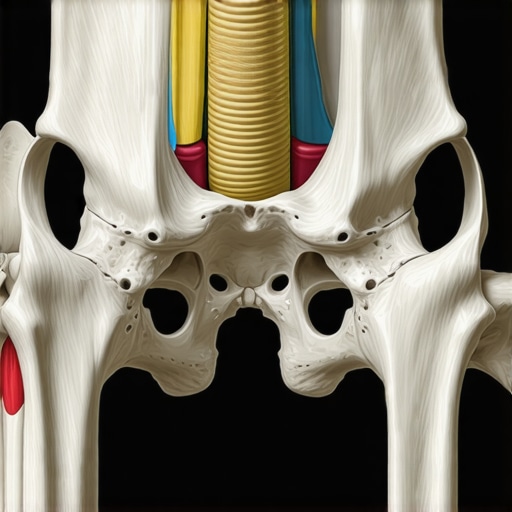
Why Does My Adjustment Only Last Two Days?
This is the most common frustration I hear from people who have graduated beyond the basic foam roller. They get an adjustment, feel incredible for 48 hours, and then the ‘clicking’ returns. If you’ve wondered about the truth about why your adjustments dont seem to last, the answer usually lies in proprioception and neural tension. Your brain has ‘mapped’ your tight hip as the new normal. A study published by Falvey et al. in the Journal of Science and Medicine in Sport highlights that the IT band is firmly attached to the femur along its entire length, meaning it cannot slide or stretch independently like a muscle. This implies that the ‘tightness’ you feel is actually your nervous system keeping the TFL in a state of high tension to protect a perceived instability in your pelvis. To make a change stick, you must pair the adjustment with specific motor-control drills that prove to your brain the area is safe.
Ditch the Passive Fix and Reset Your Pelvic Shield
If you’re only focused on the foam roller, you’re ignoring the command center. We know that how spinal alignment directly impacts your athletic performance isn’t just about ‘straightening’ things out; it’s about clearing the interference so your glutes can actually fire. When your pelvis is out of sync, your body uses the IT band as a secondary stabilizer. It’s a backup system that was never meant to be the primary. This is a core pillar in the role of chiropractic care in effective sports injury recovery. You aren’t just fixing a knee; you are recalibrating the entire kinetic chain from the lower back down. Have you ever fallen into the trap of thinking a single stretch would solve a months-long injury? Let me know in the comments, and let’s talk about the specific plateau you’re hitting.
Stop Treating Symptoms and Start Mastering Your Tools
To move beyond the cycle of temporary relief, you need to be surgical with your equipment. A foam roller is a blunt instrument, but for the deep-seated tension in the TFL, I always reach for a lacrosse ball. I keep one in my car and one in my gym bag because 120 seconds of targeted pressure on that ‘pocket muscle’ can prevent a whole weekend of limping. If you have ever learned how to use a lacrosse ball to melt away mid-back knots, you already know the power of pinpoint pressure. By applying this same precision to your hip, you are literally telling your nervous system to stand down. For those days when the tension feels broader, I switch to my percussion massager, making sure I follow the proper way to use a massage gun on your quads so I don’t accidentally beat up the IT band itself. 
How can I keep my lateral knee pain from returning every time I increase my mileage?
Maintenance isn’t just about rolling; it’s about the strategic chiropractic solutions for long-term back health that keep your pelvis level. Once you’ve cleared the initial pain, you have to reinforce the new movement patterns. I’m a huge believer in the work of Dr. Stuart McGill, who notes in his clinical research that spinal stability provides the anchor for hip power. If your core is ‘leaky,’ your IT band becomes the emergency brake. This is why enhancing athletic performance with targeted chiropractic care is such a game-changer; it ensures your anchor is solid. I personally spend five minutes every morning on a ‘dead bug’ variation to wake up my deep core before my feet even hit the pavement.
The Future of Injury Prevention is Wearable Biomechanics
Looking ahead, I suspect we are moving away from the ‘wait until it hurts’ model of sports rehab. I predict we’ll soon see integrated wearable tech in our running tights that monitors glute activation in real-time, vibrating the moment our gait shifts into an IT-band-straining pattern. Until then, you are your own best sensor. Integrating essential tips for managing back pain through healthy lifestyle choices—like avoiding long periods of sitting that ‘turn off’ your glutes—will do more for your knees than a thousand hours of icing. If you want to revolutionize your rehab with chiropractic techniques for faster recovery, stop looking for a finish line. Start looking for a rhythm that works for your body. Try this today: before your next run or workout, spend just 60 seconds on each hip with a lacrosse ball and see if that ‘clicking’ disappears during your warm-up.
The Mistakes That Kept My Knee Clicking for Months
Reflecting on my recovery journey, I realized that my biggest hurdle wasn’t the injury itself—it was my obsession with the “sore spot.” I spent months trying to flatten a “knot” that was actually just a signal from my brain. One major realization was that my lateral knee pain was often a byproduct of a lazy hip. If you aren’t waking up those stabilizers, the band will always be under tension. Another insight is that we often ignore the kinetic chain; sometimes the real reason your sciatica flares up when you sit is the same reason your knee hurts when you run—compressed nerves and poor pelvic posture. I also learned that consistency beats intensity. Five minutes of targeted work is better than an hour of aggressive, painful rolling once a week.
My Go-To Tools for Staying Trail-Ready
I’ve narrowed my recovery kit down to three non-negotiables. First, the lacrosse ball is king for deep tissue work in the hips. If you have mastered how to use a lacrosse ball to melt away mid-back knots, you can apply that same precision to your TFL and glutes for massive relief. Second, I rely on the role of chiropractic care in effective sports injury recovery to ensure my pelvis and spine are actually aligned. Without a level foundation, everything else is just a temporary patch. Finally, I follow essential tips for managing back pain through healthy lifestyle choices, such as using a standing desk or active sitting, to keep my hips from locking up during the workday.
Take Your First Step Toward Lasting Relief
Recovering from lateral knee pain isn’t about being the toughest person in the gym; it’s about being the smartest. You have the tools now to stop attacking the symptom and start addressing the system. Don’t be afraid to take a few days off the pavement to focus on your “tuning pegs”—your hips and your spine. When you return, you’ll find your stride is smoother, your power is higher, and most importantly, that nagging click is gone. Have you ever noticed your knee pain gets worse after a long day of sitting at your desk? Let me know in the comments, and let’s figure out your next move together.