
I woke up last Tuesday feeling like a rusty door hinge that had been slammed shut. You know that feeling? You try to glance at the clock, and a sharp, electric jolt shoots from the base of your skull straight into your trap. I sat there, paralyzed, mouth slightly agape, wondering if I’d somehow wrestled a bear in my sleep or if my pillow had finally conspired against me. It wasn’t just a little ache; it was that visceral, “don’t-move-an-inch” kind of pain that makes you question every life choice you’ve made. My first move was the classic one, the one we’ve all been conditioned to do: I grabbed a bag of frozen peas from the back of the freezer and strapped it to my neck with a dish towel for nearly an hour. Big mistake. Huge. I ended up stiffer than a frozen board, and by lunchtime, I couldn’t even turn my head to check my blind spot while driving. It took me twice as long to get back to my normal routine because I was literally freezing my muscles into a state of permanent contraction. Today, I’m going to walk you through exactly why that ‘ice-first’ instinct is often the wrong call for neck issues.
Stop Freezing Your Neck Into a Statue
We’ve been told since little league that ice is the holy grail for any injury. “Ice it down,” they say, as if the cold is some magical eraser for pain. But here is the cold, hard truth: ice is a powerful vasoconstrictor. It shuts down blood flow and slows down the metabolic activity in the area. While that’s absolutely fantastic if you just rolled your ankle and it’s swelling like an overripe plum, your neck stiffness is often a completely different animal. Most of the time, that “stuck” feeling isn’t a massive inflammatory event; it’s your muscles guarding or going into protective spasm to keep your head from moving too far. When I iced my neck for an hour, I was essentially telling those already tight muscles to seize up even harder. If you’ve been struggling with this, you might even find that the 2-minute drill to stop a tension headache in its tracks works better than any ice pack ever could. The goal isn’t just to numb the area; it’s to restore movement. I learned the hard way that why icing your lower back might be slowing down recovery also applies directly to your cervical spine. If you don’t get the blood moving, the waste products from the muscle spasm just sit there, making you feel miserable for longer. [IMAGE_PLACEHOLDER]
Will heat actually make my inflammation worse?
This is the big one that keeps everyone up at night. Everyone is terrified that applying heat will “feed the fire” of inflammation and turn a little ache into a full-blown emergency. But according to recent research published in the British Journal of Sports Medicine, the traditional RICE (Rest, Ice, Compression, Elevation) method is being phased out for the PEACE & LOVE protocol, which emphasizes movement and blood flow over prolonged icing for soft tissue injuries. For chronic stiffness or that annoying “crick” in the neck, heat is often the key to melting that tension away. Heat brings fresh, oxygenated blood to the area, which helps the tissues relax, allows for better range of motion, and actually starts the real healing process rather than just pausing it. I used to be a “cold-pack-only” purist, but that’s a trap I don’t want you to fall into. If you’ve had an injury for more than 48 hours, or if the pain is purely a matter of stiffness, you really need to consider why you should stop icing old injuries and use heat instead. It’s a game changer for your morning range of motion. Have you ever felt like you were doing the “right” thing by icing, only to find yourself more restricted and frustrated the next day? Drop a comment or reach out—I’d love to know if I’m the only one who fell for the “frozen pea” trap. We need to look at the long game, because the truth about why your adjustments dont seem to last often comes down to how you treat your muscles in your own living room between visits.Once you’ve put down the frozen peas, the real work begins. Think of your neck like a rusted gate hinge; if you just yank it open, you’ll chip the paint or worse. You need to lubricate the joint. In human terms, that means blood flow. I remember a particularly nasty Tuesday where I was stuck in what I call lighthouse mode—I couldn’t move my neck at all, so I had to rotate my entire torso just to see my computer screen. I tried to force a stretch, which felt like pulling a tight rubber band to its breaking point. It was a total disaster. The moment I switched to a moist heating pad and gentle, isometric contractions, the muscle guarding reflex finally let go and I could actually breathe again.
Get the Blood Flowing Instead of Chilling It Out
Your first mission is to increase the temperature of the tissue to make it pliable. Use a moist heating pad for about 15 to 20 minutes. Moist heat is superior because it penetrates deeper than the dry heat from an electric pad, reaching those stubborn deep-layer stabilizers. This isn’t just about comfort; it’s about neurochemistry. Heat signals the brain to dial down the sympathetic nervous system, which is currently screaming at your muscles to stay tight. While you’re under that heat, don’t just sit there like a statue. Start with tiny, pain-free micro-movements to show your brain that it is safe to move again. If you’ve ever wondered about the truth about cracking your own neck at your desk, it’s usually a sign that you’re seeking a quick fix for a deeper lack of functional mobility. 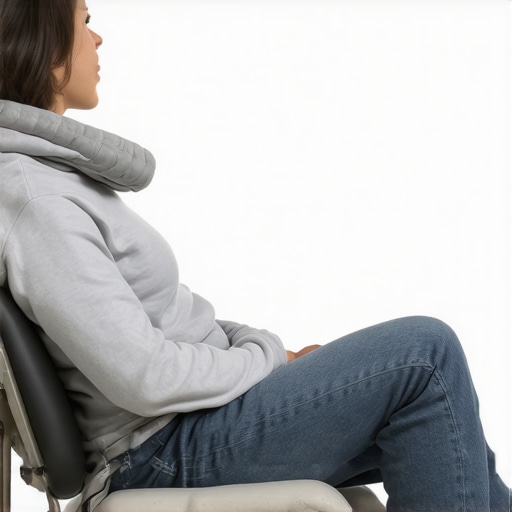
Engage the Muscles Without Moving the Bone
Instead of standard stretching, which often triggers a stretch reflex that makes the spasm worse, try isometric holds. Place your palm against your forehead and gently push your head into your hand without actually moving your neck. Hold for five seconds and release. This wakes up the deep stabilizers of the cervical spine. It’s a technique I used during that lighthouse incident, and within ten minutes, I had regained about 30% of my range of motion without any sharp pain. We often forget that how a weak core actually causes chronic neck tension means your neck is often overworking to compensate for a lazy midsection that isn’t supporting your trunk.
Reset Your Foundation From the Shoulders Down
You cannot fix a neck issue if your shoulders are rolled forward like a gargoyle. Your neck sits on your upper back, so if the base is tilted, the tower will eventually lean. Incorporate the 10-second posture reset you can do at your desk every thirty minutes to ensure you aren’t undoing all your heat-therapy progress. When I was recovering from my own neck lock-up, I realized my monitor was sitting three inches too low, forcing my chin down into a permanent slump. By simply adjusting my eye line and performing the 3-exercises that fix a forward head posture, I stopped the cycle of tension before it could start the next morning. It’s about building a sustainable environment for your spine rather than just reacting to the pain when it becomes unbearable. Stop fighting your body and start negotiating with it.Most people walk into a clinic thinking their vertebrae are like loose bricks that just need a quick shove to get back in line. This is the biggest misconception in modern rehab. If your bones were truly ‘out of place’ as often as people claim, you’d be in the emergency room, not a chiropractor’s office. The ‘out’ feeling is usually a joint that has lost its full range of motion, causing the surrounding nerves to fire off alarm bells. When we perform an adjustment, we aren’t just ‘fixing’ a mechanical alignment; we are hacking the nervous system. According to a study published in the Journal of Bodywork and Movement Therapies, spinal manipulation actually causes a global decrease in muscle inhibition—meaning it turns your muscles back ‘on’ by clearing the static in the communication lines. This is why how spinal alignment directly impacts your athletic performance isn’t about moving bone; it’s about optimizing electricity. The biggest trap I see? People becoming ‘adjustment junkies’ who chase the sound rather than the function. If you’re constantly trying to pop your own back, you might be creating hypermobility in some segments while the actual problem joint remains stuck. It’s a vicious cycle that makes the truth about why your adjustments dont seem to last a frustrating reality.
Does a lack of sound mean the adjustment failed?
This is the advanced nuance most people miss. That ‘crack’ is just gas bubbles popping in the joint fluid, a phenomenon called cavitation. It feels great, sure, but the neuro-reflexive benefits happen regardless of the acoustics. If you force the sound, you’re likely just shearing through healthy tissue rather than targeting the restricted segment. I’ve seen patients who think a ‘quiet’ visit was a waste of time, but then realize two days later their chronic hip ache is gone. You have to stop listening with your ears and start listening with your movement patterns. Understanding the real difference between a chiropractor and a pt often comes down to this: we look at the neurological input first. If you’re still struggling to figure out why the pain persists, you need to learn how to identify if your back pain is muscular or nerve related because the treatment for a pinched nerve is worlds away from a simple muscle knot. Have you ever felt like you needed a ‘pop’ just to feel normal again? Let me know in the comments—I’m curious how many of you are stuck in that ‘self-cracking’ loop.Once you break the habit of chasing that addictive ‘pop,’ you realize that the real victory happens in the 167 hours a week you aren’t on my table. I’ve spent years testing every gadget from high-end percussive massagers to questionable ‘alignment’ shirts, and the truth is often much simpler and cheaper. My daily kit revolves around three non-negotiables that help maintain strategic chiropractic solutions for long-term back health without needing a PhD to operate.
The Low-Tech Tools That Actually Save My Spine
The absolute king of my gym bag is a standard, high-density lacrosse ball. Why? Because foam rollers are too broad for the complex anatomy of the upper back. A lacrosse ball allows you to pin a specific trigger point—like that burning spot between your shoulder blades—and breathe through the release. I personally use it for a ‘pin-and-stretch’ technique where I trap the knot against a wall and move my arm through a full range of motion. This is how you effectively learn how to use a lacrosse ball to melt away mid-back knots instead of just rolling around aimlessly and bruising your ribs. Combined with essential tips for managing back pain through healthy lifestyle choices, this one tool has saved me from at least a dozen potential ‘lighthouse mode’ incidents. 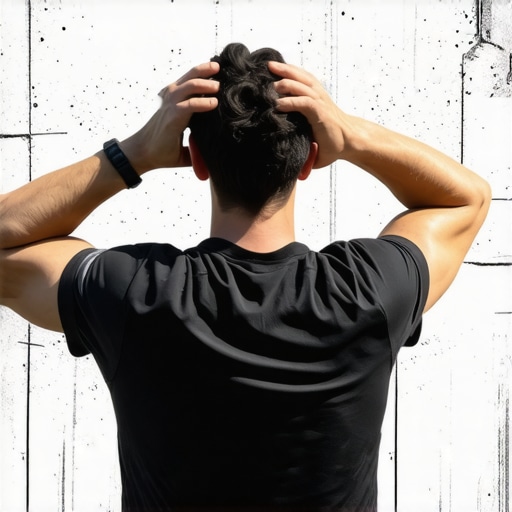
How do I keep my spine resilient for the long haul?
Maintenance isn’t just about smashing tissues; it’s about neurological tension and stability. Dr. Stuart McGill, a titan in spine biomechanics and author of Back Mechanic, famously argues that most people don’t need more ‘flexibility’—they need more ‘stiffness’ or stability in the right places. To achieve this, I incorporate a the nerve flossing technique for carpal tunnel relief and cervical health. Nerve flossing isn’t a stretch; it’s a gentle glide that keeps the nerves from getting stuck in their surrounding soft tissue ‘tunnels.’ If you find your hands going numb during the day, this is your secret weapon. I also swear by how to use diaphragmatic breathing to calm your nervous system. If you are breathing into your chest and neck, those muscles will never truly relax, no matter how many adjustments you get.
The Future of Your Back is Data-Driven
Looking ahead, I predict we are moving away from reactive ‘crisis care’ toward bio-integrated wearables. We’re already seeing sensors that can track your ‘slump’ time and provide haptic feedback, but the next step is real-time EMG (electromyography) built into our clothes. Imagine your shirt vibrating the moment your traps start to over-fire while you’re typing. This will revolutionize your rehab chiropractic techniques for faster recovery because we’ll have objective data on why your symptoms keep returning. For now, don’t wait for a high-tech shirt. I want you to try one thing tonight: grab a lacrosse ball, find that one spot near your shoulder blade, and perform five slow arm circles while keeping the pressure steady. You’ll feel a ‘release’ that no ice pack could ever provide.
What I Finally Realized About Chasing the Perfect Crack
For years, I thought my job was to simply ‘put things back in.’ But the biggest lightbulb moment I ever had was realizing that the adjustment is just the invitation; what you do after you leave the clinic is the actual party. If you don’t change the environment that caused the restriction—like your desk setup or your breathing patterns—you’re just spinning your wheels. I’ve learned that the science behind chiropractic adjustments for back pain relief proves we are shifting the nervous system’s threshold for pain, not just moving calcified bone. Consistency in your daily ‘micro-habits’ will always outperform a once-a-month heavy-duty session. To truly discover how chiropractic adjustments can alleviate chronic back pain, you have to pair that new range of motion with intentional movement.
Another hard-won lesson: perfect posture is a myth. The best posture is your next posture. Stagnation is the enemy. Even if you have the most ergonomic chair in the world, staying in it for four hours will still cause your tissues to creep and tighten. This realization is why I prioritize movement over static ‘correct’ positions. When you keep the blood flowing, you keep the pain away.
#IMAGE_PLACEHOLDER_E#
The Toolkit That Keeps My Spine Happy Between Visits
I don’t leave my recovery to chance, and you shouldn’t either. Over the decade, I’ve whittled my gear down to the essentials that actually move the needle for sports rehab and long-term maintenance. I personally swear by the high-density lacrosse ball for digging into those stubborn rhomboid knots. Learning how to use a lacrosse ball to melt away mid-back knots is probably the single most cost-effective thing you can do for your spine. I also recommend a clay-based moist heating wrap over electric pads; the penetration is vastly superior. Finally, I always point people toward Dr. Stuart McGill’s research for essential tips for managing back pain through healthy lifestyle choices. These aren’t just gadgets; they are your frontline defense.
Take Control of Your Movement Today
Don’t wait for the next time your neck locks up to start caring about your spinal health. The goal is to move from a state of fragility—where a simple sneeze sends you to bed—to a state of true physical resiliency. By focusing on blood flow, stability, and neurological resets, you are implementing strategic chiropractic solutions for long-term back health that last a lifetime. You have the tools, the science, and the plan; now you just need to put down the frozen peas and start moving. Have you found that your neck issues are more common after a long day at the desk or after a specific workout? Let me know in the comments below!