
I’ve been there—staring at a barbell with a mix of raw ambition and pure dread. A few years back, I thought I was doing everything right. I had the belt, the expensive shoes, and a “no pain, no gain” attitude. Then, mid-rep on a heavy set of three, I felt my spine round like a frightened cat. That sharp, electric zap in my lumbar area sent me straight to the floor. It wasn’t just a bad workout; it was a wake-up call. I realized that most of us are taught to “pull” the weight, which is exactly why our backs buckle under the pressure. We’re missing a fundamental connection between our upper body and our pelvis.
Stop Pulling and Start Creating Tension
The mistake I made—and maybe you’re making it too—was treating the deadlift like a test of back strength rather than a full-body brace. I used to just grab the bar and yank. That “yank” is a one-way ticket to a disc herniation or a long-term injury. What I discovered through trial, error, and some serious sports rehab strategies is that the secret lies in your armpits. If you can master the “orange squeeze” cue, you’ll lock your spine into a vault that simply won’t budge. According to research from the Journal of Orthopaedic & Sports Physical Therapy, maintaining a neutral spine through co-contraction of the trunk muscles is the single most effective way to prevent mechanical failure during lifting.
Is One Tiny Mental Trick Really Enough?
You might be skeptical. I was too. I thought I needed a thicker belt or more core work. But as it turns out, most core exercises actually make lower back pain worse if you aren’t engaging correctly. This cue isn’t just a suggestion; it’s a structural requirement. By “putting your lats in your back pockets,” you create a tension bridge that protects your lumbar spine from that dreaded rounding. Have you ever felt that terrifying “ping” in your back mid-lift, or are you just struggling to keep your form as the weights get heavier?
The Hip Hinge Is Your Foundation
Before we dive into the specific “how-to” of this cue, we have to talk about the mechanics. If you don’t understand the hip hinge secret, no cue in the world will save you. I spent years thinking a deadlift was a squat with the bar in front of me. Wrong. It’s a hinge. This realization was my second “lightbulb moment.” It’s especially crucial for those of us dealing with chronic back issues while juggling life’s demands. You have to learn to move through the hips, not the vertebrae. That is how you stay in the game for the long haul.First, you need to stand with your feet mid-foot under the bar. Don’t overthink the distance; just make sure the bar is cutting your laces in half. From there, reach down without moving the bar. This is where most people fail. They bump the bar forward, lose their tension, and end up chasing the weight. Instead, keep the bar still.
The Setup That Saves Your Spine
Before you even touch the bar, remember that recovery is just as important as the lift itself. I see lifters in the gym trying to fix their back pain by rolling their spine on a hard cylinder, but you should know why you should never roll your lower back on a foam roller. It increases instability in a region that needs rigidity.
Lock Your Lats to Freeze Your Mid-Back
Imagine you have an orange tucked into each armpit. Your goal is to squeeze that orange so hard you are trying to make juice. This orange squeeze activates the latissimus dorsi, which are essentially the guy-wires for your spine. When these muscles are firing, they pull your scapula down and create a rigid torso. This is the same principle I use when teaching the scapular setting trick for pain-free pull-ups. If your lats are loose, your upper back will round, and that force will travel straight down to your lumbar vertebrae, causing that burning sensation between your shoulder blades or worse. #IMAGE_PLACE_HOLDER_B#
Take the Slack Out or Pay the Price
This was my biggest mistake for years. I would get tight, then just rip the bar off the floor without preparation. One Tuesday morning, I tried to pull heavy without wedging myself in. My hips shot up first, my back became a wet noodle, and I felt a pop that sounded like a dry branch snapping. I spent the next three weeks unable to put on my own socks. To avoid this, you must pull the slack out of the bar. You should hear a metallic click as the bar hits the top of the weights before the plates even leave the ground. You are essentially using the weight of the bar to pull yourself into a tighter position. This is how you ensure spinal alignment directly impacts your athletic performance by preventing energy leaks.
Treat the Floor Like a Leg Press Machine
Once you are locked in, stop thinking about pulling up with your arms. Your arms are just chains. Instead, think about the floor. You want to push the floor away from you with your legs. If you have ever used a leg press, it is the exact same movement. This shift in focus keeps the load in your glutes and hamstrings rather than your lower back. If you struggle to feel this, you might need to learn how to breathe through your belly for instant lower back relief. Diaphragmatic breathing creates internal pressure—think of it like an internal airbag—that supports your spine from the inside out. For many, especially those using the lifting technique for parents with chronic back issues, this internal pressure is the difference between a successful lift and a week on the heating pad.Let’s dig deeper into why simply ‘trying hard’ to have good form isn’t enough. Many lifters fall into the trap of thinking their hamstrings are ‘short’ when they can’t reach the bar comfortably. You’ve probably spent hours on a foam roller or a stretching mat, yet that tightness never goes away. Here is the contrarian truth: your hamstrings aren’t short; they are likely under constant tension because your pelvis is out of position. This is precisely why stretching your hamstrings won’t fix your chronic tightness. Your brain is keeping those muscles ‘on’ to protect your spine. If you keep pulling on them, you’re just irritating the sciatic nerve. 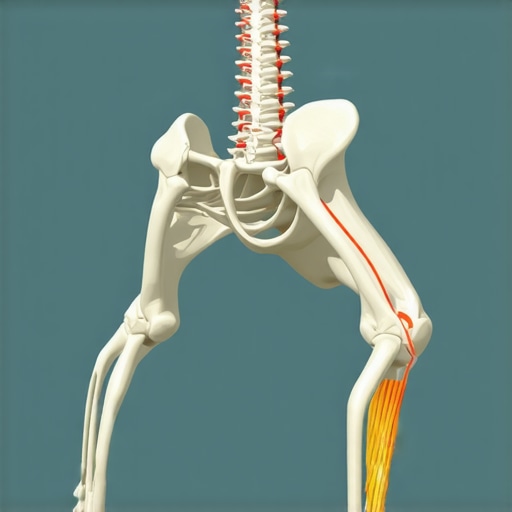
The Hamstring Myth That Keeps You Stiff
Dealing with this requires more than just a yoga pose; it requires enhancing athletic performance with targeted chiropractic care to reset the neural drive to those muscles.
Stop Hyper-Extending at the Top
There is a dangerous ‘oops’ factor I see in every commercial gym: the over-zealous lockout. People pull the weight up, and then they lean back to ‘show’ the weight who is boss. This crushes your facet joints and reverses all the good work your ‘orange squeeze’ did. According to research published in the Journal of Strength and Conditioning Research, excessive lumbar extension under heavy load creates significant shear force that can lead to spondylolysis over time. You want a vertical pillar, not a bow string.
Why do my adjustments feel like they wear off after 48 hours?
This is the most common question I get from advanced athletes. You get cracked, you feel great, and then by Thursday, the knots are back. The hidden nuance is that an adjustment clears the path, but your motor patterns keep driving you back into the ditch. This is where strategic chiropractic solutions for long-term back health come into play. It’s not just about the ‘pop’; it’s about the corrective exercises that follow. If you don’t reinforce the adjustment with proper stabilization, you’re just renting relief instead of owning it. This cycle is often the truth about why your adjustments don’t seem to last. Have you ever fallen into this trap of ‘chasing the relief’ without changing how you move? Let me know in the comments.Maintaining that iron-clad spine isn’t just about what you do during the sixty seconds you’re under the bar; it’s about the tools you use to reinforce those patterns every other hour of the week. I’ve tried every gimmick on the market, from vibrating foam rollers to expensive posture shirts, but I always come back to two things: a high-quality 10mm lever belt and a simple lacrosse ball. For anyone serious about enhancing athletic performance with targeted chiropractic care, the gear you choose must support your anatomy, not fight it. I personally prefer a 10mm belt over the thicker 13mm versions because it allows for just enough torso expansion to get a deep breath without bruising your ribs and ruining your setup. If you can’t breathe, you can’t brace.
My Daily Toolkit for Long-Term Spinal Health
Beyond the belt, I keep a lacrosse ball in my gym bag at all times. It is the most cost-effective way to manage those ‘hot spots’ that crop up when your training volume increases. You need to know how to use a lacrosse ball to melt away mid-back knots properly—targeting the tissue between the shoulder blade and the spine rather than smashing the bone. This proactive maintenance is one of the essential tips for managing back pain through healthy lifestyle choices that separates the lifters who retire at 30 from those still pulling triples in their 50s. 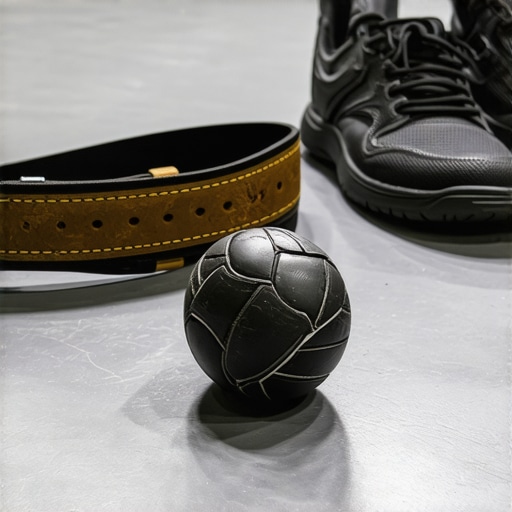
How do I maintain my spinal health between heavy training sessions?
The secret isn’t more stretching; it’s the ‘Big 3’ stabilization routine. Dr. Stuart McGill, a leading expert in spine biomechanics and author of Back Mechanic, notes that “proximal stiffness enhances distal athleticism.” This means your core must be a rigid cylinder for your hips and shoulders to move explosively. I perform the Bird-Dog, the Side Bridge, and the McGill Curl-up every single morning—no exceptions. These drills lock in the work done during your sessions and ensure strategic chiropractic solutions for long-term back health actually stick.
The Shift Toward Precision Bio-Feedback
Looking ahead, I predict a massive move away from “one-size-fits-all” rehab toward wearable bio-feedback that monitors lumbar shear in real-time. We are already seeing sensors that can tell you if your spine is rounding before you even feel the “ping.” This technology will revolutionize how we train, but it won’t replace the need for foundational strength and how chiropractic adjustments can alleviate chronic back pain when things do go awry. Before your next heavy session, I want you to try this: spend two minutes in a 90/90 breathing position on the floor, focusing on expanding your lower back into the ground. It is the fastest way to “re-set” your brace before you touch the steel.
Lessons from the Trenches of Lumbar Recovery
Reflecting on my years of training and recovery, I’ve realized that the mental game is just as vital as the physical one. First, remember that progress isn’t linear; some days you will feel like a powerhouse, and others, your body will demand a deload. Respecting those signals is the key to longevity. Second, I learned that ‘stiffness’ is a skill—mastering the ability to create 360-degree tension through healthy lifestyle choices and proper bracing will protect you more than any piece of equipment. Finally, don’t ignore the small stuff. If a movement feels ‘off,’ it probably is. Seeking expert chiropractic adjustments that work can help realign your foundation before a minor niggle becomes a major setback.
#IMAGE_PLACEHOLDER_E#
My Personal Arsenal for a Resilient Spine
I don’t believe in cluttering your gym bag with junk, but these are the few items I never train without. I always recommend a 10mm lever belt for its perfect balance of support and mobility. For education, Dr. Stuart McGill’s Back Mechanic is essentially the bible for anyone dealing with disc issues. When I’m on the go, a simple lacrosse ball and the knowledge of how to melt away mid-back knots are my first line of defense against muscle tightness. These tools, combined with chiropractic adjustments to alleviate chronic back pain, form a comprehensive strategy for keeping your spine safe while you chase your personal bests.
Step Up to the Bar with New Confidence
The journey from a back injury to a heavy deadlift isn’t just about physical rehabilitation; it’s about reclaiming your confidence. By focusing on the ‘orange squeeze,’ respecting the hip hinge, and prioritizing your spinal health, you are setting yourself up for decades of strength rather than a few months of reckless gains. You have the tools, the knowledge, and the cues to lift safely. Now, it’s time to put them into practice and build a body that serves you for the long haul. Which part of the deadlift setup do you find the most difficult to keep tight? Let me know below!