
I spent three years convinced I had a chronic neurological condition because every Tuesday at 3:00 PM, my head felt like it was being squeezed by a giant, invisible vise. I’d pop ibuprofen like they were Tic Tacs, dim the lights, and wonder what I’d done to deserve this. Then, one afternoon, I caught a glimpse of myself in the hallway mirror. My shoulders weren’t just near my ears; they were practically earrings. My upper traps were rock-hard, vibrating with a tension that had nowhere else to go but up into my skull. That was my ‘lightbulb moment.’ It wasn’t a brain problem; it was a biomechanical one.
Your Shoulders Are Lying to Your Head
We often treat a headache like an isolated event happening inside our foreheads. But your body is an interconnected web. When those meaty muscles sitting on top of your shoulders—the upper trapezius—get overworked and angry, they develop trigger points. These aren’t just ‘knots’; they are hyper-irritable spots that refer pain directly to the side of your head and behind your eyes. I used to think cracking my own neck would fix it, but I was just irritating the joints while ignoring the source. If you’re tired of that dull ache that makes it impossible to focus, we’re going to pinpoint exactly why those traps are firing when they should be resting. I’m going to show you how to shut down the burning sensation between your shoulder blades that usually precedes the migraine.
Do these tiny muscles really have that much power?
You might be skeptical. How can a muscle in my shoulder make my eyes throb? According to the American Chiropractic Association, most tension headaches are actually ‘cervicogenic,’ meaning they start in the neck or upper back tissues. My biggest mistake early on was ignoring my posture and thinking I just needed a better prescription for my glasses. I didn’t realize that my rounded shoulders from desk work were forcing my traps to do the job of my deep core muscles. It’s a classic case of the wrong muscle showboating for the ones that are actually slacking off. Today, I’ll teach you the 2-minute drill to stop a tension headache before it ruins your evening. Have you ever felt like your shoulders were glued to your ears by the end of a long workday? It is time to let them down.
Stop Treating Your Shoulders Like Earrings
To break the cycle of tension, you have to first identify the ‘shrug’ reflex. I used to spend eight hours a day with my traps engaged about 20%, never fully letting go. It is like leaving your car’s engine idling in the garage; eventually, the fumes—or in this case, the lactic acid and tension—fill the room. Start by performing a conscious reset every 20 minutes. Drop your shoulders, tuck your chin slightly, and imagine a string pulling the crown of your head toward the ceiling. If you find a specific lump that won’t let go, you need to learn how to tell if that knot in your back is a trigger point versus just general fatigue.
Breathe Through Your Belly to Quiet the Noise
Most of us are ‘chest breathers.’ When you are stressed or focused, you use your neck and trap muscles to lift your rib cage to get air in. This is exhausting for those small muscles. You need to shift the work to your diaphragm. I remember sitting in a meeting once, feeling a migraine building behind my left eye. I placed one hand on my stomach and forced myself to breathe through your belly for instant relief. Within five minutes, the throbbing subsided because I stopped asking my neck to do the diaphragm’s job. This is especially vital because how a weak core actually causes chronic neck tension is often overlooked; your neck compensates for a trunk that is not stable. 
Reset Your Workspace Before Your Body Breaks
If you are working from a kitchen table or a couch, you are essentially inviting a headache to dinner. Your monitor height is the biggest culprit. If you are looking down even slightly, your head (which weighs about 10-12 pounds) effectively doubles in weight for your neck muscles to hold up. I finally stopped the madness by learning how to set up your laptop for better neck alignment using nothing but a stack of old textbooks and a cheap external keyboard. It felt clunky at first, but the ‘burning’ in my traps vanished by Wednesday.
Master the Nerve Glide to Unstick the Tension
Sometimes the pain is not just muscle; it is the nerves getting ‘pinched’ by tight tissues. If you feel a zing down your arm or a numbness, it is time for nerve flossing. Think of your nerves like a silk thread inside a straw. If the straw (the muscle) gets crushed, the thread cannot move. You can use a nerve gliding routine that helps relieve arm numbness to gently pull that ‘thread’ back and forth, restoring blood flow and signaling to your brain that the ‘danger’ is over. I started doing this twice a day, and the frequency of my ‘Tuesday Vise’ headaches dropped by nearly 70% in two weeks.
The Adjustment is Only Half the Battle
Most people assume that once they hear that satisfying ‘pop’ during an adjustment, the work is done. This is the biggest misconception in sports rehab. An adjustment is like hitting the reset button on your router; it clears the signal, but it doesn’t fix the frayed wires. If you rely solely on passive care, you’ll find yourself wondering the truth about why your adjustments don’t seem to last. The real magic happens in the 48 hours following a session. This is your ‘neurological window’ where your brain is finally receptive to new patterns. If you go straight back to slouching over a laptop, your nervous system will simply default to its old, painful settings. To truly boost your sports rehab journey, you must pair those adjustments with active movement to ‘lock in’ the new alignment. Have you ever fallen into the trap of thinking the adjustment was a permanent fix? Let me know in the comments.
Stop Stretching a Muscle That is Actually Weak
Here is a contrarian truth: that ‘tight’ feeling in your upper traps might not be because the muscle is too short. In fact, for most desk workers, those muscles are over-stretched and exhausted from trying to hold your head up. When you relentlessly stretch a muscle that is already over-lengthened, you actually trigger a protective reflex that makes it feel tighter. This is the ‘Oops’ factor most people miss. Instead of stretching, you often need to strengthen the opposing muscles. I’ve seen patients find more relief by learning how to stop your lower back from arching and engaging their mid-back than they ever did with a neck stretch. We often see that why your glutes won’t fire can actually impact your neck because the entire posterior chain is disconnected. 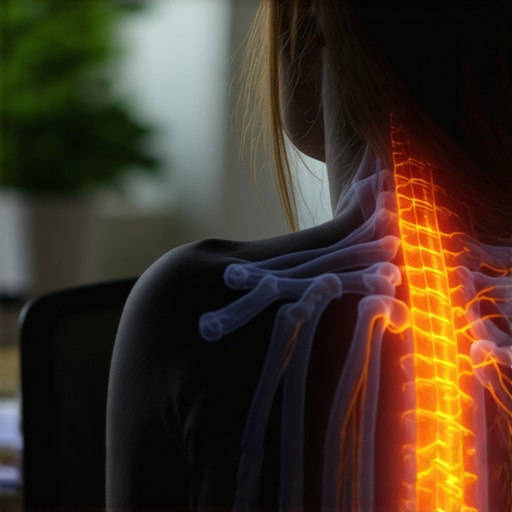
Can your eyes really dictate how your spine feels?
It sounds like science fiction, but your visual system and your neck are hardwired together via the vestibulo-ocular reflex. If you have a slight tracking issue or spend all day staring at a fixed point, your neck muscles will stiffen to stabilize your gaze. I often suggest clients look into how your vision might be affecting your posture because no amount of massage can override a visual trigger. According to a study published in the Journal of Manipulative and Physiological Therapeutics, patients who combined cervical spine therapy with eye-tracking exercises showed significantly higher improvements in pain and range of motion compared to those who did physical therapy alone. To round out your recovery, you might need strategic chiropractic solutions for long-term health that look beyond just the bone and muscle. It is time to stop looking at your pain through a straw and start seeing the whole-body connections.
I used to think that as long as I saw my chiropractor every two weeks, I was doing my part. I was wrong. Relying on the adjustment alone is like brushing your teeth once a month and expecting no cavities. The real progress happens in the mundane moments—how you sit, how you reach, and the tools you use to reinforce that new alignment. If you want to stop the cycle of ‘fix and fail,’ you have to get serious about your maintenance kit. I stopped buying generic gear and started focusing on choosing the right resistance band for my specific weaknesses, which changed everything for my shoulder stability. If you are struggling, check out this guide on how to choose the right resistance band for shoulder rehab to ensure you aren’t actually making the problem worse with too much tension.
Ditch the Cheap Gadgets for Tools That Actually Work
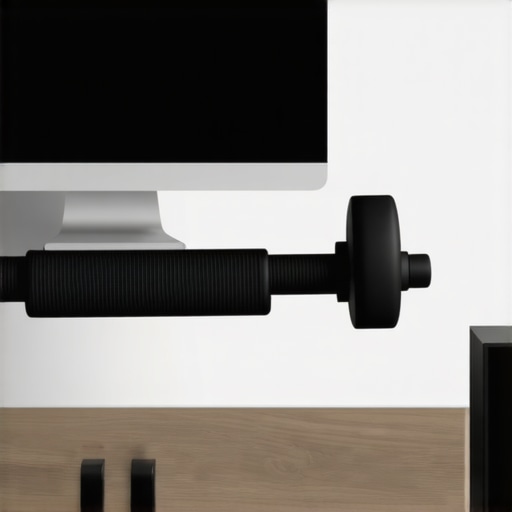
I’ve wasted hundreds of dollars on posture braces that just made my muscles lazy. Now, I stick to three essentials: a high-quality loop band, a firm (not soft) foam roller, and a monitor arm that actually moves. Most people use a foam roller like a rolling pin on pizza dough, but that is the wrong approach. I had to learn the correct way to use a foam roller on your it band to actually see a difference in my hip mobility. If you are just rolling back and forth aimlessly, you are likely just bruising the tissue rather than releasing the fascia. Similarly, stop stacking books under your screen. You need to know how to adjust your monitor to stop mid-back burning by placing it exactly at eye level, which forces your deep neck flexors to stay engaged throughout the day.
How can I maintain my spinal health without a weekly appointment?
Maintenance is about building a ‘biological suit of armor.’ Dr. Stuart McGill, a world-renowned spine biomechanics expert at the University of Waterloo, emphasizes that stability comes from muscular endurance, not just raw strength. He advocates for the ‘Big Three’ exercises (the bird-dog, side plank, and modified curl-up) to create a stiffening effect that protects the discs. I’ve integrated these into my healthy lifestyle choices, and the results are measurable. In fact, research shows that how regular adjustments can lower your resting heart rate is directly tied to how well you maintain that parasympathetic state between visits. You aren’t just fixing a bone; you are recalibrating your entire nervous system. For those looking for strategic chiropractic solutions, I highly recommend looking into strategic chiropractic solutions for long-term back health that focus on functional movement patterns rather than just temporary relief.
The Future of Posture is Built into Your Clothes
I predict that in the next five years, we will move away from manual ‘reminders’ to sit up straight. We are already seeing the rise of smart clothing with embedded haptic sensors that vibrate when your shoulders slump past a certain degree. This real-time biofeedback is going to revolutionize how we handle sports rehab because it removes the ‘forgetfulness’ factor. Until then, you have to be your own sensor. Try this advanced tip: The next time you feel that tension building, grab a light resistance band, hold it with both hands at shoulder width, and pull it apart while keeping your shoulder blades tucked into your back pockets. Hold for 10 seconds. This ‘scapular reset’ is the most effective way I’ve found to kill a brewing headache before it starts.
What My Spine Taught Me That No Textbook Could
After years of trial and error, I realized that the loudest pain isn’t always the biggest problem. My ‘Tuesday Vise’ was actually a protective scream from a nervous system that felt unsafe. I learned that you cannot exercise your way out of a bad environment; if your setup is broken, your body will eventually break too. I also discovered that migraines aren’t always just ‘stress’—often, how a misaligned atlas causes chronic migraines is the missing piece of the puzzle for those of us who feel like we’ve tried everything. Most importantly, I learned that recovery isn’t a straight line. It is a series of small, intentional resets that happen every single hour, not just every other week at the clinic.
My Daily Arsenal for a Pain-Free Back
I don’t believe in hoarding gadgets, but there are a few non-negotiables that live in my desk drawer. First, I never start my day without a specific tension release using how to choose the right resistance band for shoulder rehab as my guide. It helps me wake up those sleeping mid-back muscles before I ever touch a keyboard. I also swear by the best way to use a foam roller for it band relief to keep my lower half mobile, because tight hips will eventually pull on your neck. Finally, I keep a simple sticky note on my monitor that says ‘Breathe.’ It sounds basic, but pairing physical tools with essential tips for managing back pain through healthy lifestyle choices is the only way to make the results stick for the long haul.
Take the First Step Toward Your Reset
You don’t have to live in a cycle of tension and temporary fixes. Your body has an incredible capacity to heal once you stop fighting its natural mechanics and start supporting them. Whether you are an athlete or a desk warrior, you can boost your sports rehab journey with proven chiropractic strategies that bridge the gap between ‘feeling better’ and ‘staying better.’ Start small today—adjust your screen, take a deep belly breath, and listen to what your shoulders are actually trying to tell you. You have got this.
Have you ever found that a specific movement or habit was the secret key to unlocking your tension? Let me know in the comments below.