
I used to think my ability to touch my elbows together behind my back was a cool party trick. In my early yoga days, I was the one effortlessly sliding into a deep pigeon pose while everyone else was propped up on three blocks. I thought I was winning at flexibility. But then, the constant ‘dull ache’ in my lower back became my shadow, and my shoulders started to feel like they were barely held on by scotch tape. It was a brutal wake-up call: I wasn’t ‘flexible’ in a healthy way; I was hypermobile, and my practice was actually tearing me apart. We’re going to peel back the curtain on why chasing that deep stretch is likely the very thing keeping you in pain. I’ll show you how to transition from ‘floppy’ to ‘functional’ so you can actually enjoy your movement without feeling like a ragdoll the next morning.
The Day My Flexibility Became My Biggest Liability
For years, I made the classic mistake of ‘hanging’ on my joints. I’d sink into a pose, feel that intense pull, and think I was doing great work. In reality, I was just overstretching already lax ligaments that didn’t need any more length. If you find that why your morning stretches might be making your back more sensitive is a topic that hits home, you’re likely in the same boat. My ‘lightbulb moment’ happened when a physical therapist told me my muscles weren’t tight—they were exhausted from trying to hold my skeleton together because my ligaments were too loose. If you’ve ever noticed you stop ignoring the click in your hip during leg raises, that’s your body screaming for stability, not more range of motion. According to the Ehlers-Danlos Society, repetitive micro-trauma from overextending joints can lead to early-onset osteoarthritis, which is why ‘just stretching more’ is often the worst advice for us.
Is yoga actually worth the hype if you are already too bendy?
This is the question I get most often from fellow ‘bendy’ people who are tired of hurting. The short answer is yes, but not the way you’re doing it now. You have to stop looking for the ‘stretch’ sensation and start looking for the ‘squeeze.’ I spent way too long ignoring how how your breathing mechanics are sabotaging your core strength, which is the literal foundation of joint safety. Have you ever left a yoga class feeling more unstable or ‘loose’ in a bad way than when you walked in? If so, your nervous system is likely sounding the alarm. Today, we are going to fix that by focusing on muscle engagement over aesthetic depth. We aren’t here to be the most flexible person in the room; we are here to be the most stable.
Stop Chasing the Stretch and Start Finding the Squeeze
To fix a hypermobile practice, you have to reprogram your brain to value tension over range of motion. Think of your joints like a suspension bridge. If the cables—your ligaments—are too long or loose, the whole structure wobbles under pressure. Your muscles have to become the secondary support beams. In every pose, I want you to back off by at least 20%. If you can touch your toes, stop at your shins. If you can do a full split, stay in a high lunge. By shrinking your range of motion, you force the muscles to hold you up instead of relying on the end-range of your joint capsules.
Micro-bends Save Your Connective Tissue
Locking out your joints is the fastest way to invite chronic pain and premature wear. When you lock your knees or elbows, you are literally resting on the bone and connective tissue, bypassing the muscles entirely. This is why the science behind that popping sound in your joints often points back to micro-instability and friction. I remember a specific Tuesday afternoon in a hot yoga class where I was ‘winning’ at a standing balancing pose by locking my knee until it bowed backward. My instructor stepped over and poked my quadricep—it was soft as a marshmallow. I wasn’t strong; I was just balanced on a hinge. The moment I added a ‘micro-bend’ to my knee, my entire leg began to shake uncontrollably. That shake was my nervous system finally waking up and forcing my muscles to do their job.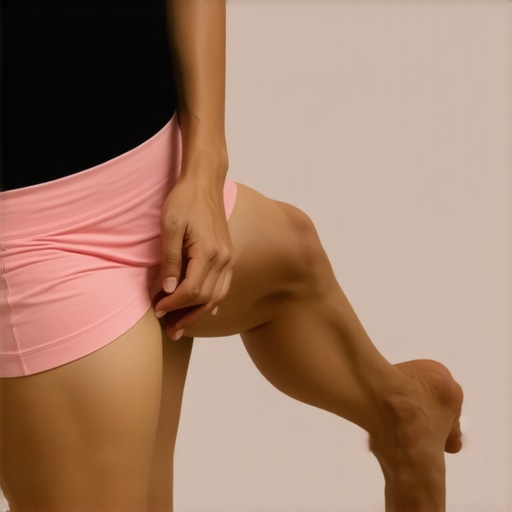
Use Your Breath to Brace Instead of Bloom
Many of us are taught to ‘expand’ on the inhale, but for the hypermobile person, too much expansion can lead to rib flare and a disconnected core. You need to learn how to use diaphragmatic breathing to calm your nervous system without losing your ‘canister’ of support. If you let your belly completely go, your lumbar spine takes the hit. Instead, think of your breath as a 360-degree expansion that stays ‘knit’ together at the ribs. If you don’t, you might find that how your breathing mechanics are sabotaging your core strength is the silent culprit behind your recurring back tweaks.
Isometric Holds Are Your New Best Friend
Instead of moving through a flow like water, I want you to move like you’re moving through honey. Slowing down forces the stabilizer muscles to fire. When you reach the ‘end’ of your comfortable range, squeeze the muscles toward the bone. For example, in a bridge pose, don’t just lift your hips as high as possible—that’s how you end up needing expert chiropractic adjustments that work to fix a jammed facet joint. Instead, lift halfway and imagine dragging your heels toward your shoulders without actually moving them. You’ll feel your hamstrings and glutes light up. This internal ‘squeeze’ creates a sleeve of protection around the joint. If you feel a ‘pinch’ in your hips during these movements, you should check the hidden reason your knees cave during heavy squats, as it usually signals a lack of lateral hip stability.Let’s dig deeper into a nuance that most people—and even some practitioners—completely miss. In the world of sports rehab, the general consensus is usually to find the restriction and release it. But what happens when there is no restriction? If you are hypermobile, your body is essentially a collection of open doors with no locks. This is why you might find that the truth about why your adjustments dont seem to last is rooted in your lack of foundational stability. While how chiropractic adjustments can help your breathing and spinal health is well-documented, the ‘bendy’ patient requires a completely different strategy. In my experience, chasing a ‘release’ in an already loose joint is like trying to tighten a screw in stripped wood; it just keeps spinning and never catches.
Is it possible to have too much of a good thing when it comes to spinal mobility?
Most patients assume that more range of motion always equals better health. However, clinical studies, including research published in the Journal of Manual & Manipulative Therapy, indicate that for those with systemic joint laxity, passive treatments like adjustments must be secondary to active motor control training. If your provider isn’t talking to you about strategic chiropractic solutions for long-term back health that include heavy stabilization, you’re only getting half the story. The trap many fall into is the ‘oops’ of self-manipulation. You feel a dull ache, you twist your spine until it pops, and you feel better for five minutes. But this ‘pop’ provides a temporary hit of endorphins while further stretching the already weak ligaments. This is the truth about cracking your own neck at your desk: you are essentially creating more ‘slop’ in the system and training your nervous system to rely on instability for relief. #IMAGE_PLACE_HOLDER_C# To truly heal, we need to revolutionize your rehab chiropractic techniques for faster recovery by focusing on what I call ‘neuromuscular braking.’ This means teaching your brain to stop a movement before the joint reaches its end-range. It’s the difference between crashing into a wall and using the brakes. Have you ever fallen into this trap of chasing the pop only to feel worse an hour later? Let me know in the comments. We need to move away from the ‘no pain, no gain’ mentality and toward a ‘no stability, no movement’ philosophy. By prioritizing how chiropractic adjustments can alleviate chronic back pain when combined with isometric strengthening, you stop being a ragdoll and start being an athlete. It’s time to stop stretching what is already loose and start bracing what is vulnerable.I used to think my gear bag should be full of foam rollers and massage balls, but for someone with hypermobile joints, those are often just ‘feel-good’ distractions. To actually keep your joints from sliding around like marbles on a glass table, you need tools that provide high-intensity tactile feedback.
Ditch the light bands for something that fights back
When I’m working on my own rehab, I reach for heavy-duty monster bands over those thin, colorful strips. Why? Because thin bands don’t provide enough tension to wake up the deep stabilizers. You need to know how to choose the right resistance band for shoulder rehab that actually challenges your muscle’s ability to resist the pull. I also swear by heavy kettlebells for ‘waiter carries.’ Carrying a weight overhead forces the rotator cuff to ‘fire or fail,’ and since why your grip strength determines your rotator cuff health is a real physiological link, I focus on crushing that handle as hard as I can. This tension radiates up the arm, creating a protective sleeve around the shoulder. 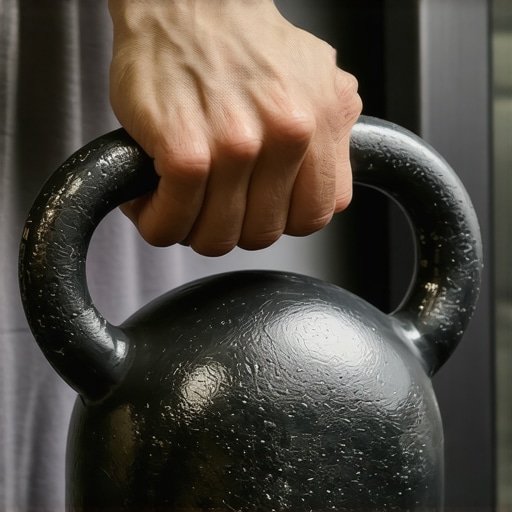
How do I keep my joints stable for the long haul?
Maintenance for the hypermobile athlete isn’t about hitting a new PR every week; it’s about the relentless pursuit of ‘boring’ consistency. I focus on three pillars: volume-based isometrics, eccentric control, and professional oversight. As Dr. Stuart McGill, a world-renowned spine biomechanics expert and author of Back Mechanic, notes in his research, the goal for an unstable spine is to create ‘superstiffness’ through muscular co-contraction. This protects the neural structures from those tiny, painful micro-movements. I find that strategic chiropractic solutions for long-term back health are most effective when they are paired with a program that emphasizes how to stabilize your spine during heavy farm chores or daily activities. You have to treat every movement, from picking up a laundry basket to deadlifting 300 pounds, with the same level of core bracing. Incorporating essential tips for managing back pain through healthy lifestyle choices like better sleep hygiene and inflammatory management also ensures your connective tissue isn’t under constant chemical stress.
Predicting the end of the ‘accidental’ injury
I believe the future of sports rehab for ‘bendy’ people lies in haptic feedback technology. We are already seeing the emergence of wearable sensors that vibrate the moment a joint enters a ‘danger zone’ of hyperextension. This will revolutionize the role of chiropractic care in effective sports injury recovery by giving us real-time data on how a patient moves outside the clinic. Instead of guessing why you’re sore, your phone will tell you that you locked your knees 47 times during your grocery run. This kind of data helps us boost your sports rehab journey with proven chiropractic strategies that are personalized to your actual movement patterns. If you are struggling to how to regain explosive power after an acl tear or any major joint injury, the key is this blend of high-tech feedback and old-school strength. My advanced tip for you today: try doing your next set of lunges with your eyes closed. It forces your nervous system to stop relying on vision and start relying on the receptors in your joints. Give it a shot and feel the difference in your stability.
The Hardest Lesson I Learned About Finding Balance in Sports Rehab
For years, I associated the depth of a yoga pose with progress. The biggest lesson I learned was that for us, progress looks like less range, not more. When you feel that urge to stretch because your back feels ‘stiff’, recognize it as a signal for stability, not length. It is about shifting your mindset: you are not trying to open up; you are trying to close the gap between your bones and your muscle control. One lightbulb moment for me was realizing that my ‘tight’ hamstrings were actually a protective tension created by my nervous system to keep my pelvis from sliding around. Stretching them further was just making the problem worse and fueling the cycle of back pain.
The Only Tools You Actually Need to Build Support
I recommend focusing on three specific pillars to reclaim your joint health. First, invest in high-quality resistance bands; knowing how to choose the right resistance band for shoulder rehab is crucial because you need enough tension to engage the deep stabilizers without over-stretching the joint capsule. Second, I suggest reading Back Mechanic by Dr. Stuart McGill. It is the gold standard for understanding how to protect your spine from micro-trauma. Finally, find a provider who understands strategic chiropractic solutions for long-term back health—someone who prioritizes muscle activation over repetitive manipulations. This combination turned my ‘floppy’ movement into a resilient, athletic practice that no longer leaves me aching the next morning.
Your Joints Deserve the Strength Only You Can Provide
The transition from being a ‘human pretzel’ to a stable athlete does not happen overnight. It requires patience and a willingness to be the one in class who is not doing the ‘deepest’ version of the pose. But by choosing how chiropractic adjustments can alleviate chronic back pain through stability rather than just more laxity, you are setting yourself up for decades of healthy movement. You already have the range; now it is time to earn the power to control it. Let’s move away from the ‘no pain, no gain’ cycle and embrace a smarter way to heal with targeted sports rehab. Have you ever found yourself ‘chasing the pop’ only to feel more unstable afterward? Let me know your experience in the comments below!