
I still remember the exact Tuesday morning my back decided to stage a full-blown mutiny. I rolled out of bed, reached down to grab my coffee mug, and a lightning bolt of pain shot straight through my lumbar spine, locking me in a pathetic, half-bent posture. For weeks, I blamed my workouts, my office chair, and even my shoes. But the real culprit was staring me in the face every single morning. It was the way I slept. I was actively sabotaging my spine for eight hours every single night, waking up feeling like I had just gone fifteen rounds in a boxing ring.
Your Mattress Isn’t Always the Scapegoat
When our backs ache, our immediate reaction is to blame the mattress and spend thousands of dollars on a new one. I made that exact mistake early on, buying the softest, cloud-like mattress I could find, only to realize it made my morning stiffness ten times worse. If you are struggling with this, you should absolutely stop using soft mattresses if your back aches in the morning because they allow your pelvis to sink, throwing your entire spinal alignment out of whack. The truth is, how you position your body on that mattress matters infinitely more than the price tag on the brand-new memory foam.
Is a simple sleeping position change actually worth the hype?
It sounds too simple to be true, doesn’t it? We want complex solutions like expensive traction gadgets or intense daily rehabilitation programs. But think about the math: you cannot easily out-stretch or out-train eight hours of sustained, poor spinal torque while you sleep. According to a clinical study published by the Journal of Physical Therapy Science, sleeping in positions that do not support the natural lordotic curve of the spine directly correlates with chronic, non-specific low back pain. Adjusting how you sleep is the lowest-hanging fruit in your recovery journey, and it acts as the perfect structural foundation so that your daytime treatments, like expert chiropractic adjustments, can actually take hold and heal your tissues long-term.
The Simple Biomechanics of Overnight Relief
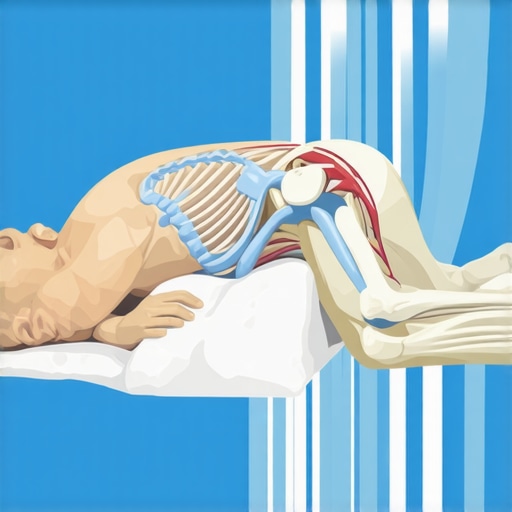
To stop waking up with that familiar, dull ache, we have to keep the spine in a neutral position. For back sleepers, this means putting a pillow under your knees to take the tension off your hip flexors. If you are a side sleeper like me, you need a firm pillow between your knees to keep your pelvis from rotating. I used to think I could just tough it out, but once I started using these simple props, my morning spasms virtually vanished. Have you ever spent half your morning just trying to stand up straight after a bad night’s sleep? Let’s dive into exactly how to set up your bed tonight so you can finally wake up pain-free.
How to Rebuild Your Nighttime Alignment from Scratch
When you suffer from chronic lower back tension, your sleep setup should function like a structural mold. Think of your spine as a high-performance suspension bridge. If the main cables slacken, the entire deck warps. In the context of the science behind chiropractic adjustments for back pain relief, we learn that maintaining neutral joint positioning minimizes the micro-trauma that builds up when you are unconscious. When you spend eight hours twisted like a pretzel, you force your deep stabilizer muscles to work overtime just to keep you from snapping. No wonder you wake up feeling like you ran a marathon.
The Side Sleeper Blueprint
If you prefer sleeping on your side, your immediate challenge is lateral pelvic tilt. When your top leg drops forward to touch the mattress, it acts as a lever, twisting your lumbar spine and putting immense strain on your sacroiliac joint. To fix this, do not just toss a flimsy, feather pillow between your knees. You need a dense, contoured foam pillow that spans from your knees down to your ankles. I remember the first night I tried this; I used a tiny throw pillow from the couch that squished flat within ten minutes. I woke up at 3:00 AM with a throbbing hip flexor. When I switched to a firm, dedicated knee spacer, it felt like my pelvis was finally floating in perfect alignment.

The Back Sleeper Strategy
Back sleeping is structurally ideal, but only if you neutralize the natural pull of your hip flexors. When your legs lie completely flat, your psoas muscle pulls forward on your lower lumbar vertebrae, creating a hollow arch in your lower back. You can easily test this: if you can slide your entire hand under your lower back while lying down, your spine is under constant compression. Place two plump pillows directly under your knees. This slight elevation bends your knees to about thirty degrees, tilting your pelvis backward and flattening your lumbar spine gently against the mattress. This mimics the restful pelvic position used in advanced sports rehab environments.
Integrating Active Recovery into Your Morning Routine
Even with perfect pillows, your body will still experience some degree of overnight stagnation. The transition from your bed to your feet is where most acute muscle spasms occur. Instead of jumping straight out of bed to brush your teeth, spend two minutes performing gentle pelvic tilts while still lying down. This slowly pumps synovial fluid back into your spinal discs, preparing them for the gravity-bearing loads of the day. If you struggle to move smoothly even after trying these adjustments, you might be dealing with deeper structural imbalances. At this stage, understanding strategic chiropractic solutions for long term back health can provide the targeted, hands-on care necessary to unlock stubborn joints that pillows alone cannot fix.
When we look at the mechanics of spinal health, we have to talk about a major blind spot that even dedicated gym-goers and therapy patients miss. The prevailing wisdom in fitness circles is that if you want to fix your back, you just need to do more planks, stretch your hamstrings, and buy a firm mattress. But this linear thinking completely ignores how our joints adapt to sustained, multi-hour postures while we are unconscious.
The Core-Strength Fallacy in Spinal Rehab
Everyone tells you to build a bulletproof core to cure back pain, but in my experience, focusing solely on muscular strength while ignoring passive joint shearing at night is like trying to empty a sinking boat with a teaspoon. You can have the strongest abs in your gym, but if your lumbar spine is twisted at a thirty-degree angle for eight hours every night, those muscles will eventually exhaust themselves trying to stabilize the joint. This is why so many active individuals struggle with morning stiffness despite their pristine daytime habits. Your muscles simply cannot protect your joints when they are powered down during deep sleep.
Why do your morning stretches sometimes make your lower back feel more vulnerable?
It is incredibly tempting to wake up stiff and immediately throw yourself into deep hamstring stretches or spinal twists. However, pulling on highly sensitized nerves first thing in the morning is a massive trap. During sleep, your spinal discs naturally absorb fluid and swell slightly. This means they are at their most vulnerable and pressurized state right when you wake up. When you perform aggressive forward folds immediately after getting out of bed, you actually increase the risk of micro-tearing the outer fibers of your spinal discs. Instead of forceful stretching, you should focus on gentle, progressive mobility. For a deeper look at this specific biomechanical trap, check out why your morning stretches might be making your back more sensitive before you try your next routine.
The Passive Torque Trap That Ruins Professional Treatments
The most frustrating mistake I see people make is investing time and money into clinical care, only to immediately undo all that progress overnight. When you receive expert chiropractic adjustments that work to restore joint mobility, your nervous system requires a period of relative stability to cement those new movement patterns. If you immediately go to sleep in a twisted, unsupported posture, you subject those newly mobilized segments to lateral shear forces. This acts like a slow, low-grade sprain, causing your stabilizer muscles to spasm in defense by the time your alarm goes off. To get the most out of your recovery, you have to treat your sleep environment as an active extension of your physical therapy.
A fascinating study published in the Archives of Physical Medicine and Rehabilitation highlighted that patients who combined targeted clinical interventions with strict sleep-posture compliance reported a 40% greater reduction in morning pain scores compared to those who only received clinical treatments. This demonstrates that passive recovery is not just a secondary detail; it is the structural anchor for your active healing. If you are serious about long-term relief, integrating proven chiropractic strategies into your daily lifestyle is what bridges the gap between temporary relief and permanent recovery.
Have you ever fallen into this trap of stretching out your morning stiffness only to make it worse, or blaming your workouts for pain that was actually caused by your sleeping posture? Let me know in the comments below.
When you transition from acute back pain management to long-term spinal preservation, you quickly realize that passive posture adjustments are just the starting line. To truly cement your progress and prevent the recurrence of debilitating spasms, you need a systematic approach to joint maintenance. Think of this phase as your structural insurance policy. Without it, you are simply waiting for the next random movement to trigger another painful episode.
The Pro Tools of Passive Spinal Maintenance
In my own journey to keep my lower back working flawlessly, I stopped relying on luck and started using specific, high-density tools that enforce correct biomechanics while I sleep or rest. I personally swear by a medical-grade, contoured orthopedic knee spacer rather than standard retail pillows. Standard pillows lose their loft within an hour of body-heat exposure, but a high-density viscoelastic foam spacer keeps my pelvis perfectly square all night. If you are struggling to find the right baseline for your sleep setup, checking out how to pick the right mattress for your spine type is an excellent starting point to pair with these targeted props.
How do I maintain my spinal alignment over time?
Consistency in passive support must be paired with intelligent active recovery. Maintenance is not about performing exhausting daily workouts; it is about strategic, low-intensity decompression. To maintain your alignment over time, you must consistently use lumbar rolls during long drives, perform daily micro-decompressions, and schedule regular structural tune-ups. The spine is subjected to constant compressive gravity throughout the day. By utilizing targeted, preventive care like essential tips for managing back pain through healthy lifestyle choices, you actively counteract this daily wear and tear before it manifests as a clinical issue.
The Future of Sleep Ergonomics and Spine Tech
We are currently on the cusp of a major shift in how we manage spinal health overnight. I predict that within the next five years, we will see the widespread adoption of smart, sensor-mapped mattresses. These systems will detect real-time pelvic rotation and automatically adjust localized air-chamber pressures to keep your spine in perfect neutral alignment, regardless of how many times you roll over. Until that technology becomes mainstream, we have to rely on conscious biomechanical habits and expert hands-on guidance. If your self-care routines are hitting a wall, it is wise to explore why most Omaha chiropractors miss the mark on long-term wellness to ensure your clinical support is actually designed for lasting structural durability.

As noted by Dr. Stuart McGill, a leading authority on spine biomechanics at the University of Waterloo, repeated overnight flexion and poor sleeping postures significantly sensitize the pain receptors of the lumbar discs. This is why a proactive, tool-supported strategy is vital. My challenge to you tonight is simple: do not sleep another night with your legs un-propped. If you are a side sleeper, grab a firm, dense pillow and secure it between your knees and ankles before you close your eyes.
I still remember the exact Tuesday morning my back decided to stage a full-blown mutiny. I rolled out of bed, reached down to grab my coffee mug, and a lightning bolt of pain shot straight through my lumbar spine, locking me in a pathetic, half-bent posture. For weeks, I blamed my workouts, my office chair, and even my shoes. But the real culprit was staring me in the face every single morning. It was the way I slept. I was actively sabotaging my spine for eight hours every single night, waking up feeling like I had just gone fifteen rounds in a boxing ring.
Your Mattress Isn’t Always the Scapegoat
When our backs ache, our immediate reaction is to blame the mattress and spend thousands of dollars on a new one. I made that exact mistake early on, buying the softest, cloud-like mattress I could find, only to realize it made my morning stiffness ten times worse. If you are struggling with this, you should absolutely stop using soft mattresses if your back aches in the morning because they allow your pelvis to sink, throwing your entire spinal alignment out of whack. The truth is, how you position your body on that mattress matters infinitely more than the price tag on the brand-new memory foam.
Is a simple sleeping position change actually worth the hype?
It sounds too simple to be true, doesn’t it? We want complex solutions like expensive traction gadgets or intense daily rehabilitation programs. But think about the math: you cannot easily out-stretch or out-train eight hours of sustained, poor spinal torque while you sleep. According to a clinical study published by the Journal of Physical Therapy Science, sleeping in positions that do not support the natural lordotic curve of the spine directly correlates with chronic, non-specific low back pain. Adjusting how you sleep is the lowest-hanging fruit in your recovery journey, and it acts as the perfect structural foundation so that your daytime treatments, like expert chiropractic adjustments, can actually take hold and heal your tissues long-term.
The Simple Biomechanics of Overnight Relief
To stop waking up with that familiar, dull ache, we have to keep the spine in a neutral position. For back sleepers, this means putting a pillow under your knees to take the tension off your hip flexors. If you are a side sleeper like me, you need a firm pillow between your knees to keep your pelvis from rotating. I used to think I could just tough it out, but once I started using these simple props, my morning spasms virtually vanished. Have you ever spent half your morning just trying to stand up straight after a bad night’s sleep? Let’s dive into exactly how to set up your bed tonight so you can finally wake up pain-free.
How to Rebuild Your Nighttime Alignment from Scratch
When you suffer from chronic lower back tension, your sleep setup should function like a structural mold. Think of your spine as a high-performance suspension bridge. If the main cables slacken, the entire deck warps. In the context of the science behind chiropractic adjustments for back pain relief, we learn that maintaining neutral joint positioning minimizes the micro-trauma that builds up when you are unconscious. When you spend eight hours twisted like a pretzel, you force your deep stabilizer muscles to work overtime just to keep you from snapping. No wonder you wake up feeling like you ran a marathon.
The Side Sleeper Blueprint
If you prefer sleeping on your side, your immediate challenge is lateral pelvic tilt. When your top leg drops forward to touch the mattress, it acts as a lever, twisting your lumbar spine and putting immense strain on your sacroiliac joint. To fix this, do not just toss a flimsy, feather pillow between your knees. You need a dense, contoured foam pillow that spans from your knees down to your ankles. I remember the first night I tried this; I used a tiny throw pillow from the couch that squished flat within ten minutes. I woke up at 3:00 AM with a throbbing hip flexor. When I switched to a firm, dedicated knee spacer, it felt like my pelvis was finally floating in perfect alignment.
The Back Sleeper Strategy
Back sleeping is structurally ideal, but only if you neutralize the natural pull of your hip flexors. When your legs lie completely flat, your psoas muscle pulls forward on your lower lumbar vertebrae, creating a hollow arch in your lower back. You can easily test this: if you can slide your entire hand under your lower back while lying down, your spine is under constant compression. Place two plump pillows directly under your knees. This slight elevation bends your knees to about thirty degrees, tilting your pelvis backward and flattening your lumbar spine gently against the mattress. This mimics the restful pelvic position used in advanced sports rehab environments.
Integrating Active Recovery into Your Morning Routine
Even with perfect pillows, your body will still experience some degree of overnight stagnation. The transition from your bed to your feet is where most acute muscle spasms occur. Instead of jumping straight out of bed to brush your teeth, spend two minutes performing gentle pelvic tilts while still lying down. This slowly pumps synovial fluid back into your spinal discs, preparing them for the gravity-bearing loads of the day. If you struggle to move smoothly even after trying these adjustments, you might be dealing with deeper structural imbalances. At this stage, understanding strategic chiropractic solutions for long term back health can provide the targeted, hands-on care necessary to unlock stubborn joints that pillows alone cannot fix.
When we look at the mechanics of spinal health, we have to talk about a major blind spot that even dedicated gym-goers and therapy patients miss. The prevailing wisdom in fitness circles is that if you want to fix your back, you just need to do more planks, stretch your hamstrings, and buy a firm mattress. But this linear thinking completely ignores how our joints adapt to sustained, multi-hour postures while we are unconscious.
The Core-Strength Fallacy in Spinal Rehab
Everyone tells you to build a bulletproof core to cure back pain, but in my experience, focusing solely on muscular strength while ignoring passive joint shearing at night is like trying to empty a sinking boat with a teaspoon. You can have the strongest abs in your gym, but if your lumbar spine is twisted at a thirty-degree angle for eight hours every night, those muscles will eventually exhaust themselves trying to stabilize the joint. This is why so many active individuals struggle with morning stiffness despite their pristine daytime habits. Your muscles simply cannot protect your joints when they are powered down during deep sleep.
Why do your morning stretches sometimes make your lower back feel more vulnerable?
It is incredibly tempting to wake up stiff and immediately throw yourself into deep hamstring stretches or spinal twists. However, pulling on highly sensitized nerves first thing in the morning is a massive trap. During sleep, your spinal discs naturally absorb fluid and swell slightly. This means they are at their most vulnerable and pressurized state right when you wake up. When you perform aggressive forward folds immediately after getting out of bed, you actually increase the risk of micro-tearing the outer fibers of your spinal discs. Instead of forceful stretching, you should focus on gentle, progressive mobility. For a deeper look at this specific biomechanical trap, check out why your morning stretches might be making your back more sensitive before you try your next routine.
The Passive Torque Trap That Ruins Professional Treatments
The most frustrating mistake I see people make is investing time and money into clinical care, only to immediately undo all that progress overnight. When you receive expert chiropractic adjustments that work to restore joint mobility, your nervous system requires a period of relative stability to cement those new movement patterns. If you immediately go to sleep in a twisted, unsupported posture, you subject those newly mobilized segments to lateral shear forces. This acts like a slow, low-grade sprain, causing your stabilizer muscles to spasm in defense by the time your alarm goes off. To get the most out of your recovery, you have to treat your sleep environment as an active extension of your physical therapy.
A fascinating study published in the Archives of Physical Medicine and Rehabilitation highlighted that patients who combined targeted clinical interventions with strict sleep-posture compliance reported a 40% greater reduction in morning pain scores compared to those who only received clinical treatments. This demonstrates that passive recovery is not just a secondary detail; it is the structural anchor for your active healing. If you are serious about long-term relief, integrating proven chiropractic strategies into your daily lifestyle is what bridges the gap between temporary relief and permanent recovery.
Have you ever fallen into this trap of stretching out your morning stiffness only to make it worse, or blaming your workouts for pain that was actually caused by your sleeping posture? Let me know in the comments below.
When you transition from acute back pain management to long-term spinal preservation, you quickly realize that passive posture adjustments are just the starting line. To truly cement your progress and prevent the recurrence of debilitating spasms, you need a systematic approach to joint maintenance. Think of this phase as your structural insurance policy. Without it, you are simply waiting for the next random movement to trigger another painful episode.
The Pro Tools of Passive Spinal Maintenance
In my own journey to keep my lower back working flawlessly, I stopped relying on luck and started using specific, high-density tools that enforce correct biomechanics while I sleep or rest. I personally swear by a medical-grade, contoured orthopedic knee spacer rather than standard retail pillows. Standard pillows lose their loft within an hour of body-heat exposure, but a high-density viscoelastic foam spacer keeps my pelvis perfectly square all night. If you are struggling to find the right baseline for your sleep setup, checking out how to pick the right mattress for your spine type is an excellent starting point to pair with these targeted props.
How do I maintain my spinal alignment over time?
Consistency in passive support must be paired with intelligent active recovery. Maintenance is not about performing exhausting daily workouts; it is about strategic, low-intensity decompression. To maintain your alignment over time, you must consistently use lumbar rolls during long drives, perform daily micro-decompressions, and schedule regular structural tune-ups. The spine is subjected to constant compressive gravity throughout the day. By utilizing targeted, preventive care like essential tips for managing back pain through healthy lifestyle choices, you actively counteract this daily wear and tear before it manifests as a clinical issue.
The Future of Sleep Ergonomics and Spine Tech
We are currently on the cusp of a major shift in how we manage spinal health overnight. I predict that within the next five years, we will see the widespread adoption of smart, sensor-mapped mattresses. These systems will detect real-time pelvic rotation and automatically adjust localized air-chamber pressures to keep your spine in perfect neutral alignment, regardless of how many times you roll over. Until that technology becomes mainstream, we have to rely on conscious biomechanical habits and expert hands-on guidance. If your self-care routines are hitting a wall, it is wise to explore why most Omaha chiropractors miss the mark on long-term wellness to ensure your clinical support is actually designed for lasting structural durability.
As noted by Dr. Stuart McGill, a leading authority on spine biomechanics at the University of Waterloo, repeated overnight flexion and poor sleeping postures significantly sensitize the pain receptors of the lumbar discs. This is why a proactive, tool-supported strategy is vital. My challenge to you tonight is simple: do not sleep another night with your legs un-propped. If you are a side sleeper, grab a firm, dense pillow and secure it between your knees and ankles before you close your eyes.
The Hardest Lessons My Bad Back Taught Me About True Alignment
It took me years of waking up like a folded lawn chair to finally accept that standard sleep advice is often built on half-truths. Here is the raw, unvarnished wisdom I gathered from my journey through structural frustration:
- The “Orthopedic” Label is Often Marketing: Just because a pillow has a fancy medical cross on the box doesn’t mean it fits your specific skeletal frame. Rely on measurements, density, and height, not labels.
- Symptom Shifting is Real: When you first correct your lumbar curve, your mid-back or hips might protest. This isn’t damage; it’s your body reacting to the sudden release of years of chronic tension.
- Daytime Efforts Can’t Save a Bad Night: You can afford the best athletic therapy in the world, but if you spend eight hours shearing your joints under gravity, you are taking one step forward and two steps back.
My Essential Toolbox for Restorative Sleep
I don’t leave my overnight posture to chance anymore. Over the last decade, I have built a non-negotiable toolkit that ensures I wake up ready to move, and these are the physical elements I swear by:
- Dual-Zone Contour Pillows: Specifically, those made of solid, high-density memory foam that doesn’t collapse under the weight of my skull. It keeps my neck neutral and prevents the cervical vertebrae from twisting the thoracic spine.
- Dense Polyurethane Knee Spacers: Standard retail pillows are simply too soft. A heavy-duty foam block keeps the pelvis completely square throughout the night without shifting.
- The 10-Minute Evening Decompress: Using a simple thoracic roll or yoga bolster for a gentle chest opening before climbing into bed. This helps reset the physical toll of sitting at a desk before my muscles enter their overnight resting state.
Taking Control of Your Morning Movement
Living with chronic back pain can feel like walking through a minefield, where every wrong step might trigger a week of stiffness. But realizing you have absolute control over your sleep posture is incredibly liberating. You don’t have to accept waking up in pain as a natural consequence of getting older or training hard. By making conscious adjustments to how you align your body tonight, you protect your nervous system and give your joints the space they need to heal. True the best sleeping position for lower back pain relief is about consistency and physical mindfulness.
Have you ever tried using a knee pillow only to kick it out of bed halfway through the night? Let’s discuss your biggest sleep alignment struggles in the comments below!