
I remember sitting at my kitchen table, third cup of coffee in hand, feeling like my heart was trying to win a marathon I wasn’t even running. I wasn’t stressed—at least not mentally. But my chest felt tight, and my fitness tracker was screaming that my resting heart rate was hovering in the mid-80s. I thought I just needed more cardio or maybe less caffeine. I was wrong. It wasn’t my lungs or my diet that were the primary culprits; it was my spine. I spent years obsessing over my cardio, running miles until my feet ached, all because my resting heart rate was stubbornly high. I felt like a coiled spring, never truly able to relax. Then, during a routine visit for a nagging shoulder issue, my chiropractor mentioned the sympathetic overdrive my body was trapped in. It was a lightbulb moment. If your spine is misaligned, your nervous system stays on high alert, and today, I’m going to show you why regular adjustments are a secret weapon for a calmer, healthier heart.
Your Spine is the Remote Control for Your Pulse
Most of us treat our bodies like a collection of separate parts. We see a specialist for the heart and a chiropractor for the back, but they are talking to each other 24/7. When your vertebrae are out of whack, they can irritate the nerves that control your involuntary functions. I made a massive mistake early on by thinking my high pulse was just a permanent part of my DNA. In reality, my thoracic spine was so jammed up that my body thought it was constantly under attack. By understanding the science behind chiropractic adjustments for back pain relief, I realized those same adjustments were actually soothing my overactive nervous system. When the structural interference is removed, your body stops wasting energy on a fake ‘fight or flight’ response.
Can a simple back crack really change your pulse?
It sounds like a bit of a reach, doesn’t it? I was the biggest skeptic in the room until I saw the data. Your Vagus nerve, which acts as the ‘brake pedal’ for your heart, can be significantly influenced by the health of your upper neck and mid-back. A study published in the Journal of Manipulative and Physiological Therapeutics (JMPT) found that specific spinal adjustments can improve heart rate variability, which is a gold-standard marker for cardiovascular health and stress resilience. This isn’t just about feeling less stiff; it is about how spinal alignment directly impacts your athletic performance and your heart’s ability to recover. Have you ever felt that weird, fluttering anxiety in your chest even when your mind was perfectly calm? Sometimes, even the lung drill that instantly lowers your stress and back tension isn’t enough if the mechanical foundation is stuck. We often focus on the truth about why your adjustments don’t seem to last, but the real secret is the cumulative effect consistent care has on your heart’s internal rhythm.
Clear the Interference in Your Mid-Back
I once spent a Tuesday afternoon staring at my watch as my heart rate hit 95 BPM while I was just answering emails. I felt like I had just downed five shots of espresso even though I had only had one. I realized my mid-back was locked in a hunched position, essentially kinking the garden hose of my nervous system. Your thoracic spine—the section where your ribs attach—is the powerhouse for sympathetic nerve activity. If these vertebrae are stuck, your body stays in ‘fight or flight’ mode regardless of how much you meditate. This is often why your upper back feels like it needs to pop constantly. Getting a specific adjustment here acts like a reset switch for your internal rhythm. Knowing what to expect during your first thoracic adjustment is key, as the release often provides an immediate sense of ‘opening up’ in the chest. It is not just about the bones; it is about giving your lungs and heart the mechanical space to function without constant static on the line. 
Stop Breathing Like You’re Running a Marathon
When your spine is out of alignment, you tend to become a ‘chest breather.’ I caught myself doing this constantly—short, shallow gasps that tell the brain there is an emergency. This creates a vicious cycle where back tension causes bad breathing, and bad breathing spikes your heart rate further. I started implementing a specific drill: placing one hand on my chest and one on my belly. If the top hand moves first, my nervous system is redlining. Learning how to breathe through your belly for instant lower back relief is the fastest way to manually override a high pulse. It forces the Vagus nerve to send a ‘slow down’ signal to the heart. Even something as simple as the thoracic extension move that saves your shoulders can help expand your ribcage enough to make deep breathing physically possible again. When the ribcage is mobile, the heart doesn’t have to fight against a rigid cage.
Fix Your Workspace Before It Fixes Your Pulse
You cannot get adjusted on Monday and then spend forty hours hunched over a laptop without seeing your heart rate climb back up. I used to think my expensive ergonomic chair was enough, but I was still ‘turtling’ my head forward toward the screen. This posture puts immense strain on the upper cervical spine, which is directly tied to your autonomic balance. You need a strategy for the hours between professional appointments. I use the 10-second posture reset you can do at your desk every time I finish an email or a meeting. It is a simple way to safely adjust your own posture throughout the day without needing a professional every hour. If you are a regular at the gym, be careful because why your bench press is wrecking your thoracic mobility might be the hidden reason your resting heart rate won’t drop despite all the cardio you do. High-performance recovery requires a spine that can move, breathe, and rest.
Stop stretching your way into a higher heart rate
One of the biggest lies told in the fitness world is that ‘tightness’ always needs to be stretched out. If I had a dollar for every time a patient tried to stretch their way out of a high resting heart rate, I’d have retired years ago. In reality, your brain often creates tension as a protective ‘cast’ around a misaligned or unstable joint. When you aggressively stretch that tension away, you’re essentially ripping the cast off a broken arm. Your nervous system detects this loss of stability and responds with a massive spike in sympathetic activity—there goes that high heart rate again. This is exactly why stretching your hamstrings won’t fix your chronic tightness; your brain is simply refusing to let them go because it’s protecting your lower back.
Why does your heart rate spike when you try to ‘relax’ into a stretch?
It’s a phenomenon called protective tension. Dr. Stuart McGill, a world-renowned expert in spinal biomechanics, has often noted that the body will prioritize stability over mobility every single time. If your spine is out of alignment, your body perceives a threat. When you force a stretch, you are fighting against your own survival mechanisms. This internal ‘tug-of-war’ is exhausting for your heart and nervous system. Instead of forcing length, you need to provide stability through structural alignment. This is where strategic chiropractic solutions for long-term back health come into play. By aligning the joints, you tell the nervous system it’s safe to stand down.
The foam roller trap that keeps you in pain
The ‘Oops’ factor often happens with popular recovery tools. People feel a pinch in their lumbar region and immediately reach for a foam roller. Please, stop. Why you should never roll your lower back on a foam roller is one of the most important lessons in sports rehab. You are essentially crushing the small joints of your spine and forcing them into more inflammation, which keeps your pulse high and your pain levels peaking. 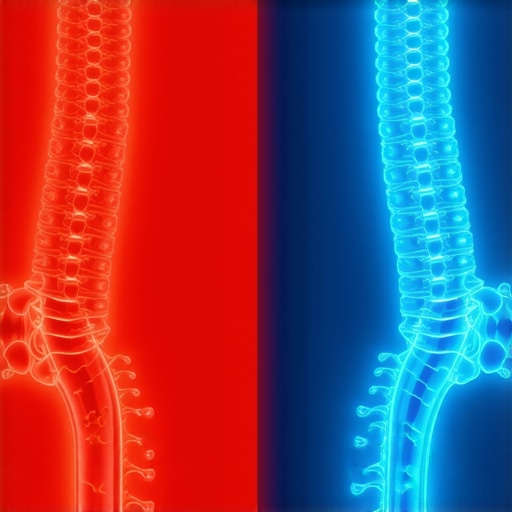 Instead of rolling the pain, you need to address the mechanics of how you move under load. For many, the hip hinge secret for people with chronic lumbar issues is the missing link. When you move through your hips rather than your spine, the ‘threat’ signal to your brain disappears. I’ve seen athletes drop their resting heart rate by 10 points simply by fixing their hinge and getting adjusted. Have you ever fallen into this trap? Let me know in the comments. We also have to look at the ‘bottom-up’ approach. Sometimes the heart is working harder because the foundation is weak. For instance, why your squat depth is limited by your toes and not your hips can be a revelation for those struggling with back tension. When your feet can’t ground you, your spine overcompensates, leading back to that sympathetic overdrive we discussed earlier. Consistent, expert chiropractic adjustments that work are about more than just the ‘crack’; they are about neuro-muscular recalibration.Once you have achieved that initial neuro-muscular recalibration, the challenge shifts to keeping it. I used to think I was ‘fixed’ after one good session, only to have my heart rate spike again by Friday afternoon. Real progress comes from chiropractic techniques for faster recovery that emphasize home-care stability rather than just passive treatment. You need a system that prevents your nervous system from slipping back into that protective ‘high-alert’ mode.
Keep Your Progress Without Constant Clinic Visits
I have spent thousands on gadgets, from vibrating massage guns to expensive lumbar pillows, but the real breakthrough came when I stopped looking for a ‘cure’ and started looking for a routine. To keep your heart rate in that sweet spot, you need strategic chiropractic solutions for long-term back health that treat the body as a connected unit. My personal secret weapon is a simple lacrosse ball. I use it for ‘tack and stretch’ techniques on my rhomboids and middle trapezius. By pinning the muscle against a wall and moving my arm through its full range of motion, I am giving my nervous system the proprioceptive input it needs to let go of ‘fight or flight’ tension. This is far more effective than mindless stretching. Check out the specific way I use it in how to use a lacrosse ball to melt away mid-back knots to see exactly where I place it to drop my pulse before a workout. 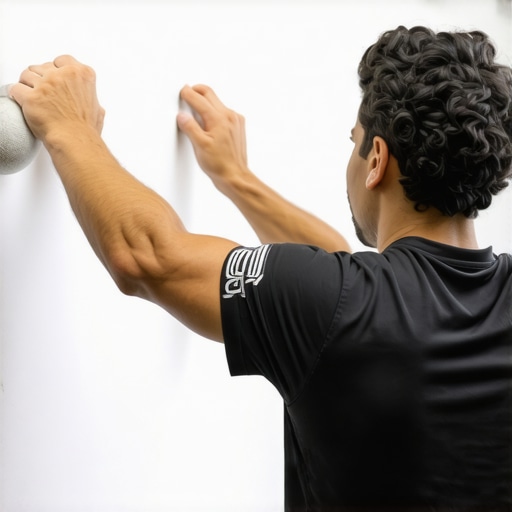
How do I maintain my results long-term?
The goal of any high-level sports rehab journey is to graduate to self-management. I focus on ‘spinal hygiene’ every single day. Just like you brush your teeth, you need to brush your nervous system. I follow essential tips for managing back pain through healthy lifestyle choices, specifically focusing on hydration and mandatory movement breaks every fifty minutes. Dr. Kelly Starrett, author of Becoming a Supple Leopard, emphasizes that ‘all human beings should be able to perform basic maintenance on their own bodies.’ For me, that maintenance involves checking my pelvic alignment every morning. If I feel a slight tilt or rotation, I immediately use the pelvic tilt fix that instantly boosts your squat depth to reset my foundation before I even sit down for breakfast.
Why Wearables and Your Spine are a Perfect Match
Looking ahead, I predict we are going to see a massive integration of real-time Heart Rate Variability (HRV) data in chiropractic clinics. Imagine getting an adjustment and seeing your ‘vagal tone’ improve on a screen in real-time. This kind of targeted chiropractic care will move from simply ‘fixing pain’ to ‘optimizing the human machine’ for peak longevity. We already see this in elite athletics, where the role of chiropractic care in effective sports injury recovery is as much about the nervous system as it is the skeletal structure. If you want to see a change in your own data today, I challenge you to try a ‘thoracic bridge’ before your next cardio session. It opens the ribcage and tells your heart it is okay to breathe deep and stay calm. Focus on the mechanics, and the pulse will follow.
The Most Surprising Lessons from My Journey to a Slower Pulse
Looking back at my years of struggle, I realized that my high pulse was never the enemy; it was a smoke signal from a spine that felt unsafe. First, I had to accept that physical structure dictates neurological function. You can’t think your way out of a physiological reflex. Second, I learned that ‘no pain’ doesn’t mean ‘no problem.’ My mid-back didn’t always hurt, but it was immobile, and that immobility was the silent driver of my high heart rate. Third, consistency is the only way to earn the trust of your nervous system. By implementing essential tips for managing back pain through healthy lifestyle choices, I stopped the cycle of flare-ups and kept my heart in the green zone.
The Personal Essentials I Use to Stay Balanced
If you are ready to take control of your internal rhythm, there are a few tools I swear by. I never travel without a high-quality lacrosse ball for myofascial release—it is the best way to maintain the work your chiropractor does. I also recommend diving into the work of Dr. Kelly Starrett for mobility or checking out The Oxygen Advantage by Patrick McKeown for deep-dive breathing science. These resources paired with proven chiropractic strategies for your sports rehab journey create a comprehensive plan that goes beyond just masking symptoms. For those who want more targeted help, I’ve found that learning how chiropractic adjustments can alleviate chronic back pain is often the first step in quieting a racing heart.
Your Heart Deserves a Break from the Static
You don’t have to live in a constant state of ‘fight or flight.’ Whether you are a high-level athlete or a busy professional, the health of your spine is the foundation of your cardiovascular resilience. When you prioritize expert chiropractic adjustments that work, you are giving your heart the mechanical freedom it needs to perform at its best. It is time to stop guessing why your pulse is high and start addressing the structural static that is holding you back. Have you ever noticed your heart rate drop after a massage or a back adjustment? Let me know your experience in the comments below!