
I was three reps into a heavy set of squats when it happened. Not a ‘pop’ in my knee or a tweak in my back, but a sudden, heavy sensation downstairs that made me rack the bar immediately. I’d spent years focusing on ‘bracing my core,’ but I realized right then that I’d been doing it in a way that was essentially trying to push my internal organs through the floor. It was a terrifying wake-up call for me. If you’ve ever leaked a little during a deadlift or felt a weird, dragging pressure after a gym session, you aren’t alone. You aren’t broken, and you don’t have to stop lifting. Today, I’m going to show you exactly how to sync your breath with your movement so you can lift heavy while keeping your pelvic floor safe and sound. [image_1]
Stop Bracing Like a Balloon About to Burst
Early in my lifting journey, I followed the old-school advice to a T: take a massive breath and hold it until the rep is over. I thought I was being safe, but I was actually making a huge mistake by creating a ‘pressure trap.’ I was shoving all that intra-abdominal pressure straight down onto my pelvic floor instead of using my diaphragm to distribute it outward against my abdominal walls. You really have to understand how your breathing mechanics are sabotaging your core strength before you add more weight to the bar. Many lifters struggle with this because they don’t realize that the pelvic floor is effectively the ‘bottom’ of their core canister. If you just press down without an outlet, something has to give. I even had to learn how to stop your lower back from arching during presses just to get my ribs in the right position to breathe properly. According to research cited by the American Physical Therapy Association, poorly managed intra-abdominal pressure is a leading cause of pelvic floor dysfunction in otherwise healthy athletes. When I finally stopped treating my torso like a balloon about to pop and started treating it like a functional pump, my strength went up and that ‘heavy’ feeling vanished.
Is This Actually Something You Need to Worry About?
You might think this is only a concern for powerlifters or people who have recently given birth, but that’s a myth I fell for early on. Every time you lift—whether it’s a barbell or a heavy grocery bag—you are managing pressure. If you’ve been using the lifting technique for parents with chronic back issues, you already know how important posture is, but the breath is the secret sauce that holds it all together. Have you ever felt that weird ‘heavy’ pressure or had a close call during a workout? I’d love to know if you’ve experienced this too, as it’s way more common than people admit. Learning to use diaphragmatic breathing to calm your nervous system is a great first step, but applying it under a heavy load is where the real protection happens. Let’s get into the actual mechanics of the ‘Exhale on Exertion’ method.
Master the Exhale on Exertion
The single most effective change you can make to protect your pelvic floor is mastering the ‘Blow as You Go’ technique. Instead of holding your breath throughout the entire lift, you need to initiate your exhale at the point of maximum effort. When you are at the bottom of a squat, start a forceful, controlled exhale through pursed lips—think of it as a ‘hiss’—the moment you begin your ascent. This creates a release valve for internal pressure. I’ve found that how chiropractic adjustments can help your breathing is often overlooked; if your mid-back is stuck, you can’t get that full expansion needed to manage this pressure properly. By exhaling on the way up, you allow the diaphragm to rise, which naturally lifts the pelvic floor rather than shoving it downward.
Keep Your Ribs Stacked Over Your Pelvis
Think of your torso as a canister. For the pressure to be distributed evenly, the ‘lid’ (your diaphragm and ribs) must be perfectly aligned with the ‘bottom’ (your pelvic floor). If your ribs are flared upward, the pressure escapes out the front and down the back, straining your spine and pelvic muscles. You should perform the simple test for rib flare and why it matters for your core before every heavy session. When I first started fixing my own lift, I realized I was arching my back so much that my ‘canister’ was essentially bent in half. Once I tucked my ribs down, the heavy pressure in my pelvis vanished instantly because the load was finally being shared by my entire core. 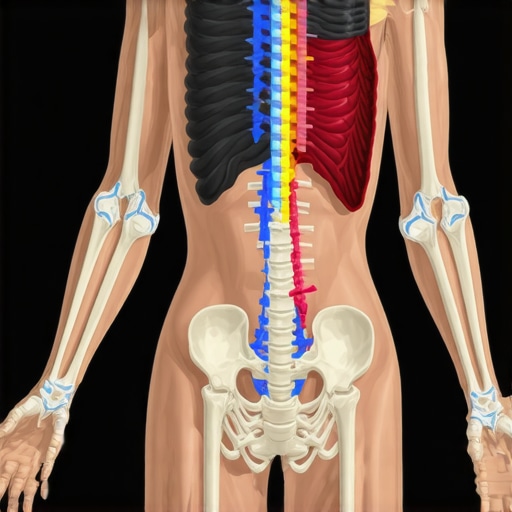
The Morning My Deadlift Almost Ended My Workout
I remember a specific Tuesday morning, cold and early, where I was rushing through a set of 275-pound deadlifts. I was lazy with my setup and held my breath like a vise from the floor to the lockout. Midway through the third rep, I felt a sharp, dragging sensation in my lower pelvis that felt like a localized internal weight. It was terrifying. I dropped the bar, took a second, and realized I hadn’t let a single bit of air out. I reset, focused on the deadlift cue that stops your lower back from rounding, and combined it with a sharp hiss as soon as the bar cleared my knees. The ‘heavy’ feeling didn’t come back. That messy rep taught me that the breath isn’t just about oxygen; it’s about structural integrity.
Why Your Glutes Need to Cooperate
Your pelvic floor doesn’t work in a vacuum; it’s physically connected to your hip rotators and glutes. If your glutes are ‘sleepy,’ the pelvic floor often over-contracts to compensate for the lack of hip stability, making it more prone to injury under load. If you find why your glutes won’t fire during your workout, you’re likely putting 20% more stress on your pelvic floor than necessary. In my practice, I often see that the science behind chiropractic adjustments for back pain relief directly translates to better pelvic floor function because we are clearing the neural pathways that tell those big muscle groups to do their job, taking the ’emergency’ load off your internal stabilizers.
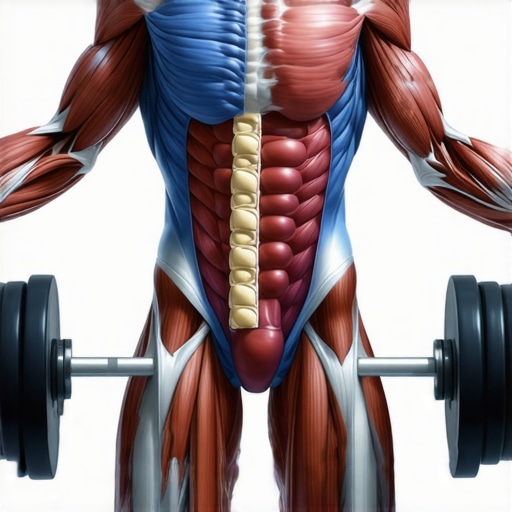
One of the biggest lies in the fitness world is that a ‘strong core’ must be a completely rigid core. I used to think that the stiffer I was, the safer I was, especially under a heavy bar. But here is the nuance: if your core is a brick, there is no shock absorption. In my experience, athletes who focus solely on ‘packing’ their abs like a piece of luggage are the ones who end up with the most pelvic floor issues. You need a core that acts more like a high-end suspension system than a concrete pillar. When you are too rigid, the force of the barbell doesn’t get distributed; it gets hammered straight down into your pelvic floor because it has nowhere else to go. This is where the truth about no pain no gain in sports rehab comes into play—it’s not about trying harder or squeezing tighter; it’s about shifting how you manage the load through fluid movement rather than static tension.
Why an Iron Stomach is Actually Killing Your Progress
Most lifters are obsessed with building an ‘iron stomach,’ but they ignore the ‘yield.’ To protect your pelvic floor, your muscles need the ability to eccentrically load—that means they have to be able to lengthen under tension. If you are constantly ‘on’ and never let those muscles relax, they become hypertonic and weak. I’ve seen this time and again in my practice: a lifter comes in with back pain, and we find that their pelvic floor is stuck in a permanent state of contraction because they’ve been told to ‘squeeze’ everything at all times. Using expert chiropractic adjustments that work can often reset that neurological ‘high alert’ state, allowing the muscles to actually do their job of stabilizing without suffocating your internal organs. Have you ever fallen into the trap of thinking you need to be 100% rigid throughout every single lift? Let me know in the comments.
Does Your Lifting Belt Mask Poor Pressure Management?
This is a question I get from advanced lifters all the time. A belt is a fantastic tool for performance, but it’s often used as a crutch to compensate for a lack of internal pressure control. If you rely on the belt to hold you together, you aren’t actually learning how to use your diaphragm to create 360-degree stability. In fact, a study published in the Journal of Women’s Health Physical Therapy suggests that high-intensity athletes often suffer from pelvic floor dysfunction not because of muscle weakness, but because they rely on external bracing rather than internal regulation. If you’re curious about how to build that internal strength, I highly recommend looking at the best core exercises for people who hate planks, which focus on dynamic stability rather than just holding a stiff position. Using a belt is fine, but you should be able to manage the same weight without it while keeping your pelvic floor silent.
Stop Accepting Leaking as a Badge of Honor
There is a weird subculture in powerlifting and CrossFit where leaking a little during a PR is seen as a sign of extreme effort. Let’s be very clear: it is actually a sign of a pressure leak. It means your ‘canister’ has failed at its weakest point. You wouldn’t ignore a leaking pipe in your house, so don’t ignore one in your body. This is a crucial part of how we revolutionize your rehab—by teaching you to respect the physiological signals your body is sending. By integrating the science behind chiropractic adjustments into your recovery, we ensure your spine and pelvis are aligned so that when you do exhale on exertion, the pressure follows the path of least resistance—out of your mouth, not out of the bottom of the system. If you keep ignoring these signs because they seem ‘normal’ in the gym, you are just waiting for a more significant structural injury to occur down the road.
Test Your Pressure with a Simple Tactical Cue
I don’t just walk into the rack and hope for the best anymore. To keep my pelvic floor in the ‘safe zone’ during my heavy sets, I use a specific feedback loop that I developed after months of trial and error. I take a light, 12-inch loop resistance band and place it around my lower rib cage, just above my waist. The goal isn’t to restrict movement, but to provide a physical boundary for my breath to push against. If I only feel the band move in the front, I know I’m leaking pressure toward my lower back and pelvic floor. I need to feel that band expand 360 degrees. Knowing how to choose the right resistance band is helpful here, but for this specific drill, the lighter the better. It’s about sensation, not resistance.
How do I maintain this core-pelvic synergy over time?
Consistency is the only way to turn a conscious ‘hiss’ into a subconscious habit. I’ve integrated strategic chiropractic solutions for long-term back health into my monthly routine to ensure my sacroiliac joints are moving freely. If your SI joint is locked, your pelvic floor muscles will often stay ‘guarded,’ making it nearly impossible to manage pressure effectively. You also need to look at essential tips for managing back pain through healthy lifestyle choices like hydration and sleep, because systemic inflammation makes these delicate tissues much more reactive and prone to fatigue. Dr. Stuart McGill, a world-renowned expert in spinal biomechanics, often emphasizes that the ‘stiffness’ required for a heavy lift must be balanced with ‘gliding’ during recovery. This is why the role of chiropractic care in effective sports injury recovery is so vital; we aren’t just ‘fixing’ a pop, we are maintaining the mechanical environment that allows your core to function as a unit.
The Future of Pressure Management in Lifting
I believe we are on the verge of a tech revolution in the weight room. I predict that within the next decade, we will see ‘smart’ lifting belts and compression gear equipped with internal pressure sensors that sync to your phone, giving you a real-time ‘heat map’ of where your intra-abdominal pressure is going. Until then, we have to rely on our internal sensors. If you’ve been struggling with that heavy feeling, I recommend trying this today: spend three minutes of your warm-up doing 90/90 breathing with a hand on your lower belly and a hand on your ribs. If the belly hand moves up while the ribs stay still, you’re not ready for the barbell yet. For those of you serious about your longevity, integrating targeted chiropractic care to enhance athletic performance is the best way to ensure your frame can handle the pressure you’re putting on it. Give that 360-degree band cue a shot during your next squat session and see if that ‘heavy’ feeling starts to fade.
Lessons from the Barbell That Changed Everything
Reflecting on my journey from that terrifying squat session to where I am now, three major ‘lightbulb moments’ stand out. First, I realized that slowing down to master the breath wasn’t a step backward; it was the only way to move forward safely. I used to think of my core as a solid wall, but I now see it as a dynamic system that needs to expand and contract. Second, that audible ‘hiss’ on exertion isn’t just for show—it is the most reliable pressure release valve you have. Finally, I learned that a ‘perfect’ brace looks different for every lift. A max effort deadlift requires a different internal environment than a high-rep set of kettlebell swings.
The Gear and Guidance I Actually Use
I don’t believe in cluttering your gym bag, but three resources have been non-negotiable for my longevity. I constantly revisit Dr. Stuart McGill’s Back Mechanic because his focus on spinal hygiene changed how I approach every movement. For physical feedback, a simple 12-inch resistance band around the ribs is the best coach I have ever had for 360-degree expansion. #IMAGE_PLACEHOLDER_E# Most importantly, I prioritize strategic chiropractic solutions for long-term back health. Having a professional who understands the mechanics of a heavy lifter ensures my pelvis and spine are never fighting against the loads I am asking them to carry.
Building a Body That Doesn’t Break
You don’t have to live in fear of your next heavy set or accept leaking as an inevitable part of the sport. By learning to manage your internal pressure and respecting your pelvic floor as much as your quads or lats, you are setting yourself up for decades of progress. This isn’t just about avoiding a ‘heavy’ sensation; it is about effective sports injury recovery and prevention that actually works. If you are ready to stop guessing and start lifting with total confidence, consider making healthy lifestyle choices that support your nervous system and structural alignment. We are here to help if you want to contact us and get a professional assessment of your lifting mechanics. Have you ever felt that ‘heavy’ pressure during a specific exercise, and did changing your breath help? Let me know in the comments below!