
Picture this. It is 3:00 AM. You are deep in a peaceful, restorative sleep, dreaming of anything but your legs. Suddenly, a searing, white-hot knot of agony rips through your lower leg. Your toes curl downward against your will, your calf hardens into a solid block of concrete, and you are left clawing at your sheets, trying not to wake the entire neighborhood. If you have ever experienced this level of primal panic, you are not alone. For years, I suffered from these exact same agonizing wake-up calls, desperately chugging water and stretching my legs until they were sore, only for the spasm to return the very next night.
The Midnight Nightmare That Wouldn’t Quit
For a long time, I made the classic mistake of thinking a single glass of water before bed or a quick hamstring stretch would magically cure my stubborn spasms. It did not. In fact, I was actually making my body more prone to cramping because I completely misunderstood how my lower limbs interact with my spine and nervous system. My athletic performance suffered, and my morning runs felt awful. I learned the hard way that when your legs feel heavy after a short run, or when your calves constantly lock up, your body is screaming that something deeper is physically out of alignment.
Are Bananas and Water Actually Enough to Stop This?
Most people will tell you to just eat a banana, drink some electrolyte replacement, and call it a day. But let’s be totally honest: is that basic advice actually worth the hype when you are dealing with chronic, recurring neurological spasms? The short answer is absolutely not. While hydration matters, research published in the Journal of Athletic Training indicates that muscle fatigue and altered neuromuscular control—not just dehydration or electrolyte depletion—are the true primary drivers of exercise-associated muscle cramping. When your spinal alignment is compromised or your hips are locked up from sitting all day, the nerves traveling down to your lower limbs are constantly irritated, keeping your calf muscles in a hyper-sensitive, pre-spasmed state.
Why Your Alignment and Movement Patterns Hold the Real Key
Once I stopped treating my calves as isolated muscles and started looking at my entire kinetic chain, everything changed. Your calves do not just work on their own; they react to how your feet strike the ground, how your hips move, and how your lower back stabilizes your spine. For instance, many people do not realize that your foot arch affects your knee alignment and directly impacts the workload placed on your lower leg muscles. If you are constantly walking or running on an unstable foundation, your calf muscles are forced to overwork just to keep you upright, leading to those brutal midnight tight knots. By focusing on targeted joint mobility, smart movement habits, and professional structural care, you can finally calm those overactive nerves and restore normal muscle function. Have you ever been jolted awake by one of these agonizing leg spasms and felt completely helpless? I want to hear your story, so please let me know in the comments below!
To finally silence the nighttime alarms in your lower legs, we have to look beyond the water bottle. Think of your nervous system as an electrical grid. When your lower back is compressed or your hips are locked up, it is like a power line getting pinched by a fallen branch. The lightbulb at the end of the line—in this case, your calf muscle—starts flickering violently. To stop the flicker, you do not change the bulb; you clear the branch off the wire. This means restoring space to your lumbar spine and mobilizing your lower joints so your nerves can send clean, unbothered signals.
The Three-Step Neural Reset to Stop the Spasm Cycle
Here is how you can systematically dismantle the tension in your lower body before you crawl into bed tonight. This routine targets the root mechanical causes of muscle cramping rather than just trying to stretch a muscle that is already fighting for its life.
Step 1: Open Up Your Hips with a Targeted Release
When you spend all day sitting, your hip flexors shorten and pull your pelvis into a forward tilt. This anterior pelvic tilt places constant, low-grade tension on your sciatic nerve, which travels directly down into your calves. Instead of a basic hamstring stretch that actually irritates the nerve further, you need to open up your anterior chain. I highly recommend spending two minutes on the couch stretch that actually opens up your hips. By lengthening the front of your thighs and restoring a neutral pelvic position, you instantly slacken the neural tension running down the back of your legs.
Step 2: Gently Glide the Nerve Instead of Aggressively Stretching It
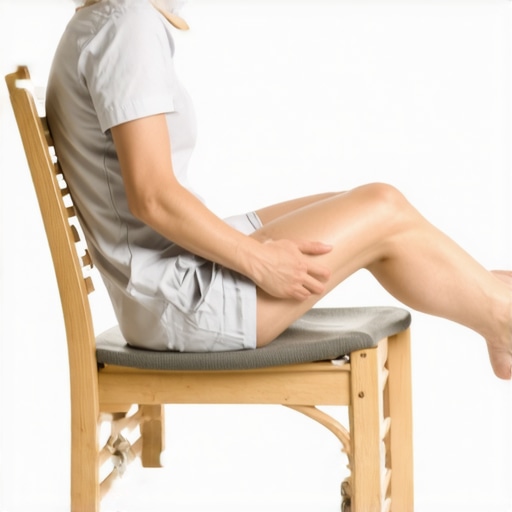
If your calves are constantly on the verge of cramping, pulling your toes back as hard as you can before bed is actually counterproductive. Your nervous system views this aggressive stretching as a threat and responds by contracting the muscle even tighter. Instead, we want to gently glide the nerve. Sit on the edge of a chair, slouch your spine forward, tuck your chin, and slowly straighten one leg while pointing your toes. Then, look up toward the ceiling as you pull your toes back. This flossing motion coaxes the nerve to move smoothly through its surrounding tissues rather than getting snagged. This gentle mobilization is one of the most effective proven chiropractic strategies you can use at home to calm an overactive nervous system.
Step 3: Release the Bottom of Your Foot
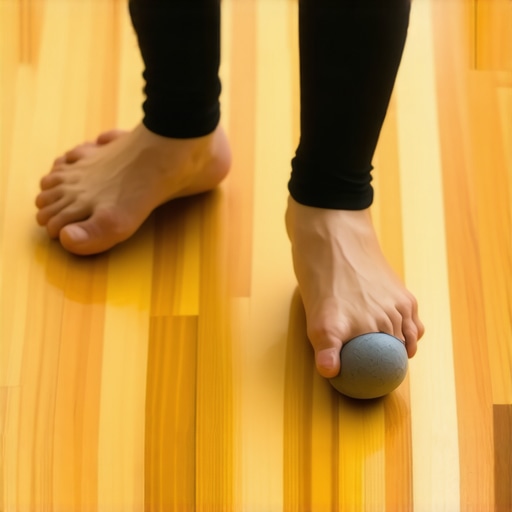
Because your plantar fascia connects directly to your calf muscle through the Achilles tendon, tension in your foot arch will lock up your lower leg. I remember a period during my half-marathon training when my left calf would seize like clockwork at 2:00 AM. In my frustration, I spent a messy week rolling my foot on a frozen water bottle and digging a golf ball into my arch. It was incredibly painful, but the midnight spasms vanished within three days. To do this safely and effectively, you can learn the correct way to use a tennis ball for muscle knots under your foot. Roll the ball slowly from your heel to the base of your toes, pausing and breathing into any tender spots for 30 seconds.
When Structural Alignment Needs Professional Hands
If you have mobilized your hips, flossed your nerves, and rolled your feet, but still wake up in agony, the underlying issue is likely a deeper structural joint restriction. When your pelvis or lower lumbar vertebrae are locked out of their normal movement patterns, no amount of home rolling will fully release the pinched nerve. This is where professional, targeted care comes into play. Seeking out expert chiropractic adjustments that work can instantly decompress those spinal segments, taking the physical pressure off the nerve roots and finally allowing your calf muscles to fully relax at night.
When you are struggling with recurring, agonizing leg cramps, most therapists will tell you to stretch more, drink more water, or get a massage. But in my experience, focusing solely on the local muscle tissue is a massive mistake that keeps people trapped in a cycle of chronic tightness. If your nervous system is constantly sending emergency alarm signals to your lower leg, manual rubbing is only a temporary band-aid. We need to look further up the kinetic chain to where those nerves originate.
The Decompression Myth in Modern Sports Rehab
Everyone says that stretching a tight muscle is the key to length and relief, but I have found that aggressive, static stretching of an already irritated nerve path actually triggers a protective spasm reflex. When a patient comes in complaining that their calf feels like a rock, the trap is to immediately dig into the muscle with heavy friction or a foam roller. This aggressive approach stimulates the muscle spindles to contract even harder to protect the area. Instead of forcing the tissue to release, we must first address the physical spinal restriction that is causing the nerve irritation in the first place.
Why Do Spinal Adjustments Work When Muscle Stretching Fails?
To understand why local therapies fall short, we have to look at how spinal mechanics govern lower limb function. A study published in the Journal of Manipulative and Physiological Therapeutics demonstrated that spinal manipulation has an immediate, down-regulating effect on motor neuron excitability. When you receive targeted expert chiropractic adjustments that work, you are not just ‘moving bones’—you are quite literally hitting a reset switch on the spinal cord level. This mechanical correction instantly reduces the hyper-active nerve firing that tells your calf muscle to cramp up in the middle of the night.
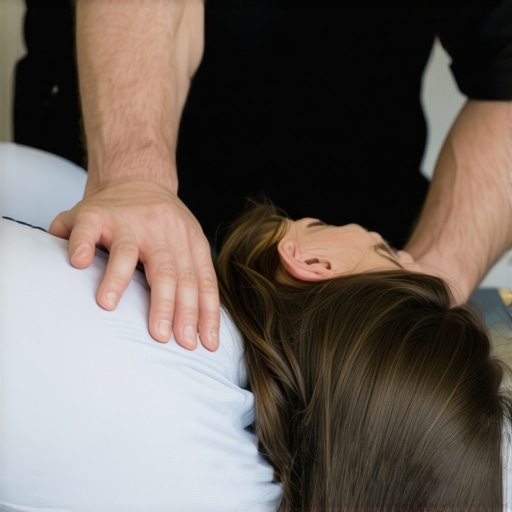
This is why incorporating proven chiropractic strategies into your regular recovery routine is so powerful. It addresses the neurological root of the problem, rather than just chasing the physical symptoms down your leg. Have you ever fallen into the trap of aggressively stretching a tight muscle only to make it feel stiffer the next day? Let me know in the comments below!
The One Mistake to Avoid When Managing Sciatic Nerve Tension
The most common mistake I see athletes make is assuming that all lower leg pain requires deep, painful soft-tissue work. If your nerve is compressed at the lumbar level, heavy pressure on the calf can actually worsen the neural inflammation. Instead, focus on restoring gentle joint mobility. By utilizing precise chiropractic techniques for faster recovery, you can unload the joints of your lower back and pelvis, allowing the sciatic nerve to glide freely. Combined with smart movement habits, this comprehensive approach ensures that you are treating the true source of your pain, not just the symptom.
How to Maintain a Spasm-Free Kinetic Chain for the Long Haul
Once you clear the initial neural irritation and get your spine moving correctly, the real challenge begins: keeping it that way. You cannot expect a single round of therapy or one week of rolling to protect you forever if you return to the exact same daily habits. To maintain your results, you need a daily system that reinforces pelvic stability and keeps your nervous system calm. In my personal routine, I do not rely on complex gym setups. Instead, I use two specific tools every single day: a high-density, small-diameter lacrosse ball and a heavy-resistance loop band.
I prefer the lacrosse ball over standard foam rollers because its firm density allows me to target the deep lateral hip rotators, such as the piriformis, which sit directly over the sciatic nerve path. Placing this ball under my hip while sitting on the floor and gently shifting my weight allows me to release deep myofascial restrictions that a soft roller simply cannot reach. This daily maintenance is crucial for preventing the silent structural build-up that leads to acute flare-ups. If you are already dealing with discomfort, understanding how to manage a flare-up of chronic lower back pain can save you weeks of agony and keep you on track.
How Do I Maintain Neuromuscular Health Over Time?
Consistency beats intensity every single time. To keep your lower limbs free of spasms, you must commit to daily movement snacks—short, two-minute mobilizations spread throughout your workday—to break up the physical stagnation of sitting. The nervous system adapts to the positions you spend the most time in. If you sit at a desk for eight hours, your brain learns to keep your hip flexors short and your glutes turned off. To combat this, I perform three sets of glute bridges using a heavy-resistance loop band around my knees right before my evening workout. This simple movement patterns lateral hip stability and wakes up the posterior chain, ensuring my lower back doesn’t take a beating during my runs.
As sports science continues to evolve, I predict we will see a major shift away from passive recovery tools like massage guns and a massive move toward active neuromuscular re-education. Industry leaders, including the specialists at the American Chiropractic Association (ACA), emphasize that active patient participation and targeted motor-control training are the true future of long-term musculoskeletal wellness. We are moving toward a world where preventing injuries is about training the brain how to fire muscles in the correct sequence, rather than just rubbing a sore spot after the damage is done. Utilizing strategic chiropractic solutions for long-term back health will become the gold standard for athletes who want to stay competitive as they age.
If you want to permanently break the spasm cycle, stop waiting for the next midnight cramp to strike before you take action. Try this advanced tip tonight: right before bed, spend exactly two minutes performing the sciatic nerve gliding exercise I outlined above, followed by 60 seconds of gentle tennis ball rolling under each foot. Do not push into pain; keep the movements smooth and fluid. This simple combination tells your brain that it is safe to power down, lowering neural drive and letting your muscles relax into a deep, uninterrupted sleep.
When you are fighting chronic, agonizing calf spasms, the instinct is always to stretch the muscle or reach for water. But as we have explored, local fixes are nothing more than temporary band-aids when the root cause is a compressed neural pathway. True, lasting relief requires a structural reset that addresses the entire kinetic chain from your feet to your lower spine.
The Hardest Lesson I Learned About Chronic Calf Spasms
For years, I believed the myth that a tight muscle just needed more aggressive stretching. This is the biggest trap in sports rehab. When I finally looked at my spine, I realized that my midnight calf cramps were actually defensive reactions to pelvic misalignment. Here are the three most critical realizations that changed how I approach lower limb recovery:
- Aggressive stretching is a threat signal: Yanking your toes back when a nerve is already irritated triggers a protective contraction, making the spasm cycle worse over time.
- The spine dictates lower leg tension: If your pelvis is rotated from sitting all day, the sciatic nerve is under constant tension before you even take your first step.
- Local rubbing won’t fix structural compression: Foam rolling a calf muscle cannot decompress a pinched nerve root in your lumbar spine.
My Essential Recovery Toolkit for Spasm-Free Nights
You do not need an expensive rehab clinic to start restoring balance to your lower body. Over years of trial and error, I have narrowed my daily routine down to a few highly effective tools and resources that I trust completely:
- A high-density lacrosse ball: This is my go-to tool for targeted myofascial release. It is firm enough to penetrate the deep gluteal muscles that often compress the sciatic nerve. If you want to maximize its effectiveness, check out how to use a tennis ball for muscle knots to safely release tension without bruising the tissue.
- A heavy loop resistance band: Essential for waking up the glutes and stabilizing the pelvis before any workout or long walk.
- Professional chiropractic care: When self-mobilization hits a wall, getting targeted structural adjustments is the only way to decompress stubborn joint restrictions. To understand how this works on a neurological level, read about the science behind chiropractic adjustments for back pain relief.
Your Path to Uninterrupted Sleep Starts Tonight
You do not have to live in fear of the 3:00 AM wake-up call. By shifting your focus away from the painful muscle and addressing the structural alignment of your spine and pelvis, you can finally calm your nervous system. Taking a proactive approach with strategic chiropractic solutions for long-term back health is the most reliable way to keep your lower limbs moving freely and pain-free. Commit to a gentle neural glide and foot release tonight, and let your body experience what true, deep recovery feels like.
Have you ever tried aggressively stretching a tight calf only to have it lock up even worse the next day? Let me know your experience in the comments below!