
I remember it like it was yesterday: I reached down to pick up a stray sock, and snap. It wasn’t a sound, but a sensation—a white-hot bolt of lightning that welded my hips to my ribs. I spent the next twenty minutes contemplating my life choices while lying face-down on the rug. If you have lived with chronic back issues, you know that heart-sinking moment when the ‘ache’ turns into a full-blown flare-up. It feels like your body has betrayed you. For years, I did exactly what everyone tells you to do: I crawled into bed and stayed there. But that was my biggest mistake. I learned that why bed rest is the worst thing for acute back spasms isn’t just a theory; it’s a recipe for permanent stiffness. Today, I want to share the exact roadmap I use to get back on my feet without the panic. We are going to talk about calming your nervous system, moving safely, and why your usual ‘ice it and hide’ strategy might be keeping you stuck.
Your Spine Isn’t Made of Glass
When the pain is this loud, it’s easy to feel like you’ve broken something fundamental. It’s scary. You start moving like a robot, afraid that one wrong twist will end it all. I spent way too much time in that fear-loop early on, but here is the truth: your back is incredibly resilient, even when it’s angry. I used to think I needed to be perfectly still to heal, but a study published in the Journal of the American Medical Association (JAMA) found that remaining active—even with low-intensity movement—leads to significantly better recovery outcomes than resting. Staying still actually tells your muscles to guard and tighten even more. Have you ever felt that terrifying ‘locking’ sensation the moment you try to stand up after an hour on the couch? That is your body overprotecting itself. We need to gently convince your brain that you aren’t actually in danger. Sometimes that means looking into how chiropractic adjustments can alleviate chronic back pain by resetting those panicked signals. Have you ever been stuck on the floor wondering if you’ll ever stand up straight again? I want to hear your ‘sock moment’ in the comments.
Is Movement Really Possible When You Can Barely Crawl?
It sounds like a cruel joke to tell someone in a flare-up to ‘just move.’ I get it. I’ve been the guy using the kitchen counter as a walker. But movement doesn’t mean hitting the gym; it means avoiding the stagnation that turns a three-day flare-up into a three-week ordeal. I made the mistake of over-icing for years, not realizing that icing your lower back might be slowing down recovery by restricting the very blood flow needed to flush out inflammation. We need to find that ‘goldilocks’ zone of activity where you’re moving enough to stay loose but not so much that you’re aggravating the nerves. We’ll dive into the specific ‘micro-movements’ that saved me next.I once spent forty minutes on my kitchen floor, face-down, trying to negotiate with my lower back muscles like I was a hostage negotiator. I had tried to force a ‘stretch’ that only made things worse. That was the day I realized that why your morning stretches might be making your back more sensitive is a reality when you’re in the middle of a crisis. I had to pivot from ‘fixing’ the pain to ‘calming’ the engine.
Stop the Panic and Start the Pulse
The first thing you need to do when your back locks up is to stop the adrenaline dump. When you’re in pain, your brain sends a signal to your muscles to tighten even more to ‘protect’ the area. It’s a vicious cycle. I broke that cycle by lying on my back with my knees bent and focusing entirely on my breath. Learning how to use diaphragmatic breathing to calm your nervous system is the most underrated tool in your recovery kit. By expanding your belly rather than your chest, you physically signal to your brain that the ‘threat’ is gone. 
Breathe Like Your Spine Depends on It
Don’t just take shallow sips of air. Think about filling your lower ribs and your pelvic floor. This internal pressure acts like a natural airbag for your spine. When I was stuck on that kitchen floor, this was the only thing that stopped the ‘lightning’ sensations. It resets the tone of your core muscles without you having to lift a finger.
The Micro-Movements That Melt Muscle Guarding
Once your breath is steady, you don’t jump up and walk. You wiggle. I’m talking about movements so small a bystander might not even see them. Think about gently tilting your pelvis or sliding a heel an inch at a time. This is where the science behind chiropractic adjustments for back pain relief becomes so relevant; it’s about restoring the proper communication between your joints and your brain. If the joints are ‘stuck,’ the brain stays on high alert. Seeking out unlocking back pain relief expert chiropractic adjustments that work can often bridge the gap between ‘I can’t move’ and ‘I’m back in the game’ by resetting those joint receptors quickly and effectively.
Check Your Environment for Hidden Triggers
While you’re recovering, you have to stop pouring gasoline on the fire. You might be making progress during your movements only to undo it by how you sit or sleep. For example, understanding why your sleep position is creating a sharp pain in your shoulder or back is often down to a lack of structural support that keeps your muscles working all night. Similarly, if you’re trying to work through the discomfort, learning how to set up your laptop for better neck alignment can prevent that cascading tension that eventually hits your lumbar spine. Small adjustments to your daily life are the difference between a flare-up that lasts a single afternoon and one that drags on for weeks of misery.Most people treat a back flare-up like a localized fire, but the smoke rarely starts where the heat is felt. The biggest mistake I see—and one I made for years—is the obsession with ‘stretching it out.’ We’ve been conditioned to believe that if a muscle feels tight, we should pull on it. However, if your muscles are in a protective spasm, stretching is like pulling on a knotted rope; it only makes the knot tighter. This is exactly why your hip flexors are still tight after a year of stretching. Your brain isn’t tightening those muscles because they are short; it’s tightening them because it doesn’t trust your spine to stay stable.
The MRI Trap and Why Your Results Might Be Normal
Another trap is the ‘MRI Panic.’ We get a scan, see words like ‘bulge’ or ‘degeneration,’ and assume we are broken. But the science tells a different story. A landmark study by Brinjikji et al., published in the American Journal of Neuroradiology, revealed that over 50% of 30-year-olds with no pain have disc degeneration. By age 50, that number jumps to 80%. Your scan might just be showing ‘wrinkles on the inside.’ Learning how to read your mri report without panicking is vital because the fear of what you see on that film can actually increase your physical pain through a process called central sensitization.
Can Your Ankle Mobility Secretly Sabotage Your Spine?
If you’ve been doing all the ‘right’ back exercises and still feel stuck, you need to look at your foundation. Your body is a kinetic chain. If your ankles are stiff, your lower back has to pick up the slack every time you walk or squat. I finally saw a breakthrough when I addressed the hidden link between your ankles and lower back health. 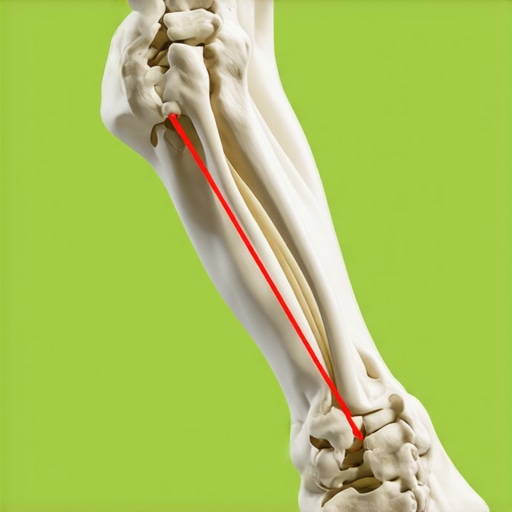 When your foot doesn’t move correctly, it forces a cascade of compensations upward. You might notice why your foot arch affects your knee alignment during lunges, which eventually torques the pelvis and strains the lumbar discs.
Stop Chasing the Sound of the Pop
We also need to talk about the ‘oops’ factor of chasing the sound of a ‘crack.’ Many people think the louder the noise, the better the adjustment. That’s a myth. The sound is just gas releasing from the joint capsule, and while it feels great, the real magic is the neurological reset. Relying on self-cracking is a dangerous game because you usually end up ‘adjusting’ the joints that are already moving too much, rather than the ones that are actually stuck. Understanding the science behind that popping sound in your joints helps you realize that precision matters more than volume. In the world of boost your sports rehab journey with proven chiropractic strategies, we focus on restoring function, not just making noise. Finally, ditch the ‘no pain, no gain’ mantra. In acute recovery, pushing through sharp pain isn’t ‘tough’—it’s a neurological setback. Pushing too hard too fast is the truth about no pain no gain in sports rehab that most athletes learn the hard way. Have you ever fallen into the trap of thinking a ‘perfect’ MRI meant a life of pain? Let me know in the comments.Once you move past the fear of what’s on those films, the focus shifts to the long game: maintenance. I’ve realized that long-term relief requires more than just reactive care; it’s about building a toolkit of habits and gear that makes resilience second nature. For me, that meant moving away from ‘waiting for the pain’ and toward strategic chiropractic solutions for long-term back health. One of my non-negotiables is a simple lacrosse ball. Learning how to use a lacrosse ball for better thoracic mobility changed how my upper back felt after eight hours of typing. By releasing the tension in my mid-back, I took the mechanical ‘drag’ off my lumbar spine. It’s a tool that costs less than a latte but has saved me thousands in missed work days. I’m also a huge advocate for enhancing athletic performance with targeted chiropractic care because it keeps the communication lines between my brain and my muscles open, ensuring my glutes actually fire when I’m lifting something heavy.
The Gear That Actually Lives in My Gym Bag
Beyond the lacrosse ball, I keep a specific set of resistance bands nearby. Most people buy the heaviest ones possible, but for spinal stability, ‘less is more.’ I use them for micro-movements to wake up the deep stabilizers of the spine.  I predict that in the next few years, we’ll see a massive shift toward wearable biofeedback—devices that don’t just track steps, but monitor the specific shear force on our vertebrae during a lift. This real-time data will allow us to adjust our form before a flare-up even begins. Until then, we have to be our own sensors by listening to the ‘whispers’ of stiffness before they become the ‘screams’ of a spasm.
How can I keep my back healthy for the next decade?
The secret isn’t a single exercise; it’s the compounding effect of essential tips for managing back pain through healthy lifestyle choices. Dr. Stuart McGill, author of the seminal text Back Mechanic, emphasizes that ‘spine hygiene’ is a 24-hour job. It’s not just the 30 minutes at the gym that counts; it’s the 23.5 hours of how you sit, stand, and sleep. I’ve found that even my hydration levels impact my disc health, as those spinal cushions need water to maintain their height and shock-absorbing properties. If you’re constantly dehydrated, your discs are literally working with a flat tire.
The 10-Second Fix You Can Do Right Now
If you are sitting at a desk right now and your mid-back is starting to burn, stop what you’re doing. I want you to try the 10-second posture reset you can do at your desk. It’s not about sitting ‘straight’ like a soldier; it’s about finding the stack where your head sits effortlessly over your ribcage. This small adjustment takes about five pounds of pressure off your neck instantly. When we integrate these tiny habits with professional guidance—like the kind found in the role of chiropractic care in effective sports injury recovery—we stop being victims of our anatomy and start being the architects of it. Give that 10-second reset a try right now and see if you feel that ‘release’ in your shoulders; I bet you’ll be surprised at how much tension you were holding for no reason.
Why My Best Progress Happened Outside the Gym
Reflecting on years of trial and error, the biggest lightbulb moment was realizing that my back wasn’t failing me; I was simply failing to listen to its signals. One hard truth I had to face was that why you should stop cracking your own neck for relief is about more than just the sound; it is about avoiding hypermobility in joints that are already working too hard. I also learned that pain is rarely a straight line. You will have days where you feel incredible and days where a stiff breeze makes you nervous, but the goal is to raise your baseline over time. Lastly, I discovered that essential tips for managing back pain through healthy lifestyle choices—like staying hydrated and managing stress—did more for my inflammation than any pill ever could.
The Gear That Saved My Sanity
You do not need a thousand-dollar home gym to stay mobile. My personal toolkit is actually quite simple. First, a firm lacrosse ball is my go-to for localized tension; knowing how to use a lacrosse ball for better thoracic mobility allows me to unlock my mid-back before it causes a lumbar flare-up. #IMAGE_PLACE_HOLDER_E# Second, I rely on light resistance bands to wake up my stabilizers without overtaxing my joints. Finally, I trust professional oversight. Integrating the role of chiropractic care in effective sports injury recovery into my routine ensured I was not just guessing. Having an expert eye to spot compensations before they become injuries is the most valuable tool I have.
It is Time to Trust Your Body Again
If you are currently in the middle of a flare-up, please know that this is not your new permanent reality. Your body is capable of incredible healing if you give it the right environment and the right movements. By focusing on strategic chiropractic solutions for long-term back health and moving with intention, you can break the cycle of fear. Don’t let a bad day convince you that you are broken. Start small, breathe deep, and keep moving forward. What was the one ‘trigger’ that caused your most recent flare-up, and how did you handle it? I would love to hear your story in the comments below.