
I spent three months wearing a Velcro brace that smelled like an old locker room, convinced my arm was simply broken. I’d try to open a heavy door or even just carry a single bag of groceries, and that familiar, sharp zing would shoot from my forearm straight into my brain. It was frustrating, humbling, and, honestly, a bit scary. I made the classic mistake of thinking that because it hurt at the elbow, the elbow was the only thing I needed to fix. I iced it until my skin was blue and popped ibuprofen like they were mints, but the relief never lasted more than an hour.
Your elbow is the victim not the criminal
You’ve probably tried the stretches. You’ve probably bought the ergonomic keyboard. Maybe you’ve even looked into the best way to position your mouse to avoid wrist pain, which is a great start, but it is only one piece of the puzzle. The real reason your elbow tendonitis hasn’t cleared up is that your elbow is caught in the middle of a functional war between your shoulder and your wrist. If your shoulder blade isn’t stable or your neck is sending messy signals down the line—much like how why your thumb pain is actually coming from your neck—your elbow has to work double shifts to compensate. Today, I am going to show you how to stop treating the symptom and start fixing the source so you can finally get back to the gym or the golf course without that nagging ache. Have you ever felt like you were doing all the right rehab exercises but still couldn’t shake the pain?
Does this rehab stuff actually work for real people?
It is a fair question to ask if any of this is worth the hype, especially when you feel like you have already tried it all. We often get stuck in a cycle of treating tendonitis as an inflammatory issue, but science tells us a different story. According to the British Journal of Sports Medicine, chronic tendon pain is often tendinosis, which involves a breakdown of collagen rather than just simple inflammation. This means that total rest might actually be the worst thing you can do for long-term health. You need progressive movement and a better understanding of how your upper body moves as a single unit. For instance, high-level athletes often find that the move every baseball pitcher needs for elbow health is actually about scapular control rather than just forearm strength. Early in my journey, I ignored my mid-back stiffness entirely, not realizing that my frozen ribs were forcing my arm into a compromised position every time I reached for something. By focusing only on the spot that hurt, I was essentially trying to fix a leaky faucet by mopping the floor. We are going to change that approach right now and look at the body as the connected machine it really is.
Stop resting and start loading the tissue
If there is one thing I wish I had known years ago, it is that absolute rest is often a slow death sentence for tendon health. When we stop moving, the collagen fibers in our tendons become disorganized. I remember sitting on my couch for two weeks, barely moving my arm, only to find that the first time I tried to lift a coffee mug, the pain was sharper than ever. To fix this, you need to introduce progressive load. This is not about pushing through agony, but it is about finding the right threshold. You can learn more about the truth about no pain no gain in sports rehab to understand why sitting still is rarely the answer.
Find your entry point for weight
Start with isometrics—holding a weight steady without moving the joint. I started by just holding a five-pound dumbbell in a neutral wrist position for thirty seconds. It felt ridiculous, but it signaled my nervous system that the tissue was safe. Once you can hold weight without a spike in pain, move to slow eccentrics, which is the lowering phase of a movement. This controlled tension is what actually remodels the tendon. 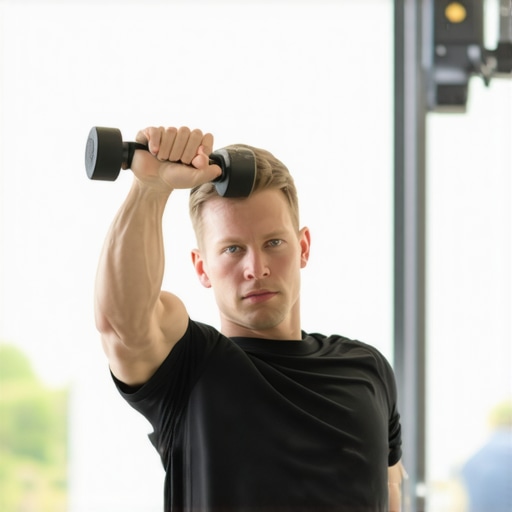
Clear the path from your neck and upper back
If the pipes are clogged at the source, the faucet at your elbow will never work right. I realized my own elbow flare-ups usually happened after a long week of hunching over my laptop. My neck was stiff, and my mid-back felt like a sheet of plywood. If you have ever wondered how to treat tech neck symptoms while working from home, you already know that posture is not just about looking good—it is about nerve conduction and blood flow.
Wake up your ribcage and thoracic spine
When your ribs are stuck, your shoulder blade cannot glide. When your shoulder blade cannot glide, your elbow overextends to compensate for that lack of range. I started using a simple drill where I would lie on a foam roller horizontally across my mid-back. If you do not have a roller, you should learn how to use a lacrosse ball for better thoracic mobility to pinpoint those stubborn spots between your blades. For me, the breakthrough came when I felt a release in my mid-back, and suddenly, my grip strength felt twenty percent stronger. It turns out why your ribs might be the source of your mid-back pain is a concept that applies directly to distal limb issues like tennis elbow.
Build a stable base with scapular control
Your rotator cuff and your scapular muscles are the foundation of every arm movement. If the foundation is shaky, the elbow takes the brunt of every force. I used to do endless bicep curls and tricep extensions, but my elbows always screamed. The fix was shifting focus to the back of my shoulder and the stability of my shoulder blade.
Master the serratus punch
I started incorporating the scapular stability move every baseball player needs into my daily routine. By training my shoulder blade to stay glued to my ribcage during movements, I took the sheer force off the common extensor tendon in my elbow. The first time I successfully completed a full set of push-ups without that stabbing sensation was the day I realized I was finally winning the war. It is all part of proven chiropractic strategies that prioritize global movement over local symptoms.Most people view the spine as a stack of Jenga blocks where a single ‘misalignment’ causes everything to tumble. This is one of the biggest myths in modern rehab. Your spine is not a fragile tower; it is a dynamic, resilient communication hub. When a chiropractor performs an adjustment, we are not just ‘shoving a bone back into place.’ We are providing a high-velocity, low-amplitude input to the nervous system. The science behind chiropractic adjustments for back pain relief shows that the benefit is largely neurophysiological—it is like rebooting a glitched computer rather than hammering a crooked nail. If you are only focusing on the mechanical ‘clunk’ of a joint, you are missing the forest for the trees. This neural reboot is why chiropractic techniques for faster recovery work so effectively on distal issues like that nagging elbow pain.
Stop over-stretching your way into more pain
We have been conditioned to believe that if something feels tight, we should pull on it. However, the ‘Oops’ factor here is significant: many people accidentally aggregate their nerve sensitivity by over-stretching. If your elbow or back feels tight, it might actually be under neural tension. For instance, why your morning stretches might be making your back more sensitive is often due to the fact that you are tugging on sensitized nerves rather than tight muscles. I see this all the time with people who have ‘tight’ legs; they spend hours on a mat, but why your hamstrings always feel tight even though you stretch them is usually because the sciatic nerve is being compressed at the spine, not because the muscle is short. Stretching a nerve is like pulling on a live wire—it just makes the alarm bells ring louder. #IMAGE_PLACE_HOLDER_C#
Does the sound of the adjustment actually matter for healing?
This is the question that separates the beginners from the experts. That audible ‘pop’ is simply gas bubbles being released from the joint fluid, a phenomenon known as cavitation. While it feels satisfying, the science behind that popping sound in your joints confirms that the therapeutic benefit comes from the rapid stretch of the joint capsule and the resulting neurological dampening of pain, not the noise itself. A study published in the Journal of Orthopaedic & Sports Physical Therapy highlights that manual therapy’s primary effect is modulating the central nervous system’s perception of threat. This is why managing back pain through healthy lifestyle choices must include movement variability, not just static ‘fixes.’ Have you ever fallen into the trap of thinking your back was ‘out’ when it was actually just a movement red flag? Let me know in the comments.After that initial neural reboot, I realized that I couldn’t just walk away and expect my body to remain in that high-performance state without a plan. Long-term success isn’t about one big fix; it is about the small, boring habits you do when nobody is watching. This is why strategic chiropractic solutions for long-term back health focus so heavily on movement literacy. I started looking at my rehab as a lifestyle shift rather than a temporary chore. If you want to move like an athlete, you have to maintain your ‘machinery’ with the same precision they do. Leveraging targeted chiropractic care to enhance athletic performance is about more than just surviving the work week—it is about thriving during your Sunday morning golf round or your evening CrossFit session.
The gear that actually lives in my gym bag
I am a bit of a minimalist, but there are a few tools that changed everything for my recovery. First, a high-density peanut ball. I use this specifically for thoracic spine extensions to combat the rounding that happens from staring at a screen. It is the only way I found to truly target the segments of the mid-back that get stuck. I also swear by thick grips on my dumbbells. By increasing the diameter of the handle, you force the muscles of the forearm and hand to engage more effectively, which actually protects the elbow joint from the shearing forces that cause tendonitis. This is a core part of effective sports injury recovery because it shifts the load from the tendon to the muscle belly where it belongs. 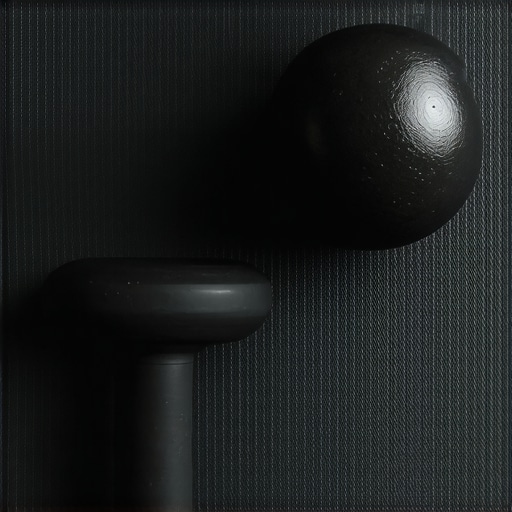
How do I stay ahead of the next flare-up?
Maintaining your progress requires a shift from fixing to monitoring. I follow the 80/20 rule: 80% of my results come from 20% of my movements—specifically compound movements with perfect form. Dr. Stuart McGill, a world-renowned expert on spine biomechanics, emphasizes the concept of proximal stiffness for distal mobility in his technical research. If my core is braced correctly, my elbow does not have to overwork. You can see this in action by learning the correct way to brace your core for heavy carries.
The future of injury prevention is watching you
Looking ahead, I believe we are moving toward a world where smart apparel and real-time biofeedback will be standard for the average person, not just pros. Imagine a shirt that vibrates when your shoulders round too far forward or an app that analyzes your squat depth in real-time. This kind of proven chiropractic strategy will eventually become automated, making it easier to stay out of pain. For now, your best tool is your own awareness. I challenge you to try this one advanced tip: the next time you pick up a heavy grocery bag, do not just grab it with your hand; engage your shoulder blade first, then lift. Feel the difference in your elbow tension? Let us keep that momentum going.
The hard truths I learned while trying to fix my arm
After years of chasing symptoms, I finally realized that my body wasn’t failing me—it was just speaking a language I didn’t understand yet. Here are the three ‘lightbulb moments’ that changed everything: First, the site of pain is almost never the site of the problem. I wasted months rubbing my elbow when the issue was a locked-up ribcage that refused to move. Second, movement is the only way forward. Total rest makes you stiff and fearful; controlled loading makes you strong and resilient. Third, your nervous system has a memory. Even after the tissue heals, your brain might keep the ‘pain alarm’ on. Learning how chiropractic care can shorten your injury recovery time was the key to turning that alarm off for good and regaining my confidence in the gym.
A few tools that belong in your recovery bag
If you are serious about getting back to your favorite activities, you need the right support. I trust these resources because they move beyond the ‘ice and rest’ myths that keep people sidelined:
- Thick Bar Grips: These snap onto any dumbbell and force your nervous system to distribute load through your whole arm, effectively sparing the elbow tendons from unnecessary strain.
- A High-Density Peanut Ball: This is essential for the thoracic mobility we discussed. It is the only way I have found to effectively target the specific segments of the mid-back while at home.
- Expert Clinical Guidance: Don’t try to DIY a complex injury forever. Finding expert chiropractic adjustments that work provides the neural reset you need to start your rehab exercises from a clean, pain-free slate.
You are more resilient than you think
It is easy to feel like your best days in the gym or on the golf course are behind you when a chronic injury sets in. But remember: your body is a self-healing machine that just needs the right inputs and a bit of patience. By combining smart, progressive loading with chiropractic adjustments that alleviate chronic pain, you are giving your tissues the best possible environment to rebuild and thrive. Don’t be afraid to start small, but don’t be afraid to start today. You’ve got this.
Have you ever felt like your rehab was stuck in neutral despite doing all the right stretches? Let me know in the comments below!