
I remember standing in the squat rack, bar heavy on my traps, feeling more like a folding lawn chair than an athlete. Every time I descended, my torso tipped forward so far I thought I’d kiss the floor. My lower back wasn’t just tired; it was angry. I was doing everything “right” according to the popular tutorials, but my long femurs were making my life a living nightmare. I spent years thinking I was just “tight” or “weak,” when in reality, I was just fighting my own skeleton.
Stop Blaming Your Lack of Mobility for Your Squat Struggles
For a long time, I made the classic mistake of trying to force my body into a mold it simply didn’t fit. I followed the cookie-cutter advice to keep my chest up and my shins vertical, but all that did was create a massive “butt wink” that left me sidelined for weeks with back spasms. If you’ve been struggling with that same rounding at the bottom of your lift, you might want to learn how to fix the butt wink in your deep squat by adjusting your stance and pelvic tilt rather than just stretching your hamstrings until they’re numb. My “lightbulb moment” happened when I realized my long thigh bones meant I had to lean forward more to stay balanced. It wasn’t a flaw; it was physics. We are going to solve that balance puzzle today so you can finally load the bar without fearing for your spine. [IMAGE]
Are your long legs actually a curse for heavy lifting?
You might be skeptical. You’ve probably heard that anyone can squat “butt-to-grass” if they just work on their ankle mobility enough. While ankle range is huge—and there is a hidden link between your ankles and lower back health—it won’t change the length of your femur. A study published in the Journal of Strength and Conditioning Research highlights that those with longer femurs relative to their torso must lean forward significantly more to keep their center of mass over the mid-foot. This isn’t “bad form”; it’s necessary mechanics. Have you ever felt like your body simply wasn’t built for the movements the fitness world considers “essential”? You aren’t alone, and you aren’t broken. Early in my journey, I ignored the sharp pinches in my hips, believing the truth about no pain no gain in sports rehab meant I should just push through. That was a lie. If you notice the hidden reason your knees cave during heavy squats, it’s often your body’s way of trying to shorten the lever of that long femur to make the lift easier. We’re going to stop those dangerous compensations and build a squat that actually feels good.
Ditch the Narrow Stance to Save Your Spine
If you have long femurs, a narrow, hip-width stance is a recipe for disaster. Think of your thigh bone like a long lever; the further your hips sit back, the more that lever pulls your chest down toward your knees. To fix this, you need to widen your base significantly. I remember a specific session at a local powerlifting meet where I was red-lighted on my second attempt because my torso collapsed. My coach told me to move my feet out three inches on each side. On my third attempt, the weight felt lighter because my hips finally had room to move. By widening your stance, you effectively “shorten” the femur’s horizontal length relative to your center of mass. This adjustment is vital because how spinal alignment affects your balance and stability depends entirely on where that center of gravity sits. 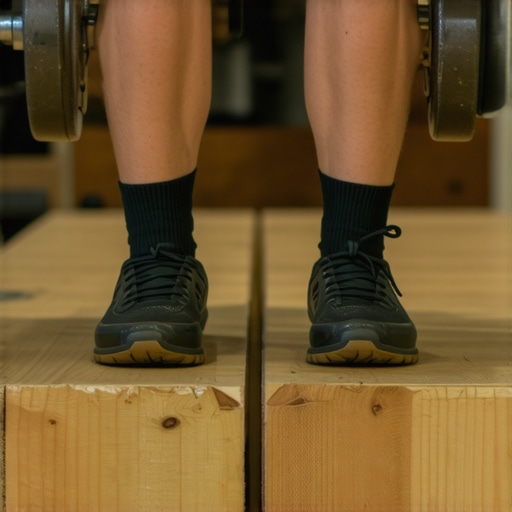
Point Your Toes Out to Clear Your Hips
You’ve probably been told to keep your toes pointing straight ahead to protect your knees, but for long-limbed lifters, that is often counterproductive. If your toes are forward, your femurs will eventually hit the front of your hip socket, causing a sharp, bony block. I used to ignore that sensation, thinking it was just muscle tightness, but why you feel a pinch in your hip during deep lunges or squats is often structural. By flaring your toes out—anywhere from 30 to 45 degrees—you clear a path for your pelvis to drop between your thighs. This opens up the hip joint and allows for a much deeper range of motion without forcing your lower back to round to compensate for the lack of space.
Accept the Lean but Keep the Tension
Stop trying to stay perfectly vertical like a professional Olympic weightlifter with short legs. It isn’t going to happen with your anatomy. Instead, embrace the forward lean but keep your back rigid. You must treat your torso like a solid steel beam. This starts with the correct way to brace your core for heavy carries and applying that same pressurized breath to your squat setup. I once struggled with the bar rolling toward my neck as I descended; the fix wasn’t more leg strength, it was active lat engagement. By pulling the bar down into your traps, you create a stable “shelf” that protects the spine even when your torso is angled at 45 degrees.
Bracing Techniques for a Tilted Torso
When you lean forward more, the shear force on your lumbar spine naturally increases. This is where the science behind chiropractic adjustments for back pain relief becomes relevant, as maintaining joint segment mobility ensures your body can handle these mechanical loads. To stay safe, you must create maximal intra-abdominal pressure. Don’t just suck in your gut; breathe “into your belt” and push your obliques outward. If you feel your back starting to round at the bottom, you have lost that internal pressure. You should also focus on the deadlift cue that stops your lower back from rounding, which is to keep the chest driven up and the shoulder blades packed. Even though your torso is angled, your spine stays neutral, preventing the load from shifting onto your discs.One of the biggest lies in the fitness world is that a “neutral spine” is a fixed, vertical position. If you have long femurs, your spine is going to tilt during a squat—it is a mathematical certainty. I used to panic every time I saw a video of myself where my back wasn’t perfectly straight up and down, thinking I was one rep away from a herniated disc. However, stability is far more important than the specific angle of your torso. When you are constantly trying to “fix” your posture by pulling your shoulders back and tucking your tailbone, you might actually be creating more harmful tension. In fact, the science behind chiropractic adjustments for back pain relief shows that we aren’t just “putting bones back in place” but rather resetting the nervous system’s response to load and mechanical stress.
Stop Chasing a Perfectly Vertical Spine
You must accept that your skeletal architecture dictates your movement pattern. For a long-limbed lifter, forcing a vertical torso often leads to the pelvis tucking under, which is a massive “oops” factor for your discs. Instead of fighting the lean, focus on creating a rigid column of pressure. If you feel a sharp pinch rather than a muscular stretch, stop immediately. Many people assume they just need to stretch more, but the best way to stretch your psoas without hurting your spine often involves stabilizing the pelvis rather than pushing into deeper, painful ranges.
Why Self-Cracking is Actually Sabotaging Your Recovery
The most common trap I see is the “pop addict.” When your back feels tight after a heavy squat session, it is incredibly tempting to twist your spine until it clicks. However, why you should stop cracking your own neck for relief or your own lower back is that you are likely only hitting the hypermobile segments. These are the joints that are already moving too much to compensate for the “stuck” areas. By self-adjusting, you make the unstable parts even less stable while the actual restriction remains untouched. If you want to truly recover, you must boost your sports rehab journey with proven chiropractic strategies that address the root cause of the stiffness rather than just chasing a temporary endorphin rush from a self-pop.
Can your hip anatomy actually limit how much your chiropractic adjustment helps?
The short answer is yes. If your acetabulum (hip socket) is deep or your femur has a specific neck-to-shaft angle, no amount of adjusting or stretching will allow you to squat with a narrow, toes-forward stance. A study published in the journal Clinical Biomechanics suggests that hip morphology significantly dictates squat depth and spinal compensation. If you try to force a range of motion your skeleton doesn’t allow, your brain will “lock down” your lower back as a protective mechanism. This is why I often advise lifters to be wary of generic protocols; why icing your lower back might be slowing down recovery is a perfect example of how a standard “fix” can actually blunt the necessary inflammatory signals your body needs to adapt to heavy loads. Have you ever fallen into the trap of thinking you could just stretch your way out of a mechanical, bone-on-bone block? Let me know in the comments. 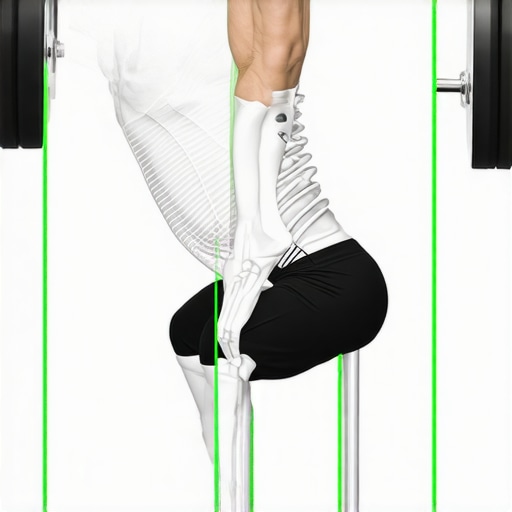 I used to think wearing weightlifting shoes was ‘cheating.’ I wanted to be the athlete who could squat 400 pounds barefoot without a care in the world. But reality—and my long femurs—had other plans. After years of fighting my own mechanics, I finally invested in a pair of Adidas Adipowers with a solid 0.75-inch heel. The difference was immediate and profound. By elevating the heel, you are essentially creating artificial ankle dorsiflexion, which allows your knees to track further forward without your heels lifting. For those of us with long thigh bones, this is one of the most effective ways to stay upright enough to prevent the lumbar spine from taking over the lift. If you are still struggling with your positioning, checking out how to fix the butt wink in your deep squat by integrating the right footwear is an absolute game-changer.
Ditch the Flat Shoes if Your Femurs are Miles Long
Beyond shoes, I rely heavily on a high-quality leather lifting belt—specifically a 10mm Pioneer belt. The reason is simple: it provides a consistent, rigid surface to brace against. When you are applying proven chiropractic strategies to your training, you learn that stability is the foundation of all strength. A belt isn’t a crutch for a weak core; it’s a tool to increase intra-abdominal pressure, which acts like a hydraulic jack for your spine. This pressure keeps the vertebrae stacked and prevents the micro-shifts that lead to disc irritation during heavy sets. #IMAGE_PLACE_HOLDER_D#
How can I keep my back healthy while pushing heavy weights for years?
Maintenance isn’t just about what you do in the gym; it’s about the systemic recovery you prioritize outside of it. I schedule a maintenance adjustment once every three weeks, regardless of whether I feel ‘pain’ or stiffness. This is a core part of my strategic chiropractic solutions for long-term back health. Think of it like a wheel alignment for a high-performance car. You don’t wait for the tires to blow out before you align the frame. Dr. Stuart McGill, a world-renowned expert on lower back disorders, often notes in his technical publications that ‘the key to a long lifting career is the mastery of movement patterns that spare the spine.’ By combining professional oversight with essential tips for managing back pain through healthy lifestyle choices, you stop being a patient and start being an athlete in total control of their longevity.
Wearables are the Next Frontier for Spinal Safety
Looking ahead, I believe we are moving away from ‘guessing’ our form. Technologies like AI-driven video analysis and wearable sensors that track joint angles in real-time are becoming increasingly accessible for the average lifter. In the near future, your smartphone will likely alert you if your hip-to-knee ratio is creating too much shear force on your L5-S1 disc before you even finish the rep. This shift toward data-driven effective sports injury recovery means we can stop injuries before the first spark of inflammation ever occurs. Until then, stay focused on the mechanical fundamentals. I challenge you to try a one-inch heel elevation during your next squat session—even if it’s just a couple of small plates under your heels—to feel the immediate relief in your lower back. You’ll find that enhancing athletic performance with targeted chiropractic care and the right mechanical tools is the fastest way to get back to the weights you love.
Three Breakthrough Lessons That Saved My Spine and My Squat
Looking back on my years of frustration, I realize that much of the ‘expert’ advice I received was actually toxic for my specific frame. First, I had to stop viewing my forward lean as a technical failure. When you have long femurs, leaning is a mechanical requirement to keep the bar over your midfoot. Second, I learned that unlocking back pain relief expert chiropractic adjustments that work isn’t about fixing a one-time injury, but about managing the recurring shear forces that naturally come with a tilted torso. Finally, I accepted that depth is relative. My ‘deep’ might look different than a short-limbed weightlifter’s, and that is perfectly okay as long as my spine stays stable and pressurized. By shifting my focus from ‘perfect form’ to ‘optimized mechanics,’ the constant back aches finally disappeared.
Tools I Use to Keep My Form From Falling Apart
If you are serious about lifting with long limbs, you need a toolkit that actively compensates for your levers. I swear by a solid 0.75-inch heel in my lifting shoes to assist with ankle geometry, and I never squat heavy without a 10mm leather belt to maximize intra-abdominal pressure. Beyond the physical gear, I prioritize strategic chiropractic solutions for long-term back health. This isn’t just about feeling better after a session; it’s about ensuring my pelvis and lower back move as a synchronized unit rather than fighting each other under a heavy load. I also rely on the ‘Big 3’ core exercises from Dr. Stuart McGill to maintain the stiffness needed to protect my discs during those high-volume training blocks. [IMAGE]
Building a Foundation That Lasts for Decades
Your lifting journey should not be a constant battle against your own anatomy. By embracing your unique skeletal structure and utilizing enhancing athletic performance with targeted chiropractic care, you can move heavy weight without the looming fear of a disc injury. You aren’t broken or ‘tight’; you just need a better blueprint for your specific proportions. Don’t be afraid to widen that stance and trust your body’s signals over a generic tutorial. When you boost your sports rehab journey with proven chiropractic strategies, you stop being a patient and start being an athlete in total control of their longevity. It is time to stop fighting your skeleton and start training with it. Have you ever felt a sharp pinch in your hips during a heavy set that stretching just couldn’t fix? Let me know in the comments below!