
I used to think that when it came to my tight hips, more was always better. I would drop into the deepest lunge possible, arching my back like a gymnast and leaning into the pain because I thought that’s what ‘progress’ felt like. Instead, I ended up spent a week on the floor because my lower back decided to stage a full-blown protest. It was a classic rookie mistake, and honestly, a bit embarrassing for someone who prides themselves on staying active. I wasn’t actually stretching my psoas; I was just jamming my lumbar vertebrae together and wondering why my chronic back pain wasn’t getting any better. Today, I want to show you exactly how to stop that cycle of ‘stretch and suffer’ so you can actually gain mobility without needing an emergency ice pack afterward.
Stop Arching Your Way Into a Back Flare
Most people treat the psoas like a stubborn rubber band that needs to be yanked at all costs. But here is the thing: the psoas is a unique beast because it attaches directly to your lumbar spine. When you lunge forward and let your back arch, you aren’t lengthening the muscle effectively; you are just pulling your spine into a compromise. I made this mistake for years, thinking my hip flexors were still tight because I wasn’t trying hard enough, when in reality, I was just aggravating my nerves. According to research published in the Journal of Biomechanics, the psoas can exert significant compressive loads on the spinal discs when the pelvis isn’t properly stabilized. This is why the correct way to stretch your psoas involves a subtle ‘tuck’ rather than a massive ‘lean.’ It’s about precision, not power. Have you ever noticed that your back feels tighter right after you finish a hip routine? If so, you are likely missing the pelvic tilt that makes all the difference.
Is This Stretch Actually Worth the Risk?
You might be sitting there thinking that maybe it is just safer to leave your hips tight and call it a day. I totally get the skepticism. If stretching hurts, why do it? But the truth is that a chronically shortened psoas is a recipe for long-term back health issues. It pulls on your spine while you sit, walk, and sleep. The goal today isn’t to turn you into a contortionist, but to teach you how to isolate the muscle so your spine can finally stay neutral and supported. We are going to focus on the ‘less is more’ approach that saved my own training and helped me get back to enhancing my athletic performance without the constant fear of a ‘pop.’
The Tactical Shift That Changes Your Psoas Stretch Forever
To get this right, you need to think of your pelvis as a bowl of water. If you arch your back, the water spills out the front. To protect your spine, you have to keep that water level. Start by getting into a half-kneeling position—one knee on a mat, the other foot flat on the floor in front of you. Most people immediately lunge as far forward as they can, but that is where the trouble starts. Instead of moving forward, I want you to focus entirely on your hips. If you are struggling with a sense of instability here, it might be a sign of deeper issues, and understanding the science behind chiropractic adjustments for back pain relief can help explain why your joints feel ‘stuck’ in a bad position.
Tuck Your Tailbone Like a Scared Dog
This is the single most important part of the movement. Imagine you have a tail and you are trying to tuck it between your legs. This is a posterior pelvic tilt. By pulling your belt buckle toward your chin, you engage your lower abs and glutes, which effectively ‘locks’ the top of the psoas in place. Without this tuck, you are just leaning into your hip joint capsule and shearing your lumbar spine. I remember a specific Tuesday at the gym where I ignored this. I was trying to impress a training partner with my ‘flexibility’ and went into a deep, arched lunge. I felt a sharp pinch that radiated into my sit-bone—a classic sign that I was overstretching the nerves rather than the muscle. If you feel that sharp sensation, you need to learn how to identify if your back pain is muscular or nerve related before continuing. 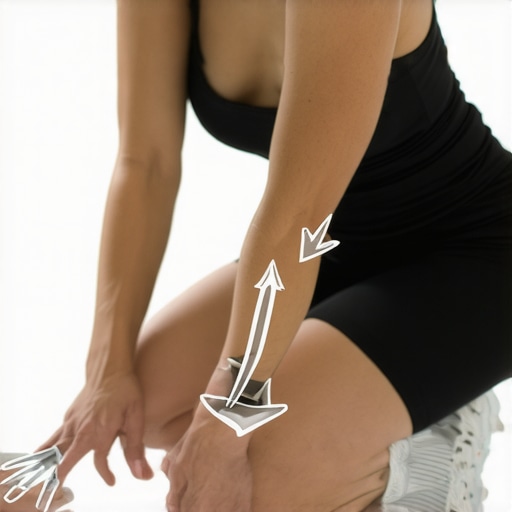
Stop the Massive Lunge and Shorten Your Stride
Once your tailbone is tucked, you should already feel a slight pull in the front of your thigh. Now, instead of a massive lunge, just shift your entire torso forward about two inches. That is it. If you have done the tuck correctly, two inches will feel like a mile. This small, controlled movement ensures you are actually hitting the muscle fibers. This is the same principle we use when we boost your sports rehab journey with proven chiropractic strategies; we prioritize precision over sheer force. If you are just ‘hanging’ on your ligaments, you aren’t building mobility; you are building instability. This is why many people find that why your morning stretches might be making your back more sensitive—they are aggressive when the spine is most vulnerable.
Breathe Into the Tension to Quiet Your Nerves
While you hold this ‘micro-lunge,’ don’t hold your breath. Your nervous system needs to know it is safe to let that muscle relax. I use a 4-7-8 breathing pattern here. Inhale for four, hold for seven, and exhale slowly for eight. This helps how to use diaphragmatic breathing to calm your nervous system and tells your brain that this new range of motion isn’t a threat. I’ve found that when I rush this part, my psoas just snaps back to its tight state ten minutes later. By staying calm and focused on the ‘tuck,’ you are creating a long-term change in the tissue. This isn’t just about feeling good for five minutes; it’s about strategic chiropractic solutions for long term back health that keep you out of the doctor’s office and on the field.Let’s dig deeper into why you can spend a year on the mat and still feel like a rusty hinge. Most people believe that ‘tightness’ is a physical property of the muscle fibers—like a short piece of rope that just needs to be yanked longer. In my experience, this is the most common misconception in sports rehab. Tightness is often a neurological ‘brake’ applied by your brain. If your nervous system feels that your spine is unstable or misaligned, it won’t let the psoas relax because that muscle is working overtime to hold you together. This is a survival mechanism, not a lack of flexibility. Trying to stretch your way out of a protective spasm is like trying to pull a locked door open; you aren’t opening the door, you’re just breaking the handle. This is why the truth about no-pain-no-gain in sports rehab is so critical to understand. Pushing into sharp pain isn’t ‘mental toughness’; it’s mechanical ignorance.
Stop Chasing the Burn If You Want Real Results
The ‘oops’ factor for most active people is the tendency to ignore the ‘end-feel’ of a stretch. If you feel a hard, bony block or a sharp pinch, you aren’t stretching tissue—you are likely compressing a joint or a nerve. Research in the Journal of Orthopaedic & Sports Physical Therapy (JOSPT) suggests that static stretching often fails to alter the actual resting stiffness of a muscle-tendon unit if the underlying joint dysfunction isn’t addressed. This is why you might find that the truth about why your adjustments don’t seem to last is often linked to continuing these aggressive, misaligned stretching habits. You are essentially un-doing the work of the adjustment by jamming the joint back into a compromised position every morning. 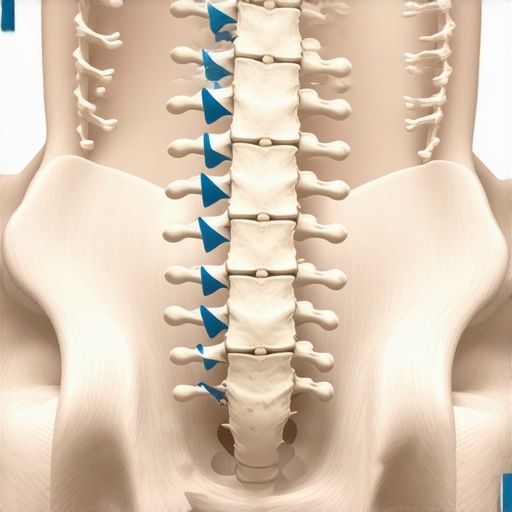
Why does your hip still feel ‘locked’ after a perfect stretch?
This is the nuance that separates elite recovery from endless frustration. If a lumbar vertebra or the sacroiliac joint is restricted, it sends a constant stream of ‘danger’ signals to the surrounding musculature. You can perform the most textbook lunge in the world, but if the joint itself isn’t moving correctly, the brain will keep the psoas in a state of hyper-tonicity to protect the area. This is where the science behind chiropractic adjustments for back pain relief becomes a game-changer. By restoring proper motion to the vertebrae, we ‘reset’ those neural signals, allowing the muscle to finally let go. Have you ever fallen into this trap of stretching harder and harder only to feel stiffer the next day? Let me know in the comments.
The Hidden Joint Blockage Muting Your Progress
When you combine proven chiropractic strategies with the micro-lunge technique we discussed earlier, you are attacking the problem from two angles: the mechanical and the neurological. We want to stop the cycle of ‘stretching the symptoms’ and start strategic chiropractic solutions for long-term back health. By prioritizing joint centration and the posterior pelvic tilt, you move from a state of constant ‘flare-ups’ to true, sustainable mobility. Remember, a healthy psoas is a responsive one, not just a long one. Let’s focus on the precision that your spine deserves so you can get back to moving without the ’emergency’ ice packs.Once you’ve mastered the physical mechanics of the micro-lunge, the real challenge begins: keeping those results. I’ve seen too many people treat their recovery like a 30-day challenge where they go hard for a month and then wonder why their stiffness returns the moment they stop. True progress is about building a system of movement hygiene. For me, this meant looking at my environment—not just my gym time. I realized that my commute was undoing half of my work, which is why I finally learned how to optimize your car seat for lumbar support. It’s these small, consistent essential tips for managing back pain through healthy lifestyle choices that actually move the needle over years, not just weeks.
The Gear That Earned a Permanent Spot in My Gym Bag
I’ve spent thousands of dollars on gadgets that promised to ‘unlock’ my hips, and most of them are currently gathering dust. However, three things have stood the test of time. First, a heavy 24kg kettlebell. I don’t just use it for swings; I use the handle for a weighted psoas release. By lying on my back and carefully placing the handle just inside my hip bone, I can apply a targeted pressure that a foam roller simply can’t reach. This kind of self-mobilization is a perfect bridge between visits when you are looking for revolutionize your rehab chiropractic techniques for faster recovery. Second is a firm lacrosse ball. It’s my go-to for the gluteus medius, which often gets ‘locked long’ when the psoas is tight. Finally, I never travel without a portable lumbar roll. Whether I’m on a plane or in a rental car, maintaining that natural curve is non-negotiable for my spinal health.
How do I keep my hips and back healthy for the long haul?
Maintenance is less about intensity and more about frequency. I follow the ’10-minute rule’: ten minutes of dedicated mobility work every single day, no exceptions. This isn’t just my opinion; the data backs up the need for multi-modal care. A landmark study published in The Spine Journal by Dr. Gert Bronfort found that patients who utilized spinal manipulation combined with home exercise reported significantly more improvement in pain and function compared to those who only did one or the other. This synergy is why I advocate for strategic chiropractic solutions for long-term back health rather than just waiting for a crisis to occur. When you combine professional adjustments with smart home tools, you’re not just chasing pain—you’re building resilience. 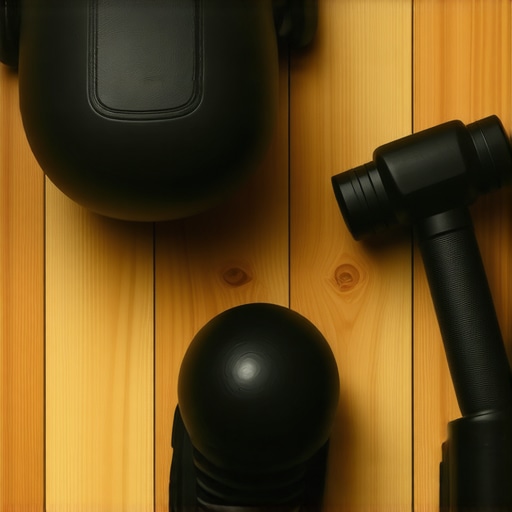
Where the Future of Spinal Performance is Heading
I genuinely believe the next five years will move away from manual tracking and toward ‘smart’ compression gear. We’re already seeing early versions of bio-feedback leggings that vibrate when your pelvis tilts too far forward during a run or a lift. Imagine a world where your clothes tell you when your psoas is starting to compensate before you even feel the first twinge of pain. Until that technology is perfected, we have to rely on our own internal feedback loops. For those of you into golf, you might already be familiar with how data can help, such as the trackman metric that reveals why your lower back hurts after 50 balls. This level of specific, actionable data is the future of sports rehab. My advice? Don’t wait for a sensor to tell you your back is at risk. Grab a lacrosse ball today and spend two minutes on your glutes—it’s the simplest way to start decompressing your lumbar spine right now.
Lessons My Lower Back Had to Teach Me
I used to believe that if I just pulled harder, the tightness would vanish. It took a few painful ‘flare-ups’ to realize that the psoas is a messenger, not a problem to be solved with brute force. Here are the shifts that changed everything for me:
- The ‘Tuck’ is King: If your belt buckle isn’t tilting toward your chin, you aren’t stretching; you’re just compressing. This is the foundation of how to safely stretch your psoas without hurting your back.
- Pain is Not Progress: I had to unlearn the ‘grind’ and embrace the truth about no-pain-no-gain in sports rehab. If it pinches, stop.
- Joint Mobility First: Muscles won’t relax if the bone is stuck. Understanding the science behind chiropractic adjustments for back pain relief helped me see that a misaligned joint keeps the psoas in a ‘guarding’ state.
Tools That Keep My Spine Happy
You don’t need a basement full of equipment. I’ve narrowed my routine down to a few essentials that support long-term spinal health. First, I never skip a day without using a firm lacrosse ball for targeted release—it’s far more effective than a bulky foam roller for deep tissue work. Second, I’ve become religious about how to optimize your car seat for lumbar support, because your recovery happens during the 23 hours you aren’t at the gym. Finally, I recommend keeping a portable lumbar roll in your bag; it’s one of the most underrated essential tips for managing back pain through healthy lifestyle choices that actually works. #IMAGE_PLACEHOLDER_E#
The Future of Your Movement Starts Now
Reclaiming your mobility isn’t about one-off sessions; it’s about a consistent, respectful dialogue with your body. By integrating the micro-lunge and seeking out strategic chiropractic solutions for long-term back health, you’re not just avoiding pain—you’re building a foundation for higher performance. Don’t let a ‘rusty’ hip dictate your activity level. You have the tools now to move with precision and confidence.
What’s the one stretch that always seems to cause a pinch or a ‘catch’ in your back? Let me know in the comments below!