
I used to spend every single morning face-down on my living room rug, desperately reaching for my toes. My lower back was screaming, and like most people, I figured my hamstrings were just stubborn. I pulled, I breathed, and I stretched until I was blue in the face. But my back ache only got worse. It was a vicious, daily cycle of stretching, temporary relief, and then an even deeper, burning ache a few hours later. I was making a classic, frustrating mistake that so many of us fall into before we learn how the body actually functions as a linked system.
The Tightness Illusion That is Wrecking Your Spine
That pulling sensation in the back of your thighs isn’t actually a sign that your muscles are short and need to be yanked on. In fact, your hamstrings always feel tight because they are already stretched to their absolute limit. When your pelvis tilts forward, it pulls these muscles incredibly taut, like an overstretched rubber band. Grabbing your toes and pulling harder only irritates the nerves and destabilizes your lumbar spine even further. When you understand the relationship between pelvic alignment and muscle tension, you realize that static stretching is often the exact reason morning stretches make your back more sensitive to daily movements.
Are you secretly making your back spasm worse?
It sounds completely backwards, doesn’t it? We have been told our entire lives that flexibility equals a healthy spine. But the reality is that your nervous system is actually tightening those hamstrings to protect you. According to clinical guidelines from the American College of Physicians, aggressive stretching during acute back pain episodes can actually delay recovery times by constantly triggering protective muscle guarding. When you force a stretch on a hyper-sensitive system, your lower back muscles are forced to work double-time to keep you upright. Instead of stretching, what you really need is to learn how to open up your hips and stabilize your core. Have you ever spent weeks stretching your legs only to find your back stiffness worse than when you started?
Shift the Pelvic Bucket Back to Neutral
Imagine your pelvis is a bucket filled to the brim with water. When you sit all day, that bucket tips forward, spilling water over your toes. This forward tilt pulls your hamstrings tight because they are anchored to the bottom back of that bucket. To stop the pull, you do not need to stretch the hamstrings; you need to tip the bucket back. If you want to find lasting comfort, you have to prioritize strategic chiropractic solutions for long term back health rather than pulling on irritated muscles.
I remember trying to fix my own pelvic tilt years ago before a lifting session. I spent twenty minutes doing aggressive hamstring stretches, walked over to the barbell, and immediately felt my lower back seize up. My pelvis was so unstable that my nervous system clamped down to protect my spine. The very next day, I stopped stretching entirely and focused on a simple pelvic tuck using my breath. Within three days, the constant burning ache in my thighs vanished.
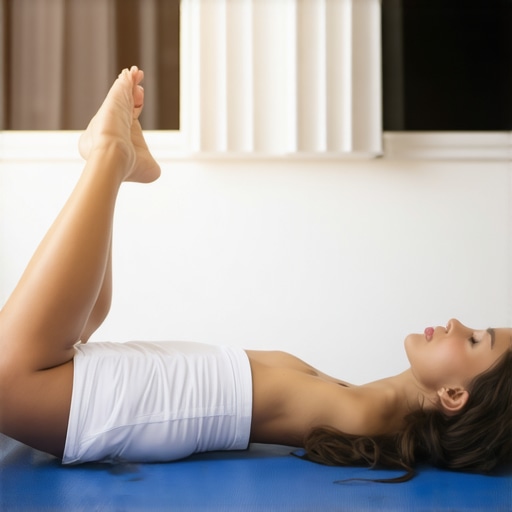
Active posterior tilting with a wall reference
To perform this pelvic reset, lie on your back with your feet flat against a wall, knees bent at ninety degrees. Do not press your feet into the wall to push yourself away. Instead, gently drag your heels down the wall without actually moving them. This engagement instantly fires your hamstrings from the top down, pulling your pelvis back into a neutral position. Keep your lower back flat against the floor and hold this position for five deep breaths, exhaling completely until you feel your side abs engage.
Brace Your Spine Without Restricting Your Breath
Once the pelvis is level, you must secure it. Think of your core as a physical corset. If you only tighten the front laces, the back remains loose and unsupported. Most people brace by sucking in their stomach, which actually destabilizes the spine and creates a rigid, fragile torso. True stability requires learning how to breathe while lifting to protect your pelvic floor and your lower lumbar region simultaneously.
Create 360-degree intra-abdominal pressure
Instead of pulling your belly button toward your spine, place your hands around your waist, just above your hips. Push your fingers into your sides. Now, breathe in through your nose and try to push your fingers out using only your breath. You should feel your abdomen, sides, and lower back expand outward like a balloon. When you exhale, maintain that outward pressure. This technique creates a natural cushion of air pressure that takes the mechanical load off your sensitive lumbar joints.
Re-educate Your Glutes to Take the Load
When your pelvis is tilted forward, your glutes essentially go to sleep. Because they are not supporting your hips, your lower back muscles are forced to do all the heavy lifting when you stand, walk, or bend over. To stop this cycle, you must learn why your glutes aren’t firing during your workouts and actively cue them during daily movements. When your glutes function properly, they act as the main shock absorbers for your entire upper body, preventing the micro-movements that cause painful spasms.
Most sports rehab programs treat the spine like a simple crane, focusing solely on building brute strength in the surrounding muscles. But in my experience, chasing raw strength before establishing proper joint mechanics is like putting a massive engine into a car with a broken axle. If your joints are locked up or misaligned, your nervous system will actively prevent those newly strengthened muscles from firing to protect you from further damage.
The passive treatment trap that delays your recovery
Everyone says you should just lie back and let a therapist crack your joints to fix your issues, but relying entirely on passive care is a massive mistake. When you only receive adjustments without active movement re-education, you are only getting temporary relief. The true power of the science behind chiropractic adjustments for back pain relief lies in using that temporary window of pain-free mobility to immediately teach your brain how to move correctly. If you walk straight back to your desk and slouch after an adjustment, your nervous system will quickly default right back to its protective, painful guarding patterns.
Why does your back pain return even after structural adjustments?
An advanced concept that many people overlook is the role of joint proprioception—your brain’s map of where your body is in space. When you have been in pain for months, your internal map becomes distorted. A study published in the Journal of Electromyography and Kinesiology demonstrated that individuals with chronic low back pain have significantly impaired proprioceptive postural control compared to healthy controls. This means even if a professional performs perfect expert chiropractic adjustments that work to align your joints, your brain still perceives “straight” as crooked. Without targeted, active motor-control training to recalibrate this map, your body will pull itself right back out of alignment within hours.
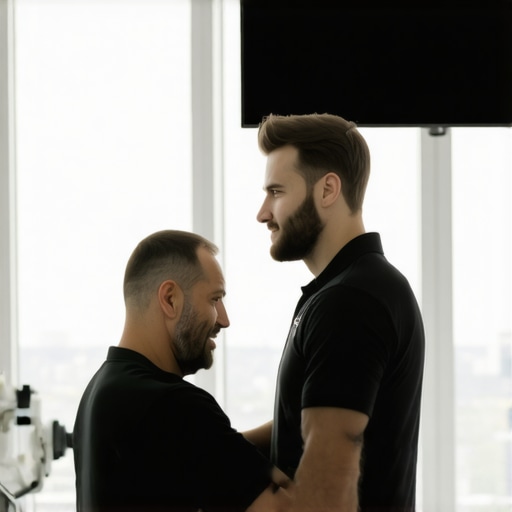
To break this loop, you need to combine targeted joint mobilization with functional movement drills. For example, utilizing proven chiropractic strategies alongside stabilization exercises ensures that your nervous system accepts and locks in the new, healthy range of motion. Have you ever fallen into the trap of relying solely on adjustments without changing how you move daily? Let me know in the comments below.
The danger of over-stabilizing your lumbar spine
Another common mistake in modern sports rehab is over-bracing. In an effort to protect an injured disc, people often stiffen their torsos so intensely during simple daily tasks that they completely stop moving through their hips and thoracic spine. This constant, rigid guarding actually increases spinal compression and starves your spinal discs of the fluid exchange they need to heal. True long-term recovery requires a delicate balance of stiffness when lifting heavy loads and relaxed, fluid mobility during normal daily life. By learning essential tips for managing back pain through healthy lifestyle choices, you can learn to move naturally again without fear of reinjury.
When my own back pain was at its absolute worst, I realized that relying solely on clinical visits was keeping me trapped in a cycle of temporary relief. If you want to maintain your progress and protect your spine, you need to transition from passive therapy to an active, daily maintenance routine. This is where having the right tools and knowing exactly how to use them makes all the difference in your sports rehab journey.
The precise maintenance tools I use daily
I do not believe in buying every flashy recovery gadget on the market. In my personal routine, I rely heavily on a high-density lacrosse ball and a simple pair of yoga blocks. I use the lacrosse ball to target very specific trigger points in my glutes and piriformis, which directly relieves the tension that pulls on my pelvis. If you want to replicate this, learn the correct way to use a tennis ball for muscle knots or step up to a harder lacrosse ball for deeper tissue release. For my upper back, I regularly use blocks to open up my chest and shoulders. Using these tools helps me execute essential tips for managing back pain through healthy lifestyle choices without needing an expensive home gym setup.
How do I maintain my spinal alignment over time?
Consistency beats intensity every single time. To keep your spine healthy, you need to dedicate just five minutes every morning to resetting your pelvic alignment and activating your core. I recommend starting your day with the pelvic tuck exercise we discussed earlier, followed by a simple breathing drill to set your intra-abdominal pressure. According to Dr. Stuart McGill, a leading expert in spine biomechanics, building true spinal endurance through short, daily movement sessions is far more effective for long-term joint health than doing one massive, exhausting workout once a week. Integrating these quick habits ensures you do not lose the progress made during your active proven chiropractic strategies.
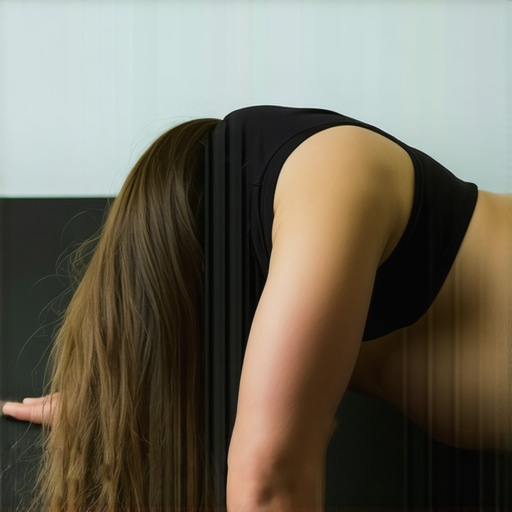
The future of spinal health and active recovery
Looking ahead, the sports rehab and chiropractic fields are rapidly shifting away from passive, symptom-based treatments toward personalized, movement-based diagnostics. In the future, I predict we will see widespread use of wearable biofeedback sensors that track your pelvic tilt and core activation in real-time as you go about your work day. Instead of guessing whether your glutes are firing or if your pelvis is tilting forward while you sit, your phone will give you a gentle nudge to adjust your posture. Until that technology is in everyone’s hands, we must rely on building deep internal awareness of our own joint mechanics and utilizing expert chiropractic adjustments that work to keep our bodies in optimal alignment.
My challenge to you today is to stop passive stretching for the next forty-eight hours. Instead, try the wall-referenced pelvic tilt and the 360-degree breathing technique tonight before you go to bed and tomorrow morning when you get out of couch or office chair. Pay close attention to how your lower back feels when you stand up.
What I Learned When I Stopped Stretching My Sore Legs
For years, I believed that my tight hamstrings were the enemy. I fell into the trap of thinking that pulling on them harder would magically unlock my rigid lower back. The hardest lesson I had to learn on my own sports rehab journey was that my tight legs were actually acting as a vital shield for my spine. When I constantly pulled on those overstretched fibers, I was stripping away my body’s natural defense mechanism. The day I stopped static stretching and began using proven chiropractic strategies to stabilize my pelvis was the day my chronic lower back spasms finally vanished. I realized that back pain is rarely a local issue; it is a full-body coordination puzzle that requires patience, core stability, and targeted motor-control training to solve.
The Core Kit That Keeps My Pelvis in Place
You do not need a gym full of expensive recovery gear to maintain a healthy spine and keep your hips perfectly aligned. I keep my daily maintenance incredibly simple, relying on just three high-value tools that have made the biggest difference in my recovery:
- A high-density lacrosse ball: This is my absolute favorite tool for deep tissue release. I use it to work through stubborn trigger points in my glutes, which helps release the pull on my pelvis. If you are new to this, you can easily start by learning the correct way to use a tennis ball for muscle knots before moving up to a denser lacrosse ball.
- A pair of sturdy yoga blocks: I use these daily to support my alignment during gentle hip flexor releases and to help unload my spine when doing early morning mobility work. They are perfect for executing essential tips for managing back pain through healthy lifestyle choices right from your living room.
- A simple wall space: Never underestimate the power of using a wall as a physical reference point. My go-to pelvic reset drill relies entirely on pressing my feet flat against a wall to instantly engage my hamstrings from the top down and pull my pelvis out of that painful forward tilt.
Take Control of Your Spinal Health Today
The journey back from chronic back pain can feel incredibly overwhelming, especially when traditional advice tells you to keep stretching muscles that are already screaming for stability. But once you understand the mechanics of your pelvis and learn to brace your core correctly, you regain absolute control over how your body moves and feels. Do not settle for temporary fixes or rely entirely on passive treatments. By pairing the science behind chiropractic adjustments for back pain relief with active, mindful movement habits, you can build a resilient spine that supports you through every single lift, run, and daily activity without fear. Have you ever noticed your lower back feeling tighter right after you finish stretching your hamstrings? Let me know in the comments below.