
I remember staring at the gym mirror, sweat dripping into my eyes, and feeling a dull, familiar ache in my lower back that definitely shouldn’t have been there. I was mid-set on heavy squats, pushing weight that should have been a breeze, but my glutes felt like they were made of stone—cold, lifeless, and completely offline. It is a maddening, invisible wall. You are doing the work, you are following the program, but the muscles that are supposed to be the powerhouse of your body are essentially ghosting you. If you have ever felt like your backside is just along for the ride while your lower back and quads do all the heavy lifting, you are not alone. Today, we are going to bridge that gap between your brain and your glutes so you can finally stop leaving gains on the table and start protecting your spine.
Stop blaming your genetics for your quiet glutes
When I first started my own sports rehab journey, I made a massive mistake: I thought if I just did more reps, my glutes would eventually have to join the party. I ignored the fact that my body was incredibly efficient at cheating. Instead of using my hips, I was relying on a pelvic tilt that forced my lower back to do the work. I was essentially building strength on top of a dysfunctional foundation, which is a one-way ticket to a clinic. This lack of activation, often called “glute amnesia,” is usually a neural disconnect. According to the National Academy of Sports Medicine (NASM), tight hip flexors from our sedentary lifestyles can cause “reciprocal inhibition,” a fancy way of saying your front muscles are so tight they tell your brain to keep the back muscles turned off. It is not that you are weak; it is that your nervous system has literally dialed down the volume on your glutes. This often leads to people wondering how to identify if your back pain is muscular or nerve related when the real culprit is just a sleepy backside.
Is glute amnesia actually worth the hype?
Some people think this is just a buzzword used by trainers to sell fancy bands, but the mechanics do not lie. When your glutes do not fire, your lumbar spine often takes the brunt of the load during every step, jump, or lift. Have you ever finished a heavy leg day and realized your quads are on fire but your glutes feel like they didn’t even show up to the gym? I want to hear about your experience—have you found a specific exercise that actually makes you feel the burn in your hips, or are you still searching? Before we dive into the specific drills to fix this, we need to look at how your daily habits, like how you sit at your desk, are actively training your glutes to stay dormant.
Wake up your hips before you pick up the bar
Think of your glutes as a high-performance engine. If you try to drive with the parking brake on, you are going to smell smoke pretty fast. In your body, that parking brake is often the hip flexors. If you spend eight hours a day in a chair, those muscles are shortened and hyper-reactive. This is exactly why stretching your hamstrings won’t fix your chronic tightness because the tension is not a length issue; it is a protective tension caused by your pelvis being pulled out of alignment. When I was training for my first powerlifting meet, I ignored this and my lower back felt like a guitar string ready to snap every time I approached the rack. It was not until I started treating the front of my hip that the back finally let go.
Release the brake before you hit the gas
Before you do a single rep of any heavy lift, you need to address the front of your body to clear the path for neural drive. I used to spend twenty minutes on a foam roller hitting my IT band, but my squats still felt clunky. The game-changer was a targeted psoas release. By using a small mobility ball just inside the hip bone, you can signal to your nervous system that it is safe to relax. This immediately shifts your pelvis back into a neutral position. If you are constantly fighting your own anatomy, you might need a the 5-minute mobility routine for desk workers with stiff hips to prepare your joints for the actual work ahead.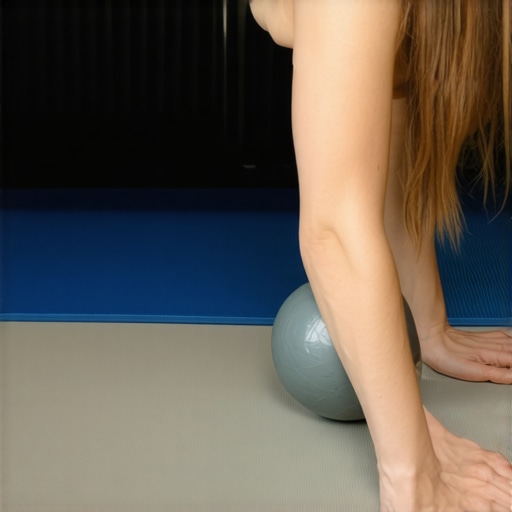
The simple squeeze that restarts the engine
Once the front is loose, you need to find the glutes without involving the lower back. This is where most people fail because they jump straight into heavy lunges and then wonder how to identify if your back pain is muscular or nerve related when their spine starts to throb. Instead, start with a floor bridge, but do not just lift your hips. Think about scooping your tailbone under and squeezing your glutes at the bottom before you move an inch. It is an isometric contraction that serves as a loud wake-up call to your brain. I worked with a client who could deadlift 300 pounds but could not feel his glutes in a simple bridge. We spent weeks focusing on this neural connection, and his chronic SI joint issues vanished.
Moving from isolation to the big lifts
The final step is teaching those newly awake muscles how to behave when things get heavy. This requires mastering the hip hinge secret for people with chronic lumbar issues. The hinge is the bridge between a rehab exercise and a performance lift. When you hinge correctly, you are loading the glutes like a bowstring. If you lose that tension, the load dumps straight into your spinal discs. This is where structural alignment becomes non-negotiable. If your vertebrae are restricted, the signals from your brain to your glutes are like a fuzzy radio station. Understanding the science behind chiropractic adjustments for back pain relief shows how clearing those neural pathways allows the gluteus maximus to fire at full capacity.While mastering the hip hinge is a vital piece of the puzzle, there is a deeper layer that most people—and even some trainers—completely overlook. We tend to treat our bodies like a collection of pulleys and levers, assuming that if we just pull on the right string, the muscle will work. But your body is more like a computer network. If the software is glitchy, the hardware will never perform. This is where most people get chiropractic care wrong. They think an adjustment is just about ‘putting a bone back in place.’ In reality, it is a neurological hard reset.
Why that satisfying ‘pop’ is only half the story
The common belief is that the sound of an adjustment is the goal, but I have seen plenty of patients get that ‘pop’ and still walk out with the same movement dysfunctions they came in with. According to research by Dr. Heidi Haavik, a leading expert in chiropractic neurology, spinal adjustments actually improve the brain’s ability to sense what is happening in the body, which can increase muscle drive by nearly 20%. This is the real secret to why you should not just rely on the adjustment itself. If you do not follow up that neurological window of opportunity with the right movement, you are essentially rebooting your computer but then immediately opening the same corrupted files. This is exactly the truth about why your adjustments don’t seem to last. You have to feed the brain new, better data while the ‘noise’ of spinal restriction is gone.
Does my spine really need to click every single time?
This is the number one question I get from high-level athletes. The answer is a resounding no. The therapeutic benefit comes from the high-velocity, low-amplitude thrust that stimulates mechanoreceptors in your joints, not the gas bubble release. If you are chasing the sound, you are missing the point of strategic chiropractic solutions for long-term back health. In fact, some of the most profound changes in glute activation come from gentle mobilizations that do not make a sound at all but successfully clear the interference between your lumbar nerves and your hips. 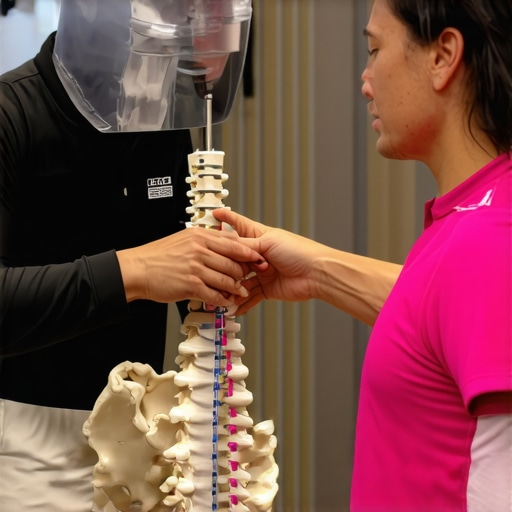
The stretch that actually makes your back pain worse
Here is the contrarian truth: most people who feel ‘tight’ in their glutes or hamstrings should actually stop stretching them immediately. I know it sounds counterintuitive. You feel tension, so you want to pull on it. But often, that tension is ‘protective tension.’ Your brain is making those muscles feel tight because it is trying to stabilize an unstable spine. If you force a stretch on a muscle that is trying to protect you, your brain will only respond by making it tighter ten minutes later. This is one of the most common the 3-stretching mistakes that make sciatica worse. Instead of stretching, you need to provide stability elsewhere so the brain feels safe enough to let that tension go.
Don’t fall into the passive care trap
The biggest mistake I see—the ‘oops’ factor that stalls progress for months—is becoming a passive patient. If you think the chiropractor is ‘fixing’ you while you lay on the table, you are setting yourself up for a relapse. You need to take the increased range of motion from your session and immediately apply it to your lifting technique. This is what your chiropractor wishes you knew about heavy lifting: the adjustment gives you the opportunity, but your movement choices earn the results. Have you ever fallen into this trap of stretching a ‘tight’ muscle only for it to feel worse an hour later? Let me know in the comments. By combining proper alignment with active participation, you can truly boost your sports rehab journey with proven chiropractic strategies that actually stick.Once you have achieved that satisfying click of activation, the real challenge begins: keeping the engine running when you are not under the watchful eye of a specialist. I have found that my most successful patients are the ones who treat their mobility like their morning coffee—non-negotiable. I never leave the house without my own spine kit in my gym bag. For me, that is a high-density rubber lacrosse ball. While a foam roller is great for global tissue work, I have realized that why your foam roller is useless for it-band syndrome is often because it lacks the mechanical specificity needed for deep trigger points. I use the ball to pin down the small multifidus muscles that run along the spine to prevent them from seizing up after heavy sets. Learning how to use a lacrosse ball to melt away mid-back knots has saved me more times than I can count when a long drive or a heavy squat session threatens to lock me up. 
How do I maintain my structural alignment over the long haul?
Maintenance is not just about rolling around on the floor; it is about the architectural integrity of your daily movement. This is where essential tips for managing back pain through healthy lifestyle choices become your daily compass. Specifically, the Spinal Hygiene protocol developed by Dr. Stuart McGill at the University of Waterloo highlights the Big 3—a set of isometric exercises designed to maximize core stiffness without excessive spinal compression. These are not meant to be burn exercises; they are tune-up exercises. They provide the stability that allows your glutes to keep firing properly as part of the role of chiropractic care in effective sports injury recovery. On days when I need extra proprioceptive feedback during a heavy session, I often use a bit of tape. Knowing how to use kinesiology tape for lower back support can act as a constant neurological reminder to your nervous system to stay in that neutral pelvis position we worked so hard to find.
The future of spinal health is in your pocket
Looking ahead, the way we approach strategic chiropractic solutions for long-term back health is about to shift from subjective feeling to objective, real-time data. I predict that within five years, we will see consumer-grade wearable sensors that sync directly with your phone to alert you the second your glute activation drops below a certain threshold during a set. We are moving away from reactive fixing and toward enhancing athletic performance with targeted chiropractic care that is monitored in the moment. This will eventually take the guesswork out of what your chiropractor wishes you knew about heavy lifting. For now, you are the sensor. Your job is to stay tuned into those subtle signals of fatigue or compensation. I challenge you to grab a lacrosse ball today and spend three minutes on each side of your upper back. It is an advanced habit that finally bridges the gap between feeling okay and feeling truly unstoppable.
Lessons the Training Floor Taught Me About Persistent Pain
I’ve spent years refining my own approach to movement, and if there’s one thing I’ve learned, it’s that strategic chiropractic solutions for long-term back health are about more than just one-off fixes. Here are the core truths that changed everything for me: First, muscle activation is a conversation between your brain and your body, not just a physical movement. If the signal is fuzzy, the muscle won’t fire. Second, you cannot out-train a sedentary lifestyle. Even the best workout can’t undo eight hours of slumping without conscious intervention. Third, your joints need space to breathe. When you prioritize strategic chiropractic solutions for long-term back health, you are giving your nervous system the clearance it needs to coordinate complex movements like heavy squats or sprints.
The Gear That Keeps My Spine in Check
I don’t believe in cluttering your gym bag with every gadget on the market, but a few specific tools are non-negotiable for anyone serious about their longevity. I always keep a high-density mobility ball nearby; if you’re dealing with stubborn tension, I highly recommend learning how to use a lacrosse ball to melt away mid-back knots to keep your thoracic spine moving. Additionally, I rely on the McGill Big 3 protocols to build the necessary core stiffness that protects my discs. Finally, I advocate for a movement-first mindset where you apply essential tips for managing back pain through healthy lifestyle choices to your desk setup and driving habits. Success often comes down to these essential tips for managing back pain through healthy lifestyle choices that you apply every single day to maintain the progress we make in the clinic.
Build a Foundation That Doesn’t Break
Your journey toward a pain-free life isn’t a straight line, but it is entirely within your reach. It starts with a single decision to stop ignoring the small aches and start addressing the root causes of your dysfunction. By integrating proven chiropractic strategies, you aren’t just masking symptoms; you are rebuilding your athletic potential from the ground up. If you’re feeling stuck or unsure where to start, don’t hesitate to reach out and contact us to find a path forward. You have the tools, the knowledge, and now the plan. It is time to get back to the activities you love with a body that supports you every step of the way. Have you ever felt like one side of your glutes is stronger than the other during a workout? Let me know in the comments below!