
I remember staring at my $180 neon-green trainers, the ones the salesman promised would make me feel like I was floating on clouds, and wanting to throw them into traffic. Every step was agony. It wasn’t a sharp break, but that dull, rhythmic throb along the inside of my shin bone that just wouldn’t quit. I thought I was doing everything right. I had the gear, the motivation, and the training plan. But the harder I pushed, the more my body screamed back. It took me months of limping and a very humbling visit to a specialist to realize my ‘high-tech’ shoes were actually the primary suspects in my misery. I had fallen for the marketing and ignored the mechanics.
The Day My Favorite Sneakers Betrayed Me
The mistake I made early on was simple but devastating: I assumed more cushion meant more safety. I bought the softest, most pillowy shoes available, thinking they would absorb the shock of the pavement. Instead, they acted like unstable marshmallows. Because my feet couldn’t feel the ground, my ankles wobbled, and my lower leg muscles had to work overtime just to keep me upright. This instability is a classic precursor to that searing bone pain. If you’ve noticed that the real reason your feet ache after running seems to be getting worse despite buying ‘better’ shoes, you might be in the same boat I was. We’re going to break down exactly how to audit your gear so you can stop the cycle of inflammation and get back to the miles you love.
Are your shoes actually worth the hype?
It’s easy to get sucked into the latest trends, but your shins don’t care about brand names or aesthetics. I spent way too much time ignoring the warning signs, thinking I just needed to ‘tough it out.’ That’s a recipe for a stress fracture. A fascinating study published in the Journal of Sports Science & Medicine highlights that Medial Tibial Stress Syndrome is often a result of a sudden change in footwear or training surface, coupled with biomechanical inefficiencies. When your shoe doesn’t match your foot’s natural movement, your tibia takes the brunt of the force. I learned the hard way that you need to vet your running shoes for proper arch support rather than just going by what feels soft in the store. Have you ever felt like your shoes were actually making your runs harder? I’d love to hear about your experience in the comments below.
How Your Shoes Force Your Shins to Do Too Much Work
When your footwear lacks the right structure, your body compensates in ways that aren’t exactly helpful. For me, my shoes were causing my gait to collapse inward. This put an incredible amount of torque on the soft tissues of my lower leg. I even found that my glutes would turn off during long distance runs because my base of support was so mushy. It’s a chain reaction. If the foundation is off, everything upstairs—from your shins to your hips—is going to pay the price. You might also find that the eccentric calf fix for chronic achilles tension helps, but if the shoe is the root cause, you’re just putting a bandage on a leaky pipe. Today, we’re going to dive into the specifics of heel-to-toe drop and why it might be the secret culprit behind your shin splints.
Check the Drop Before You Buy
The heel-to-toe drop is the height difference between the heel and the forefoot. Think of it like the pitch of a roof. Most traditional trainers have a steep 12mm drop, which forces a heavy heel strike and sends a shockwave straight up your tibia. When I switched to a mid-drop shoe, my foot landed more under my center of mass. This subtle shift is vital because how spinal alignment directly impacts your athletic performance often starts with how your feet hit the pavement. If you’re a heel striker suffering from shin splints, look for a shoe with an 8mm or lower drop to encourage a more neutral landing.
Kill the Marshmallow Softness
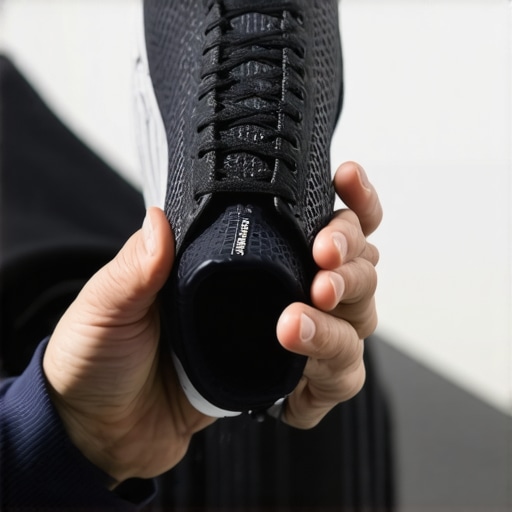
Cushioning is a double-edged sword. If the foam is too soft, your foot searches for a stable surface that isn’t there, leading to overpronation. I once tried a pair of ultra-plush maximalist shoes during a 15-mile long run. By mile 6, my arches felt like they were collapsing into quicksand. This instability doesn’t just hurt your feet; it travels upward. You might even find that why your arch support might be weakening your ankle stability is due to the shoe being too helpful. You want responsive foam, not a sofa for your feet. To test this, try to twist the shoe like a wet towel. If it twists effortlessly, it won’t support your shins under load.
Audit Your Footwear for Torsional Rigidity
Take your current shoe and try to bend it in half. It should bend at the forefoot—where your toes naturally hinge—not in the middle of the arch. A shoe that folds in the middle is a structural failure for your shins. During my own rehab, I realized my broken-in favorites were actually broken down. I had to boost your sports rehab journey with proven chiropractic strategies just to realign my gait after months of wearing dead foam. If the midsole is dead, your tibia becomes the shock absorber, and that’s a job it isn’t designed for.
Fix the Foundation with Targeted Drills
Replacing shoes is only half the battle. You have to wake up the muscles that the shoes put to sleep. While you’re transitioning to better gear, incorporate the foot exercise that prevents plantar fasciitis in runners to rebuild your natural arch strength. Strengthening the intrinsic muscles of the foot provides a built-in suspension system. This isn’t just about feet; it’s about the entire kinetic chain. For long-term relief, strategic chiropractic solutions for long-term back health ensure that your hips and lower back aren’t compensating for the lack of foot stability, which is often where chronic shin issues actually begin.
While fixing your shoes is a primary step for shin health, it is rarely the end of the story. I discovered that months of running in unstable sneakers had forced my pelvis to tilt and my nervous system to ‘lock down’ my lower back for stability. The mistake most athletes make is treating their body like a collection of isolated parts. They buy a shoe for the foot, a brace for the knee, and a belt for the back. But enhancing athletic performance with targeted chiropractic care is about understanding that a ‘foot’ problem is often a ‘brain’ problem. When I finally combined the right footwear with a neurological reset, the shin pain didn’t just fade—it vanished. If you’ve been chasing symptoms without looking at the neurological foundation, you’re just spinning your wheels.
Many people think a chiropractic adjustment is just about ‘cracking’ a bone back into place, but that is a massive oversimplification that even some practitioners fall for. In reality, we are hitting a reset button on your central nervous system. A study published in the Journal of Manipulative and Physiological Therapeutics suggests that spinal manipulation actually changes the way the brain processes signals from the muscles, improving what experts call ‘cortical drive.’ This means the real benefit isn’t the sound of the joint, but how your brain regains control over your movements. If you rely solely on the ‘pop,’ you’re missing the point, which is exactly the truth about why your adjustments don’t seem to last. 
Stop Stretching Your Way Into More Pain
One of the most common traps I see is the ‘stretch it out’ reflex. When your shins or back feel tight, your instinct is to pull, reach, and elongate. However, if that tightness is a protective mechanism from a nerve issue, you are essentially picking at an internal scab. This is a classic case of how to identify if your back pain is muscular or nerve related. If it’s the latter, stretching will actually cause more inflammation and ramp up the tension. This is precisely why stretching your hamstrings won’t fix your chronic tightness—your brain is keeping those muscles short to protect the nerves from being over-tensioned. Have you ever fallen into this trap of over-stretching a sore spot only to have it bark back at you? Let me know in the comments.
Why does your adjustment seem to wear off after forty-eight hours?
The adjustment itself creates a window of opportunity where pain is reduced and mobility is increased. But if you walk out of the clinic and go right back to the same posture or the same worn-out shoes, your brain will revert to its ‘protection mode’ within two days. To make it stick, you need expert chiropractic adjustments that work in tandem with corrective exercises. You have to prove to your nervous system that the new range of motion is safe. Relying on strategic chiropractic solutions for long-term back health means looking at the whole person, from the arches of your feet to the alignment of your neck, rather than just chasing a single ‘click’ in your spine. When you treat the foundation and the command center simultaneously, that’s when real recovery begins.
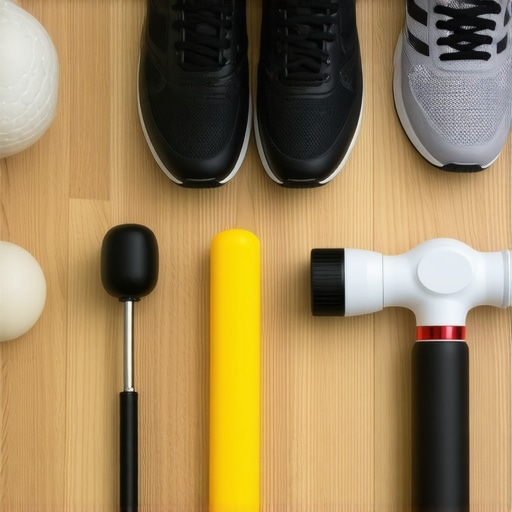
You don’t need a $5,000 home gym to stay out of the clinic. In fact, most of the ‘miracle’ recovery tools gathering dust in people’s closets are just over-engineered versions of things you can find in a dog’s toy bin. I personally swear by a standard lacrosse ball. It’s dense, it doesn’t compress under your body weight, and it allows for surgical precision when addressing tight tissues. I’ve found that learning how to use a lacrosse ball to melt away mid-back knots is worth ten times its weight in gold compared to those vibrating rollers that just numb the surface. The goal is to provide a specific mechanical stimulus to the fascia, not just bounce around on top of it. Similarly, if you own a percussive massager, you’re likely using it wrong—shuttling it over bone instead of soft tissue. Mastering the proper way to use a massage gun on your quads can flush out metabolic waste without bruising the periosteum.
How do I keep my body running pain-free long-term?
Maintenance is less about the tools and more about the ‘workload ratio.’ One of the most important concepts in modern sports science is the Acute:Chronic Workload Ratio, pioneered by Dr. Tim Gabbett. He suggests that injuries happen not because we train too hard, but because we increase our training load faster than our body can adapt. I use this principle every single week. If I’ve been sedentary for three days, I don’t go out and hit a personal best on the squat rack. This disciplined approach, combined with essential tips for managing back pain through healthy lifestyle choices, creates a buffer against injury. You have to treat your recovery as seriously as your PRs. Integrating the role of chiropractic care in effective sports injury recovery into your monthly routine acts as a fail-safe, catching those minor alignment shifts before they become full-blown inflammatory events.
The Shift Toward Neurological Biofeedback
The future of this field isn’t in better foam or more expensive shoes; it’s in biofeedback. We are seeing a massive shift toward wearable technology that monitors your ‘readiness’ via Heart Rate Variability (HRV). This isn’t just for elite athletes anymore. When your HRV is low, your nervous system is in a sympathetic (fight-or-flight) state, meaning your risk for back spasms and shin splints sky-rockets. We can now revolutionize your rehab chiropractic techniques for faster recovery by timing adjustments to when your body is actually prepared to integrate the stimulus. I predict that in five years, your smartwatch will tell you exactly which vertebrae needs a ‘reset’ before you even feel the first twinge of pain. For now, focus on the basics: the tools, the workload, and the professional oversight. Tonight, I want you to spend exactly five minutes using that lacrosse ball on the soles of your feet—it’s the simplest way to start resetting your foundation from the ground up.
Why Your Brain Wins Every Argument With Your Muscles
The most profound realization I had during my recovery journey was that my muscles were never actually ‘short’ or ‘tight’ by mistake. They were reacting to a lack of stability elsewhere. If your nervous system feels threatened, it will tighten your calves and shins as a protective splint. This is why you can’t just stretch your way out of a biomechanical crisis. I’ve learned that when you discover how chiropractic adjustments can alleviate chronic back pain and distal leg pain, you’re essentially giving your brain a green light to relax those defensive patterns. It’s not just about the bone; it’s about the signal being sent from the spine to the sole of your foot.
The Gear That Earned a Permanent Spot in My Gym Bag
I stopped buying every gadget on Instagram and narrowed my toolkit down to the essentials that actually provide high-yield results. First is a firm lacrosse ball for deep plantar fascia work; it’s the only tool dense enough to penetrate the thick tissue of the foot. Second, I highly recommend looking into movement-based longevity books like Ready to Run, which revolutionized how I view ankle mobility. Finally, consistent neurological maintenance is non-negotiable. Investigating the science behind chiropractic adjustments for back pain relief helped me understand that my ‘shin splints’ were often tied to my lumbar nerve output. I trust these resources because they focus on mechanics rather than temporary numbing of the pain.
Start Your Pain-Free Chapter Today
Running shouldn’t be a test of your pain tolerance. It’s easy to feel defeated when your body feels like it is breaking down, but most injuries are just high-volume feedback signals. Whether you are learning how to manage a bulging disc without using opioids or surgery or simply trying to shave a minute off your personal best, the principles remain the same: respect the workload, audit your gear, and maintain your nervous system. You now have the knowledge to look past the marketing and focus on what your body actually needs. If you’re ready to take the next step in your recovery, feel free to contact us for a personalized assessment. Your best miles are still ahead of you. Have you ever found a specific piece of gear or a simple change in your routine that finally ended your chronic pain? Let me know in the comments below!