
I’ll never forget my flight to Seattle back in 2019. I was wedged into seat 24B—the dreaded middle—between a linebacker-sized guy and a toddler who thought my seat was a percussion instrument. About thirty minutes after takeoff, it started. That familiar, white-hot searing sensation began crawling down my right glute and into my calf. I tried to shift. I tried to lean. I even tried that awkward “glute squeeze” move, but nothing worked. By the time we landed, I had to use the armrests to hoist myself up like a ninety-year-old. It was embarrassing, painful, and completely avoidable. [IMAGE_PLACEHOLDER]
Why Airplane Seats are Basically Designed to Hurt You
The truth is, coach seating is a nightmare for your spine. The seats are usually hollowed out in the middle, which forces your lower back to collapse into a “C” shape. This posture puts immense pressure on your discs. Early in my journey with back issues, I made the classic mistake of thinking I could just “tough it out” or that stretching my hamstrings in the terminal would save me. It didn’t. In fact, aggressive stretching often makes the nerve more sensitive and angry. If you want to avoid a week of recovery after you land, you have to change how you interact with that seat. We are going to look at how to create a “neutral” spine in a space designed for a folding chair. It’s about more than just a pillow; it’s about decompression. You need to know how to sit without compressing your L5-S1 disc, because once that compression starts, the clock is ticking on your comfort.
Does a tiny lumbar roll really make a difference?
I used to be a skeptic. I thought “ergonomic” was just a buzzword used to sell overpriced foam. But the physics don’t lie. When your pelvis tilts backward, it pulls on the sciatic nerve. According to research cited by Harvard Health Publishing, the pressure on your lumbar discs is significantly higher when sitting than when standing or walking. On a plane, you are dealing with static loading—your muscles aren’t moving, so the discs take the full weight of your torso. I once tried using a thick sweatshirt rolled up behind my back, thinking I was being clever. I ended up pushing my ribcage too far forward and caused a massive flare-up by the time we reached the baggage claim. The trick is precision, not just bulk. You need to learn the best way to handle a flare-up while traveling before it even starts. Once you land, even the simple change to your walking stride can help you walk off that residual stiffness. Have you ever stepped off a plane and realized you couldn’t stand up straight without a sharp jab in your leg? If you’ve been there, you know that a little preparation goes a long way. Let’s get into the actual mechanics of the “save your back” seating position.
Turn your seat into a brace instead of a hammock
The first move is the “pelvic reset.” Think of your pelvis like a bucket of water. When you slump in a plane seat, that bucket tips backward, spilling water all over your lower back and yanking on the sciatic nerve. To fix this, you need to tilt that bucket forward until it is level. I remember flying to Newark once—a short hop, but I was exhausted and let my form slip. By the time the “fasten seatbelt” sign went off, my right leg was humming like a live wire. I had to physically lift my hips and scoot my tailbone as far back into the seat crease as possible. This creates a foundation where your spine can actually stack, rather than collapse. You have to learn how to safely adjust your own posture throughout the day, even when you are stuck in economy. Once your tailbone is anchored, you can perform a gentle pelvic tilt fix to find your neutral spine. This is not about sitting up perfectly straight like a soldier; it is about making sure your lower back is not acting like a hammock.
Build a better lumbar support with what you have
Do not wait for the flight attendant to bring you a flimsy pillow. Grab your hoodie or a light jacket. Fold it into a firm, flat rectangle—not a ball. A ball creates a localized pressure point that can actually irritate the nerve further. Slide that rectangle into the small of your back, right above your belt line. The goal is to fill the gap between the seat and your spine so your muscles can finally let go. I used this trick on an eleven-hour flight to London. I felt ridiculous for the first twenty minutes, adjusting the fold every few seconds, but I was the only person in my row who did not spend the baggage claim line groaning in pain. This is very similar to how to optimize your car seat for lumbar support, and the physics are identical.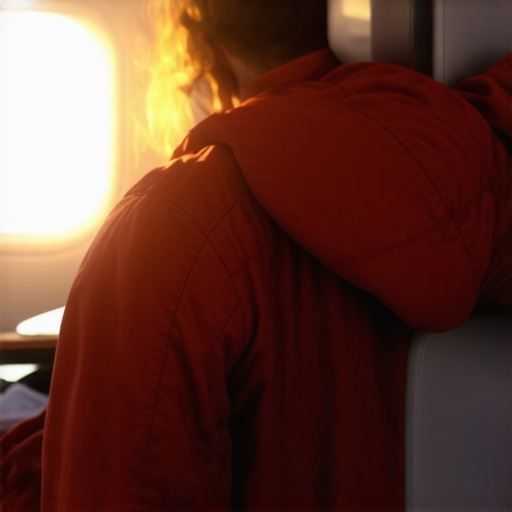
Use your breath to shut down the alarm bells
When you are in pain, your nervous system goes into high alert. Your breathing becomes shallow, your shoulders creep up toward your ears, and your muscles tighten in a protective “guarding” response. This guarding actually increases the compression on your discs. To break this cycle, you need to use your diaphragm. It sounds simple, but how to breathe through your belly for instant lower back relief is one of the most powerful tools in your travel kit. Deep, diaphragmatic breathing creates internal pressure that supports the spine from the inside out, acting like a natural weight belt. If you feel a sharp pinch, stop and check: is this a muscle cramp or a nerve firing? Knowing how to identify if your back pain is muscular or nerve related determines whether you should keep moving or stay still.
Stop trying to stretch the pain away
The biggest mistake I see travelers make is standing up in the aisle and trying to touch their toes or pull their knees to their chest. If your disc is already irritated, these movements are like picking at a scab. Instead of aggressive stretching, focus on stability. If you have invested time in strategic chiropractic solutions for long-term back health, you know that movement is medicine, but only the right kind of movement. If you feel like your alignment is off, remember the truth about why your adjustments do not seem to last: it is usually because of the hours we spend slumped in chairs like these. Instead of stretching, try subtle ankle pumps or small seated glute squeezes to keep blood flowing without aggravating the nerve root.
We have to talk about the elephant in the room: why you can follow every ‘ergonomic’ rule on a plane and still feel like a crumpled soda can when you land. Most people think of back pain as a purely structural problem—like a car with a bent frame. They assume that if they just get one good ‘pop’ or do enough planks, the pain will vanish. But after years of working with chronic cases, I have realized that the biggest myth in rehab is the idea that ‘weakness’ is the primary enemy. In reality, the enemy is often over-tension. Many travelers are so focused on ‘holding their core tight’ that they effectively turn their spine into a rigid, pressurized pillar that cannot absorb the vibrations of the aircraft.
This is where why most core exercises actually make lower back pain worse if you are already in a state of high neural sensitivity. If you are constantly bracing, you are essentially choking the life out of your lumbar discs. Instead of more bracing, you need to find ways to let the deep stabilizers do their job without the superficial ‘six-pack’ muscles taking over. This is a nuance often missed in basic physical therapy but is a cornerstone of strategic chiropractic solutions for long-term back health. When you understand that movement quality beats movement quantity, your recovery time during travel will plummet.
Why does your back still hurt if your MRI looks normal?
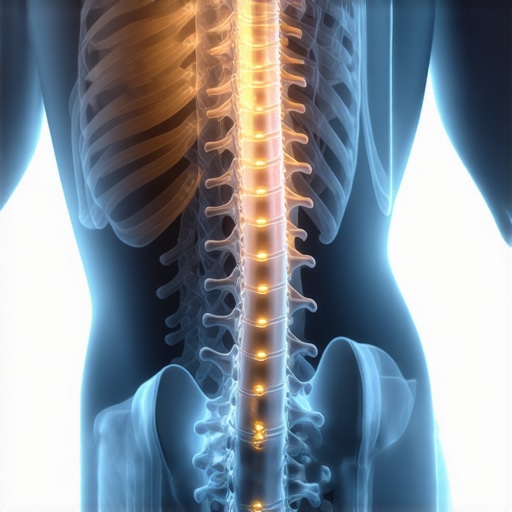
This is the question that keeps patients up at night. They get a scan, the doctor says it is ‘clean,’ and yet they can barely walk after a three-hour flight. Here is the advanced truth: structural damage and pain are not perfectly correlated. A landmark study published in the American Journal of Neuroradiology (Brinjikji et al., 2015) showed that 37% of 20-year-olds with no pain had disc protrusions. By age 50, that number jumps to 60%. This means your pain is likely a functional issue—a ‘software’ glitch in how your brain is protecting your spine—rather than just a ‘hardware’ break. This is exactly the truth about why your adjustments do not seem to last if you do not address the underlying movement patterns. If you want real relief, you have to stop treating the scan and start treating the human.
The biggest ‘oops’ factor I see? People trying to stretch through a flare-up. If your nerve is already irritated from a long flight, stretching it is like pulling on a frayed electrical wire. You are better off using how to use diaphragmatic breathing to calm your nervous system than trying to touch your toes in the galley. You have to learn how to identify if your back pain is muscular or nerve related before you apply any ‘fix.’ If it is the nerve, movement should be small, gentle, and focused on decompression rather than length. Have you ever fallen into the trap of thinking you just needed to ‘stretch it out’ only to feel ten times worse the next morning? Let me know in the comments below.
Stop using foam rollers on your lumbar spine
I see it in every gym and airport lounge: someone trying to ‘iron out’ their lower back pain by rolling over a hard plastic cylinder. Please, stop. If you have a disc issue, you are essentially grinding your vertebrae into already inflamed tissue. This is exactly why you should never roll your lower back on a foam roller. Instead, I pack a simple lacrosse ball in my carry-on. It is small, cheap, and fits in the side pocket of my backpack. I use it specifically for my thoracic spine and my glutes to release the tension that pulls on the pelvis. Learning how to use a lacrosse ball to melt away mid-back knots is a total game-changer for those long-haul flights because it targets the muscles that actually need the release without risking your lumbar stability.
How do I maintain my spinal resilience over the long haul?
Maintenance is not about doing a sixty-minute yoga flow every morning; it is about ‘spinal hygiene.’ Dr. Stuart McGill, a legendary spine biomechanist from the University of Waterloo, emphasizes that the most successful patients are those who remove the ’cause’ of their pain rather than just adding more exercises. For me, that meant mastering the hip hinge secret for people with chronic lumbar issues. If you can move through your hips instead of your spine when picking up your luggage or reaching for the overhead bin, you stop micro-damaging the discs every single day. This is the foundation of strategic chiropractic solutions for long-term back health. You want your adjustments to stick? You have to stop undoing them with poor body mechanics.

The next frontier in travel-friendly rehab
Looking ahead, the trend is shifting toward wearable biofeedback. We are moving away from passive supports and toward devices that alert your nervous system the moment you start to slump or lose your neutral spine. Imagine a shirt that vibrates gently when your core stability drops. Until that becomes mainstream, I rely on how to use kinesiology tape for lower back support. It provides that same sensory ‘reminder’ to my brain to keep the muscles engaged without acting like a rigid, restrictive brace. It is about building a better relationship with your body’s internal signals. If you want to revolutionize your rehab, you have to start thinking about the twenty-three hours you aren’t in a clinic. Try this tonight: before your next trip, spend five minutes on how to use diaphragmatic breathing to calm your nervous system. It is the single most effective tool I have for resetting my pain threshold before it hits a breaking point.
Lessons I Learned the Hard Way in the Trenches of Coach Class
After years of navigating the skies with a finicky sciatic nerve, I have realized that the battle for your back is won or lost before you even board the plane. One of the hardest lessons I learned is that the sensation of ‘tightness’ is often a lying messenger. When your leg feels tight after four hours in the air, your instinct is to stretch. But if that tightness is neural tension, stretching is the worst thing you can do. I spent years making my condition worse by trying to touch my toes in the galley, not realizing I was just yanking on an already angry nerve.
Another lightbulb moment was the realization that travel stress is a physical weight. When you are rushing to a gate, your sympathetic nervous system kicks in, increasing muscle guarding and making your spine less resilient. This is why learning essential tips for managing back pain through healthy lifestyle choices is so vital; it’s about preparing your nervous system for the physical toll of travel. Finally, I stopped viewing my back as ‘broken.’ Your spine is incredibly strong, but it needs the right environment. Once I prioritized unlocking back pain relief expert chiropractic adjustments that work, my body could handle the static loading of travel much better.
The Gear That Actually Earned a Spot in My Carry-On
I don’t travel with bulky gadgets anymore. My toolkit is lean and focused on function. First is a simple lacrosse ball. It is the only thing that can get into the gluteus medius and piriformis without the risks of rolling the lumbar spine directly. Second, I never fly without a small strip of kinesiology tape applied to my lower back. This isn’t just for physical support; it provides a constant sensory cue to my brain to avoid the dreaded ‘C-slump.’ You can learn how to use kinesiology tape for lower back support to create that same awareness during your next trip.
Lastly, I swear by a quality thoracic bridge exercise before I leave for the airport. Opening up the upper back takes the pressure off the lumbar region, which is a key component of strategic chiropractic solutions for long-term back health. If you can keep the mid-back moving, the lower back doesn’t have to overwork to compensate for the stiff airplane seat.
Your Path Toward a Spine That Travels Well
You deserve to arrive at your destination ready to explore, not looking for the nearest pharmacy. The secret to long-term relief isn’t a single ‘magic’ stretch; it is a combination of better movement patterns and proactive care. By focusing on revolutionize your rehab techniques, you can build a spine that is resilient enough to handle the 24B middle seats of the world. Don’t be afraid to take up space, move your body, and prioritize your comfort. Travel is meant to be a joy, and with a few tactical shifts in how you sit and breathe, you can reclaim that experience. What is the one ‘travel hack’ you tried for your back that actually made things worse? Let me know in the comments below.