
I remember the Tuesday afternoon the fire started. It wasn’t a literal fire in my home office, but that searing, localized heat right between my shoulder blades that felt like someone was pressing a hot penny against my spine. I had spent four hours grinding through spreadsheets, and by 3:00 PM, I was squirming like a worm on a hook. My biggest mistake? I assumed I just needed a more expensive chair. I went out and dropped a small fortune on a mesh throne that looked like it belonged on the bridge of a starship, yet the burning persisted. It took me six months of misery and a very patient chiropractor to realize that the real cause of that burning sensation between your shoulder blades wasn’t where I was sitting, but what I was looking at. If you have ever felt that hot poker sensation while typing, you are not alone, but you are likely looking in the wrong place for the fix. Today, I am going to show you exactly how to tweak your setup so you can stop the mid-day agony without needing a total office renovation.
Is a more expensive chair really the answer?
I used to think so, but the truth is a bit more complicated. You can sit in the best chair in the world, but if your screen is two inches too low, your nervous system will pay the price. Have you ever noticed yourself leaning forward as the day goes on? That is your body trying to compensate for poor visual alignment. I spent years trying to how to fix rounded shoulders from years of desk work, only to realize I was recreating the problem every single morning by glancing down at a monitor that sat too low on its factory stand. Even if you regularly how to use a lacrosse ball to melt away mid-back knots, the relief will always be temporary if your monitor height is forcing your thoracic spine into a permanent slump. According to researchers at the Cornell University Ergonomics Lab, even a slight downward gaze can significantly increase the load on your neck and upper back muscles, effectively making your head feel 30 pounds heavier than it actually is.
Get your screen level or get ready for more pain
The reason your mid-back burns is actually quite simple: your eyes are the boss of your spine. If your monitor is too low, your chin drops. When your chin drops, your shoulders follow, and the muscles in your mid-back have to work overtime just to keep you from face-planting into your keyboard. This constant tug-of-war is what creates that inflammatory ‘burn.’ It is the same mechanical failure that happens when people forget how to set up your laptop for better neck alignment while working from a coffee shop. We are going to break down the exact measurements you need to turn your workspace from a torture chamber into a place where you can actually get things done. Let’s get into the nitty-gritty of the ‘eye-line rule’ and why your current monitor stand is probably your back’s worst enemy.
Set your monitor height by your eyes, not your desk
To stop the fire in your back, you need to understand that how your vision might be affecting your posture and neck pain is the primary driver of your discomfort. Start by sitting in your normal working position. Close your eyes, take a deep breath, and let your head settle naturally where it wants to stay. When you open your eyes, your gaze should land exactly on the top third of your screen. If you find yourself looking at the middle or bottom of the display, your neck is perpetually flexed. After that Tuesday fire I mentioned earlier, I tried to prop my monitor up with a stack of heavy medical textbooks to test this theory. It worked for about twenty minutes until the stack slowly started to list to the left. I was so focused on a deadline that I didn’t notice until my monitor tipped, and my lukewarm coffee ended up all over my keyboard. Mess aside, those twenty minutes of having the screen at eye level were the first time in months that the hot penny feeling between my scapulae actually vanished. It was the mechanical proof I needed that height, not the chair, was the culprit. 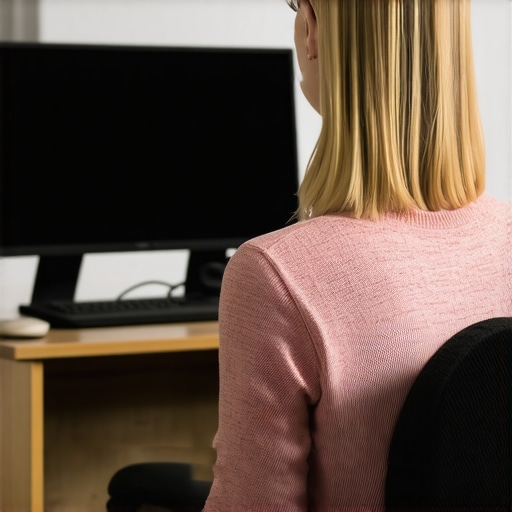
Use the zombie arm test for perfect distance
Distance is just as important as height. If the screen is too far away, your brain will unconsciously pull your chin forward to see better—a move called turtling. This forces you to perform the 3 exercises that fix a forward head posture just to undo an hour of email. Extend your arm straight out in front of you as if you were a zombie reaching for a door. Your middle finger should just barely touch the glass of your screen. This distance allows your eyes to focus without your neck muscles engaging in a survival-mode grip that eventually leads to burning spasms.
Stop treating your laptop like a monitor
Laptops are ergonomic disasters because the keyboard and screen are fused together. If the keyboard is at a comfortable height for your wrists, the screen is inevitably too low for your eyes. You must separate these two functions. Use a dedicated laptop riser or even a sturdy set of boxes to bring the screen up to that eye-level sweet spot, and then plug in an external keyboard and mouse. Failing to do this is why so many people struggle with how to use a wall slide to fix rounded shoulders; they are fighting an uphill battle against their own hardware for eight hours a day.
The quick reset that saves your spine mid-meeting
Even with a perfect setup, static loads are your enemy. Your muscles were designed for movement, not for holding a fifteen-pound head perfectly still for four hours. Every thirty minutes, perform the 10 second posture reset you can do at your desk. Simply pull your shoulder blades down and back as if you are trying to tuck them into your back pockets, and tuck your chin slightly to elongate the back of your neck. It is a tiny movement, but it reboots the neural pathways that tell your mid-back muscles to relax. If the pain persists despite these changes, you might need to understand the real difference between a chiropractor and a pt to decide who can best help you mobilize the joints that have become stuck from years of poor alignment.Most people think that when a chiropractor adjusts them, they are putting something back in place. I hate to break it to you, but your spine isn’t a Jenga tower. If a bone were actually out of place, you would be in the emergency room, not sitting at your desk reading this. The reality is that your joints get stuck or restricted in their movement range, which is exactly where the science behind chiropractic adjustments for back pain relief comes into play. It is about restoring the slide between vertebrae and resetting the nervous system, not just moving a bone from point A to point B. If you are only chasing the sound of a crack, you are missing the forest for the trees. Here is the oops factor that most people miss: if you are constantly twisting your own neck or back until it pops, you are likely making yourself worse. I see this every week. A patient comes in complaining of chronic tightness, and every ten minutes during our consultation, they give their neck a quick crack for relief. What they are actually doing is over-stretching the ligaments in the joints that are already moving too much—a state called hypermobility—while the actual stuck joint stays completely immobile. This creates a cycle of instability that is one of the main reasons the truth about cracking your own neck at your desk is so much more complicated than a simple habit; it is a neurological trap that keeps you in pain. #IMAGE_PLACE_HOLDER_C#
Why does your upper back feel like it needs to pop every ten minutes?
This is the million-dollar question for desk workers. That urge to pop isn’t actually your body asking for a structural realignment; it is often a sign of creep, a phenomenon where your ligaments have stretched and deformed under the constant load of a slumping posture. When you feel that why your upper back feels like it needs to pop constantly, your nervous system is actually hunting for a sense of stability it has lost. According to a study published in the Journal of Manipulative and Physiological Therapeutics, the cavitation—the technical term for the pop—triggers a brief refractory period where the surrounding muscles are forced to relax via a reflex arch. This feels great for about fifteen minutes, but because the underlying mechanical issue, like that monitor height we discussed earlier, hasn’t changed, the tension returns with a vengeance. To find a permanent exit from this cycle, you have to look beyond the immediate relief of a click. You need strategic chiropractic solutions for long-term back health that focus on strengthening the weak side of the equation, not just stretching the tight side. Most people spend their lives trying to stretch the back of their neck when they should actually be strengthening the deep flexors in the front. This is often the truth about why your adjustments dont seem to last; you are treating the smoke and ignoring the fire. Have you ever fallen into this trap of constantly cracking your own neck for relief? Let me know in the comments.
Why my aluminum laptop stand is worth more than my office chair
I didn’t stop at textbooks; I eventually invested in a solid aluminum laptop stand because stability matters more than you think. If your screen wobbles every time you type, your eyes will strain, and your neck will lock up to compensate. I personally use a Rain Design mStand because it acts as a heat sink and, more importantly, gets the screen exactly where it needs to be. For my keyboard, I went with a mechanical one with a split design. This allows my chest to stay open, preventing me from needing to constantly figure out how to fix rounded shoulders from years of desk work every single evening. 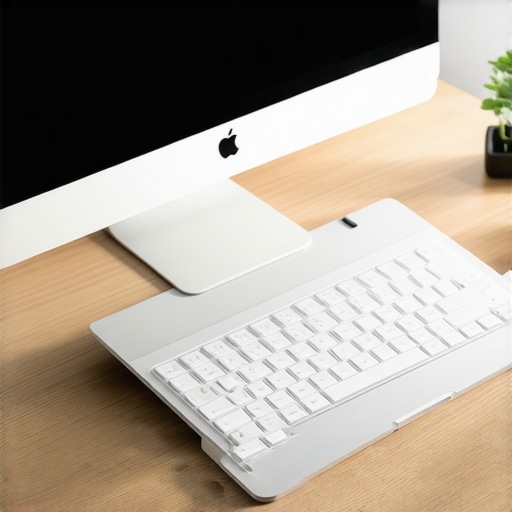
How do I maintain my spinal health over time?
Consistency is the only currency that matters in ergonomics. Maintaining this isn’t about a one-time fix; it’s about essential tips for managing back pain through healthy lifestyle choices that become invisible habits. I treat my spinal hygiene like I treat my dental hygiene. You need a mix of unlocking back pain relief expert chiropractic adjustments that work and daily self-care. This is why I keep a foam roller in my office, though I had to learn the correct way to use a foam roller on your it band and my mid-back so I wasn’t just bruising my tissue without any real benefit. Dr. Stuart McGill’s seminal work, ‘Low Back Disorders,’ highlights that repetitive micro-trauma from sustained sitting postures is a primary driver of disc tissue cumulative strain. If you are an athlete, you can boost your sports rehab journey with proven chiropractic strategies by simply ensuring your desk doesn’t undo your gym work.
Stop chasing symptoms and start building resilience
I predict that within the next five years, we will see the rise of haptic bio-feedback clothing—shirts that subtly vibrate when your scapulae drift too far apart. Until that tech becomes mainstream, you have to be your own coach. You should care about this even if you aren’t a ‘desk worker’ because how spinal alignment directly impacts your athletic performance is non-negotiable. Whether you are swinging a golf club or a kettlebell, a stuck thoracic spine limits your power output. I want you to try this advanced tip tomorrow: set a ‘posture alarm’ for every 50 minutes. When it goes off, don’t just stand up—do 10 reps of scapular wall slides. It’s the single best way to ensure the role of chiropractic care in effective sports injury recovery actually sticks long-term.
The Three Hardest Lessons from My Time in the Ergonomic Trenches
The first big epiphany was that my eyes dictate my posture. If you do not fix the visual input, no amount of expert chiropractic adjustments that work will stick because you are undoing the work within ten minutes of sitting back down. Second, I realized that ‘tightness’ is often a cry for stability, not more stretching. Pushing through the pain usually makes it worse. Third, I learned that the science behind chiropractic adjustments for back pain relief is about neurological resets, not just moving bones around like Lego bricks. You have to train your brain to hold the new position.
The Essential Toolkit That Keeps My Mid-Back Flame-Free
I swear by the Rain Design mStand; it is simple, rigid, and gets the height right every time. For education, Dr. Stuart McGill’s work is the gold standard for understanding how to move without injury. I also incorporate strategic chiropractic solutions for long-term back health by scheduling maintenance visits before the pain becomes a ‘fire.’ Lastly, a simple lacrosse ball is better than any five-thousand-dollar massage chair for targeted relief during a long conference call.
Start Rewriting Your Bodys Daily Script
You do not have to live with that searing heat between your shoulders. By making your environment work for your anatomy rather than against it, you can boost your sports rehab journey with proven chiropractic strategies and finally focus on your work instead of your discomfort. Your spine is incredibly resilient, but it needs the right signals to thrive. Start with one small change today: raise that monitor to eye level and let your nervous system finally exhale. Have you ever found yourself obsessively cracking your own neck just to get through an afternoon meeting? Let me know in the comments below!