
I was hunched over my keyboard three years ago, desperately trying to finish a project, when that familiar, searing itch started right under my left scapula. It wasn’t just a tight muscle; it felt like a tiny, angry marble was buried deep in the tissue. I did what most of us do—I leaned against a doorframe and tried to grind it out. Big mistake. My back flared up so badly I couldn’t turn my head for two days. That was my lightbulb moment where I realized that unless you know exactly what you’re poking, you’re just guessing. Today, I’m going to help you figure out if that stubborn lump is a trigger point or something else entirely, so you can finally get back to moving without that constant, dull throb distracting you from your life.
Stop poking your back and start finding the source
We’ve all been there: reaching back, finding a lump, and thinking I just need to crush this. But did you know that what feels like a knot might actually be referred pain from elsewhere? Early on, I spent way too much time obsessing over a spot in my mid-back, only to find out through professional help that the real issue was my neck alignment. If you’re wondering how to identify if your back pain is muscular or nerve related, you aren’t alone. Trigger points are hyper-irritable spots in skeletal muscle that are associated with palpable nodules in taut bands of muscle fibers. Research published in the National Institutes of Health indicates that myofascial trigger points are a primary cause of pain and dysfunction in up to 85% of people attending pain clinics. Identifying them correctly is the difference between a quick recovery and weeks of unnecessary soreness.
Is this nagging spot actually worth the worry?
You might be scared that a knot means permanent damage, but usually, it’s just your body’s way of sounding an alarm. I used to think I had a torn muscle every time I felt that burning sensation between your shoulder blades. In reality, it was just a trigger point screaming for oxygen and movement. Have you ever felt a spot so tender it made you jump when you touched it? Have you ever noticed that pressing one spot makes your head ache or your arm tingle? Tell me, have you faced a mystery pain like this that just won’t quit?
How to hunt down the source of the fire
To tell if it’s a trigger point, you need to look for a few specific tells. First, does it feel like a hard kernel? Second, does pressing it send a zing of pain somewhere else? When I first started trying to fix my own issues, I made a classic rookie error: I used a soft foam roller on everything, including my spine. I eventually learned that why you should never roll your lower back on a foam roller is one of the most important lessons in spinal health. Instead, I should have been focused on precision tools. Learning how to use a lacrosse ball to melt away mid-back knots changed everything for me. It’s about being surgical with your relief, not just applying blunt force and hoping for the best.
Map your back like a search and rescue mission
To find the true culprit, you need to be systematic. Imagine your back is a grid. Don’t just swipe your hand over the skin; you need to sink your fingers in with the intent of finding a hidden marble. I remember one Tuesday afternoon after a heavy gym session when my mid-back felt like it was made of concrete. I started at the base of my neck and worked down the inner edge of my shoulder blade. I wasn’t looking for generalized soreness—I was looking for that one specific ‘jump sign.’ When you hit a real trigger point, your body has a physical reaction; you might flinch or catch your breath. This is where how to identify if your back pain is muscular or nerve related becomes vital. If the spot feels like a distinct, hard node that reproduces your familiar pain, you’ve found your target.
Does the pain travel when you press?
Once you find a spot, hold it for five seconds. If that pressure sends a dull ache up into your jaw or down your arm, you’ve confirmed a trigger point. This ‘referred pain’ is the smoking gun. I once spent weeks trying to massage a headache away, only to realize the pain was actually coming from a tiny knot in my upper trapezius. If you’re feeling a sharp pinch rather than a dull ache, especially during movement, you might be dealing with something like why your shoulder pinches during overhead presses. Understanding the difference prevents you from irritating an already inflamed nerve.
Apply pressure without starting a war
The biggest mistake I see—and one I’ve made dozens of times—is trying to ‘kill’ the knot with maximum force. Your nervous system is like a high-security alarm; if you kick the door in, it just locks down tighter. Instead, use a lacrosse ball or a massage cane. Apply about 70% of the pressure you can tolerate. It should feel ‘exquisitely painful’ but not like you’re damaging tissue. Hold that pressure for 30 to 90 seconds while focusing on deep, slow breaths. I learned that how to use diaphragmatic breathing to calm your nervous system is the secret sauce here. Without the breath, your muscle stays in a defensive state.
The time I confused a rib for a knot
Early in my journey, I had a spot near my spine that felt incredibly hard. I spent an hour leaning into a golf ball, trying to ‘melt’ it. By the next morning, I couldn’t take a deep breath without a stabbing pain. It wasn’t a trigger point; it was a rib subluxation. If I had known how to spot a rib subluxation fast, I would have stopped immediately. That was the day I realized that some things require expert chiropractic adjustments that work to reset the mechanics before the muscle can ever truly relax.
Integrate movement to make the relief stick
Once the ‘knot’ feels like it’s softening, you can’t just go back to slouching on the couch. You have to teach the muscle that it’s safe to stay long and relaxed. I follow every release session with a light mobility drill, like wall slides. This is a core part of proven chiropractic strategies for long-term health. If you just crush the knot and sit back down, your body will revert to its protective pattern within hours. For those of us dealing with chronic issues, this is often the truth about why your adjustments don’t seem to last—the lack of follow-up movement. You have to reclaim that range of motion immediately.
Most people think that if a muscle feels tight, the solution is to pull on it until it lets go. I’m going to be blunt: this is exactly why so many people stay in a cycle of chronic pain. In my early days of rehab, I was a stretching fanatic. I thought that if I could just touch my toes with ease, my back pain would vanish. Instead, I was just aggravating my nervous system. You see, a muscle often feels tight because it’s actually weak or overextended, and your brain is ‘braking’ that area to prevent injury. When you stretch a muscle that is already in a protective state, you’re essentially fighting your own brain. This is why stretching your hamstrings won’t fix your chronic tightness if your pelvis is tilted; you’re just straining the attachment points.
Stop stretching muscles that are already screaming for help
The ‘Oops’ factor here is confusing muscle tension with neural tension. I once treated a runner who was convinced her calves were just ‘stubborn.’ She spent twenty minutes a day on a slant board. It turned out she had a disc issue in her lower back, and she was actually stretching her sciatic nerve, which was already inflamed. This is one of the classic the 3 stretching mistakes that make sciatica worse. If you feel a zing, a tingle, or a numbness during a stretch, stop immediately. You aren’t ‘releasing’ anything; you’re irritating a nerve that is already under duress. Real expertise lies in knowing when to back off.
Why does your back feel ‘locked’ even after a perfect adjustment?
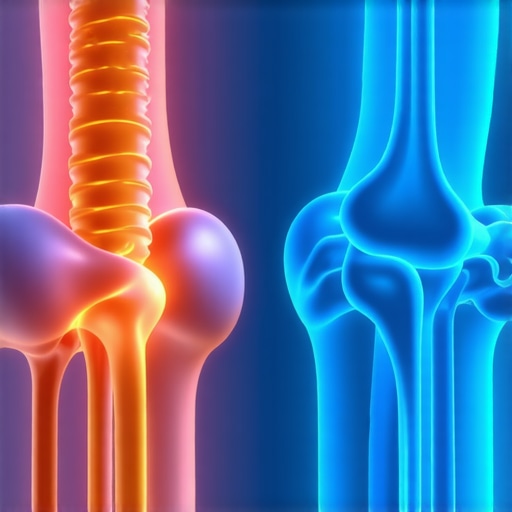
Sometimes you leave a session feeling like a million bucks, but by the time you’ve driven home, that familiar stiffness is back. This happens because the adjustment addresses the joint mechanics, but the software—your nervous system—is still running the old ‘pain’ program. Research published by the National Library of Medicine suggests that spinal manipulation has a significant neurophysiological effect, but if the surrounding tissues aren’t retrained, the body reverts to its habitual patterns. This is the truth about why your adjustments don’t seem to last. You need to bridge the gap between the table and your daily life through specific, corrective movement.
Don’t let passive therapy become a crutch for your recovery
Real progress happens when you combine the science behind chiropractic adjustments for back pain relief with active stabilization. We often think of the chiropractor as the ‘fixer,’ but they are actually the one who opens the window of opportunity. It’s up to you to walk through it by implementing strategic chiropractic solutions for long-term back health. This means addressing your desk setup, your breathing, and your movement patterns. Have you ever fallen into this trap of relying only on the ‘crack’ without changing your habits? Let me know in the comments.
I have spent a small fortune on gadgets over the years, but I have learned that the most expensive tool isn’t always the most effective. For a long time, I relied on a basic lacrosse ball, but when I wanted to scale my recovery, I started looking into percussive therapy. The key is understanding that a massage gun is not a magic wand; it is a desensitization tool. If you use it incorrectly, you are just bruising your fascia without solving the underlying tension. I finally sat down and learned the proper way to use a massage gun on your quads and it completely changed how I felt after heavy squat sessions. It is all about using high-frequency vibration to override pain signals, allowing the muscle to drop its guard. Looking ahead, I predict we are going to see a massive shift toward biofeedback wearables. Imagine a shirt that vibrates the moment your scapula starts to wing or an app that tracks your spinal shear in real-time. We are moving away from reactive ‘fixing’ and toward predictive maintenance. But until that tech is perfected, you have to be your own sensor. You need to master the environmental basics, such as how to set up your laptop for better neck alignment. These micro-adjustments are what actually prevent that ‘marble’ knot from returning every Monday morning.
How do I keep my back feeling this good every day?
Maintenance is a lifestyle, not a chore you save for Saturday morning. I keep a lumbar roll in my car because I know my commute is where my posture usually goes to die. If you spend hours behind the wheel, learning how to optimize your car seat for lumbar support is non-negotiable for long-term comfort. It is also about what you do in the quiet moments between your big gym sessions. Integrating strategic chiropractic solutions for long-term back health means you are doing the ‘boring’ work—like deadbugs or bird-dogs—even when you feel perfectly fine. Dr. Stuart McGill, a world-renowned expert in spine mechanics at the University of Waterloo, emphasizes that ‘spine hygiene’—the way you move and sit throughout the day—is just as vital as the specific exercises you perform. 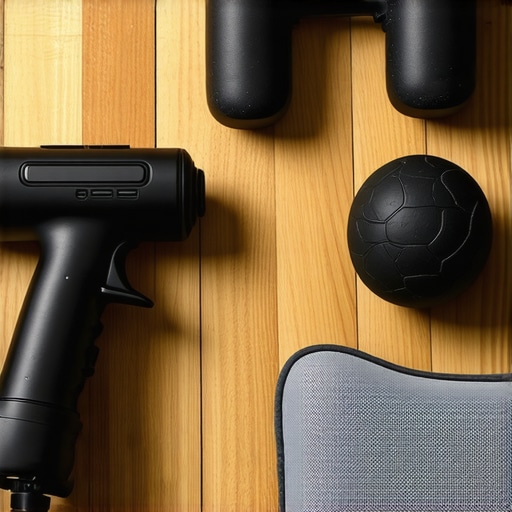 I also swear by the small wins. If I am at my desk for more than an hour, I perform the 10 second posture reset you can do at your desk to break the cycle of tissue ‘creep.’ For those of us who stay active, this becomes even more critical. You need to look at proven chiropractic strategies that prioritize tissue quality over raw strength. This balance is what allows you to keep pushing without the constant fear of a flare-up. Today, I want you to try one thing: check your monitor height. Go read how to adjust your monitor to stop mid-back burning and fix it right now. Your neck and traps will thank you by the time you clock out.
My Hard-Earned Lessons on Taming Persistent Muscle Knots
Looking back at my own recovery, I realized that the hardest lesson wasn’t about finding the right tool, but changing my mindset. First, I had to accept that pain is a messenger, not a personal failure; when my back flamed up, it was my body asking for a change in position, not a punishment. Second, I learned that ‘more’ isn’t better. I used to think that if thirty seconds of pressure felt good, ten minutes would be amazing—only to wake up the next day bruised and worse off. Third, the real breakthrough happened when I stopped treating the knot as an isolated enemy and started looking at my overall movement. By incorporating strategic chiropractic solutions for long-term back health into my daily flow, the frequency of those ‘angry marbles’ dropped significantly. Consistency in small, gentle movements always wins over aggressive, sporadic ‘fixes.’
The Toolkit I Use to Keep My Spine Happy
I don’t believe in cluttering your house with gadgets, but a few specific items are non-negotiable for me. I always keep a standard lacrosse ball in my gym bag for precision work on the mid-back; its density allows for a targeted release that foam rollers just can’t match. For my workspace and travel, I never leave without a lumbar support cushion. Understanding the best way to support your lumbar spine while driving long distances saved me from countless flare-ups during road trips. Finally, I trust the data behind professional intervention. I’ve seen firsthand how chiropractic adjustments can alleviate chronic back pain by resetting the neural threshold, making it much easier for my own stretches and exercises to actually take hold.
#IMAGE_PLACE_HOLDER_E#
Reclaiming Your Life From Chronic Tension
It’s easy to feel defeated when a trigger point keeps returning, but remember that your body is remarkably adaptable. You aren’t stuck with this pain forever; you are simply in the middle of a learning process. By paying attention to your posture, breathing through the tension, and prioritizing managing back pain through healthy lifestyle choices, you are building a foundation for a life where you move freely. Don’t be afraid to seek professional guidance to get your mechanics back on track. Your journey to a pain-free back starts with the very next breath you take. Have you found a specific spot that always seems to trigger a headache or leg pain? Let me know in the comments below.