
I was mid-set in my garage gym, pushing for that final rep of lateral raises, when it felt like a hot needle poked straight into the front of my shoulder. It wasn’t just a “good burn.” It was a sharp, mechanical catch that made me drop the dumbbells instantly. For weeks, I tried to push through it, thinking I just needed to “get stronger,” but that ego-driven mistake only landed me on a physical therapy table wondering if I’d ever be able to lift heavy again. If you’ve ever felt that jagged pinch when your arms reach shoulder height, you aren’t alone, and you definitely aren’t “just getting old.” I spent months frustrated by this, but it turns out the fix is simpler than I ever imagined. We are going to solve this mystery today so you can get back to training without that nagging dread.
Stop Fighting Your Anatomy During Delts Day
We often treat our bodies like machines that just need more oil or a harder push, but the shoulder is more like a delicate high-precision clock. When you feel that sharp pinch in your arm during lateral raises, it’s usually your supraspinatus tendon getting crushed between the humerus and the acromion process. This is often called subacromial impingement, and it’s remarkably common among lifters who focus on “the pump” over proper mechanics. I remember my early days of training—I’d keep my palms facing the floor and drive the weight up as high as possible. I thought I was maximizing tension. In reality, I was grinding my rotator cuff into a pulp. Have you ever had to cut a workout short because your shoulder felt like it was “catching” on something? Let me know, because I’ve been there, and it’s frustrating as hell.
Is it really possible to fix this without surgery?
The fear is real. You start googling “shoulder pain” and suddenly you’re convinced you have a full-thickness labrum tear. However, most of the time, it’s a simple matter of space management. According to the Journal of Orthopaedic & Sports Physical Therapy, movement modifications and strengthening the stabilizing muscles are often as effective as surgical interventions for subacromial pain. Before you give up on side raises forever, you need to audit your movement. You might need to check your own shoulder mobility in 30 seconds to see if the issue is actually coming from a stiff rib cage or a lack of internal rotation. I learned the hard way that a “shoulder problem” is often a “scapula problem.” If your shoulder blade isn’t rotating upward to clear a path for the arm bone, something is going to get pinched. In fact, I found that using a scapular setting trick—which I originally used for pull-ups—was the missing link for my lateral raises too. It’s about creating a stable base for the joint to move on. Today, we’re going to look at why your current technique is failing you and how to re-tool your lift so you can build those “cannonball delts” without the nagging ache.
Shift Your Angle to Save Your Joints
If you’re lifting your arms directly out to your sides like you’re forming a perfect ‘T’ with your body, you are inviting that pinch to stay for dinner. Your shoulder blades don’t actually sit flat on your back; they are angled forward at about 30 degrees. This is known as the scapular plane. I remember one specific Tuesday—International Chest and Delt Day—where I was determined to ‘isolate’ the side delt by keeping my arms perfectly lateral. By the third set, I couldn’t even lift my coffee cup. The fix was as simple as moving my hands slightly forward. When you work in this 30-degree window, the humerus slides smoothly without banging into the acromion. It’s the difference between trying to force a key into a locked door versus having the right key that turns effortlessly. This logic is also why your shoulder pinches during overhead presses if you aren’t careful with your elbow positioning. 
Stop Pouring the Pitcher
You might have heard the old-school advice to ’tilt the dumbbells forward as if you’re pouring a pitcher of water’ at the top of the move. Please, for the sake of your rotator cuff, stop doing this. Internal rotation while the arm is abducted is the fastest way to compress those sensitive tendons. Instead, keep your thumbs slightly higher than your pinkies. Think about reaching *out* toward the walls rather than *up* toward the ceiling. If you’re struggling with the weight, it’s better to drop the ego and learn how to choose the right resistance band for shoulder rehab to groove the pattern before going back to the heavy iron. I felt like a novice when I swapped my 35lb dumbbells for a light band, but three weeks later, the ‘mechanical catch’ was gone.
Squeeze the Weight Like You Mean It
Your body works in kinetic chains, not in isolation. One of the biggest mistakes I see—and one I made for years—is holding the weights with a ‘loose’ grip to ‘feel the muscle more.’ In reality, a firm grip sends a neurological signal to your rotator cuff to pack the joint and stay stable. It turns out that why your grip strength determines your rotator cuff health is rooted in a reflex called irradiation. When you white-knuckle the handle, the stabilizing muscles around the shoulder fire more effectively.
When Your Spine Sabotages Your Shoulders
You can have the best arm technique in the world, but if your upper back is rounded like a question mark, your shoulder is physically blocked from moving correctly. This is where the bigger picture comes in. It’s incredible how spinal alignment directly impacts your athletic performance by giving your scapula a flat, stable surface to glide across. If your mid-back is stuck, your shoulder has to compensate, leading to that chronic ache. You might find that the truth about why your adjustments dont seem to last is often linked to continuing the same poor lifting habits that keep pulling your spine out of whack. Align the spine first, then move the weight.Most people think that once they address the mechanics of a single lift, the job is done. But I’ve seen countless lifters fix their lateral raise only to wonder why they still wake up with a dull ache. The hidden nuance here is that we often treat our recovery as a passive waiting game. Everyone says you should “take it easy” when your back or shoulders flare up, but in my experience, complete rest is a trap. If you think lying down is helping, you’re likely falling for the myth that why bed rest is the worst thing for acute back spasms. Your tissues need blood flow and controlled loading to remodel properly. A landmark study published in The Lancet confirms that for non-specific low back pain, staying active and returning to work quickly results in far better long-term outcomes than sedentary “healing” time. 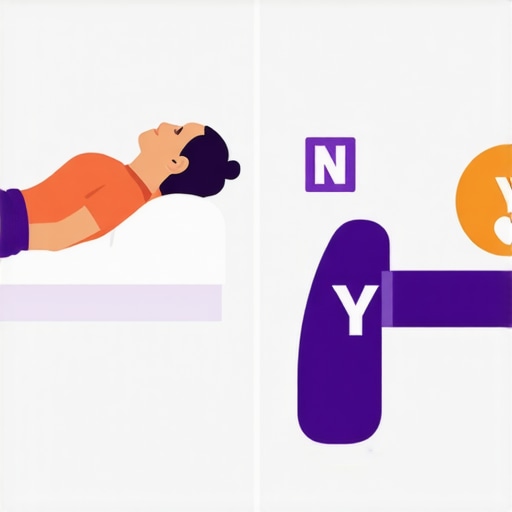
Why Sitting Still is the Worst Way to Treat a Spasm
Another advanced mistake I see is the obsession with “the pop.” We’ve all seen the viral videos of high-velocity cracks, and it’s tempting to use that sound as a metric of success. However, that sound is just gas bubbles escaping the joint fluid, a phenomenon explained by the science behind that popping sound in your joints. If you are constantly seeking that relief without changing your movement patterns, you’ll find yourself asking the truth about why your adjustments dont seem to last. The goal isn’t just to move a bone; it’s to change the neurological input to the brain. This is exactly how you can discover how chiropractic adjustments can alleviate chronic back pain long-term: by creating a window of opportunity where you can finally move without guarding.
Is the “Pop” Really Necessary for a Successful Adjustment?
Many advanced lifters ask if the audible release is required to actually “fix” a misalignment. The answer is a resounding no. Real structural change happens through the combination of an adjustment and follow-up stabilization. If you’re just “cracking” your own neck at your desk to relieve tension, you might actually be creating hypermobility in the wrong segments. This is the truth about cracking your own neck at your desk—you’re usually hitting the joints that are already moving too much, not the stiff ones that actually need the help. Have you ever fallen into this trap of self-adjusting just for the sound? Let me know in the comments.
Why You Need to Stop Freezing Your Healing Process
Finally, let’s talk about the “Oops” factor of chronic icing. We’ve been conditioned to put ice on everything that hurts. But while ice is great for numbing an acute sting, it can actually slow down the metabolic processes needed to heal a chronic, grumbling shoulder or back. I started seeing much faster progress when I learned why you should stop icing old injuries and use heat instead. Heat brings fresh, oxygenated blood to the area, which is vital for the “cleaning” phase of healing. When you combine that with a revolutionize your rehab chiropractic techniques for faster recovery approach, you stop managing pain and start building resilience.
Use This Simple Tool to Save Your Delts
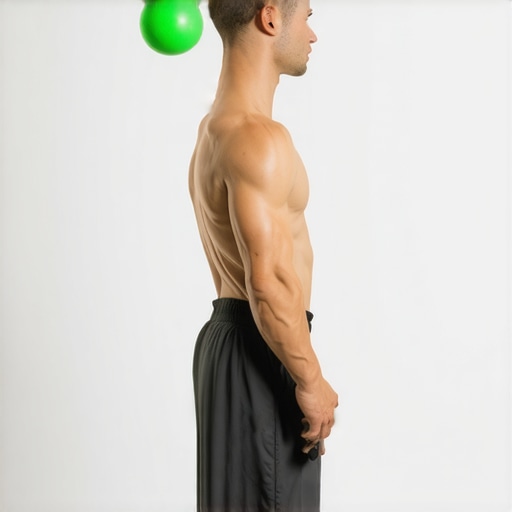
I used to think expensive massage guns were the only way to stay loose, but the real MVP in my gym bag is a simple lacrosse ball. I learned how to use a lacrosse ball to melt away mid-back knots while traveling for work, and it’s been a game-changer for my shoulder positioning. By pinning the ball between my shoulder blade and the wall, I can find those trigger points that usually lead to my neck tightening up. This localized pressure helps reset the muscle tone, allowing the scapula to move more freely. If I’m heading into a heavy leg day, I’ll also apply some kinesiology tape for lower back support just to give my nervous system that extra bit of ‘safe’ feedback during deep squats.
How do I keep my back from regressing?
The secret isn’t a secret at all: it’s consistent, strategic chiropractic solutions for long-term back health. You have to treat your spine like a high-performance car; you don’t wait for the engine to blow to change the oil. Dr. Stuart McGill, a world-renowned expert in spine biomechanics and author of Low Back Disorders, emphasizes that spine hygiene—the way you move throughout your day—is just as important as the exercises you do in the gym. This means integrating essential tips for managing back pain through healthy lifestyle choices like walking daily and monitoring your ‘sitting budget.’ I’ve found that even a five-minute movement break every hour does more for my longevity than a single two-hour workout once a week.
Biofeedback is the Next Frontier
I truly believe the future of sports rehab is moving toward real-time biofeedback. We are already seeing sensors that can tell you if your athletic performance with targeted chiropractic care is being sabotaged by a slight hip shift or a lack of thoracic extension. Soon, your phone might vibrate the second your form breaks down on a set of lateral raises. Until then, you need to be your own biofeedback loop by paying attention to the ‘check engine lights’ your body sends you. If you want to boost your sports rehab journey with proven strategies, start by implementing the ‘white-knuckle’ grip technique on your next delt day. Squeeze the weight like you’re trying to crush it, and watch how much more stable your shoulder feels. Give it a shot on your next session and feel the difference in joint stability immediately.
The Hardest Lesson I Learned About Training Through the Pain
If there is one thing I could go back and tell my younger, more stubborn self, it is that your body is a biological ecosystem, not a mechanical object. I used to think I could just ‘grind out’ the issues, but real progress came when I realized that the role of chiropractic care in effective sports injury recovery is not about fixing a broken part; it is about restoring the communication between your brain and your muscles. I also learned that pinpointing the source of pain is rarely a straight line. Sometimes a shoulder ache is actually a neck issue, which is why understanding the real difference between a chiropractor and a pt is crucial for choosing the right recovery path. Most importantly, I realized that ‘perfect form’ is not a static destination—it is a constant conversation with your anatomy that changes day by day.
#IMAGE_PLACEHOLDER_E#
My Daily Toolkit for Durable Shoulders and a Resilient Spine
To keep my joints happy while still lifting heavy, I rely on a few specific resources that I believe every lifter should have in their arsenal. First, I always keep a copy of ‘Back Mechanic’ by Dr. Stuart McGill nearby; his work on spinal stability changed how I approach every big lift. Second, I have made expert chiropractic adjustments that work a non-negotiable part of my monthly maintenance to ensure my scapula and spine stay aligned. Finally, I have stopped following generic ‘stretch routines’ because I found out the hard way about the 3 stretching mistakes that make sciatica worse—the lesson being that specific intent beats general movement every time.
Take Your First Pain-Free Rep Today
You do not have to accept a ‘mechanical catch’ as your new normal. By adjusting your lifting angle, engaging your grip, and prioritizing your spinal health, you can get back to building the physique you want without the nagging dread of injury. Your journey in sports rehab does not have to be a lonely one, and it certainly should not involve permanent rest. Start small, listen to your biofeedback, and stay consistent with the mechanics we have discussed. Have you ever had a specific exercise that felt ‘wrong’ no matter how much you practiced? Let me know in the comments below!