
I remember the 2012 state tournament like it was yesterday. By the third set of the semifinals, my hitting arm felt less like a weapon and more like a heavy piece of wet lumber. Every time I went up for a cross-court kill, a sharp, biting sensation flared right in the front of my socket. I ignored it, popped some ibuprofen, and kept swinging. That was the biggest mistake of my career. I ended up sidelined for six months because I didn’t understand that a shoulder doesn’t just ‘get tired’—it loses its ability to stay centered in the joint. Have you ever felt that terrifying click in your shoulder during a warm-up and wondered if today was the day it would finally give out? If you’ve been struggling with that ‘heavy arm’ feeling or noticed that your shoulder pinches during lateral raises or spikes, we need to talk about why your current warm-up isn’t cutting it.
Stop Ignoring the Ache Before It Ends Your Season
Most players think they need more ice or more rest, but usually, they just need better activation. I spent years thinking static stretching was the answer, only to realize I was actually making my joint more unstable. According to a study published in the British Journal of Sports Medicine, fatigue of the supraspinatus muscle significantly reduces the subacromial space, which is essentially the fast track to a chronic impingement. This 5-minute routine is designed to wake up the stabilizers that go dormant after a long bus ride or a morning of classes. You can even check your own shoulder mobility in 30 seconds before you start to see exactly where your restrictions are hiding. We are going to focus on blood flow and ‘waking up’ the nervous system rather than just pulling on tight muscles.
Is five minutes really enough to save your rotator cuff?
I get the skepticism. We’re told that real rehab takes hours, but in the world of effective sports injury recovery, consistency beats intensity every single time. One mistake I made early on was thinking I had to do a full ‘workout’ just to warm up. I’d spend 20 minutes on bands and be exhausted before the first whistle. The goal here isn’t to build muscle; it’s to ensure your humerus stays centered when you’re swinging at 100% power. This isn’t about fluff—it’s about the science of joint positioning and making sure your body is ready for the explosive demands of a five-set match. Let’s dive into the three movements that changed the way I play.
Pin Your Shoulder Blades to the Wall
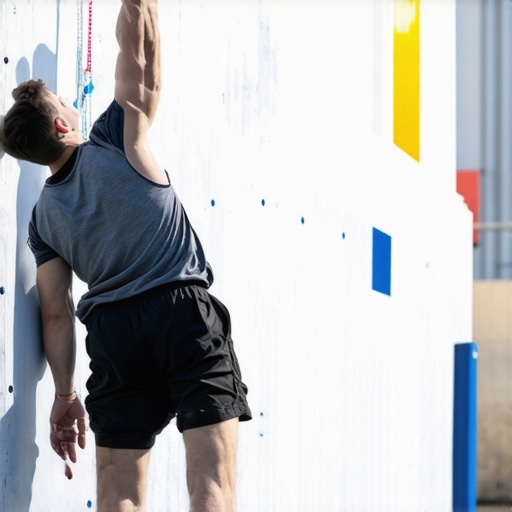
Imagine your shoulder blade is the anchor of a ship. If the anchor is dragging, the ship goes off course. Scapular Wall Slides are the fastest way to reset that anchor. Stand with your back against a flat surface, arms in a ‘goalpost’ position. As you slide your hands up, your goal isn’t just height; it’s keeping your entire spine and elbows glued to the wall. I remember a tournament in Lincoln where I skipped these. I felt my shoulders rounding forward as soon as I stepped off the bus. By the second set, I couldn’t reach full extension without a sharp jab. When I started doing these daily, that pinching sensation during spikes vanished because my shoulder blade finally stayed in the right zip code.
Rotate Like You’re Serving a Pizza
The rotator cuff is essentially a set of guidewires for a tent. If one wire is slack, the whole tent collapses under wind—or in our case, a 60mph swing. Grab a light band, tuck a rolled-up towel under your hitting arm’s elbow, and rotate your hand outward. Think about a waiter holding a tray; you want to keep that elbow pinned so the small stabilizer muscles do the work, not your big, overactive pecs. This is a core part of targeted sports chiropractic care because it ensures the humerus stays centered in the socket. If you feel your shoulder rolling forward, you’ve lost the battle. Reset and go smaller with the movement.
Squeeze the Life Out of the Ball
Most players don’t realize that your grip strength determines your rotator cuff health through a process called irradiation. When you squeeze your fist hard, the nervous system automatically sends a signal to the rotator cuff to ‘brace for impact.’ For the final minute of this routine, I want you to perform rhythmic stabilization. Hold your arm out at a 90-degree angle and have a partner (or use a wall) provide light, unpredictable taps in different directions while you keep your arm rock solid. It’s a stability move every overhead athlete needs because it trains the brain to react faster than the ball. It’s the difference between a clean kill and a trip to the trainer’s table. I once used a heavy water bottle for this in a locker room when I forgot my bands, and the ‘neural wake-up’ was so intense I felt like my arm was spring-loaded during warm-ups.
Now, here is the nuance most people miss: tightness is often a neurological illusion. We’ve been conditioned to think that if a muscle feels ‘short,’ we need to pull on it until it yields. But in my years of coaching and recovery, I’ve seen that stretching a sensitive joint often triggers a protective spasm rather than relief. Think of your nervous system as high-security software. If the software detects that the humerus is sliding around too much, it clamps down the surrounding muscles to prevent a dislocation. When you stretch those ‘tight’ muscles, you’re essentially trying to hack the security system without fixing the hardware flaw. This is where the science of chiropractic adjustments comes into play—it’s not just about the ‘pop,’ it’s about resetting the communication between your joint receptors and your brain. 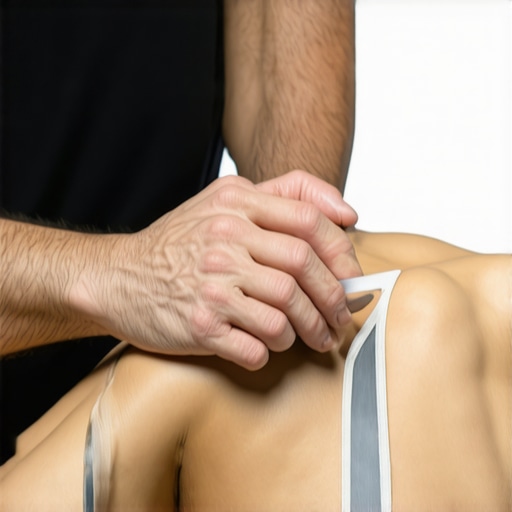
Why does your shoulder feel tighter after a long stretching session?
This is the ultimate red flag. If you spend 15 minutes on a door-frame stretch and feel more restricted ten minutes later, your brain is actively rejecting that new range of motion because it doesn’t have the strength to control it. According to research published in the Journal of Orthopaedic & Sports Physical Therapy, gains in range of motion are temporary and potentially harmful unless they are immediately followed by loaded activation. This is why we emphasize targeted chiropractic techniques for faster recovery that prioritize stability over raw flexibility. One massive ‘oops’ factor I see with high-level athletes is the trap of ‘more is better.’ They will do 100 band pull-aparts and wonder why their shoulder feels like mush during the game. You are fatiguing the very muscles meant to protect you. In the world of no pain, no gain in sports rehab, people often forget that a fatigued stabilizer is a useless stabilizer. You want these muscles crisp and reactive, not exhausted. Have you ever fallen into the trap of thinking you could ‘stretch away’ a structural instability? Let me know in the comments. If you’re ready to stop guessing and start playing pain-free, it might be time to reach out and get professional eyes on your mechanics before the next whistle blows.
I’ve seen too many athletes buy a $5 pack of flimsy bands and wonder why their rehab stalls. Personally, I only use heavy-duty, snap-resistant bands because the tension curve is predictable. If the resistance drops off at the end of your range, you aren’t actually training the end-range stability required for a high-velocity serve. Knowing how to choose the right resistance band for shoulder rehab is the difference between a productive session and a waste of time. I also keep a firm lacrosse ball in my bag at all times. It isn’t for just rolling out the pain—it’s for pinpointing specific trigger points in the infraspinatus that limit your internal rotation. You can even learn how to use a lacrosse ball for better thoracic mobility to ensure your mid-back isn’t forcing your shoulder to overcompensate during overhead movements.
How do I keep my shoulder performance from slipping over time?
Long-term health isn’t about doing more; it’s about doing the right things when you feel fine. This is why I schedule a monthly check-in even when I’m 100% pain-free. Relying on enhancing athletic performance with targeted chiropractic care allows a professional to catch small alignment shifts before they become season-ending impingements. Think of it like an oil change for your joints. As Dr. Kevin Wilk, a renowned expert in sports physical therapy, emphasizes in his Advanced Thrower’s Ten protocol, the goal is high-frequency, low-load maintenance of the posterior cuff to prevent the humeral head from migrating upward during explosive movements. This proactive approach is the backbone of strategic chiropractic solutions for long-term back health and total body longevity.

The Next Frontier: Wearable Biofeedback
I predict that within the next five years, every competitive overhead athlete will be wearing EMG-integrated apparel that alerts them when their scapular muscles stop firing correctly. We are moving away from feeling our way through rehab and toward objective, real-time data. Until that tech is mainstream, you have to be your own data point. If you notice your shoulder pinches during lateral raises or that your reach is shorter on one side, that’s your data telling you to pivot. If you want to boost your sports rehab journey with proven chiropractic strategies, you have to treat your body like a high-performance machine, not a rental car. Try this today: Add a 5-second isometric hold at the peak of your Scapular Wall Slides. This overcoming isometry forces the nervous system to hardwire that new position. If you can’t hold it without shaking, you haven’t truly mastered the movement yet. Give it a shot during your next warm-up and see how much more connected your arm feels.
The Hard Truths About Overhead Performance
One of the biggest lessons I learned is that rest without restoration is just waiting for the next injury. If you simply stop playing for two weeks but don’t address why your scapula is ‘winged,’ the pain will return the moment you step back on the court. Real effective sports injury recovery involves retraining the brain to trust the joint again. Another ‘aha’ moment? The shoulder doesn’t live on an island. If your mid-back is locked up, your rotator cuff has to work double time just to reach the ball. This is why I advocate for expert chiropractic adjustments that work to ensure every link in the chain is moving freely.
The Toolkit for Bulletproof Shoulders
I don’t leave for a match without three specific items. First, a set of high-tension resistance bands—the thin ones snap and provide inconsistent resistance. Second, a standard lacrosse ball. It is the best tool to improve your thoracic mobility, which is the foundation of a healthy overhead swing. Lastly, a recovery journal. Tracking your ‘heavy arm’ days helps you realize that your shoulder health is often tied to your sleep and stress levels, not just your swing count.
#IMAGE_PLACEHOLDER_E#
Take Back Your Power on the Court
You have the tools, the science, and the routine to change your trajectory. Don’t wait for a season-ending tear to start caring about your mechanics. By prioritizing stability and enhancing athletic performance with targeted chiropractic care, you are giving yourself the gift of longevity. Whether you are a weekend warrior or a collegiate prospect, your shoulder deserves more than just a quick stretch. It is time to play with confidence again. Which of these three moves made the biggest difference in your shoulder stability during today’s practice? Let me know in the comments below!