
It was 11 PM on a Tuesday, and I was hunched over my laptop, desperate for relief from a burning sensation between my shoulder blades. You know the one. It feels like a persistent, angry thumb pressing into your muscle. In a moment of DIY brilliance—or so I thought—I grabbed an old tennis ball from the garage, pinned it against the wall, and leaned in with every ounce of my body weight. I wanted to ‘crush’ the pain. Instead, I woke up the next morning with a bruise the size of a saucer and a neck that wouldn’t turn. I had the right tool but the absolute wrong technique.
How I Stopped Bruising My Back and Started Actually Fixing My Knots
Today, I want to set the record straight so you don’t repeat my mistakes. We are going to look at the exact way to use a tennis ball for muscle knots to find real relief, not just temporary numbness. If you’ve ever felt like your upper back was a ball of knotted twine, this is for you. We often confuse ‘soreness’ with ‘progress.’ When I first started trying to fix my own burning sensation between my shoulder blades, I didn’t realize that knowing if that knot is a trigger point or just a tired muscle changes everything. You need to treat the tissue with respect, not hostility. This is about signaling your nervous system to relax, not forcing the muscle into submission. Have you ever tried the ‘smash it till it hurts’ method and regretted it the next day? I’d love to know if I’m not the only one who has made things worse before making them better.
Does a cheap tennis ball really work better than a $100 massage?
There is plenty of skepticism here. Can a piece of sports equipment from the discount bin actually do what a professional therapist does? Well, while it won’t replace a session where you discover how chiropractic adjustments can alleviate chronic back pain, it is a phenomenal daily maintenance tool. The secret isn’t in the pressure; it’s in the precision. According to research published in the Journal of Bodywork and Movement Therapies, targeted compression on trigger points can significantly reduce myofascial pain, but only if applied with the right duration and intensity. If you’ve been struggling with tension headaches that start in your upper traps, mastering this ball technique might be the missing link in your home recovery kit. It’s about more than just poking a sore spot; it’s about understanding why rounded shoulders from desk work make those knots appear in the first place.
Stop Rolling Blindly and Start Targeting the Root
Most people use a tennis ball like a rolling pin on pizza dough, but your muscles aren’t flour and water. If you just roll back and forth rapidly, you’re merely irritating the superficial nerves without actually reaching the deeper tissues. This is where you need to shift your mindset from ‘smashing’ to ‘melting.’ Think of a muscle knot like a block of cold butter. If you hammer it, it just deforms or breaks. If you apply steady, gentle heat—or in this case, sustained pressure—it begins to soften. This is the same principle behind why the science behind chiropractic adjustments for back pain relief is so effective; it’s about specific, targeted input to the nervous system.
The Wall Method Offers Better Control Than the Floor
When I was first trying to fix my mid-back stiffness after a long weekend of golf, I made the mistake of lying directly on the ball. The floor provides zero escape; it’s 100% of your body weight pushing back. For most, that’s too much. Instead, stand against a flat wall. This allows you to lean in or back off instantly. Place the ball between your shoulder blade and your spine—never directly on the bone. I remember one specific Tuesday where my ‘rib flare’ was acting up, and I found that by using the wall, I could find the exact millimeter of tension without the agonizing sharp pain that usually makes me hold my breath. If you’ve ever wondered about the simple test for rib flare and why it matters for your core, you know that rib mobility and mid-back knots are deeply intertwined. 
Mastering the Search and Melt Technique
Once you have the ball in place, move an inch at a time until you find a spot that feels ‘exquisitely tender.’ This is your target. Instead of rolling over it, stay perfectly still. You want to maintain a pressure of about a 4 or 5 out of 10. You should be able to breathe comfortably. If you find yourself grimacing or tensing your jaw, you are pushing too hard and triggering a guarded response from your brain. This ‘no pain, no gain’ mentality is one of the biggest myths in recovery, and understanding the truth about no pain no gain in sports rehab will save you weeks of unnecessary soreness.
The 90-Second Rule for Neuromuscular Release
Stay on that single spot for 60 to 90 seconds. During this time, focus on deep belly breaths. Around the 45-second mark, you’ll likely feel a ‘release’—a sensation of the muscle finally letting go. This isn’t magic; it’s your Golgi tendon organs signaling your brain that it’s safe to relax the muscle fibers. While this provides great temporary relief, you must also address the environmental factors, such as how to adjust your monitor to stop mid-back burning, otherwise the knot will simply return tomorrow. If you find that the tennis ball feels too squishy, you might eventually progress to how to use a lacrosse ball for better thoracic mobility, as the firmer rubber can penetrate deeper into the fascia.
Active Integration During Compression
To take this a step further, once you are pinned on a knot, try moving your arm. If the ball is near your shoulder blade, slowly raise your arm forward and overhead, then back down. This ‘pin and stretch’ technique forces the muscle to glide underneath the pressure point, breaking up adhesions more effectively than static pressure alone. It’s a primitive version of what a professional does during a session, and it’s one of the most essential tips for managing back pain through healthy lifestyle choices that you can do while watching TV. I used this exact move last month when my neck felt like it was made of concrete after a 10-hour flight, and the difference in my range of motion within five minutes was staggering.
Why Stretching a Tight Muscle Can Sometimes Backfire
Most of us have been taught that if a muscle feels tight, we should stretch it. But here is the contrarian truth: sometimes your muscle feels tight because it is actually overstretched or weak. If you spend all day hunched over a laptop, the muscles between your shoulder blades are already being pulled taut like a bowstring. If you then try to aggressively stretch them further, you might find that your morning stretches are actually making your back more sensitive. This is known as ‘stretch weakness,’ and it is a common reason why simple mobility drills often fail to provide lasting relief.
Is your ‘knot’ actually a cry for stability?
When a muscle doesn’t have the strength to support your posture, the nervous system often creates a ‘knot’—a localized area of high tension—to provide a pseudo-stability. If you use a tennis ball to smash that knot without addressing the underlying weakness, you are essentially pulling the emergency brake off a car parked on a hill. This is where you need to boost your sports rehab journey with proven chiropractic strategies that focus on both mobility and stability. According to a study in the Journal of Orthopaedic & Sports Physical Therapy, addressing motor control and spinal alignment is often more effective than isolated soft tissue work for long-term pain resolution. 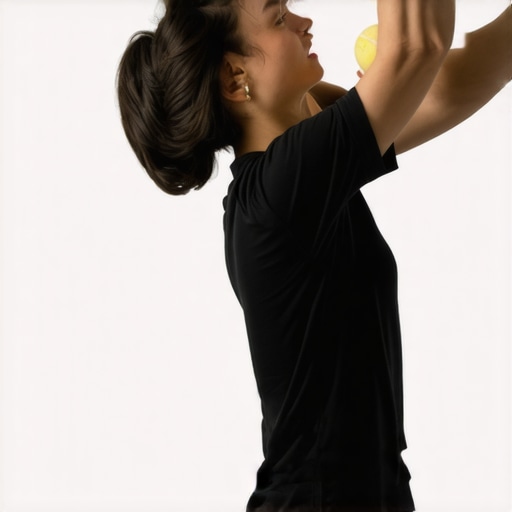
The Neurological Trap of Over-Aggressive Rolling
One of the biggest ‘oops’ factors I see with DIY rehab is the belief that more pain equals more progress. When you press too hard on a trigger point, you actually trigger a protective guarding reflex. Your brain perceives the intense pain as a threat and sends signals to the muscle to tighten up even further to protect the area. This completely negates the ‘melt’ we are looking for. You have to remember the truth about no pain no gain in sports rehab: if you can’t breathe through the pressure, it’s too much. I’ve seen people bruise their ribs or even cause minor nerve irritation by being too aggressive with a lacrosse ball before they were ready.
How This Connects to Your Overall Spinal Health
We can’t look at these knots in isolation. A knot between your shoulder blades is often just a symptom of a deeper mechanical issue elsewhere in the kinetic chain. This is why the science behind chiropractic adjustments for back pain relief is so fascinating—it looks at how a misalignment in your neck or lower back might be forcing your mid-back muscles to work overtime. When you discover how chiropractic adjustments can alleviate chronic back pain, you realize that the ball is just a temporary tool to manage symptoms while you work on the root cause. Have you ever fallen into the trap of smashing a knot for weeks only for it to come back every single morning? Let me know in the comments.Once you’ve mastered the ‘melt’ with a tennis ball, you’re eventually going to hit a plateau. That’s actually a good sign—it means your tissues are becoming less reactive and your nervous system is no longer in a state of high alert. But to keep progressing and scaling your recovery, you’ll likely need to increase the density of your tools. I personally switched to a lacrosse ball about six months into my own rehab journey because the tennis ball just didn’t have the ‘bite’ needed to get through my thicker trap muscles after they started to relax. If you’re ready for that leap, you should check out how to use a lacrosse ball for better thoracic mobility, but be warned: it’s a much more intense experience that requires even more breath control.
Trade Your Squishy Ball for Firmer Tools
I recommend moving to a harder surface only after you can spend 90 seconds on a knot with a tennis ball without your heart rate spiking or your muscles guarding. The reason is simple: a firmer ball doesn’t deform under pressure. It pushes back with 100% of the force you give it. This allows for what experts call ‘shearing force.’ Dr. Kelly Starrett, a renowned physical therapist and author of ‘Becoming a Supple Leopard,’ emphasizes that this shearing—moving the skin and fascia over the underlying muscle—is what actually restores the sliding surfaces of your body. This isn’t just about ‘pressing’ a button; it’s about how to revolutionize your rehab chiropractic techniques for faster recovery by ensuring every layer of tissue moves independently.
How do I keep these results for more than twenty-four hours?
The most common question I get is how to stop this from becoming a daily chore. The reality is that the ball is a ‘reset’ button, but your lifestyle habits are the ‘save’ button. If you reset your back and then immediately sit in a bucket seat for a four-hour drive, you’ve just deleted your progress. To maintain your gains, you have to look at strategic chiropractic solutions for long-term back health. This means pairing your ball work with specific stability exercises. I found that if I did three minutes of ball work followed by one minute of the scapular stability move every baseball player needs, my relief lasted days instead of hours. 
Smart Tech and the Future of Self-Care
We are moving into an era where ‘dumb’ tools like tennis balls are being augmented by smart technology. I’m already seeing a shift toward vibrating massage spheres and biofeedback rollers that tell you, via a smartphone app, if you’re applying too much pressure or if the muscle is actually showing signs of relaxation. While I still love the simplicity and low cost of a $3 ball, these advanced tools will eventually help us boost your sports rehab journey with proven chiropractic strategies by providing real-time data on our recovery progress. Imagine an app that tracks which knots are persistent and suggests essential tips for managing back pain through healthy lifestyle choices based on your specific tension patterns.
Consistency Beats Intensity Every Single Time
If there is one thing I want you to take away from this guide, it’s that a five-minute session every day is infinitely better than a thirty-minute ‘smash session’ once a week. Your nervous system thrives on frequency, safety, and predictability. My challenge to you: tonight, while you’re winding down, find just one spot between your shoulder blades and breathe into it for 90 seconds. Don’t try to fix your whole back at once. Just one spot. It’s these small, intentional moments that lead to unlocking back pain relief expert chiropractic adjustments that work. You might be surprised at how much your body thanks you tomorrow morning.
Hard Truths I Learned While Chasing Muscle Knots
Looking back at my journey from bruised shoulder blades to pain-free movement, I realized a few things that aren’t usually in the instruction manuals. First, your muscle is a living organ, not a piece of gristle. When you attack it, it attacks back by tightening. The biggest ‘lightbulb’ for me was realizing that telling the difference between muscle soreness and a real injury is the foundation of any safe home routine. I also learned that if I spend all my time rolling but zero time moving, the knot is back by lunch. It’s about movement quality, not just tissue smashing. Finally, I stopped trying to be my own therapist for everything; sometimes you need to safely crack your mid-back without a professional only as a temporary fix while you seek a long-term plan.
The Recovery Gear I Actually Keep in My Gym Bag
If you’re serious about taking this beyond the ‘tennis ball on a wall’ phase, there are three things I swear by. I always carry a standard tennis ball for high-sensitivity days, but I’ve also added a ‘peanut’ roller—which is basically two balls taped together—to help mobilize the spine without hitting the bone. I also highly recommend looking into the role of chiropractic care in effective sports injury recovery because it provides the structural context that a ball simply can’t. My ‘bible’ for this has been looking at how strategic chiropractic solutions for long-term back health integrate with daily mobility. These aren’t just gadgets; they are investments in your ability to keep moving without restriction.
Trust the Process and Listen to Your Tissue
Finding relief from chronic muscle knots isn’t a sprint; it’s more like a conversation with your nervous system. Don’t be discouraged if that burning sensation doesn’t vanish on day one. You are retraining years of postural habits, and that takes patience. By focusing on the ‘melt’ rather than the ‘smash,’ you’re setting yourself up for a sustainable future where you aren’t reliant on a piece of rubber just to get through a workday. Your body wants to be out of pain—you just have to give it the right environment to let go. Have you ever tried a tennis ball for your back and felt like it made things worse? Let me know in the comments below, and let’s figure out why!