
I still remember the exact moment my right knee buckled inwards under a 315-pound pull. It wasn’t a sudden, catastrophic pop, but rather a slow, sickening collapse that started way down in my shoe. My arch completely flattened against the floor, my ankle rolled inward, and a sharp, nagging ache shot straight up into my lower back. Early on in my lifting journey, I made the classic mistake of thinking deadlifts were purely a test of back and hamstring strength. I spent months treating back pain with generic stretches, entirely oblivious to the fact that the real culprit was hiding right under my heel.
The Root Cause of the Mid-Pull Foot Collapse
When you initiate a heavy pull, your feet are your sole point of contact with the earth. If your midfoot flattens out, it sets off an ugly kinetic chain reaction: your tibia rotates internally, your knee dives inward, and your hips drop out of optimal alignment. That is precisely why your foot arch affects your knee alignment during lunges and heavy pulls alike. If you are struggling with a lingering strain from compensating for poor foot mechanics, taking time to learn how to tell the difference between muscle soreness and a real injury can keep you from turning a minor movement flaw into a chronic issue. Today, we are going to fix that foundation from the ground up so you can pull heavy without sacrificing your joints.
Is fixing your foot arch really worth the effort for a bigger pull?
You might be wondering if tweaking your foot position is actually going to add weight to the bar, or if it is just another over-complicated fitness trend. The short answer is absolute leverage. According to biomechanical research published by the National Center for Biotechnology Information, maintaining a stable arch directly impacts force production and load distribution across the lower extremities. When your arch collapses, you leak energy into the floor instead of driving it straight through the barbell. Integrating targeted stability drills with enhancing athletic performance with targeted chiropractic care ensures your kinetic chain stays locked in under heavy loads. Have you ever noticed your toes clawing the ground or your ankles rolling inward when the weights get heavy? If that sounds familiar, you are definitely not alone, and it is time to rebuild your tripod foot setup.
Rebuilding Your Base with the Short Foot Technique
To stop your arch from caving under heavy loads, you need to actively engage your foot intrinsics—the small muscles inside your foot that act like an internal suspension system. Instead of thinking about grabbing the floor with your toes, focus on pulling the ball of your foot closer to your heel. Imagine your foot is a tripod with pressure evenly distributed across three points: the base of your big toe, the base of your pinky toe, and the center of your heel. Creating this active arch locks your ankle into place and creates an immediate stability cascade up your whole leg.
How to set up the tripod foot under load
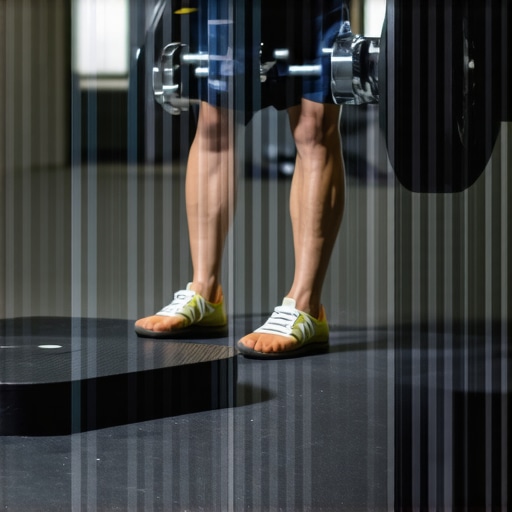
Before you even touch the barbell, kick off your shoes or wear thin, flat soles. Stand over the bar and root your feet into the ground. Screw your feet into the floor as if you are trying to tear the carpet between your shoes apart without actually moving your feet. This simple cue fires up your glutes and instantly prevents your knees from diving inward. Understanding how spinal alignment affects your balance and stability helps you realize that a rock-solid floor connection is what allows your hips and spine to stay neutrally aligned during maximal efforts.

Dialing in Core Pressure and Hinge Mechanics
Fixing your feet is only half the battle; if your midsection is loose, force still leaks out through your lower back. Think of your torso as a soda can. An unopened can can support an incredible amount of weight, but put a tiny dent in the side and it collapses instantly. Bracing your core correctly provides the internal hydraulic pressure needed to shield your lumbar spine when you pull heavy off the floor. Mastering how to breathe for a stronger safer deadlift creates that unbreakable internal pressure, taking immense stress off your passive spinal tissues.
My early mistake with heavy pulling mechanics
I learned this lesson the hard way during a heavy training block a few years back. I was so focused on ripping the bar off the floor that I neglected my setup, letting my arch collapse and my lower back round. I managed to pull the weight, but I woke up the next morning barely able to bend over to put my socks on. I had to step back, drop the weight by fifty percent, and painstakingly rebuild my setup using targeted drills. Pairing these technique fixes with boost your sports rehab journey with proven chiropractic strategies allowed my soft tissues to heal while I recoded my motor patterns. The transition was messy, and my ego took a beating, but going back to basics was the single best thing I ever did for my deadlift longevity.
Re-engaging inactive glutes before pulling
If your feet have been collapsing for a long time, your brain has likely forgotten how to recruit your side glutes properly during a heavy pull. When the feet flatten, the gluteus medius turns off, forcing your lower back muscles to work overtime to keep you upright. Learning why your glutes arent firing during your workouts is crucial for breaking this compensation cycle. Try adding band-abducted glute bridges or lateral monster walks to your dynamic warm-up. These targeted drills wake up the lateral hip stabilizers, ensuring that once your feet create a solid arch, your hips are ready to drive the load cleanly without leaning on your lower back joints for support.
When lifters run into stubborn lower back pain or joint discomfort, the knee-jerk reaction is usually to isolate the painful spot with localized passive care. Everyone wants to smash their lower back with a foam roller or stretch their hamstrings into oblivion, but in my experience, chasing pain where it manifests almost always misses the root mechanical dysfunction. If your foot arch is collapsing under a deadlift, your lower back is simply taking the heat for a foundation that crumbled three feet below it.
The Traps of Isolated Passive Care and Misdirected Stretching
The biggest trap I see lifters fall into is treating tight muscles as the enemy. When your lower back muscles feel rock hard after a heavy pulling session, they are often working over-time in a protective spasm because your primary stabilizers failed. If you blindly force those protective muscles to relax, you strip away the last line of defense your lumbar spine has left. This is exactly why you should stop stretching your hamstrings if your back aches without assessing your overall pelvis and foot mechanics first.
Why does your back hurt even when your spinal scans come back completely clean?
It is incredibly frustrating to deal with severe pain during heavy pulls while an MRI shows pristine discs and joints. The hidden reality is that static imaging cannot capture dynamic mechanical breakdown. Research indexed in PubMed Central demonstrates that movement coordination impairment and force-leakage across adjacent joints often precede structural tissue damage by months or even years. An adjustment or targeted rehab protocol should never just be about short-term pain relief; it must be used to restore joint mobility so you can re-train proper neuromuscular firing patterns under load. Combining full-body movement assessments with the science behind chiropractic adjustments for back pain relief bridges the gap between getting out of pain and pulling heavy safely again.
The Kinetic Chain Misconception
Another massive misconception in sports rehab is treating joint mobility in complete isolation. You cannot fix an ankle or a hip without looking at how they interact under systemic load. If you spend twenty minutes mobilizing your ankles but fail to integrate that new range into your brace and hinge pattern, your brain will revert straight back to its old compensation strategies the moment 300 pounds is on the bar. Real recovery requires high-threshold neuromuscular integration.
Ignoring these interconnected chain reactions is precisely why so many athletes get stuck in endless rehab loops, temporary fixes, and recurring injuries. If you are struggling to break out of a cycle of chronic tightness, taking time to learn strategic chiropractic solutions for long term back health can help reset your structural baseline. Have you ever fallen into this trap of stretching a muscle that was just trying to protect you? Let me know in the comments below.
When lifters run into stubborn lower back pain or joint discomfort, the knee-jerk reaction is usually to isolate the painful spot with localized passive care. Everyone wants to smash their lower back with a foam roller or stretch their hamstrings into oblivion, but in my experience, chasing pain where it manifests almost always misses the root mechanical dysfunction. If your foot arch is collapsing under a deadlift, your lower back is simply taking the heat for a foundation that crumbled three feet below it.
The Traps of Isolated Passive Care and Misdirected Stretching
The biggest trap I see lifters fall into is treating tight muscles as the enemy. When your lower back muscles feel rock hard after a heavy pulling session, they are often working over-time in a protective spasm because your primary stabilizers failed. If you blindly force those protective muscles to relax, you strip away the last line of defense your lumbar spine has left. This is exactly why you should stop stretching your hamstrings if your back aches without assessing your overall pelvis and foot mechanics first.
Why does your back hurt even when your spinal scans come back completely clean?
It is incredibly frustrating to deal with severe pain during heavy pulls while an MRI shows pristine discs and joints. The hidden reality is that static imaging cannot capture dynamic mechanical breakdown. Research indexed in PubMed Central demonstrates that movement coordination impairment and force-leakage across adjacent joints often precede structural tissue damage by months or even years. An adjustment or targeted rehab protocol should never just be about short-term pain relief; it must be used to restore joint mobility so you can re-train proper neuromuscular firing patterns under load. Combining full-body movement assessments with the science behind chiropractic adjustments for back pain relief bridges the gap between getting out of pain and pulling heavy safely again.
The Kinetic Chain Misconception
Another massive misconception in sports rehab is treating joint mobility in complete isolation. You cannot fix an ankle or a hip without looking at how they interact under systemic load. If you spend twenty minutes mobilizing your ankles but fail to integrate that new range into your brace and hinge pattern, your brain will revert straight back to its old compensation strategies the moment 300 pounds is on the bar. Real recovery requires high-threshold neuromuscular integration.
Ignoring these interconnected chain reactions is precisely why so many athletes get stuck in endless rehab loops, temporary fixes, and recurring injuries. If you are struggling to break out of a cycle of chronic tightness, taking time to learn strategic chiropractic solutions for long term back health can help reset your structural baseline. Have you ever fallen into this trap of stretching a muscle that was just trying to protect you? Let me know in the comments below.
Tools and Drills for Long-Term Structural Maintenance
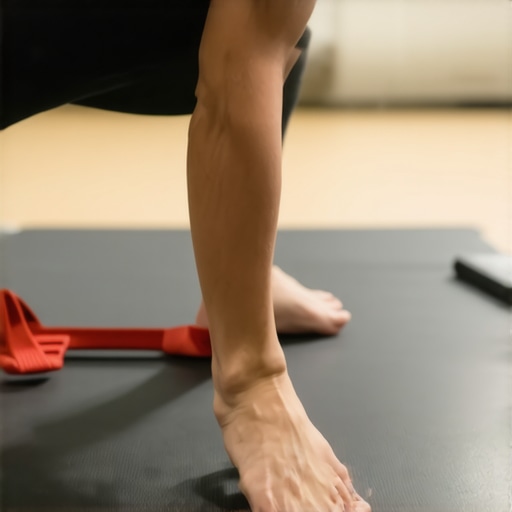
Maintaining a resilient kinetic chain under heavy loads isn’t about spending hours on a foam roller every single night. It comes down to targeted, high-yield tools that actively change how your brain communicates with your feet and hips. My absolute go-to tool for foot arch engagement is a short mini-band paired with barefoot training on hard surfaces. I personally use stiff, mini-resistance loops placed around the midfoot during warm-up sets to provide immediate biofeedback; if your arch gives out, the band snaps loose. I also heavily rely on slant boards to work on ankle dorsiflexion without letting the arch collapse. If you are struggling with systemic stiffness, knowing how to use a lacrosse ball for better thoracic mobility can give you the upper-back extension required to maintain a neutral spine from the start of the pull.
How do I maintain these mechanical gains over time?
Consistency in your warm-up routine is what transforms conscious mechanical fixes into automatic motor patterns. I mandate that every lifter I work with spends five minutes setting their tripod foot and bracing their midsection before ever loading a barbell. I predict that over the next few years, strength sports will heavily pivot toward foot-first training methodologies and sensory-rich footwear, as biomechanical experts like Dr. Emily Splichal from the Functional Podiatry Institute continue to demonstrate how proprioception at the foot directly drives glute firing and spinal stability. Master these basal connections early, and you’ll protect your spine for decades.
If you want to keep your back healthy while loading heavy, start by making one tweak on your very next training session. Before your warm-up sets, kick off your elevated lifting shoes, set a firm tripod foot, and force yourself to maintain that arch lock for every single warm-up rep. If you need dedicated guidance integrating structural alignment with performance, check out how revolutionize your rehab chiropractic techniques for faster recovery can pinpoint the weak links in your kinetic chain before they cause another flare-up.
What Heavy Barbell Pulls Taught Me About Foot Mechanics
Spending years in the weight room and clinical settings reveals hard truths about lifting mechanics that generic fitness advice usually misses. Here are the core realizations that shifted my approach to heavy pulling forever:
- Pain is often a loud distraction: Where you feel the sharpest ache is rarely where the mechanical fault lies. Your lower back takes the blame because it sits in the middle of a collapsing kinetic chain, but your feet are usually the primary point of failure. Learning why your shoes are wearing out unevenly and what it means for your hips can show you where your movement patterns are breaking down long before pain sets in.
- Flexibility won’t fix structural instability: Aggressively stretching a tight muscle that is actively contracting to safeguard a unstable joint only leaves your joints vulnerable. If you constantly experience mid-back tightness while deadlifting, understanding why your hamstrings always feel tight even though you stretch them can save you months of useless stretching.
- Foot pressure dictates hip loading: If you cannot generate active tension across your foot arch, your brain will struggle to activate your lateral glutes under maximal loads. Check out the role of chiropractic care in effective sports injury recovery to see how restoring active joint mechanics rebuilds raw force output.
My Essential Blueprint for Rooted Stability
If you want to pull heavy without burning out your lower back, you need to rely on specific, tested tools to keep your foundation locked in. Here is what I regularly use and recommend:
- Mini-Resistance Loops: Placing a short, heavy mini-band around your midfoot during light warm-up sets provides immediate feedback. If your arch drops, the tension vanishes, instantly coaching your foot intrinsics to stay engaged.
- Barefoot dynamic warm-ups: Ditching thick, cushioned lifting shoes during your preparation allows the sensory receptors on the bottom of your feet to properly communicate with your central nervous system.