
I vividly remember the Thanksgiving of 2021. There I was, leaning over a pile of half-chopped onions, when a sharp, electric twinge shot straight through my lower back. I tried to walk it off, but by the time the gravy was simmering, I was practically doubled over. It was humiliating. I love cooking, but my kitchen was essentially a torture chamber I’d built for myself. That night was a wake-up call. I realized that my passion for food shouldn’t come at the cost of my mobility. If you’ve ever felt that dull, throbbing ache after making a simple Sunday roast, you aren’t alone. Today, I want to share the exact adjustments I made to my workspace to stop the cycle of pain. We’re going to look at everything from your stance to your storage, ensuring you spend more time tasting and less time recovering. Have you ever had to stop a recipe halfway through because your back just couldn’t take it anymore?
The Stealthy Culprit Behind Your Lower Back Flare-Ups
The most common mistake I made—and maybe you’re doing it right now—was assuming that “standard” kitchen dimensions were designed for my specific body. They aren’t. Most counters are 36 inches high, which is a disaster if you are particularly tall or short. When you lean forward even slightly to dice an onion, you’re creating a massive lever effect on your spine. In fact, research published in Applied Ergonomics suggests that leaning forward at even a slight angle for extended periods can significantly increase the pressure on your spinal discs. This is exactly how chronic back pain starts to settle in and stay.
I used to think I could just “power through” the discomfort, but that’s a recipe for a long-term injury. I learned the hard way that essential tips for managing back pain often start with the environments we spend the most time in. If you’re constantly fighting your environment, your body will eventually lose. Your posture during meal prep is just as important as your form in the gym.
Will these small tweaks actually fix the problem?
It’s easy to be skeptical. You might think, “It’s just a kitchen, how much can a cutting board height really matter?” But consider this: if you’re cooking for an hour a day, that’s 365 hours a year of micro-trauma to your lumbar spine. I once made the mistake of thinking morning stretches would fix everything, only to realize I was undoing all that good work the second I started meal prepping on a counter that was three inches too low. Small ergonomic shifts aren’t just “hacks”; they are fundamental changes to your mechanical health. Let’s dive into how we can transform your kitchen into a pain-free zone.
Stop the Lean that Kills Your Lumbar
When you stand at a counter that’s too low, you aren’t just “bending over”—you’re essentially turning your spine into a suspension bridge where the cables have snapped. Think of your lower back like a hinge on a heavy door; if the door isn’t aligned, the hinge eventually grinds down to nothing. To fix this immediately, you need to bring the work to you. I spent years hunched over a standard butcher block until I realized my cutting board was nearly four inches below my optimal “neutral” spine height. I bought a two-inch thick wooden riser, and the difference was night and day. If you can’t afford a kitchen remodel, stack a sturdy board on top of another or use a stable riser. This simple shift prevents that micro-trauma from cumulative bending, which is one of the strategic chiropractic solutions for long-term back health that most people ignore.
The Step-Stool Secret for Heavy Lifting
Next time you’re standing at the sink for twenty minutes scrubbing pans, try opening the cabinet door beneath the sink and resting one foot on the bottom shelf. This tiny shift in your pelvis acts like a release valve for your lower back. When both feet are flat and your knees are locked, your hip flexors pull on your spine like a tight rubber band. By elevating one foot, you slacken that tension. I remember trying this while prepping a massive batch of chili for a local fundraiser; I stood for three hours and, for the first time in my life, I didn’t need to lie flat on the floor afterward. It’s an easy way to manage tension without even leaving the kitchen. If you find your hips are still tight, you might need to learn how to safely stretch your psoas without hurting your back to undo the damage of previous sessions.
Brace Your Core Like You’re Bracing for a Punch
Many of us “go soft” in the middle when we’re focused on a recipe. We let our bellies spill forward and our lower backs arch. Instead, you need to practice active bracing. Don’t just suck your stomach in—that’s a myth. Instead, imagine someone is about to poke you in the ribs and you need to make your midsection firm. This creates a “natural corset” of muscle that stabilizes your vertebrae while you move heavy pots or reach for the top shelf. This is the same principle used in high-level the correct way to brace your core for heavy carries. When I started doing this while lifting my heavy cast-iron Dutch oven, the sharp “zap” I used to feel in my L5-S1 joint completely vanished. It’s about being intentional with your internal pressure.
Organize Your Space to Save Your Spine
Your heaviest items—the stand mixer, the heavy pots, the bags of flour—should never be stored on the floor or the very top shelf. Move them to “the strike zone,” which is the area between your mid-thigh and your chest. Reaching and twisting simultaneously is the fastest way to earn a trip to the doctor for expert chiropractic adjustments that work. I once tried to pull a heavy mixer from a bottom corner cabinet while twisting to avoid a spill, and I felt my back lock up instantly. Now, I keep my most-used heavy tools on the counter or at waist height. If you’re currently struggling with a tweak from a similar mistake, you should check out how to manage a flare-up of chronic lower back pain to get back on your feet faster.
It’s easy to get caught up in the physical layout of your kitchen, but there’s a deeper level of mechanics at play that most people—and even some general practitioners—completely overlook. I spent years thinking my back was just ‘weak’ or that I was ‘getting old.’ I fell into the trap of believing that the more I stretched my lower back, the better it would feel. But here is the contrarian truth: many people are actually stretching themselves into a chronic state of instability. When your back feels tight after a long session at the stove, your brain is often creating that ‘tight’ sensation as a protective splint to prevent further injury. If you force a stretch on a sensitized nerve, you aren’t releasing tension; you’re aggravating a defense mechanism. This is one of the biggest reasons why your morning stretches might be making your back more sensitive rather than helping it.
The Bed Rest Trap That Prolongs the Agony
When a flare-up happens, our instinct is to crawl into bed and stay there until the storm passes. This is a massive ‘oops’ factor in recovery. According to a landmark study published in The Lancet, staying active with low-impact movement is significantly more effective for recovery than bed rest. In fact, prolonged inactivity causes the muscles supporting your spine to atrophy at an alarming rate. I used to think I was ‘healing’ by lying on the couch for two days, but I was actually making my spine more vulnerable for the next time I reached for a heavy skillet. I’ve since learned that why bed rest is the worst thing for acute back spasms is because movement is the primary way your spinal discs receive nutrients and flush out inflammatory waste.
Why does the relief from an adjustment sometimes feel temporary?
I get asked this a lot, and it’s a sophisticated question that touches on the ‘nuance’ of rehab. If you find yourself needing to go back for the same ‘crack’ every week without lasting change, the issue likely isn’t your spine—it’s your foundation. Your body is a kinetic chain. If you have a stiff ankle from an old sports injury, your lower back has to move twice as much to compensate while you walk or stand. This is the hidden link between your ankles and lower back health. Without addressing the ankle, the back adjustment is just a temporary band-aid. This is why a truly expert chiropractic adjustment should always look at how you move as a whole, rather than just where it hurts.
The Leg Length Secret Most People Miss
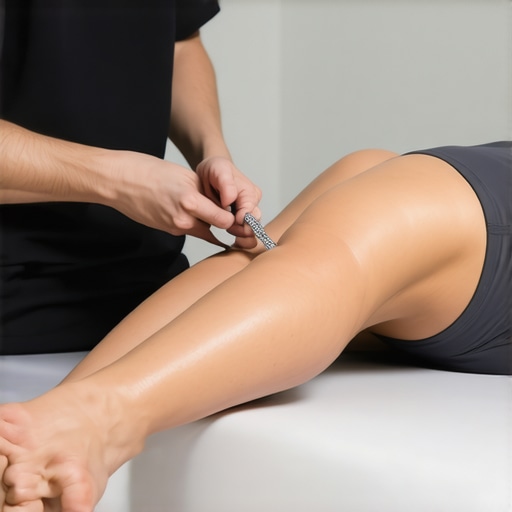
Another nuance I discovered through my own journey was that my pelvis was slightly tilted because of a functional leg length discrepancy. You’d be surprised how many ‘back problems’ are actually ‘hip and foot problems.’ If one leg is even slightly ‘longer’ due to a collapsed arch or a tight psoas, your spine has to curve to keep your head level. This creates a permanent sheer force on your lumbar discs. It’s why why your chiropractor checks your leg length every visit; they aren’t just looking at your feet, they are diagnosing the root cause of your spinal tilt. If you don’t fix the alignment from the ground up, you’ll always be fighting an uphill battle in the kitchen. Have you ever noticed your shoes wearing out more on one side than the other? Have you ever fallen into this trap? Let me know in the comments. We need to stop looking at back pain as a localized problem and start seeing it as a systemic one. By integrating strategic chiropractic solutions for long-term back health, you can finally move past the temporary fixes and get back to enjoying your time at the cutting board without fear.
If you’re serious about staying in the kitchen for the long haul, you need to treat your cooking sessions like an athletic event. I’m not joking. You wouldn’t run a marathon in flip-flops, so why are you standing on a tile-over-concrete floor for three hours in your bare feet? The first tool I tell everyone to get—and I mean everyone—is a high-density polyurethane anti-fatigue mat. I personally use a 3/4-inch thick commercial-grade mat. Unlike those cheap, squishy foam ones that bottom out in five minutes, a proper mat creates micro-movements in your calves. This keeps blood flowing and prevents the static loading that leads to that deep, throbbing ache in your sacrum. It’s a core part of any sports rehab journey because it addresses the floor-up impact on your joints.
How do I keep my kitchen ergonomics consistent?
Maintenance isn’t just about the tools; it’s about the habits that stick when you’re tired. I’ve found that setting a ‘posture alarm’ on my phone for every thirty minutes of a long cook helps me reset. When the chime goes off, I perform a quick check: Are my shoulders up in my ears? Am I leaning into the counter? Am I bracing my core? This kind of self-awareness is the secret to strategic chiropractic solutions for long-term back health. If you find that you’re still getting stiff despite these resets, you need to distinguish between simple muscle soreness and a real injury that requires professional intervention. 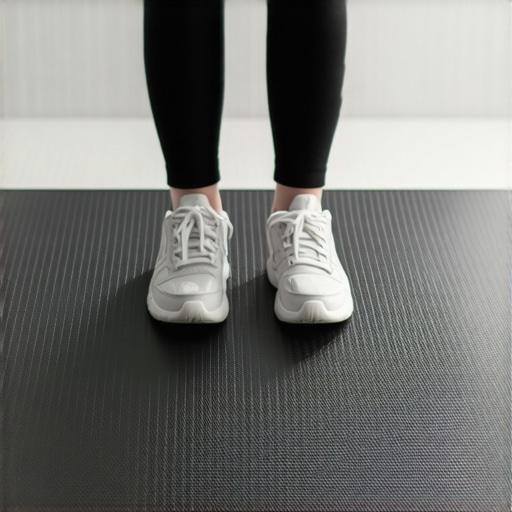
Wear Real Shoes While You Chop
I know it feels weird to wear sneakers inside, but for those of us with history of lumbar issues, the barefoot life is a death sentence for the spine. I keep a pair of dedicated ‘kitchen shoes’ with high-arch support and a wide toe box. As renowned spinal expert Dr. Stuart McGill emphasizes in his book Back Mechanic, maintaining a ‘neutral’ spine is impossible if your foundation—your feet—is collapsing. When your arches drop, your knees rotate inward, your pelvis tilts, and your lower back takes the hit. This is why the role of chiropractic care in effective sports injury recovery often focuses heavily on gait and footwear. If you’re currently using flimsy slippers, swap them for a pair of supportive cross-trainers tomorrow. You’ll feel the pressure release from your L4-L5 discs almost immediately.
The Future of Pain-Free Cooking
As we look ahead, I predict we will see a massive shift toward ‘universal design’ in home kitchens, where adjustable-height countertops become the standard rather than a luxury. Until then, we have to be our own advocates. My advanced tip for you today is the ‘Hip Hinge Reach.’ Instead of rounding your back to get that heavy cast-iron skillet from the bottom drawer, push your hips back toward the wall behind you while keeping your chest up. It’s a simple move that shifts the load from your fragile spinal ligaments to your powerful glutes. If you’ve tried these tips and your back still feels like it’s in a vice, it might be time to contact us to see if a deeper structural adjustment is needed to get your mechanics back on track.
Hard-Won Truths from My Decade at the Stove
Over the years, I’ve learned that the secret to a healthy back isn’t just one magic tool; it’s a shift in how you view your physical limits. One of the biggest lightbulb moments for me was realizing that fatigue is often the precursor to injury. When your muscles get tired, your form breaks down, and that’s when your discs take the hit. I had to learn how to tell the difference between muscle soreness and a real injury before I could truly heal. Another hard truth? Your mindset matters. If you’re rushing through a recipe, you’re more likely to twist and reach in ways that compromise your spine. Slowing down isn’t just about the flavor of the food; it’s about the longevity of your lumbar health.
Lastly, I stopped relying on quick fixes. I used to think a back brace would solve everything, but I quickly discovered the truth about posture braces and muscle atrophy. Real stability comes from internal bracing and external adjustments to your workspace, not from a velcro strap. It’s about building a body that can handle the kitchen, rather than trying to shield it from the work.
My Daily Toolkit for a Resilient Kitchen
I don’t cook without these essentials anymore, and they have made a world of difference. First, I highly recommend picking up a high-quality polyurethane anti-fatigue mat; it’s a game-changer for those of us who spend hours at the sink or stove. Second, consider a set of sturdy risers for your cutting boards. Bringing the work up to your neutral spine height eliminates the ‘lever effect’ that grinds down your lower back. Third, keep a small footstool tucked under your cabinets. It’s the easiest way to reset your pelvic tilt during long prep sessions.
I also suggest paying close attention to your footwear. If you’re curious about why your back hurts despite these changes, take a look at your closet. Understanding why your shoes are wearing out unevenly and what it means for your hips can give you a massive clue about your spinal alignment. A pair of supportive indoor sneakers is often the missing piece of the ergonomic puzzle.
#IMAGE_PLACEHOLDER_E#
Don’t Let the Fear of Pain Steal Your Joy
At the end of the day, your kitchen should be a place of creativity and nourishment, not a source of dread. It takes time to rewrite years of bad habits, but every time you choose to hinge at the hips instead of bending at the waist, you’re investing in your future mobility. By integrating these strategic chiropractic solutions for long-term back health into your daily routine, you can move past the temporary fixes and get back to what you love. You deserve to enjoy every bite of the meal you worked so hard to create. Which part of your kitchen routine usually triggers your back pain first? Let me know in the comments below!