
I still remember the specific, sickening sound my elbow made during a routine bullpen session back in my junior year of high school. It wasn’t a loud crack that everyone in the stands could hear; it was more of a dull, internal thud deep inside the joint, followed immediately by a wave of heat that radiated down to my pinky finger. For months afterward, every time I picked up a baseball, it felt like someone was driving a hot needle into my medial epicondyle. I thought I was doing everything right. I iced after every outing until my skin was numb, I took weeks of rest, and I religiously did the standard Jobe exercises my coach gave me. But I was missing the one fundamental movement that actually keeps the ulnar collateral ligament from screaming for mercy under the extreme torque of a fastball.
Your Elbow Is Only the Victim of Poor Mechanics
I made the classic mistake of thinking that elbow pain meant I needed to fix the elbow itself. In reality, my elbow was just the innocent victim of a crime committed further up and down the kinetic chain. Early in my journey, I used to spend twenty minutes a day cranking on my forearm stretches, thinking that more flexibility would be my salvation. I was dead wrong. That extra laxity I was creating actually made the joint less stable and more prone to the very injury I was trying to avoid. Most pitchers ignore these warning signs, pushing through the tightness until something finally gives, often falling for the truth about no pain no gain in sports rehab. But grit doesn’t fix a structural failure. Today, I am going to show you the one specific isometric reset that changed everything for me. This isn’t just another stretch; it is a functional shift in how your body handles force.
Does This One Drill Actually Live Up to the Hype?
It sounds a bit like snake oil, doesn’t it? Especially in an era where Tommy John surgery is treated like a common rite of passage for young athletes. However, the data suggests we are looking at the problem all wrong. According to research published in the American Journal of Sports Medicine, nearly 25% of MLB pitchers have undergone Tommy John surgery at least once, yet a significant portion of these injuries are deemed preventable through proper mechanical loading and joint hygiene. You have to realize that why your grip strength determines your rotator cuff health is a massive piece of this puzzle that most coaches miss. Have you ever felt that sharp, zinger sensation after a long outing and just prayed it would be gone by morning? I have spent those restless nights too, wondering if my career was over before it really started. By integrating this specific move, we are leaning into the role of chiropractic care in effective sports injury recovery to ensure every link in your arm is firing in the right order. This isn’t just about throwing harder; it’s about being able to throw tomorrow.
Turn Your Forearm Into a Shock Absorber
To understand why this specific movement works, think of your elbow like a high-performance mountain bike. The ulnar collateral ligament (UCL) is the frame of the bike. It is a static structure. If your suspension—the muscles surrounding the joint—is bottomed out or non-existent, every rock and root on the trail sends a jarring shockwave directly into the frame. Eventually, the frame cracks. Most pitchers try to fix that crack with ice and rest, but they never tune the suspension. By revolutionizing your rehab with chiropractic techniques for faster recovery, we focus on making the flexor-pronator mass take the brunt of the force so the ligament doesn’t have to. This isn’t just about strength; it is about teaching the nervous system to engage these muscles at the exact moment of maximum tension during the throwing motion.
Grab a Hammer and Find Your Neutral Ground
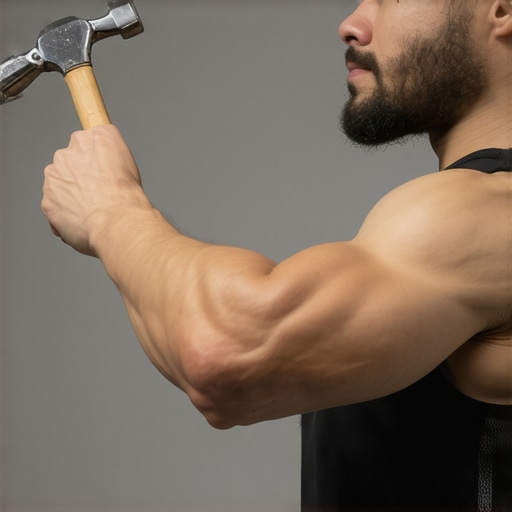
You don’t need fancy gym equipment for this; a standard 16-ounce hammer or even a heavy kitchen mallet will do. Sit on a chair with your forearm resting flat on your thigh, your wrist hanging just off the knee. Hold the handle of the hammer with your palm facing the ceiling. This is where most people mess up—they start moving the weight through a full range of motion immediately. Stop. The goal here is an isometric hold, not a repetition. I remember a rainy Tuesday in March during my freshman year of college where I was throwing into a net in a damp gym. My elbow felt like it was made of thin glass. Instead of reaching for the ibuprofen, I grabbed a weighted bat and performed three 30-second holds in a pronated position. The “glassy” feeling vanished because I was finally forcing my muscles to provide stability. This is vital when learning how to tell the difference between muscle soreness and a real injury.
The Fight Against Gravity That Saves Your Ligament
Once you are in the starting position, slowly rotate the hammer inward (pronation) until the head of the hammer is pointing toward the midline of your body, but do not let it drop. You are fighting the weight, trying to keep the hammer perfectly horizontal. You should feel a deep, intense burn in the meaty part of your forearm near the inside of your elbow. This is the pronator teres and the flexor carpi ulnaris firing to protect your joint. Hold this position for 45 seconds. It is a very similar concept to the 30-second move that prevents sim elbow during indoor golf sessions, focusing on high-tension stability rather than explosive movement. When you boost your sports rehab journey with proven chiropractic strategies, you realize that isometric loading builds a “buffer zone” for your tendons. If you can’t hold a hammer steady for 45 seconds, you have no business trying to whip a baseball at 90 miles per hour. You are essentially asking a skyscraper to stand tall without a foundation. Perform three sets of these holds before you even pick up a ball. You will notice that your arm feels “plugged in” and more connected to your shoulder, reducing that terrifying localized tension on the medial side of the joint.
Stop Stretching Your Way Into a Surgery
One of the biggest lies told in high school locker rooms is that you need to be “loose” to stay healthy. In my experience, most pitchers are already too loose in the wrong places. They spend hours trying to lengthen muscles that are actually tightening up as a defensive mechanism. If your brain perceives instability at the joint, it will “lock” the surrounding muscles to prevent a catastrophic failure. When you force a stretch on those guarded muscles, you aren’t fixing the problem; you’re just disabling the safety brakes. This is exactly why your morning stretches might be making your back more sensitive—or in this case, making your medial elbow a ticking time bomb. Have you ever fallen into the trap of stretching a “tight” muscle only for it to feel twice as stiff an hour later? Let me know in the comments.
Does Your Neck Control How Much Force Your Elbow Can Handle?
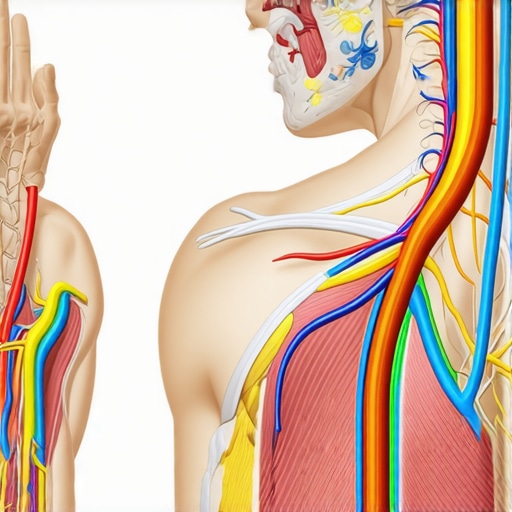
This is where we move beyond the hammer drill and into the true command center. You can’t talk about elbow health without talking about the cervical spine. The nerves that power your forearm and stabilize your elbow originate in the lower neck. If there is a “kink” in that garden hose, no amount of forearm strengthening will save you. This is a common nuance many athletes miss when comparing the real difference between a chiropractor and a PT. While physical therapy focuses on the distal mechanics, targeted chiropractic care ensures the signal from the brain actually reaches the muscle. A 2018 study published in the Journal of Manipulative and Physiological Therapeutics demonstrated that cervical spine manipulation can immediately improve muscle strength in the upper limbs by modulating the nervous system’s output. By enhancing athletic performance with targeted chiropractic care, you aren’t just “cracking” your back; you are clearing the communication lines so your muscles can fire fast enough to protect your UCL.
The Dangerous Illusion of Neural Tightness
The “oops” factor for most athletes is misidentifying neural tension as muscle tightness. If you feel a “pulling” sensation that goes from your neck down to your wrist, that is not a muscle that needs to be elongated. It is a nerve that is being compressed or over-tensioned. If you keep pulling on it, you will end up with chronic inflammation or worse. This is particularly risky for those with inherently high mobility; it is a similar reason to why your yoga practice might be aggravating your hypermobility. Instead of chasing the stretch, you should be chasing stability through the role of chiropractic care in effective sports injury recovery. We need to look at the shoulder blade and the thoracic spine—if those aren’t moving, the elbow has to work twice as hard. Stop treating the symptom and start looking at the source of the mechanical overload.
Forget the Ice and Track Your Workload Instead
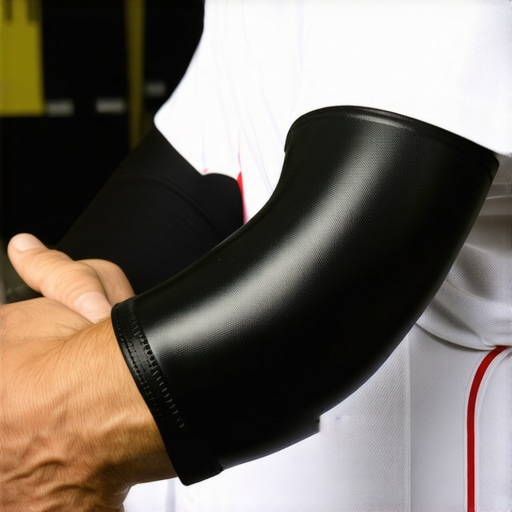
Once you have cleared the hurdle of acute pain, the real work begins: the long-term maintenance phase. Most athletes stop their rehab the second they stop feeling that sharp ‘zing’ in their elbow, but that is the quickest way to end up right back in the clinic. To stay on the mound, I personally rely on wearable workload management software like the Pulse throwing sleeve. It isn’t just a gadget; it measures the exact valgus torque on your UCL during every pitch. If the data shows my stress levels are creeping into the red zone, I don’t just ‘tough it out.’ I dial back the intensity or increase my focus on strategic chiropractic solutions for long-term back health. Your spine is the anchor; if it is misaligned, your arm will try to compensate for that lack of core stability, leading to a massive spike in elbow stress. I have seen countless pitchers blow out because they ignored a ‘stiff’ back, thinking it had nothing to do with their arm health.
How do I keep my arm healthy through an entire season?
Consistency beats intensity every single time. I use a technique called Voodoo Flossing—tightly wrapping the joint with a thick latex band—for two minutes post-game. It creates a temporary occlusion that, when released, flushes the joint with fresh, oxygenated blood. This is a game-changer when you are looking for essential tips for managing back pain through healthy lifestyle choices because it addresses systemic inflammation before it has a chance to settle in the joints. Furthermore, the American Sports Medicine Institute (ASMI) notes that a loss of just 5 degrees of internal rotation in the shoulder (GIRD) significantly increases the risk of elbow injury. This is why I schedule regular thoracic mobility sessions. If your upper back and shoulder blade are locked, your elbow becomes the primary accelerator, and it simply isn’t designed for that job. By maintaining that ‘total motion’ balance, you keep the stress on the muscles rather than the ligaments.
The Future of Bullpen Maintenance Is Bio-Feedback
We are moving toward an era where every throw is analyzed in real-time by AI and computer vision. Predictive modeling will soon tell us exactly when a ligament is on the verge of failure before the athlete even feels a twinge. Until that becomes standard in every dugout, you have to be your own advocate. You can boost your sports rehab journey with proven chiropractic strategies by focusing on total-body symmetry. If your hips are tight, your stride length changes, and that change translates directly into increased stress at the elbow. It’s all connected. If you want to stay in the game for the long haul, my advanced tip for you today is this: stop counting pitches and start counting stress units. Grab a workload tracker, monitor your range of motion daily, and if you lose more than 10% of your rotation, shut it down and get adjusted immediately. Don’t wait for the sound I heard back in high school; by then, it’s already too late.
The Hard Lessons That Saved My Career
I learned the hard way that a quiet elbow is often the result of a noisy, well-functioning kinetic chain. My biggest lightbulb moment was realizing that ‘feeling a stretch’ was often the worst thing I could do for my medial joint; I didn’t need more length, I needed more connection. I also discovered that my arm health was directly tied to my spine. When I started to discover how chiropractic adjustments can alleviate chronic back pain, I realized that the tension in my lower back was causing a subtle change in my stride, which added pounds of extra force to my UCL. Finally, I stopped viewing rest as a passive activity. Recovery is an active process of cleaning up the ‘noise’ in your nervous system. By prioritizing enhancing athletic performance with targeted chiropractic care, I was able to keep the communication lines between my brain and my forearm flexors crystal clear, ensuring they fired exactly when my arm hit maximum external rotation.
Build Your Personal Pitching Lab
You don’t need a multi-million dollar training facility to stay healthy, but you do need a specific set of tools that you trust implicitly. First, I highly recommend the ASMI (American Sports Medicine Institute) position papers; they are the gold standard for understanding workload and mechanics. Second, invest in a set of heavy-duty resistance bands for isometrics, as these are the bread and butter of joint stability. Third, find a practitioner who understands the unique demands of an overhead athlete. You can revolutionize your rehab with chiropractic techniques for faster recovery by finding someone who looks at your body as a whole, from your neck to your toes, rather than just poking at where it hurts.
#IMAGE_PLACEHOLDER_E#
Build an Arm That Never Quits
The road back from an elbow injury or the journey to prevent one isn’t paved with complex secrets; it’s paved with the boring, repetitive consistency of isometric holds and spinal hygiene. You have the power to change how your body handles force and to rewrite your athletic future. By leaning into the role of chiropractic care in effective sports injury recovery, you are giving your body the foundation it needs to perform at its peak without breaking down. Don’t wait for a pop or a zing to start caring for your arm. Start today, stay consistent, and keep yourself on the mound where you belong. Have you ever felt that localized ‘zing’ in your elbow after a long game, or did you manage to catch the warning signs early? Let me know your experience in the comments below.