
I’ll never forget the morning I tried to pick up a dropped pencil and felt a sickening, dull ‘thud’ deep in my lumbar spine. It wasn’t just a muscle pull; it was the moment my grade 1 spondylolisthesis decided to let me know who was boss. For months, I lived in fear that one wrong move would cause my L5 to slide right off my sacrum. I stopped lifting, I stopped running, and I started obsessively googling surgery. But here is the truth I wish someone had told me back then: your spine isn’t as fragile as your fear makes it feel. Today, I’m going to share the specific movement strategy that took me from bedridden to back in the gym, focusing on stabilization rather than just ‘stretching the pain away.’
Why Movement Beats Bed Rest for a Slipping Spine
When I first got my diagnosis, I thought rest was the cure. I spent weeks on the couch, but my back only felt stiffer and more unstable. I realized that strategic chiropractic solutions for long-term back health aren’t just about the office visits; they are about how you support your structure at home. If you don’t move, the muscles that act as ‘internal braces’ for your vertebrae simply give up. You need those deep stabilizers to fire correctly to prevent further slippage. I learned the hard way that why most core exercises actually make lower back pain worse is because they often involve too much spinal extension. For a ‘spondy’ patient, extension is usually the enemy, yet I was doing ‘supermans’ and cobras like my life depended on it. Once I stopped trying to arch my back and started focusing on a neutral, braced core, everything changed. Have you ever felt like your back was ‘giving out’ just by standing in line at the grocery store?
Is exercise even safe when my bones are moving?
This was my biggest hurdle. I was terrified of the ‘shear’ force. However, a surprising study published in the Journal of Orthopaedic & Sports Physical Therapy found that patients who focused on specific spinal stabilization exercises had significantly better long-term outcomes and less pain than those receiving traditional medical care alone. The key is choosing the right drills. For example, the pelvic tilt fix for chronic tight hamstrings was a game-changer for me. I used to think my hamstrings were just tight, so I would stretch them constantly. In reality, they were ‘guarding’ my spine. By learning to tilt my pelvis correctly, I took the strain off my lower back and finally found some peace. We aren’t just looking for temporary relief; we are looking to discover how chiropractic adjustments can alleviate chronic back pain while building a muscular fortress around the slip. One of the biggest mistakes I made early on was trying to ‘crack’ my own back to find relief. Not only did it not help, but it likely made the segment more hypermobile. Instead, I had to learn how to manage a bulging disc without using opioids or surgery by respecting my body’s limits and focusing on abdominal bracing. [image-placeholder]
Master the 360-Degree Shield Around Your Spine
The first thing I had to unlearn was the ‘suck it in’ mentality. We’ve been told for decades to pull our belly buttons toward our spine, but for someone with a slipping vertebra, that actually hollows out your support system. Think of your torso like a soda can; if the can is full and pressurized, you can stand on it without it buckling. If it’s empty or dented, it collapses. I had to learn how to breathe through your belly for instant lower back relief by creating 360 degrees of internal pressure. I practiced this by placing my hands on my obliques and pushing them out with my breath, rather than just letting my chest rise. This ‘bracing’ creates a pneumatic cylinder that locks the L5 in place before I even think about moving a limb.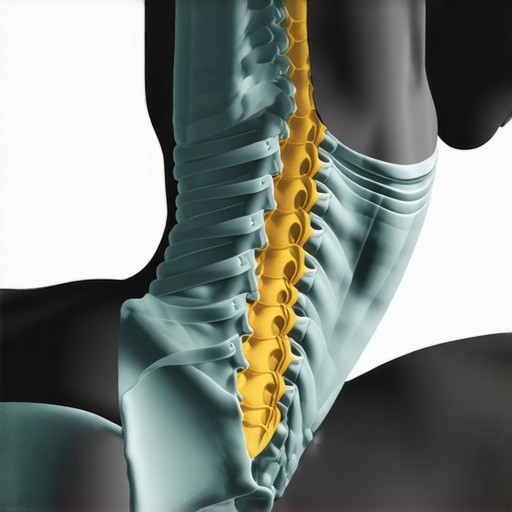
Stop Arching and Find Your True Neutral
Most of us with lower back issues default to an anterior pelvic tilt—that ‘Donald Duck’ posture where your butt sticks out and your lower back arches excessively. For a ‘spondy’ patient, this is like pouring gasoline on a fire because it encourages the L5 to slide further forward. I spent months trying to stretch my way out of this, but the real fix was the pelvic tilt fix that instantly boosts your squat depth. I had to find ‘neutral,’ which usually felt like I was tucking my tailbone slightly under. It felt weird and ‘wrong’ at first because I was so used to being hyper-extended, but the moment I found that middle ground, the sharp, biting pain in my sacrum vanished.
How I Finally Conquered the Grocery Store Reach
I remember being at the store six months ago, reaching for a heavy gallon of milk on the bottom shelf. Normally, I would have just rounded my back or, worse, kept my back straight but arched my spine to ‘protect’ it. Both would have left me limping to the car. Instead, I applied the hip hinge secret for people with chronic lumbar issues. I braced my core, kept my shins vertical, and pushed my hips back as if I were trying to close a car door with my glutes. By moving through the hips instead of the lumbar spine, I felt zero ‘shear’ force. It was the first time I felt like an athlete again rather than a patient.
Ditch the Foam Roller on Your Lumbar Spine
One of the most dangerous things I did early on was taking a hard foam roller and grinding it directly into my lower back. I thought I was ‘massaging’ the tight muscles. In reality, I was pushing my already unstable vertebrae further into the slip. This is why you should never roll your lower back on a foam roller. Your lumbar spine needs stability, not more mobility. If those muscles feel tight, it’s because they are working overtime to hold you together. Instead of rolling the site of the pain, I started focusing on the joints above and below the slip—the thoracic spine and the hips. If those areas move well, your lower back doesn’t have to overcompensate. I also realized why your lumbar spine hates your car seat and how to fix it; most seats force you into a slumped position that pulls on those fragile ligaments, so I began using a small lumbar roll to maintain that neutral brace even while driving.For a long time, I believed that a chiropractor could just ‘shove’ my L5 back into place with one loud crack. I’d walk in, hear the pop, and feel better for an hour, only for the pain to return by dinner. This is the truth about why your adjustments don’t seem to last: the adjustment isn’t about moving a bone like a LEGO piece; it’s a neurological reset. When you have a slippage, your brain goes into a defensive ‘guarding’ mode, locking down every muscle in the vicinity. The adjustment communicates with your nervous system to lower that threat level.
The Great Misconception About ‘Putting It Back In Place’
Most people think the goal of expert chiropractic adjustments that work is purely mechanical. In reality, once a vertebra has shifted, no amount of manual pressure will permanently relocate it to its original position. The real ‘magic’ is in restoring motion to the segments above and below the slip that have likely become stuck while trying to compensate. If your L4 and your SI joint aren’t moving, your L5-S1 junction is forced to handle way more stress than it was designed for. By freeing up those neighboring joints, you take the ‘shear’ pressure off the slip. This is why the science behind chiropractic adjustments for back pain relief focuses more on neuro-motor control than just ‘straightening’ the spine. 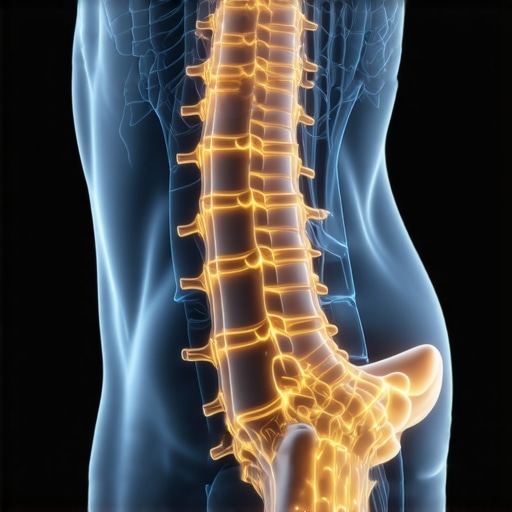
Will an adjustment actually move my slipped vertebra back into a perfect line?
The short answer is no, and trying to force it can be a massive ‘oops’ factor. One of the biggest mistakes I see—and one I made—is seeking out high-velocity ‘cracks’ directly on the unstable segment. If that joint is already hypermobile, you don’t want to make it more loose. You need stability there and mobility elsewhere. A study in the Journal of Manipulative and Physiological Therapeutics highlights that the benefit of spinal manipulation comes from its ability to modulate the dorsal horn of the spinal cord, effectively ‘turning down’ the volume of pain signals. It’s not about the bone moving; it’s about the brain calming down. When you combine this neurological ‘window of opportunity’ with proven chiropractic strategies for sports rehab, you can actually start strengthening the area without the body fighting you. Have you ever fallen into this trap of chasing the ‘pop’ rather than the function? Let me know in the comments.Maintaining that ‘neurological reset’ from your adjustment requires more than just hope; it requires creating a sustainable environment for your spine to thrive. I’ve wasted hundreds of dollars on ergonomic gimmicks that promised the world but delivered nothing. However, two specific tools changed the game for me by providing constant feedback to my nervous system. First, I started using how to use kinesiology tape for lower back support as a sensory cue. The tape doesn’t physically hold my L5 in place, but the moment I start to slouch or lose my ‘360-degree shield,’ the tug on my skin alerts my brain to re-engage my core. It’s like having a coach whispering in your ear all day. Second, I stopped guessing about my seated posture. I learned how to optimize your car seat for lumbar support using a firm, portable McKenzie-style roll. Most built-in car supports are too low or too soft; a dedicated roll ensures that even during a two-hour commute, I’m not letting my sacrum slip into that dangerous ‘Donald Duck’ arch. These aren’t just accessories; they are strategic chiropractic solutions for long-term back health that you control. 
How do I maintain my spine’s stability for the long haul?
The answer isn’t doing more exercises; it’s doing the right ones with religious consistency. I personally follow a modified version of the ‘McGill Big 3’—a set of stability drills designed by Dr. Stuart McGill. In a landmark paper for the Journal of Bodywork and Movement Therapies, McGill demonstrates that building ‘muscular endurance’ in the core is significantly more protective against spinal shear than building raw strength. I make sure to integrate a 5-minute mobility routine for desk workers with stiff hips every single morning. Why? Because if my hips are locked up, my lower back is forced to move to compensate, and that is exactly how flare-ups happen. You have to treat your sports rehab journey with proven chiropractic strategies as a daily maintenance requirement, much like brushing your teeth. Consistency is what turns a ‘fragile back’ into a resilient one.
The Future of Spinal Biofeedback and Wearable Tech
I predict we are moving toward a world where ‘smart’ clothing will replace the kinesiology tape I love. We are already seeing the emergence of wearable sensors that track spinal curvature in real-time, vibrating when they detect the precise millimeter of ‘shear’ that precedes a spasm. This kind of tech will revolutionize your rehab chiropractic techniques by providing data that was previously only available in a biomechanics lab. For now, though, your best tool is your own awareness. I challenge you to try one thing today: next time you sit in your car, use a rolled-up towel as a temporary lumbar support. See how much longer it takes for that dull ache to set in. You’ll realize that managing back pain through healthy lifestyle choices isn’t about grand gestures, but about these tiny, intentional micro-adjustments to your daily environment.
Hard Truths from the Lumbar Trenches
The most important thing I realized is that a diagnosis isn’t a destiny. For years, I let a piece of paper telling me my bone had shifted dictate my identity, but essential tips for managing back pain through healthy lifestyle choices taught me that function matters more than a static X-ray. I also learned that how to safely adjust your own posture throughout the day is a skill you must practice until it becomes second nature—you cannot outsource your spinal health 100% of the time. Finally, I stopped being afraid of weight; once I understood what your chiropractor wishes you knew about heavy lifting, I realized that controlled load is actually what keeps the internal brace strong enough to prevent future slips.
[image-placeholder]
The Daily Support Kit I Swear By
If you are serious about long-term relief, there are a few tools that make the journey much smoother. I personally recommend Dr. Stuart McGill’s Back Mechanic; it remains the gold standard for understanding how to move without pain. Alongside that, I never leave for a road trip without knowing the best way to support your lumbar spine while driving long distances using a firm lumbar roll. I also keep a roll of tape handy because how to use kinesiology tape for lower back support provides that vital sensory feedback that keeps me from slouching when I am tired. These aren’t just gadgets; they are part of my strategic chiropractic solutions for long-term back health.
Reclaim the Movement You Thought You Lost
Living with spondylolisthesis requires a shift in perspective—from fixing a problem to managing a structure. You are not broken; you are simply navigating a mechanical challenge that requires a specific roadmap. By combining the science behind chiropractic adjustments for back pain relief with the daily stabilization habits we have discussed, you can return to the gym, the garden, or the grocery store with confidence. Your spine is a marvel of engineering, and even with a slight slip, it is capable of incredible things. What is the one activity you have been avoiding because of your back? Let me know in the comments below, and let’s figure out a way to get you back to it safely.