
I remember the exact moment I thought I’d hacked the system. I was sitting at my desk, shoulders rolled forward like a wilting plant, when a package arrived with a sleek, black posture brace. I strapped it on, pulled the velcro tight, and—boom—instant military posture. I felt invincible. For a week, I wore that thing like a second skin, convinced I was training my body to stand tall. But then Saturday rolled around. I took the brace off to head to the gym, and my upper back felt like it was made of wet cardboard. I couldn’t even hold a proper form during a simple row. That was my wake-up call: I wasn’t fixing my posture; I was outsourcing my muscle function to a piece of fabric.
When we deal with chronic discomfort, we often look for the quickest fix possible. I’ve been there. Whether it’s trying to fix rounded shoulders or searching for the science behind chiropractic adjustments for back pain relief, we want that click of instant success. The problem with posture braces is that they provide a false sense of security. They hold you up, sure, but your core and postural muscles—the ones that are actually supposed to do the heavy lifting—go on a permanent vacation. This leads to a physiological state known as disuse atrophy, where your muscles literally waste away because they aren’t being used.
My Brief Romance with Neoprene Straps
The logic seems sound on the surface: pull the shoulders back, align the spine, and pain goes away. But our bodies are adaptive machines. If you provide an external skeleton, your internal one stops trying. I made the classic rookie mistake of wearing mine for eight hours a day. I thought I was being diligent, but I was actually signaling to my rhomboids and traps that they didn’t need to fire anymore. This is a common hurdle in why your adjustments don’t seem to last; if the muscles aren’t engaged, the structural changes won’t stick.
Is wearing a brace actually making you weaker?
The short answer is a resounding yes, if you use it as a crutch rather than a tool. According to research published in the Journal of Physical Therapy Science, prolonged external support can significantly decrease muscle activation, leading to a cycle of dependency. We need our muscles to fire on their own to maintain long-term health. Have you ever felt more tired and stiff after wearing a support than you did before you put it on? Drop a comment or reach out through our contact page; I’d love to hear if you’ve fallen into the same trap I did.
Real progress comes from active intervention. Instead of binding yourself up, focus on things like your laptop setup for better neck alignment and utilizing chiropractic techniques for faster recovery. These methods prioritize teaching your body to support itself. I realized that the path to a pain-free life isn’t found in a box from an online retailer. It’s found in movement and building a foundation that doesn’t crumble the second you unvelcro your solution. Let’s dive into how we can actually wake those sleeping muscles back up.
Wake Up Your Dormant Stabilizers
The first thing I had to learn was that my back wasn’t actually weak; it was just ‘off.’ Think of your posture like a high-end audio system where the wires have come loose. No matter how much you turn up the volume—or pull on a brace—the sound remains crackly. To fix the signal, we have to stop looking for external skeleton solutions and start retraining the brain-to-muscle connection. This starts with how you breathe. Most of us are chest breathers, which keeps our neck muscles in a state of constant, low-grade panic. Learning how to use diaphragmatic breathing to calm your nervous system is the literal reset button for your spine. When you breathe from the belly, you create intra-abdominal pressure, which acts like an internal airbag for your lower back.
The Scapular Setting Trick for Immediate Shoulder Relief
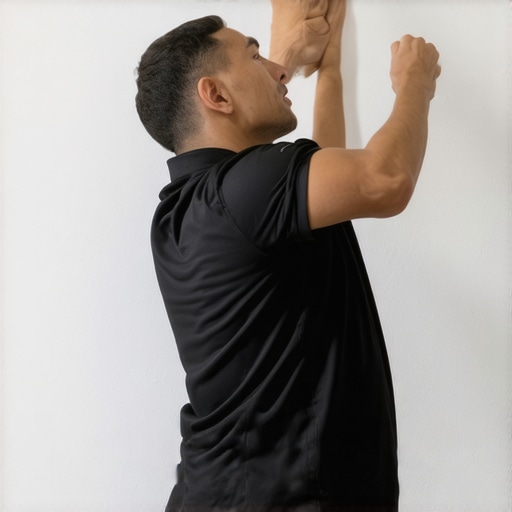
I remember trying to hold a ‘perfect’ posture during a 20-minute board meeting shortly after ditching my brace. I sat as upright as possible, chest out, chin tucked. I looked like a stiff mannequin. By minute fifteen, my mid-back went into a full-blown, vibrating spasm. I was so focused on the look of good posture that I was white-knuckling my muscles instead of letting them work naturally. That’s when I discovered that ‘setting’ the shoulders is more about a subtle glide than a forceful pull. Utilizing the scapular setting trick for pain-free pull-ups even when you aren’t at the gym teaches your shoulder blades to sit in their proper pockets. It isn’t about pinning them back; it’s about letting them drop down and wrap around your ribcage.
Why Your Adjustments Need Muscle Backup
Many people find that they get a great release at the clinic, but then the pain creeps back in forty-eight hours later. This is often because the structural alignment isn’t being supported by the surrounding soft tissue. When you discover how chiropractic adjustments can alleviate chronic back pain, you’re essentially clearing the interference in your nervous system. However, if your glutes are asleep and your core is inactive, your body will revert to its old, painful patterns. This is the truth about why your adjustments don’t seem to last. You need to follow up that mobility with stability. I started incorporating a ten-second ‘bracing’ check every time I stood up from my chair, ensuring my ribcage was stacked directly over my pelvis.
Address the Foundation of Your Kinetic Chain
If you only focus on where it hurts, you’re chasing ghosts. Often, tension in the neck is actually a cry for help from a midsection that has checked out. Understanding how a weak core actually causes chronic neck tension changed my entire approach to rehab. Instead of more neck stretches, I started working on my pelvic tilt and hip mobility. If your hips are locked up, your lower back overcompensates, and eventually, that tension travels all the way up to your skull. To see real progress, you have to move through the the 3 exercises that fix a forward head posture while simultaneously ensuring your base is solid. It’s a full-body symphony, and you are the conductor. Stop trying to force the violins to play louder and start making sure the whole orchestra is in tune.
One of the most common mistakes I see in my practice—and one I definitely fell for in my early days—is confusing ‘stiffness’ with ‘shortness.’ We are conditioned to believe that if a muscle feels tight, we should stretch it until it gives up. But here is a contrarian take that might save you months of frustration: your brain often makes a muscle feel tight to protect a joint it perceives as unstable. If you’ve been aggressively pulling on your leg, you need to know why stretching your hamstrings won’t fix your chronic tightness. In fact, if that tightness is a protective ‘brake’ for a hypermobile pelvis, stretching it further is like cutting the brake lines on a car parked on a hill. You aren’t fixing the problem; you’re removing the only thing keeping the system from crashing.
Why your ‘tight’ muscles are actually screaming for stability
This is where the nuance of motor control comes into play. When we talk about the real reason your si joint feels loose after running, we aren’t just talking about ligaments. We are talking about the nervous system’s inability to coordinate the deep stabilizers. When these small muscles fail, the big movers—like your hamstrings or spinal erectors—clamp down to do the job. This is one of the major the 3 stretching mistakes that make sciatica worse. You think you’re helping, but you’re actually irritating the nerve further by tugging on a system that is already under high tension. I’ve seen patients spend years in a cycle of stretch-pain-stretch, never realizing they just needed to turn their glutes on.
Does every ‘pop’ actually lead to better alignment?
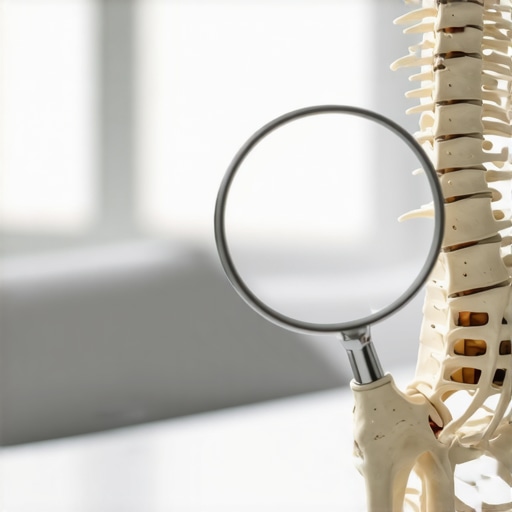
There is a massive difference between a clinical adjustment and the habitual ‘self-cracking’ most people do at their desks. I call it ‘cavitation chasing.’ When you get that release, your brain receives a temporary hit of endorphins and a neurological reset. However, if you are constantly doing it yourself, you might be creating ‘hypermobility’ in segments that are already moving too much. Research in the Journal of Manipulative and Physiological Therapeutics suggests that while spinal manipulation is highly effective for mechanical pain, the ‘pop’ itself is just gas bubbles releasing—the real magic is the neurological down-regulation of muscle guarding. Understanding the truth about cracking your own neck at your desk-2 is vital because ‘loose’ isn’t always ‘healthy.’ You want segments that move exactly as much as they should, and no more.
Don’t fall for the ‘ice everything’ trap
Another ‘oops’ factor I see constantly is the overuse of ice on chronic issues. We’ve been told ‘RICE’ (Rest, Ice, Compression, Elevation) is the gold standard, but the guy who coined that acronym, Dr. Gabe Mirkin, actually retracted his stance on the ice portion years ago. Ice slows down the inflammatory process, which is actually the very thing your body uses to heal tissue. Especially for old, nagging injuries, you need blood flow, not a deep freeze. This is why you should stop icing old injuries and use heat instead. Heat brings nutrients and oxygen to the area, facilitating the repair of the collagen fibers. I remember icing my lower back every night for a month, wondering why it felt like a block of wood the next morning. Once I switched to heat and active mobility, the change was night and day.
The hidden link here is how you treat your foundation. People often ignore the feet, but the real reason your feet ache after running might be the same reason your lower back won’t stay in alignment. It’s all connected. If you want to see how these pieces fit together in your own life, it’s worth investigating the real difference between a chiropractor and a pt to see which approach your specific body needs right now. Have you ever fallen into the trap of over-stretching or over-icing? Let me know in the comments—I’ve likely been there too, and I’d love to help you navigate out of that cycle. Real health is about working with your biology, not fighting it with outdated habits or quick-fix gadgets.
Transitioning from fixing a crisis to building a fortress is where most people drop the ball. I used to think that once the pain stopped, the work was done. Now, I see my body as an ongoing project that requires specific infrastructure. I rely heavily on a few key items that I keep in my gym bag at all times. First, a high-quality massage gun isn’t just for show or superficial relaxation. I use it to wake up my nervous system before a lift, specifically following the proper way to use a massage gun on your quads to ensure my knees aren’t taking the brunt of my squats. It is about blood flow and neurological signal, not just blunt force. Then there is the mental game of proprioception. When I know I am going into a heavy session or a long day of travel, I lean on how to use kinesiology tape for lower back support. Unlike a rigid brace, the tape provides that constant tactile feedback my brain needs to stay aware of my positioning without turning my muscles off.

Real longevity comes from weaving these habits into your daily rhythm. This is why essential tips for managing back pain through healthy lifestyle choices often revolve around the small, mundane decisions rather than the big, dramatic ones. It is the choice to stand up every thirty minutes or the way you hinge your hips when picking up a laundry basket. We have to stop thinking of ‘rehab’ as something we do for six weeks and start thinking of it as ‘prehab’ for the rest of our lives. When you integrate proven chiropractic strategies into your regular routine, you aren’t just reacting to a flare-up; you are optimizing your engine for better performance.
How can I keep my spine healthy for the long haul?
Consistency is the only currency that matters in spinal health. You cannot out-train a week of poor posture with one hour of stretching on a Sunday. Dr. Stuart McGill, the world-renowned expert in spinal biomechanics at the University of Waterloo, often highlights that ‘spine hygiene’ involves maintaining a neutral spine throughout all daily tasks to minimize cumulative micro-trauma. This is why looking for strategic chiropractic solutions for long-term back health is so effective; it ensures your joints are moving correctly so your muscles can do their job without fighting against restricted segments. By enhancing athletic performance with targeted chiropractic care, you create a buffer against injury. You are essentially widening your ‘margin of error’ so that a small trip or a heavy lift doesn’t result in a month on the sidelines.
I predict we are rapidly moving toward a world of integrated wearable biofeedback. In the next few years, I expect to see shirts with embedded sensors that vibrate the second our scapulae lose their ‘set’ position, effectively ending the era of the ‘text neck’ pandemic. Until then, we have to be our own sensors. Try this today: perform a ‘tension scan’ every time you check your phone. If your shoulders are at your ears, drop them. If your chin is protruding, tuck it. It is the bridge between temporary relief and permanent change. I’ve seen this simple awareness unlock back pain relief for people who had previously tried everything else with no luck.
The hard truths I learned while chasing a perfect spine
Looking back at my journey from “cardboard back” to athletic resilience, I realized that I spent way too much time looking for things to add—more braces, more gadgets, more tape—and not enough time looking at what I needed to activate. My first lightbulb moment was that pain is rarely the problem; it’s the signal. When you discover how chiropractic adjustments can alleviate chronic back pain, you realize that the adjustment is just opening a door. You still have to be the one to walk through it by building strength. I also learned that “stretching” is often a trap for people with hypermobility—if you feel loose and unstable, you need tension and stability, not more flexibility.
My personal toolkit for staying mobile and pain-free
I’ve tried every gimmick on the market, but these are the items that never leave my side. First, a simple lacrosse ball. Learning how to use a lacrosse ball to melt away mid-back knots was a game-changer for those long office days. Second, a standard high-density foam roller, but only if you know the correct way to use a foam roller on your it-band to avoid making inflammation worse. Finally, I highly recommend the work of Dr. Stuart McGill on spinal hygiene. These physical tools help you make essential tips for managing back pain through healthy lifestyle choices a reality instead of just a theory.
#IMAGE_PLACEHOLDER_E#
Start building a body that supports itself
Transitioning from a state of constant fragility to a state of athletic confidence doesn’t happen in a weekend. It happens in the quiet moments: the way you sit, the way you breathe, and the way you commit to strategic chiropractic solutions for long-term back health. You aren’t “broken,” and you don’t need a neoprene strap to hold your life together. You are an adaptive, living system capable of incredible repair if you just give it the right environment. Have you ever felt like a specific muscle was “permanently” tight no matter how much you stretched it? Let me know in the comments below!