
I remember a crisp autumn ride through the hills when, around mile fifteen, my fingers didn’t just feel tingly—they felt like dead weights. I reached for the brake lever and my pinky simply wouldn’t move. It is a terrifying sensation to realize you are losing control of your steering because of a minor comfort issue you decided to ignore. My hands weren’t just ‘falling asleep’; they were screaming for help because of a setup that was crushing my ulnar nerve. This isn’t just about being a tough cyclist or pushing through the miles; it is about nerve compression that can lead to permanent damage if you don’t respect the signals your body sends. If you have ever finished a ride and felt like your hands were literally stuck in a ‘claw’ shape, have you ever stopped to wonder if it’s the bike and not your fitness?
Stop treating hand numbness like a badge of honor
For years, I made the classic mistake of thinking I just needed thicker gloves. I spent sixty dollars on high-end gel-padded mitts, but the numbness stayed exactly where it was. Why? Because I was trying to put a foam band-aid on a mechanical setup error. When your handlebars are too low or tilted at an awkward angle, you dump a massive percentage of your body weight onto the small bones of your wrists. This doesn’t just affect your hands; it creates a chain reaction that can lead to cyclists back pain after every long weekend ride. I learned the hard way that a bike that fits in the showroom might be a torture device on the road if you don’t know how to tweak the cockpit ergonomics to your specific anatomy. We are going to solve that today by looking at reach, height, and hood tilt so you can finally feel your fingers again.
Does a tiny adjustment actually change anything?
You might be skeptical that moving a piece of metal by five millimeters can stop a chronic nerve issue, but the physics of the human body are unforgiving. According to a study published in the Journal of Clinical Medicine, nearly 70% of long-distance cyclists report symptoms of ulnar or median nerve compression, which is almost always linked to how weight is distributed across the palms. It is often surprising to realize that your thumb pain is actually coming from your neck and upper back alignment, which is heavily influenced by how far you have to reach for your bars. If your handlebars are too far away, you overextend, lock your elbows, and send every road vibration directly into your nerves. Beyond just comfort, proper alignment and regular chiropractic adjustments ensure your nervous system is firing correctly, which can even improve your efficiency and resting heart rate during recovery. We aren’t just adjusting a bike; we are protecting your ability to ride for the next twenty years.
Level your hoods to save your nerves
I spent hours fiddling with my shifter position before I realized I was creating a ‘kink’ in my wrist. Think of your arm and hand like a garden hose; when you cock your wrist back to reach for a poorly angled hood, you are effectively putting a crimp in the hose, stopping the flow of nerve signals. Most people have their brake hoods tilted too far down, which forces the hand to slide forward and puts all the pressure on the ulnar nerve. You want a flat transition from the handlebar to the hood. I remember once trying to ‘eyeball’ it and tilting them up like the horns of a bull. It looked ridiculous and, more importantly, it made my grip strength plummet because my muscles were working from a compromised position. Grab a straight edge, lay it across the top of your bars, and make sure those hoods continue that line perfectly. 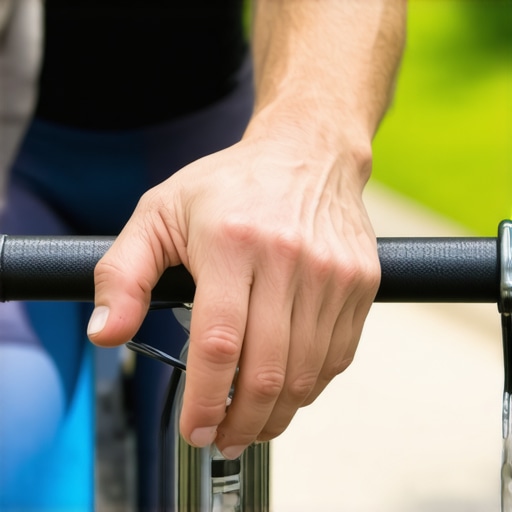
Shorten the reach to unlock your elbows
If you feel like you are reaching for the horizon every time you grab the bars, your stem is likely too long. Locked elbows are the enemy of comfort. When your arms are straight, they act like two solid wooden stilts, sending every bump in the road directly into your wrist joints and shoulders. By shortening your stem by just 10mm, you allow for a slight bend in the elbow, which acts as natural suspension. This adjustment is also crucial if you struggle with rounded shoulders from years of desk work, as a reach that is too long will pull your shoulder blades forward and tighten your neck. I finally swapped my 110mm stem for a 90mm one after a particularly brutal ride through the valley, and the difference was night and day. It felt like I was finally sitting ‘in’ the bike rather than ‘on’ it.
Stop your saddle from pushing you forward
It sounds counterintuitive, but your hand pain might be starting at your seat. If your saddle is tilted nose-down, even slightly, your body will naturally slide forward. To stop yourself from face-planting into the stem, you instinctively push back with your hands. You are essentially doing a low-grade push-up for three hours straight. Check your saddle with a level app on your phone. Even a one-degree downward tilt can dump several pounds of extra pressure onto your palms. Addressing these mechanical loads is a huge part of why we boost your sports rehab journey with proven chiropractic strategies; we look at the whole kinetic chain, not just the spot that hurts.
Engage your core to lighten the load
Your hands should be used for steering and shifting, not for holding up your entire torso. If you find yourself ‘heavy’ on the bars, it is often because your core isn’t doing its job. Just like how you need to know how to stop your lower back from arching during presses in the gym, you need to maintain a neutral spine on the bike. When I finally focused on ‘pulling’ my belly button toward my spine during climbs, I noticed that my hands felt light, almost as if they were floating on the hoods. This core engagement takes the ‘dead weight’ off the ulnar nerve and allows your shoulders to relax, preventing that dreaded mid-back burn.
Why more gel might be killing your hands
I see it every weekend: a rider struggling with numb fingers pulls out a pair of gloves that look like they belong on an astronaut. We have been sold a lie that more padding equals more comfort. In reality, excessive gel can actually increase the pressure on your median and ulnar nerves. When you use thick, mushy padding, it fills the natural ‘valley’ of your palm—the space that is supposed to protect your nerves—and creates a flat surface that compresses everything against the bar. A study in the International Journal of Environmental Research and Public Health found that while some padding helps, too much can paradoxically increase internal carpal pressure by reducing the hand’s ability to dissipate load. I switched to thinner, more strategic padding and focused on the role of chiropractic care in effective sports injury recovery to address the underlying inflammation, and the difference was immediate.
Is your neck the real culprit behind your hand numbness?
One of the biggest mistakes even seasoned riders make is focusing entirely on the wrist when the problem is six inches higher. If you have been fiddling with your shifters and still feel that ‘electric shock’ sensation, you need to look at your cervical spine. Nerve signals start in the neck; if your posture is compromised—perhaps from how to fix rounded shoulders from years of desk work—your nerves are already irritated before you even touch the handlebars. This ‘double crush’ syndrome means a minor compression at the wrist becomes unbearable because the nerve is already pinched at the neck. This is precisely why your thumb pain is actually coming from your neck more often than you would think. If your neck is out of alignment, no amount of expensive handlebar tape will fix the sensation in your pinky. 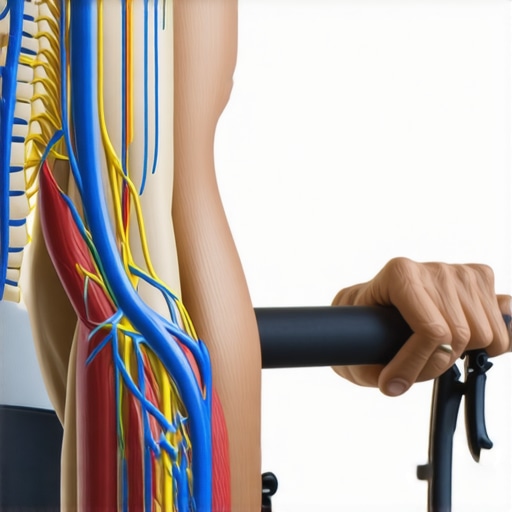
Avoid the trap of the ‘death grip’ death spiral
When we get tired, our core fails, and we start to lean heavily on the bars, which naturally leads to a ‘death grip.’ This is not just about hand fatigue; it is a neurological disaster. Over-gripping causes the muscles in your forearm to stay in a state of constant contraction, which pulls on the tendons in your shoulder. It is fascinating how your grip strength determines your rotator cuff health; they are fundamentally linked through the kinetic chain. If you find yourself white-knuckling the descents, you are essentially turning off your body’s natural shock absorbers. I tell my patients that revolutionize your rehab chiropractic techniques for faster recovery is not just about the spine; it is about retraining your nervous system to stay relaxed under load.
Stop chasing symptoms and start fixing the source
The ‘oops’ factor for most cyclists is thinking that a local pain requires a local solution. I have seen people spend thousands on carbon bars to reduce vibration when a simple the real difference between a chiropractor and a pt assessment could have identified a rib misalignment that was restricting their breathing and forcing a slouch. By understanding the science behind chiropractic adjustments for back pain relief, you realize that your body is a closed system. A restriction in your mid-back changes how your shoulders sit, which changes your wrist angle, which ultimately numbs your hands. Have you ever fallen into this trap of buying more gear instead of fixing the bike or your body? Let me know in the comments.
Buy a torque wrench before you strip an expensive bolt
I used to think ‘hand-tight’ was a universal measurement until I cracked a carbon faceplate during a high-speed descent. Beyond the obvious safety hazard, imprecise tightening allows for ‘micro-creep,’ where your components shift by fractions of a millimeter over several rides. This slow drift is the silent killer of ergonomics. If your hoods slip down just a hair every time you hit a pothole, you are slowly re-introducing that ulnar nerve compression we worked so hard to fix. For long-term results, you need a dedicated 4-6Nm torque wrench. This isn’t just about the bike; it’s about strategic chiropractic solutions for long-term back health. When your equipment is stable, your body can finally stop compensating for a moving target that shouldn’t be moving in the first place.
How do I maintain my bike fit over time?
Consistency is more important than perfection. Every three months, I perform a ‘hardware audit.’ I check the saddle tilt with a digital level app and ensure my reach hasn’t been compromised by a stem that’s slowly vibrating loose. The International Bike Fitting Institute (IBFI) emphasizes that even a 1% change in saddle height can significantly alter the mechanical load on the lumbar spine and knees. This is why you should discover how chiropractic adjustments can alleviate chronic back pain caused by these subtle mechanical shifts. If you change your shoes, your cleats, or even your bib shorts, your effective saddle height changes. Don’t be afraid to make tiny, incremental adjustments rather than waiting for a major injury to force your hand. 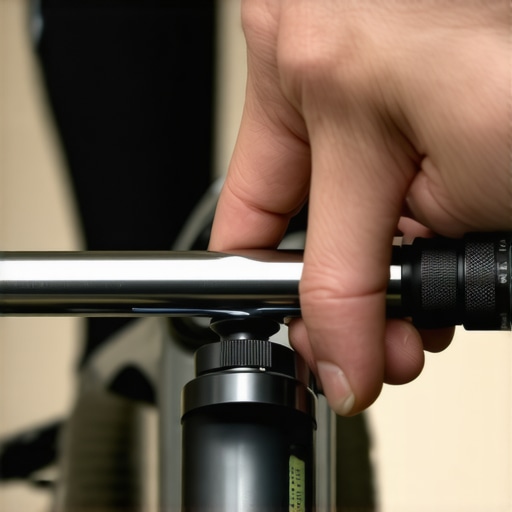
Your body changes even if the bike stays the same
We often forget that we are the most variable part of the cycling equation. If you’ve spent the winter off the bike or hunched over a desk, your hamstring flexibility and core strength have likely dipped. Trying to jump straight back into your ‘aggressive’ summer race position is a recipe for disaster. This is where enhancing athletic performance with targeted chiropractic care becomes your secret weapon. You need to align your physical capacity with your bike’s geometry. I recommend keeping a ‘fit log’ on your phone where you note how your neck and hands feel after different ride durations. If you start noticing that burning sensation again, it’s time to check the science behind chiropractic adjustments for back pain relief to see if your thoracic mobility is the actual bottleneck. In the near future, I predict we will see ‘smart’ handlebars with built-in pressure sensors that alert your head unit when you’re leaning too heavily on your palms, but until then, self-awareness is your best sensor.
Stop the cycle of reactive fixing
The goal is to move from ‘fixing what hurts’ to ‘optimizing what works.’ Just like you wouldn’t wait for your engine to seize before changing the oil, don’t wait for your hands to go dead before checking your cockpit alignment. Use a white paint pen to mark your seatpost and handlebar positions so you can see at a glance if anything has slipped. Combining this mechanical vigilance with the role of chiropractic care in effective sports injury recovery ensures that you are treating the athlete as a whole, not just the machine. My advanced tip for you today: grab a digital level, check your saddle tilt right now, and if it’s more than 1 degree nose-down, bring it back to dead level and see how much lighter your hands feel on your next ten-mile climb.
The Real Reason My Numbness Kept Coming Back
After years of tweaking stems and bars, the biggest lightbulb moment was realizing that my bike wasn’t the only thing that needed an alignment. I was treating my body like a static object when it’s actually a dynamic system of nerves and pulleys. I learned that thicker bar tape usually makes the problem worse because it increases the circumference of the grip, forcing your hand into a less natural position. More importantly, I discovered that if my thoracic spine was ‘stuck,’ my shoulders would round forward, putting immediate tension on the brachial plexus nerves. This is why expert chiropractic adjustments that work are just as important as a professional bike fit. Addressing the burning sensation between your shoulder blades is often the first step to freeing up the nerves that lead all the way to your fingers.
- Numbness is a delayed signal: By the time your pinky goes dead, the nerve has likely been compressed for at least thirty minutes.
- Your core is your suspension: If your abs are weak, your wrists pay the tax for every mile you ride.
- The Double Crush syndrome: A minor pinch in the neck makes a minor pinch in the wrist feel like a major injury.
My Go-To Tools for a Perfect Cockpit
You don’t need a mechanics degree to keep your bike comfortable, but you do need the right data. Here are the three things I never ignore when setting up a new ride or troubleshooting hand pain:
- A Precise Torque Wrench: Stop guessing. Carbon components need exact tension to prevent the micro-creep that ruins your ergonomics over several hours.
- Digital Inclinometer: Use a free level app on your phone to ensure your saddle is perfectly flat. This prevents you from sliding forward and crushing your palms into the bar tops.
- A Functional Movement Screen: Before you spend thousands on new gear, check your own mobility. Integrating healthy lifestyle choices into your routine, like thoracic stretching and neck alignment checks, saves more money than any carbon upgrade.
#IMAGE_PLACEHOLDER_E#
Finally Ride Without the Tingle
Cycling is meant to be a release, not a source of chronic pain. By balancing the mechanical setup of your bike with the neurological health of your body, you can push your limits without sacrificing the use of your hands. If you are still struggling despite these ergonomic changes, don’t hesitate to contact us to see if a deeper structural issue is at play. Your hands deserve to feel the bars, not the pain. Have you ever tried shortening your stem to fix hand pain, or did you find the solution somewhere else? Let me know in the comments below!