
I remember the exact moment my ego met my lumbar spine. It was a crisp Saturday morning, and I was trying to move a heavy truck axle across my driveway. I took a deep breath, sucked my belly button toward my spine—just like I’d been told in those old-school fitness magazines—and lifted. Snap. It wasn’t a bone breaking, thank goodness, but it was the unmistakable sound of my internal support system failing. I spent the next three days rolling off my bed like a log because I couldn’t sit up straight. That was my wake-up call: despite years of ‘working out,’ I had no idea how to actually brace for a heavy carry.
Stop Treating Your Midsection Like a Weak Plastic Straw
Most of us are taught to ‘engage the core’ by hollowing our stomachs out. It’s a common cue, but when you are lugging heavy groceries or trying to figure out how to stabilize your spine during heavy farm chores, that hollowed-out belly is about as useful as a toothpick holding up a skyscraper. I made the mistake of thinking ‘flat abs’ equaled a ‘safe back.’ I was dead wrong. True stability comes from creating a pressurized canister around your spine. If you don’t get this right, you’re not just wasting energy; you’re actively inviting a disc to join the witness protection program. Today, I want to show you the 360-degree expansion method that changed my life and kept me out of the chiropractor’s office for emergency visits. We’re going to fix your pressure, protect your discs, and finally make those heavy carries feel light.
Will This Actually Save My Back or Is It Just Gym Hype?
It is natural to be skeptical, especially if you have been burned by ‘one weird trick’ before. But the science is pretty clear: research published in the Journal of Biomechanics shows that increasing intra-abdominal pressure through proper bracing can significantly stiffen the spine and reduce the risk of buckling under heavy loads. This isn’t just for powerlifters; it’s the essential lifting technique for parents with chronic back issues who just want to pick up their toddler without a wince. Early in my training, I used to breathe entirely into my chest, which is a disaster for stability. You have to realize how your breathing mechanics are sabotaging your core strength before you can fix the problem. Have you ever felt that terrifying ‘giving way’ sensation in your lower back while carrying something heavy?
I Learned the Hard Way So You Don’t Have To
I used to ignore the little warning signs. I’d feel a dull ache and just push through, never stopping to ask how to tell the difference between muscle soreness and a real injury. By the time I finally sought help, my movement patterns were a mess. I had to unlearn everything. I had to stop sucking in and start pushing out—not just with my belly, but with my sides and my back too. It felt weird at first, like I was trying to look intentionally bloated, but the immediate relief in my lower back was undeniable. Once you feel that ‘locked-in’ sensation, there is no going back to the old, flimsy way of moving. Let’s get into the nitty-gritty of how you can start feeling that same rock-solid support today.
How to Turn Your Torso into an Unbreakable Shield
Think of your torso as a soda can. When the can is full and sealed, you can practically stand on it without it buckling. But if you pop the top or empty the contents, it crumbles under the slightest pressure. Your intra-abdominal pressure is that seal. Years ago, I was helping a friend move a heavy oak dresser. I did what most people do—I held my breath in my throat and hoped for the best. Halfway up the stairs, my legs felt strong, but my spine felt like a stack of wet noodles. I ended up needing expert chiropractic adjustments that work just to get back to my desk on Monday. The problem wasn’t my strength; it was my pressure.
Fill the Tank from the Bottom Up
The first mistake is breathing into your chest. When you do that, your shoulders rise, your neck tenses, and you’re essentially ‘unplugging’ your core. You need to understand how your breathing mechanics are sabotaging your core strength before you can fix it. Instead, imagine your pelvis is a bucket you need to fill with air. Breathe deep enough that you feel the pressure move past your ribs and into your low belly.
Expand Your Ribs Like an Accordion
Most people only think about their ‘six-pack’ muscles. But for real stability, you need a 360-degree expansion. Put your hands on your waist, just above your hips, with your thumbs pointing toward your spine and fingers toward your belly. When you inhale, your hands should be pushed outward in all directions. If you only feel movement in the front, you’re leaving your lower back vulnerable. This is why rib flare matters for your core; if your ribs are tilted up, that pressure escapes out the front like a leaky valve.
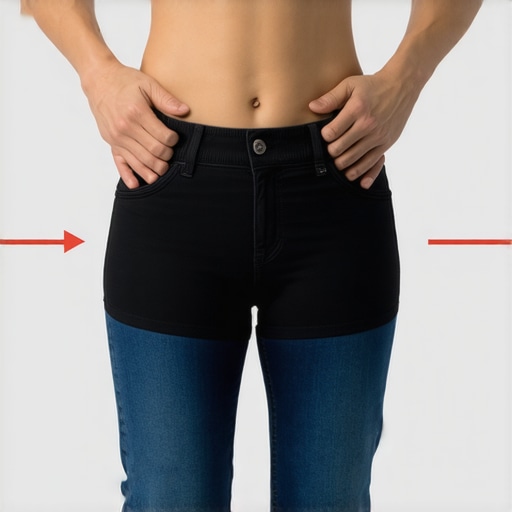
Lock the Pressure with an Internal Shield
Once you’ve filled that ‘bucket’ with air and expanded your sides, you have to lock it in. This isn’t ‘sucking in.’ It’s more like getting ready for someone to punch you in the gut. You want to stiffen the muscles around that pressurized air. This creates a rigid cylinder that protects your discs. I used this exact technique to finally master the deadlift cue that stops your lower back from rounding. It felt heavy and bulky at first, but for the first time in my life, the weight felt like it was being carried by my whole body, not just my L5-S1 vertebrae.
Keep the Pressure While You Move
The hardest part is maintaining this while actually walking or lifting. If you let that ‘air’ out the moment you step forward, you’re back to the wet noodle scenario. This is crucial when learning how to carry a heavy toddler without hurting your spine. You have to learn to ‘sip’ air on top of the brace without letting the whole canister collapse. It takes practice, but it’s the difference between a lifetime of alleviating chronic back pain and constantly re-injuring yourself during basic chores.
Most people assume that if their back hurts, it’s because their core is weak. They go to the gym, do a thousand crunches, and wonder why they still need strategic chiropractic solutions for long-term back health. Here is the contrarian truth: your back pain is rarely a lack of raw strength. It’s a lack of coordination. I see athletes all the time who can deadlift 500 pounds but can’t brush their teeth without their lower back ‘tweaking.’ They have the engine, but the transmission is slipping. This is where you need to boost your sports rehab journey with proven chiropractic strategies that focus on motor control—it’s about retraining how the nervous system fires those deep stabilizers before the big muscles take over.
Why does my back feel more fragile after a morning stretch session?
This is a classic ‘oops’ factor. We’ve been conditioned to think that ‘tightness’ always needs ‘stretching.’ But in the first hour of waking up, your spinal discs are at their most hydrated and swollen. If you immediately go into deep forward folds or ‘toe touches,’ you’re putting immense pressure on the posterior fibers of your discs. This is exactly why your morning stretches might be making your back more sensitive. Research published by spine expert Dr. Stuart McGill suggests that avoiding spinal flexion for the first hour after rising can significantly reduce the cumulative stress on your lumbar spine. Instead of stretching, you should be focused on that 360-degree bracing we talked about earlier to stabilize the joints. 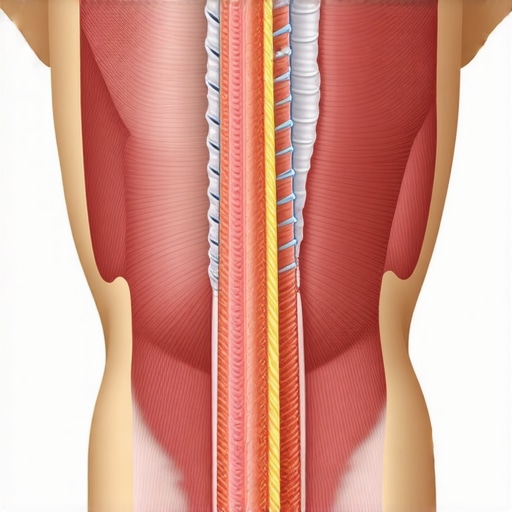 One of the most dangerous traps you can fall into is the ‘more is better’ mentality with adjustments. I used to think that unless I heard a loud crack, the treatment didn’t work. But chasing the ‘pop’ is a distraction from the real goal: restoring proper joint glide and nervous system communication. If you are obsessed with the sound, you might be missing the science behind that popping sound in your joints. Real progress in sports injury recovery is measured by your ability to move through your day without ‘guarding’ your spine, not by how many times you can make your back click. Have you ever fallen into the trap of thinking a stretch or a ‘crack’ would fix everything, only to have the pain return an hour later? Let me know in the comments.
Moving past the ‘chasing the crack’ phase was the best thing I ever did for my longevity. Once I stopped looking for a temporary release, I started looking for tools that actually reinforced my new movement patterns. I’m not talking about fancy vibration plates or thousand-dollar massage chairs. I’m talking about simple, high-feedback items that tell my brain exactly where my body is in space. For me, the absolute game-changer was a simple lacrosse ball. I don’t use it to just mash my muscles into submission; I use it specifically for better thoracic mobility by pinning it between my shoulder blade and spine to find those ‘dead zones’ that aren’t moving. If your mid-back is a frozen block, your lower back is forced to overwork, and no amount of bracing will save you from that mechanical reality.
The Only Piece of Leather You Might Actually Need
Another controversial tool I swear by is a high-quality, 4-inch leather weight belt—but probably not for the reason you think. I don’t wear it to ‘protect’ my back like a corset. In fact, I often warn people about the truth about posture braces and muscle atrophy if they rely on external support too much. I use the belt as a biofeedback device. It gives my abdominal wall something to push against. When I feel that 360-degree pressure hitting the leather, I know my ‘canister’ is pressurized. It’s a tactile teacher that ensures I’m actually using strategic chiropractic solutions for long-term back health rather than just going through the motions. If I can’t feel the belt tighten during a carry, I know I’m leaking pressure.
How do I keep my spine resilient as I get older?
Maintenance isn’t about doing a 90-minute mobility routine every morning; it’s about consistency and making lifestyle choices for managing back pain that stick. I look at it like brushing my teeth. I have a ‘non-negotiable’ five-minute flow every evening that focuses on hip and ankle mobility because I’ve learned that the link between your ankles and lower back is direct. If my ankles are stiff, my squat gets wonky, and my lower back takes the hit. A study in the Journal of Strength and Conditioning Research highlighted that hip internal rotation deficits are a massive predictor of lower back pain in athletes. This is why I always tell people to stop ignoring that click in your hip. These aren’t just ‘getting old’ noises; they are signals that your mechanics are shifting.
The Tech That is Changing How We Rehab
Looking ahead, I think we are moving away from the era of ‘blind’ exercise. I predict that within the next five years, wearable biofeedback—specifically sensors that measure intra-abdominal pressure and spinal shear in real-time—will become as common as heart rate monitors. Imagine an app that buzzes your phone the second your lower back starts to round during a farm chore or a gym lift. This will revolutionize rehab using chiropractic techniques because we will finally have data on what people are doing for the 23 hours a day they aren’t in the clinic. We are moving toward a future of proactive, data-driven spinal health, and honestly, I can’t wait. If you want to get ahead of the curve, start today: grab a belt or even just a piece of string around your waist, and try to keep it tight using your breath for one full minute while you walk around your house. You’ll be shocked at how quickly your ‘shield’ wants to collapse.
What Years of Back Spasms Taught Me That No Textbook Ever Could
After a decade of navigating the ups and downs of spinal health, I’ve realized that the most important tool you have isn’t a fancy machine—it’s your own awareness. I used to think that ‘bracing’ was something you only did in the gym under a heavy barbell. The truth? You need that same internal support when you’re leaning over the sink to brush your teeth or reaching into the backseat for a grocery bag. The hardest lesson I learned is that ‘protecting’ your back by moving like a rigid robot actually makes you more brittle. You want to be a resilient spring, not a piece of dry wood. If you’re still curious about why the ‘cracks’ feel so good but don’t always last, take a look at the science behind chiropractic adjustments for back pain relief. It’s about resetting the system so you can move naturally again.
My Personal Arsenal for a Resilient Spine
Beyond the bracing techniques we’ve discussed, I rely on a few specific tools to keep me moving. First, a firm lacrosse ball is my go-to for clearing out ‘dead zones’ in my mid-back. Second, I keep a log of my activity to see patterns in flare-ups—this is one of the most essential tips for managing back pain through healthy lifestyle choices. Finally, I never skip my ‘foundation’ movements: bird-dogs and side planks. These aren’t about building a six-pack; they are about teaching my brain how to keep my spine still while my limbs move. #IMAGE_PLACEHOLDER_E#
Start Your Journey Toward a Pain-Free Life Today
If you’ve been living in fear of the next ‘tweak’ or ‘pop,’ know that you don’t have to navigate this alone. Whether you are looking to discover how chiropractic adjustments can alleviate chronic back pain or you need strategic chiropractic solutions for long-term back health, the first step is always the same: decide that you are done with ‘just getting by.’ You deserve to move with confidence and strength. What is the one daily movement that always makes your back feel a little ‘sketchy’? Let me know in the comments below!