
I was three hours into a deadline when I realized I couldn’t actually turn my head to the left to see who had walked into my office. It wasn’t just a kink; it was a physical blockade. My neck felt like a rusted hinge, and that familiar, dull ache was blooming into a full-blown burning sensation between my shoulder blades. I’d spent years ignoring the warning signs, thinking I could just power through the ‘tech neck’ by buying a fancy chair or occasionally cracking my own neck for a quick second of relief. I was wrong. It took a literal inability to move for me to realize that my posture wasn’t just ‘bad’—it was actively eroding my quality of life. That afternoon, I didn’t go to a specialist; I grabbed a $10 yoga block from my gym bag and started a journey that finally fixed what years of desk work had broken. Have you ever felt that terrifying moment where your body just says ‘no’ to a simple movement? Tell me in the comments if you’ve been there.
My Path from Constant Neck Stiffness to Pain-Free Movement
For a long time, I made the classic mistake of treating the symptom instead of the source. I’d rub my traps or try a few morning stretches that actually made my back more sensitive because I didn’t understand the mechanics of the cervical curve. I thought my problem was just tight muscles. In reality, I was suffering from a massive loss of the natural ‘C’ curve in my neck. Today, I want to share how I used a simple yoga block to provide the passive support my spine desperately needed to reset. We aren’t just talking about stretching; we are talking about structural remodeling that you can do while listening to a podcast on your living room floor.
Will this actually work if I have a real injury?
It’s healthy to be skeptical. I certainly was. I worried that putting direct pressure on my spine with a hard block might cause more harm than good, especially after reading about the difference between chiropractic care and physical therapy. But here’s the thing: your head is heavy. A study in Surgical Technology International found that while the average head weighs 10 to 12 pounds, tilting it forward just 60 degrees—the common ‘phone-looking’ angle—increases the load on your neck to a staggering 60 pounds. No wonder we’re all in pain! By using the yoga block as a fulcrum, we aren’t forcing anything; we’re simply giving those 60 pounds of pressure a chance to reverse.
That Foam Block in Your Closet Is a Secret Weapon
Most people think yoga blocks are just for reaching the floor when your hamstrings are tight. But for those of us struggling with rounded shoulders from years of desk work, it is a precision tool for spinal health. I used to think I needed a chiropractor to ‘pop’ me back into place every week—and while chiropractic adjustments have their scientific place—I needed something I could do daily to maintain that mobility. I started small, and honestly, I failed at first by using a block that was too hard and a position that was too aggressive. I’ll show you exactly how to avoid those pitfalls so you can stop the tension headaches in their tracks before they ruin your day.
Set Up the Perfect Spinal Fulcrum
To begin this process, you need to find a firm but forgiving surface—a yoga mat on a hardwood floor is ideal. If you do this on a bed, the block will sink and you’ll lose the leverage needed for structural change. Lay flat on your back with your knees bent and feet flat on the floor to keep your lower back neutral. Place the yoga block horizontally across the base of your skull, right where the neck meets the head. You aren’t looking for a ‘stretch’ in the traditional sense; you are looking for a passive release. Imagine your spine is a garden hose that’s been kinked for years; we are slowly unkinking it by providing a stable point of contact for the vertebrae to settle against. 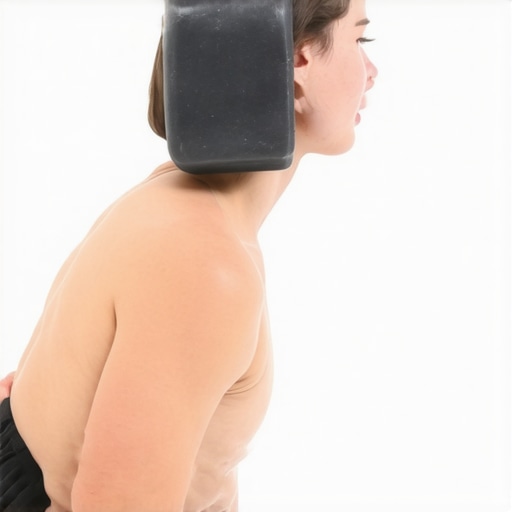
The Three Minute Protocol for Cervical Reset
I remember the first time I tried this; I was so desperate for relief I used a hard cork block on a hardwood floor. Big mistake. It felt like my vertebrae were being crushed, and I ended up with a flare-up that felt like someone was driving a needle into my upper traps. I learned that the spine responds better to duration than intensity. Once you are positioned, tuck your chin slightly toward your chest. This lengthens the back of the neck and ensures you aren’t compressing the delicate nerves that lead to chronic migraines. Close your eyes and focus on diaphragmatic breathing. If you breathe high in your chest, you’ll trigger a fight-or-flight response that keeps your muscles guarded. By breathing into your belly, you signal to your nervous system that it is safe to let go of the tension.
Why You Should Avoid the More is Better Mentality
When I first started seeing progress, I thought if three minutes was good, thirty minutes would be better. I was wrong. Over-stretching the ligaments in the neck can lead to instability, which is why the science behind chiropractic adjustments focuses so heavily on precision and timing. Your body needs time to integrate the new position. If you feel any numbness or tingling in your fingers, that’s your body’s way of saying the block is poorly placed or you’ve stayed too long. This is similar to how breathing mechanics can actually sabotage your progress if you aren’t mindful. Think of this block work as a ‘soft reset’ for your nervous system. Much like the role of chiropractic care in sports recovery, we are trying to restore the optimal environment for healing.
Targeting the Mid-Back Connection
Your neck doesn’t live in a vacuum. Often, that stiffness is a direct result of the burning sensation between your shoulder blades being ignored. To address this, you can move the block down slightly so it sits between your scapulae (shoulder blades). This encourages thoracic extension. Many people struggle with rounded shoulders from years of desk work, and this secondary position helps open the chest. As you lay there, you might hear a small pop or click. This is normal—it’s just gas releasing from the joints, a phenomenon commonly called the popping sound in your joints. It’s not your bones breaking; it’s your mobility returning.Let’s dig deeper into the most common mistake I see: the ‘stretch more’ obsession. Everyone tells you that if your back is stiff, you need to stretch it. In my experience, and according to many modern rehab protocols, ‘tight’ muscles are often overstretched and weak, not short. When a muscle is perpetually elongated—like your mid-back during a long day at the desk—the brain keeps it in a state of protective tension to prevent further damage. If you keep pulling on it, you’re just feeding the cycle. This is exactly why your morning stretches might be making your back more sensitive. You don’t need more length; you need more stability. 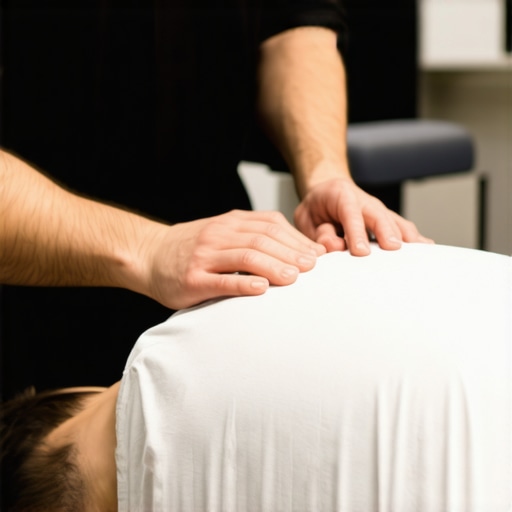
Stop Falling for the Rest and Ice Myth
Another massive ‘oops’ factor is the old-school advice to just ‘lay down and put some ice on it.’ While it feels good for ten minutes, why bed rest is the worst thing for acute back spasms comes down to circulation and atrophy. According to a study published in the Journal of Orthopaedic & Sports Physical Therapy, early mobilization leads to significantly better long-term outcomes than passive rest. If you aren’t moving, you aren’t flushing out the inflammatory markers. This lack of movement eventually leads to a ‘sleepy’ midsection, which is how a weak core actually causes chronic neck tension. Your body is a system of pulleys; when one fails, the others work overtime.
Does Every Click and Pop Mean Your Spine is Out of Alignment?
This is the question I get most often from people who have become ‘self-adjusters.’ We’ve all been there—twisting in a chair to get that satisfying crack. But there is a huge difference between a random cavitation and the science behind chiropractic adjustments. That noise is just the popping sound in your joints caused by gas bubbles bursting. If you feel the need to do it every hour, you aren’t ‘fixing’ anything; you’re actually creating hypermobility in the wrong joints while the truly ‘stuck’ segments remain frozen. This is the truth about cracking your own neck at your desk: you’re likely over-stretching the ligaments that are already loose.
Why Your Ankles Are Quietly Killing Your Lower Back
If you want to move from ‘managing pain’ to ‘optimizing performance,’ you have to look downstream. I spent months treating my lower back before a specialist pointed out that my left ankle had zero mobility from an old soccer injury. We often ignore the hidden link between your ankles and lower back health. When your ankle can’t flex, your hip has to compensate, which pulls your pelvis out of alignment and forces your spine into a compromise. Beyond just pain relief, enhancing athletic performance with targeted chiropractic care focuses on these kinetic chains. A study in the Journal of Manipulative and Physiological Therapeutics even showed that spinal adjustments can improve the cortical drive to the muscles, effectively ‘waking up’ your strength. Have you ever fallen into this ‘stretch more’ trap only to feel worse the next day? Let me know in the comments.Building on that idea of stability over stretch, let’s talk about the actual tools I keep in my bag. I’m not talking about those $500 vibrating massage guns—those are great for temporary blood flow, but they often fail to address structural change. If you really want to target that burning sensation between your shoulder blades, you need a firm lacrosse ball. I specifically use a standard rubber ball because it doesn’t compress like foam. When you lie on it, the pressure is localized enough to tackle a specific rib head or trigger point. Knowing how to use a lacrosse ball for better thoracic mobility is the single best investment you can make for under ten bucks. It forces those ‘stuck’ segments of the mid-back to actually move, which takes the load off your neck instantly and provides a more permanent fix than a quick massage.
How can I stay pain-free without a daily hour of stretching?
The secret to strategic chiropractic solutions for long-term back health isn’t doing more; it’s doing the right things at the right time. I stopped trying to force a 60-minute yoga routine and switched to functional micro-breaks. Every time I finish a deep-work session, I do the 60-second move to open up your tight chest muscles. It’s about building a lifestyle where movement is integrated into your day rather than treated as a chore you do once. This philosophy aligns with essential tips for managing back pain through healthy lifestyle choices, where consistency and frequency beat intensity every single time. Dr. Kelly Starrett, a renowned expert in human movement and a major influence on the role of chiropractic care in effective sports injury recovery, famously states that ‘the best posture is your next posture.’ This simple shift in mindset—moving often rather than sitting perfectly—is what finally ended my chronic stiffness.  I predict that in the next few years, the fitness world will move away from static ‘ergonomic’ furniture and toward active biofeedback. We are already seeing the rise of wearable sensors that track spinal curvature in real-time, sending a gentle vibration to your phone when your core stops engaging. This data-driven approach will make enhancing athletic performance with targeted chiropractic care more accessible to the average desk worker. Until that technology is mainstream, you have to be your own biofeedback loop. If you’re feeling that mid-back ache right now, stand up and perform a quick chest opener. I challenge you to try the 60-second move to open up your tight chest muscles just twice today and see how much lighter your head feels by 5:00 PM.
The Truth About Why Your Neck Stiffness Keeps Returning
Realizing that my neck pain wasn’t just a ‘neck problem’ but a total system failure was a game-changer. I found that how a weak core actually causes chronic neck tension was the missing piece of my puzzle. If your foundation isn’t stable, your neck will always overwork to keep your eyes level while you type. I also learned to stop fearing the popping sound in your joints. For a long time, I thought every crack meant damage, but understanding the release of gas helped me relax into the yoga block rather than fighting the sensation. Finally, I had to accept that there is no magic pill; even the best science behind chiropractic adjustments for back pain relief works best when you pair it with daily, mindful movement at home.
My Non-Negotiable Kit for a Resilient Spine
A high-density foam yoga block is my primary tool for cervical resets, but when the stiffness migrates lower, I know how to use a lacrosse ball for better thoracic mobility to target those specific rib-head knots. This combination is an unbeatable strategy for desk workers. I also rely on insights from experts who bridge the gap between rehab and performance. Understanding the role of chiropractic care in effective sports injury recovery taught me that my body is an integrated machine, not a collection of isolated parts. For those days when the DIY approach isn’t quite reaching the root cause, I look for strategic chiropractic solutions for long-term back health rather than just seeking a temporary fix.
Your Move Toward a Pain-Free Future
Ending the cycle of chronic pain doesn’t happen overnight, but it starts with a single three-minute session on your living room floor. You don’t have to live with a rusted hinge for a neck. By focusing on essential tips for managing back pain through healthy lifestyle choices, you can reclaim the freedom of movement you thought you’d lost forever. #IMAGE_PLACE_HOLDER_E#
Have you tried using a yoga block for your neck yet, or are you still sticking to traditional stretching? Share your experience in the comments below!