
I was thirty seconds into a personal record attempt on a weighted lunge when it happened—a sharp, toothache-like pinch right in the crease of my front hip. It didn’t feel like a muscle stretch; it felt like a bone-on-bone collision. Like an idiot, I told myself I just needed to stretch more. I spent months aggressively lunging into the pain, convinced my psoas was the villain. Spoiler alert: I was making it worse. If you’ve ever felt that ‘stop-in-your-tracks’ catch at the bottom of a lunge, you know exactly how frustrating it is to feel like your own body is hitting a literal wall. We are going to stop that today.
That Sharp Catch in Your Hip Is Not Just Muscle Tightness
We’ve been conditioned to think that every sensation of restriction requires more stretching. But here’s the truth: if you feel a sharp pinch in the front of your hip, your hip flexors might not actually be tight. In fact, cranking on them might be aggravating the joint capsule. When you drop into a deep lunge, your femur (thigh bone) needs to glide and rotate smoothly within the socket. If that bone shifts forward too much, it runs out of room and ‘pinches’ the soft tissue or labrum. I spent years in the sports rehab world learning that this sensation is often a mechanical ‘traffic jam.’ According to research published in the British Journal of Sports Medicine, nearly 20% of asymptomatic athletes have hip morphology that can lead to impingement, but the real trigger is often poor pelvic control. For example, how your foot arch behaves can completely change how your hip sits in the socket during a movement.
Is this pinch actually something I can fix myself?
You might be worried that this ‘ping’ means you need surgery or that you’re just ‘built wrong.’ Trust me, I had those same middle-of-the-night panics. But most of the time, that pinch is a signal that your alignment is off-center. We’re going to look at how to create ‘space’ in that joint so you can lunge deep without the wince. Before we dive into the mechanics, have you ever felt that specific sharp catch, or did you just assume you were stiff? Drop a comment or just think back to your last leg day—it’s the first step to fixing it. One of the biggest mistakes I made early on was ignoring the click that preceded the pinch. I treated my body like a car with a check engine light that I just taped over. Today, we’re peeling back the tape and getting to the root cause, starting with how your pelvis is positioned before you even move. It is about working with your anatomy rather than fighting it.To stop that pinching sensation, we need to address what I call the ‘Open Scissors’ position. When your ribs flare up and your butt flares back, you have essentially closed the gap in the front of your hip before you even start the movement. To fix this, we start with the ‘Pelvic Reset.’ Imagine your pelvis is a bucket of water. Most of us lunge with the water spilling out the front. You need to pull your belt buckle toward your ribcage to level the bucket. This small shift pulls the head of your femur back and down into the center of the socket, creating the physical clearance needed for a deep range of motion.
Clear the Traffic Jam in Your Hip Socket
When your pelvis is out of position, you are asking the joint to move through a path that is already blocked. In the sports rehab world, we focus on centration—keeping the joint perfectly aligned throughout the movement. If you feel that ‘clunk’ or ‘catch,’ your body is literally telling you the bone is off-center. By focusing on the position of your hips before you even bend your knees, you are setting the stage for a pain-free rep. 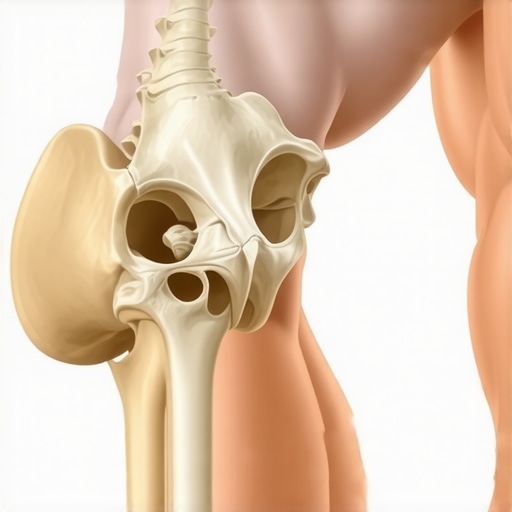
The 2-Inch Shift That Changes Everything
I remember trying a set of Bulgarian split squats where every rep felt like a knife in my groin. I was frustrated and ready to give up on leg day entirely. I stopped, pulled my tailbone down just slightly to level my pelvis, and the pain vanished instantly. It wasn’t magic; it was physics. When I was arched, I was jamming the femur into the labrum. By ‘tucking’ slightly, you engage your lower abdominals, which acts as a secondary stabilizer. This is why the correct way to brace your core is not just about breathing out—it is about setting the solid container for your spine and hips to work together.
Grab the Floor with Your Whole Foot
Your hip does not live on an island; it is the middleman between your spine and your feet. If your foot arch collapses inward during a lunge, your knee follows, and your femur rotates internally. This internal rotation is the fast track to a ‘pinch.’ I spent weeks focusing solely on my hip when the hidden link between your ankles and lower back health was actually the culprit. You need to ‘tripod’ your foot—keep the big toe, pinky toe, and heel all rooted. When you create a strong arch, you naturally create an external rotation torque at the hip, which ‘screws’ the bone into a safer, more spacious position within the socket.
Engage the Back Glute for Front Hip Relief
This sounds counterintuitive, but if you want the front of your hip to relax, you have to wake up the back of the opposite hip. When you lunge, squeeze the glute of the trailing leg as hard as you can. This uses a neurological concept called reciprocal inhibition. By firing the glute, you signal the hip flexors on that same side to relax. This reduces the overall tension pulling on your pelvis. Instead of just leaning into a stretch that might be hurting you, try the best way to stretch your psoas without hurting your spine, which involves this active glute engagement. It is a total game-changer for anyone who feels ‘stuck’ halfway down.The biggest mistake I see—and one I lived through—is the obsession with ‘opening up’ the hips. We often assume that if something feels tight, it simply needs more length. But in the world of high-level sports rehab, we know that tightness is often a protective ‘parking brake’ pulled by your nervous system. If your brain senses that your hip joint is unstable or off-center, it will lock down the surrounding muscles to prevent you from damaging the labrum. When you try to stretch through that, you’re essentially fighting your own security system. This is where expert chiropractic adjustments that work come into play—not by ‘fixing’ a bone out of place, but by resetting the neural input so your muscles can actually relax.
Chasing the Pop Is Not the Goal
Many patients come in thinking that a loud ‘crack’ is the only sign of a successful session. This is a common myth that actually stalls progress. In reality, the science behind chiropractic adjustments for back pain relief shows we are stimulating mechanoreceptors that ‘dampen’ pain signals and improve proprioception. It’s like rebooting a frozen computer. If you are just chasing the sound, you are missing the point of chiropractic techniques for faster recovery. True recovery happens when the joint gains the ability to communicate properly with the brain again.
Why does my hip still pinch even when my form looks ‘perfect’?
This is the million-dollar question for athletes. You’ve leveled your pelvis, you’ve rooted your feet, yet that ‘ping’ remains. This is often where the ‘Oops’ factor kicks in: you might be missing internal rotation at the joint level. Even if your lunge looks like a textbook picture, your femur needs to rotate internally within the socket as you descend. If your joint capsule is stiff, the bone can’t rotate, so it ‘translates’ (slides) forward instead, hitting that pinch-point. A study in the Journal of Orthopaedic & Sports Physical Therapy (JOSPT) highlights that ‘micro-instability’ at the hip is frequently misdiagnosed as simple muscle tightness. 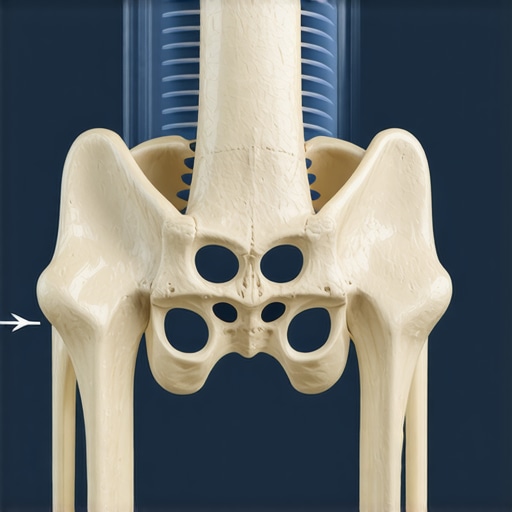
The Flexibility Trap You Need to Avoid
The most dangerous trap is thinking ‘no pain, no gain’ applies to a sharp joint pinch. In the truth about no pain no gain in sports rehab, we learn that sharp joint pain is a hard ‘stop,’ not a challenge to push through. If you keep jamming that joint, you risk turning a simple mechanical ‘traffic jam’ into chronic inflammation or a labral tear. Have you ever fallen into this trap of stretching harder when the pain actually got worse? Let me know in the comments. We need to move away from the idea that chiropractic adjustments can alleviate chronic back pain by force; it’s about precision and timing. If you’re dealing with this, remember that managing back pain through healthy lifestyle choices includes knowing when to back off the intensity to let the joint reset. Your body isn’t a machine you can just beat into submission—it’s a biological system that requires the right signals to move well.
Stop playing the guessing game with your joints
After the initial ‘fix,’ the real work begins in the maintenance phase. I’ve seen too many athletes get out of pain, return to heavy lifting, and end up right back on my table six weeks later because they stopped doing the boring stuff. To keep that hip pinch from creeping back, I rely on a few specific items in my gym bag that I consider non-negotiable. For instance, knowing how to use a lacrosse ball for better thoracic mobility is great, but applying that same targeted pressure to the deep rotators of the hip is what prevents that ‘traffic jam’ we talked about earlier. If you are just rolling around aimlessly on a soft foam roller, you are mostly just massaging the skin rather than affecting the joint capsule.
Stop guessing and start measuring your progress
We often rely on ‘feeling’ to determine if we are ready for a PR, but feeling can be a liar. I personally use a simple digital inclinometer—or even just a level app on my phone—to check my pelvic tilt before a session. This ensures I am not starting in that ‘Open Scissors’ position. I also suggest that you learn how to choose the right resistance band for shoulder rehab and hip activation. If the band is too thick, your big muscles take over; if it’s too thin, you won’t get the neural feedback needed to center the joint. Making sure you are enhancing athletic performance with targeted chiropractic care means being precise with your tools at home.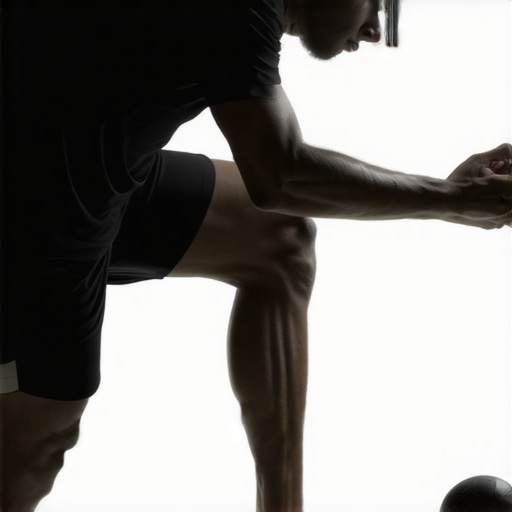
How do I maintain my hip mobility and stability over time?
Consistency beats intensity every single time. You don’t need an hour of stretching; you need three minutes of high-quality ‘resets.’ This is why strategic chiropractic solutions for long-term back health involve teaching you to be independent. Dr. Stuart McGill, author of Back Mechanic and a leading authority on spinal biomechanics, notes that ‘the best exercises are those that provide the highest challenge to the muscles with the lowest load on the joints.’ Incorporating his ‘Big 3’—the Bird Dog, Side Bridge, and Modified Curl-up—provides the core endurance needed to keep your pelvis level during those deep lunges. Without this stability, your mobility is just a fleeting window that will slam shut as soon as you add weight.
The future of movement is biofeedback
I predict that within the next decade, we won’t be guessing about joint centration. We will likely use wearable haptic sensors that provide a gentle buzz when our femur isn’t tracking correctly or when our ribs flare. Until that tech becomes mainstream, you have to be your own expert. Combine essential tips for managing back pain through healthy lifestyle choices with the active cues we’ve discussed. My challenge to you: Before your next set of lunges or squats, perform ten ‘glute squeezes’ on your trailing leg while maintaining a neutral pelvis. Feel the difference in the front of your hip? That’s your nervous system giving you the green light. If you’re still feeling stuck despite these adjustments, it might be time to look into chiropractic techniques for faster recovery to clear the physical path for your movement.
What Your Brain Isn’t Telling You About That Pinch
I learned the hard way that a sharp pinch isn’t an invitation to stretch harder. Here are the most important lightbulb moments from my own recovery and years in the sports clinic. First, your body uses tightness as a safety mechanism. If the joint doesn’t feel stable, your brain will literally ‘brake’ the movement to protect the labrum. Second, telling the difference between muscle soreness and a real injury is a superpower; a sharp pinch is a red light, not a yellow one. Finally, progress is almost never linear. You might find that how spinal alignment affects your balance and stability changes day to day based on your stress levels or sleep quality, and that is completely normal.
The Tools I Use to Stay Bulletproof
To stay on top of your game, you need more than just willpower. I personally rely on a few specific resources that bridge the gap between office visits and heavy gym sessions. I highly recommend picking up a copy of ‘Back Mechanic’ by Dr. Stuart McGill; it is the absolute gold standard for understanding how to move without wrecking your spine. For physical tools, I use a high-tension resistance band for joint distractions—learning how to choose the right resistance band is just as important for your hips as it is for your upper body. #IMAGE_PLACEHOLDER_E# I also keep a lacrosse ball in my bag at all times. Knowing how to use a lacrosse ball for the deep hip rotators can be the difference between a successful leg day and a week of frustration.
Reclaim Your Range of Motion Today
You don’t have to live with the fear that your hip is going to ‘catch’ on every single rep. By focusing on joint centration, leveling your pelvis, and rooting your feet, you are giving your body physical permission to move through its full potential. The journey toward proven chiropractic strategies and better movement isn’t about perfection—it’s about making those small, 1% adjustments every time you step into the squat rack. Don’t let a temporary mechanical ‘traffic jam’ in your joint stop you from reaching your long-term goals. Have you ever felt that sharp ‘catch’ in your hip during a lunge, or did you just think you were tight? Let me know your experience in the comments below!