
I’ll never forget the day I tried to hike a rugged trail with a pack that weighed more than my common sense. Halfway up the ascent, my lower back didn’t just ache; it felt like a white-hot poker was being pressed into my vertebrae. I spent the next three days staring at a hotel ceiling, wishing I had prioritized essential tips for managing back pain through healthy lifestyle choices rather than just ‘powering through.’ I made the classic mistake of letting my bag sag toward my hips, thinking it felt more relaxed, but I was actually crushing my lumbar spine with every step. Today, I’m going to make sure you never have to experience that kind of ‘bed-rest’ vacation.
Stop Carrying Your World on Your Shoulders the Wrong Way
Most of us treat our backpacks like a mobile junk drawer with straps. We throw our laptops, gym clothes, and three-course lunches in there and wonder why we feel eighty years old by Friday afternoon. The reality is that your spine isn’t a crane; it is a delicate stack of bones that requires balance. When your load is off-center, your body forces muscle groups to compensate in ways they weren’t designed for. If you are already feeling that familiar twinge, seeking out expert chiropractic adjustments that work can reset the damage, but the goal is to stop the injury before it starts.
Is all this strap-fiddling really worth the effort for a quick commute?
It is easy to assume that a ten-minute walk to the office won’t do much harm, but micro-stresses are the silent killers of good posture. According to the American Chiropractic Association, a backpack should never exceed 10% of your body weight to avoid long-term structural issues. Even a light bag carried improperly for months can lead to significant postural deviations. If your pack is pulling you backward, your neck has to crane forward just to keep you upright. That is a one-way ticket to chronic tension and a misaligned neck.
Your Spine Will Thank You for These Small Daily Tweaks
Carrying a heavy load needs to be an active process, not a passive one. You can’t just be a passenger to your own gear. A huge part of the solution is learning the correct way to brace your core for heavy carries so your abdominal wall takes the pressure off your discs. I spent years ignoring my ‘core’ until my back finally gave out, and I had to learn the hard way that strategic chiropractic solutions for long-term back health are about more than just the occasional pop; they’re about how you move every single day. Have you ever noticed that your shoulders feel ‘glued’ to your ears after you take your bag off? If so, your current setup is likely doing more harm than good, and it’s time we fixed that together.
Pack Your Gear Like a Tetris Master
The way you arrange items inside your bag is the difference between a fluid stride and a grinding lower back. Think of your backpack as a lever system; the further the weight is from your spine, the more it acts as a force multiplier against your discs. You want the heaviest items—your laptop, textbooks, or that heavy gym weight—pressed right against the back panel. If you shove your heavy gear toward the front pocket, you are essentially creating a see-saw effect that pulls your torso backward, forcing your hip flexors to work overtime just to keep you upright. This constant tug-of-war is often why your desk chair is making your hip flexors tight even before you sit down for the day. Surround those heavy items with softer, lighter gear like clothing to keep them from shifting. A shifting load is a chaotic load, and chaos leads to micro-tears in your connective tissue. 
Stop Pulling Your Straps Randomly
Most people throw their bag on and yank the shoulder straps until the pack is high. That is a mistake. The proper sequence starts at the bottom. If your bag has a hip belt, use it. Your pelvis is designed to carry weight; your delicate cervical spine is not. Tighten the hip belt first so the weight rests on your iliac crest—the shelf of your hip bones. Only then should you snug the shoulder straps so the pack rests flush against your back without crushing your traps. I learned this the hard way during a cross-country move where I lived out of a rucksack for a week. By day three, my gait was so skewed I was literally limping. It turned out I was over-tightening my right strap to compensate for a heavy water bottle on that side, which is a classic example of why your shoes are wearing out unevenly and what it means for your hips. Once I balanced the load and engaged the waist strap, the ‘phantom’ hip pain vanished within hours.
Keep Your Chin Up and Your Shoulders Down
When we carry weight, our natural instinct is to lean forward and poke our chin out like a turtle. This ‘text neck’ posture is exacerbated by a heavy pack and puts immense pressure on the upper traps. If you feel a burning sensation between your blades, you are likely losing the battle against gravity. Focus on keeping your ears aligned over your shoulders. This alignment is crucial because how spinal alignment affects your balance and stability determines how much energy you waste just staying vertical. If you find yourself struggling to stay upright, it is a sign that you need to master the correct way to brace your core for heavy carries.
Check Your Mirror to Spot Hidden Imbalances
Stand in front of a mirror with your fully loaded bag. Are your shoulders level? Is one hip hiking higher than the other? We often develop ‘habitual lopsidedness’ where we favor one side without realizing it. If you are a golfer, you might even notice this carries over into how you handle your gear on the course, making it vital to learn how to pick up your golf bag without straining your mid-back. Correcting these small deviations now prevents the long-term wear and tear that necessitates the science behind chiropractic adjustments for back pain relief later down the road. Every inch your head moves forward adds about ten pounds of effective weight to your neck, so keep that ‘invisible string’ pulling the crown of your head toward the ceiling.
That invisible string is a great start, but here is where most people get it wrong: they think more ‘work’ always equals more ‘results.’ I see so many athletes who think that because their back feels stiff, they need to double down on passive stretching. But here is the contrarian truth: why your hamstrings always feel tight even though you stretch them often has nothing to do with muscle length and everything to do with your nervous system protecting your spine. If you keep yanking on those muscles, you are just poking the bear. In fact, why your morning stretches might be making your back more sensitive is one of the most common reasons people stay in a chronic pain loop. You cannot stretch your way out of a stability problem.
The Ice Pack Trap and Other Recovery Myths
Another common ‘oops’ factor? The ice pack. We have been told since Little League to ‘ice it down,’ but for chronic or even sub-acute back issues, why icing your lower back might be slowing down recovery is a real concern. Cold constricts blood flow, and blood flow is the very thing that carries the ‘janitor’ cells needed to clean up tissue damage. While it might numb the area temporarily, it can stall the metabolic processes required for long-term healing. I’ve seen patients spend weeks on the couch with a bag of peas, only to realize that why bed rest is the worst thing for acute back spasms is because movement—not stagnation—is what drives recovery. Seeking strategic chiropractic solutions for long-term back health means understanding when to move and when to rest.
Why does my MRI look like a disaster when I’m barely in pain?
This is the ultimate nuance of modern sports medicine. A landmark systematic review published in the American Journal of Neuroradiology (Brinjikji et al., 2015) found that 37% of 20-year-olds and 80% of 50-year-olds with no pain at all have disc degeneration or bulges. If you are obsessing over a ‘bulge’ on a piece of paper, you might be treating a shadow instead of the source. Learning how to read your mri report without panicking is the first step toward a real solution. Your imaging is a snapshot of your anatomy, not a destiny of your pain levels. 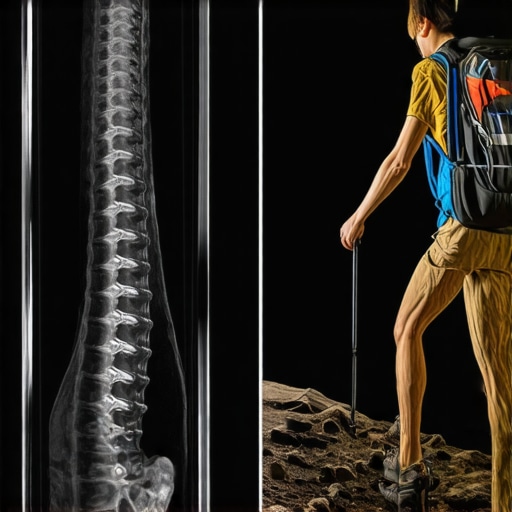
Listen to the Dashboard Warning Lights
The most dangerous mindset in the gym is the old ‘no pain, no gain’ mantra. In the world of the role of chiropractic care in effective sports injury recovery, we know that pushing through a sharp ‘pinch’ isn’t bravery—it’s a recipe for a six-month setback. The truth about no pain no gain in sports rehab is that your body uses pain as a dashboard warning light. If you ignore it, the engine eventually seizes. Instead, we use proven chiropractic strategies to identify the mechanical failure before it becomes a structural collapse. This is how you transition from just ‘surviving’ your workouts to enhancing athletic performance with targeted chiropractic care. Have you ever fallen into this trap of thinking you could just ‘stretch away’ a structural issue? Let me know in the comments.
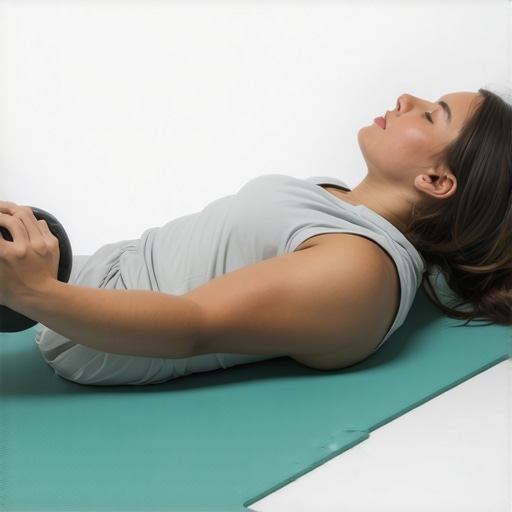
I don’t go anywhere without a lacrosse ball in my gym bag. Foam rollers are fine for big surfaces, but they’re often too blunt for the fine-tuning your thoracic spine actually needs. If you’ve ever felt that localized ache right next to your shoulder blade that feels like a stubborn knot, a standard roller just glides right over the surface. A lacrosse ball, however, provides the pin-point pressure needed to release the multifidus and rotatores muscles. Learning how to use a lacrosse ball for better thoracic mobility completely changed the way I warm up for heavy overhead movements. It is about creating literal space in the joints so your vertebrae can move through their full range without hitting a mechanical ‘stop.’
The Lacrosse Ball is My Secret Weapon for Thoracic Mobility
This isn’t just about feeling good in the moment; it’s about maintaining the gains you get from a professional. When you use tools like this, you are reinforcing the chiropractic techniques for faster recovery that we implement in the clinic. I recommend my patients spend at least two minutes a day on ‘t-spine’ extension work. Think of it as dental hygiene for your back. You wouldn’t expect a dentist to keep your teeth clean if you never brushed at home, and the same logic applies to your musculoskeletal health. These small, daily interventions prevent the soft tissue from ‘locking down’ around a previous injury site.
How can I stay pain-free without a weekly appointment?
This is the question every active person should be asking. The reality is that strategic chiropractic solutions for long-term back health are built on what you do during the 167 hours a week you aren’t in the treatment room. You have to become the architect of your own spine. Dr. Stuart McGill, a world-renowned spine biomechanist and author of Back Mechanic, emphasizes the ‘Big Three’ (the curl-up, side bridge, and bird-dog) to build a resilient, ‘stiffened’ core. This stiffness isn’t about being inflexible; it’s about creating a biological corset that protects your discs during high-load activities. Integrating these into your essential tips for managing back pain through healthy lifestyle choices is how you move from ‘rehab’ to ‘performance.’
Wearable Tech is the Future of Spinal Awareness
I genuinely believe the next decade of sports rehab will be defined by bio-feedback. We are already seeing the emergence of wearable sensors that can detect pelvic tilt and lumbar curvature in real-time. Imagine a world where your smartphone vibrates the second you start to ‘butt wink’ during a heavy squat or slouch while driving. Until that technology is in every gym bag, you have to master the internal cues, such as the correct way to brace your core for heavy carries. If you want to see how these advanced tools can be integrated into your specific recovery plan, don’t hesitate to contact us and take the first step toward a proactive maintenance routine.
Hard Lessons from the Trail That Changed My Perspective
Looking back at my years of trial and error, I realized that the biggest mistake isn’t carrying too much gear—it’s carrying it without intent. One lightbulb moment for me was discovering how expert chiropractic adjustments can alleviate chronic back pain by resetting the neural pathways that get stuck in ‘pain mode’ from bad posture. I’ve learned that pain is often a lag indicator; by the time you feel that sharp pinch, the mechanical dysfunction has likely been brewing for weeks. I also discovered that movement is the ultimate medicine, as even a five-minute walk without your pack can help reset your gait. Finally, learning how to tell the difference between muscle soreness and a real injury saved me from overreacting to normal fatigue while ensuring I didn’t ignore serious warning signs.
Specific Gear That Makes Every Mile Feel Lighter
I don’t believe in buying every gadget on the market, but there are a few non-negotiables in my recovery kit. First, a high-density lacrosse ball is essential for targeted release of those deep spinal muscles. Second, I highly recommend the book ‘Back Mechanic’ by Dr. Stuart McGill; it’s a masterclass in understanding spinal stability from a biomechanical perspective. Finally, understanding the real difference between a chiropractor and a PT helped me build a hybrid recovery team that covers both joint mobility and muscular strength. I trust these resources because they focus on long-term structural integrity rather than the quick, temporary fixes that often lead to more trouble down the road.
Your Path to a Life Without Spinal Limits
You don’t have to accept back pain as a mandatory part of your commute or your hiking adventures. By applying these small adjustments—packing smarter, bracing your core, and listening to your body—you are taking control of your physical future. If you’re feeling stuck or unsure where to begin your journey toward enhancing athletic performance with targeted chiropractic care, the best time to start is now. Let’s get you back to moving with confidence and ease. Have you ever noticed your back pain flares up more on specific days of the week? Let me know in the comments below!