
I’ll never forget the sound my knee made when I landed wrong during a weekend pickup game. It was a sickening pop, followed by that immediate, hot swell of panic. I did what most people do: I grabbed a bag of frozen peas, hopped to the couch, and waited. And waited. Two weeks later, I was still limping, frustrated, and convinced my hiking days were over. I made the classic mistake of thinking that total rest was the only path to healing, not realizing I was actually letting my joints stiffen and my nervous system go into a protective lockdown. I was stuck in a loop of inflammation because I didn’t understand how to jumpstart my body’s internal repair crew. Today, I’m going to show you why you don’t have to wait months to feel like yourself again and how a few specific adjustments can slash your downtime.
Stop Waiting for Your Body to Fix Itself
I used to think chiropractors were only for when your back went out while lifting a heavy box. Boy, was I wrong. When I finally limped into a clinic after that knee injury, I realized my entire alignment was off because my body was trying to protect the hurt joint. My hip was hiked, my lower back was screaming, and my recovery had stalled because the signals from my brain to my leg were basically static. This is where the role of chiropractic care in effective sports injury recovery makes all the difference. It’s about restoring the communication lines. By realigning the spine and the affected joints, you reduce the mechanical stress that keeps the injury flared up. I wasted weeks because I thought why icing your lower back might be slowing down recovery wasn’t something I needed to worry about, only to find out that stagnant blood flow was my biggest enemy. Have you ever felt like your recovery just hit a brick wall no matter how much you rested?
Is This Whole Chiropractic Thing Actually Worth the Hype?
I get it. You’re worried it’s just a temporary fix or, worse, that it might hurt. I was a massive skeptic too, especially when I was already in pain and didn’t want anyone touching me. But the science is pretty cool—spinal adjustments can actually down-regulate the sympathetic nervous system (your fight-or-flight mode), which often gets stuck “on” after an injury, causing chronic inflammation and muscle guarding. A study published in the Journal of Manipulative and Physiological Therapeutics found that chiropractic patients often experience a significant increase in range of motion and a faster return to daily activities compared to those using traditional rest-and-medication protocols. If you are struggling to tell the difference between muscle soreness and a real injury, you might be spinning your wheels for weeks when you could be making progress. Leveraging chiropractic techniques for faster recovery isn’t just a luxury; it’s about giving your tissues the environment they need to knit back together correctly without the scar tissue mess.
Why Movement Beats the Ice Pack Every Time
If you treat your body like a fragile piece of glass after an injury, it will eventually shatter the moment you try to use it again. Think of your recovery like a clogged sink. If you just leave it alone, the water stays stagnant and gross. To fix it, you have to get things flowing. This is exactly why icing your lower back might be slowing down recovery; you are effectively freezing the plumbing when you should be encouraging circulation. I remember when I had my first major back spasm while helping a friend move. I laid flat on the floor for three days, and by the fourth day, I could not even reach my knees. It was not until I started gentle, controlled movements that the muscles finally let go. Movement signals to the brain that the danger has passed.
Get the Fluids Moving Without Making Things Worse
The goal isn’t to go run a marathon immediately; it is to signal to your brain that the area is safe. Use micro-movements—think of them as greasing the groove. If you are dealing with a lower extremity issue, learning how to recover from a sprained ankle faster using active movement is much more effective than the old school rest method. You want to pump the swelling out of the joint through the lymphatic system, which only happens when muscles contract and relax. Start with range-of-motion exercises that stay within a pain-free window.
Fix the Communication Lines in Your Spine
Your spine is the central switchboard for every muscle you own. If a vertebra is slightly out of position, it is like trying to watch TV through heavy static. You might see the picture, but it is fuzzy and unreliable. When a chiropractor performs an adjustment, they are essentially tuning the dial back to a clear signal. This allows your brain to accurately map where your joints are in space. To really boost your sports rehab journey with proven chiropractic strategies, you need that neurological clarity so your muscles do not stay in a state of protective guarding long after the initial threat is gone.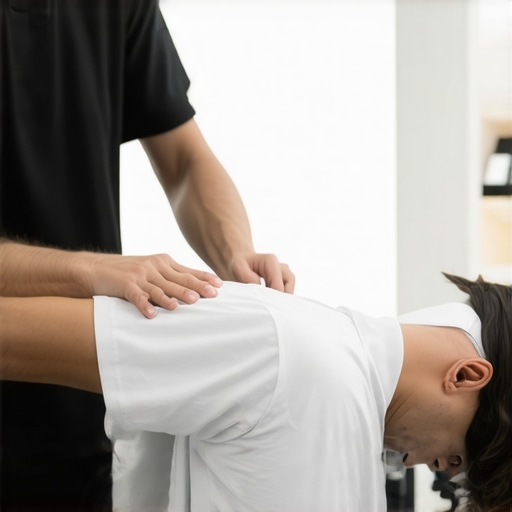
Reset Your Foundation from the Ground Up
I once spent six months wondering why my hip kept clicking every time I squatted. I did all the stretches, but nothing worked. It turned out the issue was not my hip at all—it was my collapsed arches. Your body is a kinetic chain; if the first link is weak, the rest will eventually fail. There is a deep, often ignored hidden link between your ankles and lower back health. If your ankle is stiff or your foot is flat, your knee cringes, your hip rotates, and your lower back takes the hit. By addressing the mechanics of the foot, we stop the domino effect before it reaches the spine.
Check Your Footwear and Gait
Take a look at the bottom of your trainers. If the tread is worn down more on the inside or outside, you are looking at a roadmap of your future injuries. Often, why your running shoes are causing your shin splints is simply because they are amplifying a biomechanical flaw that a spinal adjustment could help correct. Instead of just buying a new pair of shoes, you need to address the mechanical glitch in your gait that caused the wear pattern in the first place. Consistency in alignment ensures that every step you take reinforces your health rather than eroding it.
Stop Pulling on Your Tight Hamstrings
Everyone tells you that if a muscle feels tight, you should stretch it until it gives. In my years of working with athletes, I’ve found that this is often the fastest way to stay injured. We tend to treat ‘tightness’ like a short bungee cord that needs lengthening, but often that sensation is actually your nervous system’s way of creating a ‘brake.’ If your pelvis is out of alignment, your hamstrings might feel tight because they are actually being overstretched and are hanging on for dear life to stabilize your hips. This is exactly why your hamstrings always feel tight even though you stretch them. If you keep cranking on that muscle, you aren’t releasing tension; you’re increasing the neurological alarm bells. In fact, a study published in the British Journal of Sports Medicine highlights that aggressive stretching of acutely strained tissues can actually delay the healing of the micro-tears you’re trying to fix. You have to address the bony alignment first so the muscle feels safe enough to relax.
Why Does That Same Knot Reappear Every Tuesday?
You get a massage, the knot disappears, and by the time you’ve finished your Monday morning commute, it’s back with a vengeance. This happens because most people fall into the trap of treating the ‘victim’ (the painful spot) instead of the ‘criminal’ (the source). I see this constantly with desk workers who complain of arm pain. They rub their forearms for weeks, never realizing why your thumb pain is actually coming from your neck. If the nerve root in your cervical spine is even slightly compressed, it can manifest as a persistent ache or ‘knot’ in the limb. This is why how chiropractic adjustments can alleviate chronic back pain isn’t just about the back; it’s about clearing the path for every nerve that exits the spine. If you don’t clear the source, you’re just putting a band-aid on a leak while the basement continues to flood.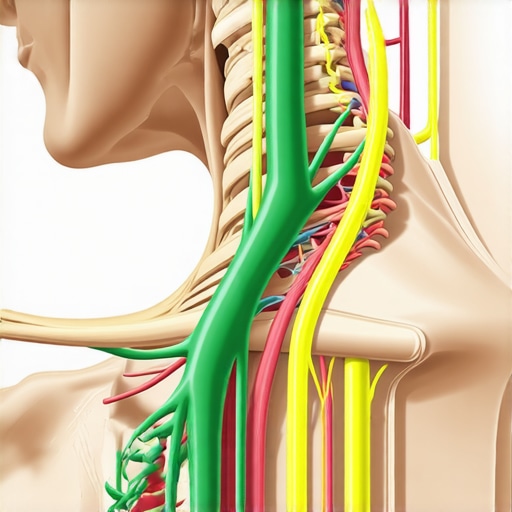
The Danger of the Morning Stretch Routine
Here is a contrarian take that usually shocks my patients: stop stretching the moment you roll out of bed. When you sleep, your spinal discs hydrate and swell slightly. This is a natural, healthy process, but it means that for the first 30 to 60 minutes of the day, your spine is physically more sensitive to flexion. If you jump straight into deep toe-touches or aggressive yoga poses, you are putting massive hydraulic pressure on those discs. I’ve seen countless people ‘throw their back out’ doing nothing more than reaching for their slippers. Understanding why your morning stretches might be making your back more sensitive is a game-changer for long-term spinal health. Instead of stretching, try walking or gentle joint circles to let that extra fluid dissipate naturally. I’ve learned the hard way that there is no prize for being the most flexible person in the room if your joints are unstable. In the world of elite athletics, the truth about no-pain-no-gain in sports rehab is that ‘more’ is rarely ‘better.’ Precision beats intensity every single time. Have you ever fallen into the trap of stretching a ‘tight’ muscle only to have it feel tighter the next day? Let me know in the comments. We need to stop chasing the pain and start chasing the cause. If you’re tired of the cycle, it might be time to boost your sports rehab journey with proven chiropractic strategies that look at your body as a complete, interconnected system rather than a collection of parts.
The Gear That Actually Lives in My Gym Bag
Once you’ve stopped the bleeding—metaphorically speaking—and the acute pain is gone, the real work begins. I’ve seen too many people treat their recovery like a finished book once they leave the clinic, only to find themselves back on the table three months later with the same nagging ache. To prevent that, I rely on a few non-negotiable tools. My absolute favorite is a simple lacrosse ball. I use it because traditional foam rollers are often too blunt; they are like using a sledgehammer when you need a scalpel to release a specific trigger point. Learning how to use a lacrosse ball for better thoracic mobility changed everything for my overhead lifts. It allows me to pin down a tight segment and breathe through the tension, which is much more effective than rolling mindlessly for twenty minutes. If you want to keep the progress you made during your last adjustment, you have to be your own first responder for daily muscle tightness.
How do I keep my spine in check for the long haul?
Maintenance isn’t about doing more; it’s about doing the right things consistently. I shifted my mindset from ‘fixing’ myself to ‘tuning’ myself. This involves essential tips for managing back pain through healthy lifestyle choices, like auditing my workspace every six months. I also make sure I’m hitting the gym with a focus on stability rather than just raw weight. Following strategic chiropractic solutions for long-term back health means understanding that your spine is the anchor of your entire athletic identity. If that anchor is loose, every other movement—from a golf swing to a heavy carry—is compromised. I also swear by the ‘Big Three’ protocol developed by Dr. Stuart McGill, a leading expert in spine biomechanics at the University of Waterloo. His research emphasizes that building ‘core stiffness’ is the secret to protecting the spinal discs from the micro-movements that cause wear and tear over time. This is why I often suggest the best core exercises for people who hate planks; it’s about creating an internal brace that stays active even when you aren’t thinking about it.

The Future of How We Move and Heal
I truly believe we are moving toward an era of ‘Predictive Alignment.’ We are already seeing the rise of wearable tech that can analyze your gait in real-time, warning you when your stride is shifting—a classic sign that your hips are fatiguing or your spine is losing its neutral position. In the future, your chiropractor might receive a notification from your insoles before you even feel a pinch. This proactive approach is the ultimate way of enhancing athletic performance with targeted chiropractic care. By catching these subtle biomechanical shifts early, we can perform a quick adjustment and keep you in the game indefinitely. If you’re ready to take this seriously, I challenge you to try this: for the next seven days, perform 60 seconds of a dead bug or bird-dog exercise before you sit down for lunch. It’s a tiny investment that pays massive dividends in spinal stability. Don’t wait for the pain to return before you start caring for the machine that carries you through life.
The Hardest Truth About Powering Through Injury
One of the biggest shifts in my recovery journey happened when I stopped viewing my body as a machine that breaks and started seeing it as a system that adapts. I realized that “powering through” is often just another way of saying “ignoring the alarm bells.” You have to learn the truth about no-pain-no-gain in sports rehab before you do permanent damage. I also learned that self-adjusting is a slippery slope; why you should stop cracking your own neck for relief became clear when I realized I was just creating hypermobility in the wrong spots while the actual stuck joints remained frozen.
The Daily Kit That Saved My Range of Motion
My routine now revolves around a few specific items that I wish I’d started using a decade ago. Beyond the clinical adjustments, I rely heavily on targeted myofascial release. Knowing how to use a lacrosse ball for better thoracic mobility is the single best way to counteract “desk posture” at home. If a lacrosse ball feels too intense, I always suggest starting with the correct way to use a tennis ball for muscle knots to gently desensitize the area before moving to deeper work. These tools aren’t just for athletes; they are for anyone who wants to stay mobile and pain-free between sessions.
#IMAGE_PLACEHOLDER_E#
Your Body Deserves More Than Just Waiting
Ultimately, your recovery isn’t just about getting back to zero; it’s about building a foundation that is stronger than before the injury occurred. When you integrate essential tips for managing back pain through healthy lifestyle choices with professional the role of chiropractic care in effective sports injury recovery, you stop being a victim of your biology. You start becoming the architect of your own physical performance. It takes courage to stop resting and start moving, but the version of you that is active, aligned, and confident is worth the effort. Have you ever found a specific stretch or tool that actually made your pain worse? Let me know in the comments—I’d love to help you figure out why.