
I remember the smell of stale gym chalk and the sudden, sharp ‘zip’ of pain in my lower back as I locked out the second rep of a heavy set. I was twenty-four, stubborn, and convinced that a massive arch was the only way to move serious weight. I ignored the twinge, finished the set, and spent the next three days struggling to even put on my own socks. That was my lightbulb moment. I realized I was treating my spine like a structural bridge made of glass rather than a stabilized pillar of strength. If you have ever felt that dull ache or a sudden pinch while trying to grow your chest, you are definitely not alone. Today, we are going to dive into the mechanics of why your bench press is secretly sabotaging your spine and exactly how to reclaim your lifts without the nagging pain. Have you ever had to cut a chest day short because your back was screaming louder than your pecs?
Your Chest Isn’t the Only Thing Working on the Bench
In my early days, I made the classic mistake of thinking the bench press was a ‘chest only’ movement. I would let my legs go limp and push my belly toward the ceiling, creating a massive gap between my lower back and the pad. I thought I was being ‘athletic,’ but I was actually just jamming my facet joints together. The reality is that the bench press is a full-body lift. When you lose tension in your midsection, your lumbar spine takes the brunt of that force. You need to learn how to stop your lower back from arching during presses by engaging your core as if someone is about to punch you. It sounds simple, but it is the difference between a PR and a week on the heating pad. Research published by the National Strength and Conditioning Association (NSCA) notes that excessive lumbar extension under load is a primary contributor to repetitive stress injuries in lifters.
Does the bench press always have to hurt my back?
I hear this question from my neighbors and gym partners all the time, and the answer is a resounding no. Pain is not a prerequisite for progress, despite what the old-school ‘hardcore’ crowd might tell you. We need to move past the truth about no-pain-no-gain in sports rehab and start listening to the signals our bodies are sending. Often, that lower back pain is a sign of poor hip mobility or a lack of stability elsewhere in the chain. If you are already dealing with a flare-up, understanding the science behind chiropractic adjustments for back pain relief can be a game-changer for getting you back under the bar faster than just resting on the couch.After we get those initial adjustments done to reset the nervous system, the real work happens on the bench. I used to think that the more I arched, the shorter the bar path, and the ‘stronger’ I was. I was wrong. To move weight safely, you need a stable platform, and that starts with where you put your feet.
The Secret to Spine Safety Starts in Your Feet
Most lifters tuck their feet way back under their hips, which forces the pelvis to tilt forward and jams the lumbar spine. Instead, try moving your feet out slightly and keeping them flat. This simple change allows you to use leg drive to push your shoulders into the bench rather than pushing your hips off the bench. I remember coaching a powerlifter named Sarah who was convinced she had a permanent disc issue. We took a look at her setup and noticed her heels were barely touching the floor. The moment we had her plant her feet firmly and engage her quads, the ‘pinching’ sensation she had felt for years vanished. She was finally using leg drive to stabilize her spine rather than stress it. This is why the hidden link between your ankles and lower back health is so critical even when you are lying on your back.
Keep Your Ribs Down to Protect Your Discs
One of the biggest culprits of back pain on the bench is ‘rib flare.’ When you reach for the bar, if your rib cage pops up toward the ceiling, you have lost your core brace. You need to perform the simple test for rib flare and why it matters for your core before you even unrack the weight. Think of your rib cage and your pelvis as two bowls that need to stay stacked. If you tilt the top bowl back, everything in the middle—your lumbar spine—gets stretched and vulnerable. When you unrack, exhale hard to pull your ribs down and then ‘lock’ them there. This creates a pressurized cylinder of air in your midsection. Learning how to breathe while lifting to protect your pelvic floor is the secret sauce here. 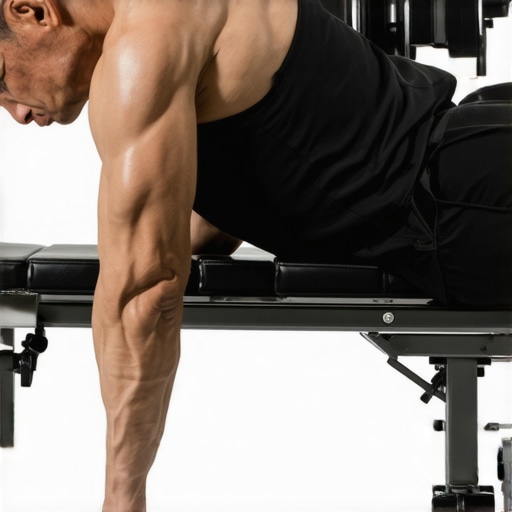
Why Your Glutes Are Your Best Defense
You might have heard that you should squeeze your glutes during a bench press, but most people do it wrong. They squeeze so hard that their hips lift off the pad, which is a one-way ticket to a flare-up. Instead, think about ‘spreading the floor’ with your feet. This engages the lateral glutes and stabilizes the pelvis without forcing it into a dangerous arch. If you are struggling to feel this, it might be because why your glute bridge isnt fixing your lower back pain—you aren’t actually connecting your hips to your core. I once spent three weeks just working on this ‘spread the floor’ cue with a client who couldn’t bench 135 without pain. By the end of the month, he was back to 225, and more importantly, he was doing the best exercises for rebuilding strength after a disc bulge as part of his warm-up. He realized that the bench press wasn’t the enemy; his lack of internal tension was. Finally, don’t forget the upper back. If your shoulders are rounded, your lower back will try to compensate for the lack of range. Using how to use a lacrosse ball for better thoracic mobility before your session can help you get the necessary chest opening without having to arch through your waist. This keeps the movement in the muscles that are designed to handle it.
But even with the best technique, I have seen seasoned lifters hit a wall because they hold onto the outdated idea that their spine is a fragile, static object that just needs to be kept perfectly straight. Let’s dig deeper into the nuance of recovery and why the conventional wisdom often fails the serious athlete. Most people believe that once they feel a pop or a twinge, the only ‘safe’ thing to do is lie flat on their back for a week. I used to think the same until I realized that immobilization actually creates a cycle of fear and muscle atrophy. In reality, your spine thrives on gradual, controlled loading. Research in the British Journal of Sports Medicine has repeatedly shown that movement-based therapy is superior to passive rest for long-term outcomes. This is exactly why bed rest is the worst thing for acute back spasms. By staying active, even just with walking or light bodyweight movements, you maintain the ‘sliding and gliding’ of the tissues that would otherwise become restricted.
The Real Reason Adjustments Work (Hint: It’s Not Just Bones)
Why does my back feel better after an adjustment if the ‘bone wasn’t out of place’?
It is a common misconception in the lifting community that chiropractic care is about ‘shoving things back.’ If a bone were truly out of place (a dislocation), you would be in the emergency room, not the gym. The nuance lies in the neurophysiological response. A targeted adjustment acts as a ‘system reset’ for your nerves. When a joint is restricted, the surrounding muscles often stay in a protective, painful spasm. By providing a quick, specific stimulus to that joint, we can break that cycle. You can discover how chiropractic adjustments can alleviate chronic back pain by looking at it as a way to lower the ‘volume’ on your pain signals. Once the neurological noise is dampened, you can boost your sports rehab journey with proven chiropractic strategies that involve reloading the movement patterns you previously feared. It is not about ‘fixing’ a mechanical misalignment; it is about restoring the brain’s trust in the body.

Stop Aggressively Stretching a Sensitive Spine
The most dangerous ‘trap’ I see lifters fall into is the ‘more is better’ approach to stretching. If your back is irritated, your hamstrings and hip flexors will often feel incredibly tight. This isn’t because the muscle is actually physically short; it’s because the nervous system is using that tension to create artificial stability for a perceived weakness in your spine. If you keep cranking on those muscles with heavy static stretching, you are actually removing the only stability your body has left. This explains why your morning stretches might be making your back more sensitive. Instead of aggressive stretching, try essential tips for managing back pain through healthy lifestyle choices, such as focusing on isometric core holds that build stability without movement. We need to stop treating the symptoms—the tight hamstrings—and start addressing the cause, which is a lack of spinal control. Have you ever fallen into this trap of trying to ‘stretch’ away a sharp pain? Let me know in the comments.
To stay in the game long-term, you need a toolkit that goes beyond just ‘hoping’ your back feels okay after a heavy session. For me, that meant moving away from thin, soft velcro belts to a stiff, 4-inch leather version. I use it not as a crutch, but as a biofeedback device. The rigid leather provides immediate tactile feedback against my abdominal wall, which is essential for reinforcing the correct way to brace your core for heavy carries and heavy presses alike. If I feel that belt lose pressure, I know my spine is at risk. When you are training heavy, you are essentially dancing on the edge of your capacity, and that is where strategic chiropractic solutions for long-term back health come into play. I do not see my chiropractor because I am currently broken; I go because I want to ensure my thoracic spine hasn’t locked up from a month of heavy volume. If I lose mobility there, my lumbar spine inevitably starts doing extra work it was never designed for. This proactive approach is a core part of the role of chiropractic care in effective sports injury recovery.
How do I keep my spine resilient for the long haul?
Consistency is the boring answer that actually yields results. You have to treat your warm-up as a non-negotiable ritual rather than a suggestion. I personally use a loadable mace for 360-degree swings to prime my shoulders and core simultaneously. This ensures I am enhancing athletic performance with targeted chiropractic care principles by integrating total-body tension before the bar ever touches my chest. If you do happen to feel a sudden twinge during a set, knowing how to manage a flare-up of chronic lower back pain without panicking is what separates the veterans from the novices who end up sidelined for months.
Wearable Sensors and the Next Decade of Lifting
Looking ahead, I predict we are going to see a massive shift toward wearable surface EMG (sEMG) sensors integrated directly into gym apparel. Imagine your smartphone buzzing the second your core tension drops or your lumbar spine exceeds a safe arch degree during a set. Until that technology is commercially viable, you have to be your own sensor. A great exercise I recommend to build this internal awareness is the ‘dead bug’ performed while holding a medicine ball between your opposite knee and elbow. 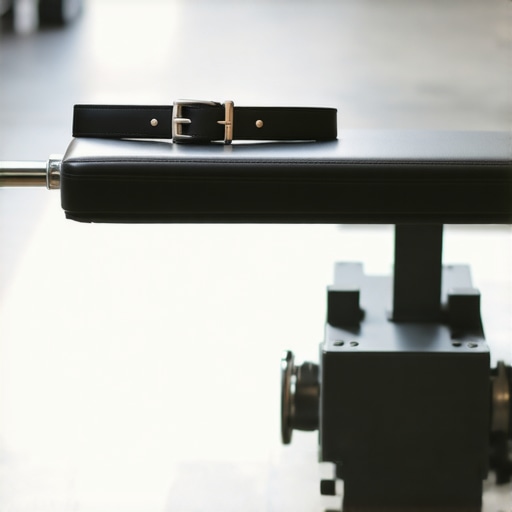 According to Dr. Stuart McGill, a world-renowned expert in spinal biomechanics in his seminal book Back Mechanic, the ‘Big 3’ exercises—bird-dog, side plank, and modified curl-up—are essential for building the muscular ‘guy-wires’ that stabilize the spine under load. I perform these every morning, and since I started, my recovery time between heavy sessions has dropped significantly. You can boost your sports rehab journey with proven chiropractic strategies by adding these to your daily routine today. Go try a high-tension side plank with a focus on ‘rib-down’ positioning right now and feel the difference in your spinal stability.
The Hardest Lessons I Learned While Chasing a 400-Pound Bench
Looking back at my recovery journey, I realized that progress isn’t linear. First, the ego is the biggest injury risk in the gym. I used to add weight when I knew my core wasn’t braced, and I paid for it in sleepless nights. Second, I learned that how to tell the difference between muscle soreness and a real injury is a skill you must develop to protect your longevity. If the pain is sharp, radiating, or lasts more than 48 hours, it is time to stop and reassess. Finally, I stopped viewing my chiropractor as a ‘fixer’ and started seeing them as a partner in performance. When you revolutionize your rehab with chiropractic techniques for faster recovery, you stop fearing the bar and start respecting the body’s internal signals.
The Tools That Kept Me From Quitting
If you are serious about lifting without pain, there are a few resources I swear by personally. Dr. Stuart McGill’s “Back Mechanic” is the absolute gold standard for understanding spinal hygiene and stability. I also highly recommend investing in a high-quality leather lifting belt; the tactile feedback it provides against your abs is more valuable than the actual mechanical support. If you are unsure where to start your recovery, understanding the real difference between a chiropractor and a PT can help you choose the right path for your specific mechanical issues. Lastly, I keep a lacrosse ball in my gym bag to address upper back knots before they cause your lumbar spine to compensate. Combining these tools with essential tips for managing back pain through healthy lifestyle choices creates a bulletproof foundation for any athlete.
#IMAGE_PLACEHOLDER_E#
Your Spine Was Built to Handle the Load
It is easy to feel defeated when your back acts up, but remember that your body is incredibly adaptable and resilient. You are not “broken,” and you do not have to give up the lifts you love just because of a temporary setback. By refining your setup and integrating sports rehab principles into your daily routine, you can return to the platform stronger and more confident than before. Don’t let fear dictate your training volume. Take the small steps today—fix your foot position, keep your ribs down, and master your brace—and the heavy weights will follow naturally. Have you ever felt a sharp pinch during a heavy set and wondered if you should keep going? Let me know your experience in the comments below.