
I remember pulling into my driveway after a six-hour trek back from the mountains, feeling like my lower body had been fused into a permanent ‘L’ shape. I opened the car door, swung my legs out, and… nothing. My hips were so locked up I had to use the door frame to pull myself into a standing position. It was embarrassing, painful, and honestly, a bit scary. For years, I made the classic rookie mistake of thinking my back was the primary issue. I would spend twenty minutes on a foam roller after a trip, wondering why my sciatica gets worse when I drive long distances despite all that effort. It turns out, I was looking at the wrong part of the map. The real culprit wasn’t my spine—it was my hip flexors, which had shortened and tightened so much they were literally yanking my pelvis out of alignment.
My Six-Hour Road Trip Turned My Hips into Stone
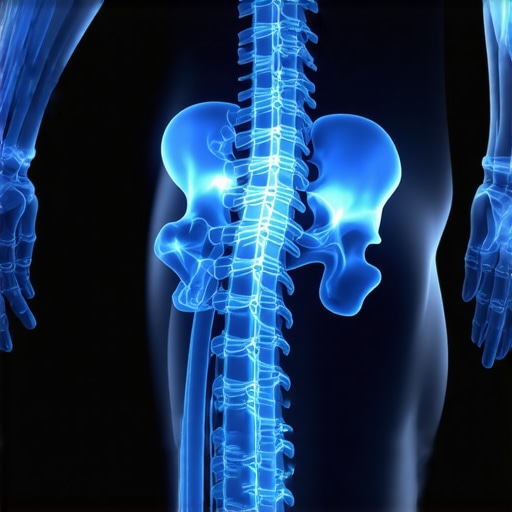
When you sit in a car for hours, your psoas and iliacus muscles are in a constant state of contraction. They get used to that shortened position. Then, the second you try to stand up, they refuse to let go, pulling your lower back forward and causing that dull, deep ache that makes you walk like a penguin. I used to think I just needed to ‘get stronger,’ but the truth is, no amount of gym time can counteract the physical compression of a long drive if you don’t know how to hit the reset button. I finally realized that learning how to fix your posture while driving long distances is only half the battle; the other half is what you do the moment you step out of the vehicle. Have you ever felt that sharp pinch in your groin or a heavy tightness in your tailbone the second you stand up at a gas station?
Is This One Small Move Actually Worth the Hype?
You might be skeptical. I certainly was. I’ve tried the fancy lumbar pillows and the expensive seat cushions, but they mostly just mask the problem. One of my biggest early mistakes was thinking I could just ‘walk it off’ or do a quick standing quad stretch and be fine. But a simple quad stretch doesn’t reach the deep-seated psoas that connects directly to your lumbar spine. Research published in the Journal of Physical Therapy Science suggests that prolonged sitting doesn’t just make you stiff; it actually alters your pelvic tilt and reduces your overall hip range of motion significantly. Today, I’m going to show you the exact ‘half-kneeling reset’ I use to realign your pelvis after travel or a long flight. This isn’t just about feeling better for five minutes; it’s about protecting your discs from the shearing force caused by tight hips. Before we dive into the mechanics, tell me: what is the longest drive you’ve done where your back felt like it was going to snap? Let me know, and let’s get you moving again without the ‘stiff-man’ walk. To really get deep, you need to understand the best way to stretch your psoas without hurting your spine, which is exactly where we are headed next.
The Three-Step Sequence to Unlock Your Lower Back
To fix the ‘stiff-man’ walk, you have to treat your hip flexors like a tangled bungee cord. If you just pull on them without untying the knot, they will simply snap back harder once you release. Most people think they are stretching their hips when they do a deep lunge, but they are actually just arching their lower back and jamming their facet joints together. This is a common reason why your glute bridge isnt fixing your lower back pain—you are using spinal compensation instead of true muscular engagement. By forcing the range of motion through your lumbar spine, you keep the psoas in its shortened state while irritating the nerves in your back.
The Setup That Actually Works
Step one is the half-kneeling position. Drop one knee to the ground—use a floor mat or even a rolled-up sweatshirt if you are at a gas station. Your front and back legs should both form 90-degree angles. This is where most people fail because they immediately lean forward with their chest. Don’t do that. If you want to discover how chiropractic adjustments can alleviate chronic back pain, you have to understand that joint alignment must come before muscle intensity. If the joint is ‘locked’ in a bad position, the muscle will not let go no matter how hard you pull.
Tuck Your Tailbone to Save Your Spine
The ‘secret sauce’ to this reset is the posterior pelvic tilt. Imagine your pelvis is a bucket filled with water. When you sit for six hours, that bucket tips forward, spilling water out the front. You need to tuck your tailbone underneath you to level that bucket out. I remember trying this at a muddy rest stop outside of Omaha after a brutal 10-hour haul. I must have looked ridiculous to the truckers—standing by my open trunk, aggressively tucking my tailbone—but the moment I felt that deep, localized pull in the very top of my hip, I knew I had finally hit the reset button. It stopped that ‘shearing’ sensation in my lumbar spine instantly. This move is foundational to the correct way to brace your core for heavy carries later on.

The One-Inch Lean That Changes Everything
Once you have the tilt locked in, lean forward just one or two inches. That is all it takes. If you go further, you are likely losing the tilt and putting the stress back on your discs. This controlled tension is vital. If you feel a small click during this movement, do not panic; the science behind that popping sound in your joints is usually just gas bubbles shifting within the joint capsule, not your bones grinding. This sequence forces the psoas to lengthen from its attachment point on the spine without dragging the spine along for the ride.
If you are still feeling stuck after your trip, consider why your desk chair is making your hip flexors tight during your regular work week as well. The adaptation happens over hundreds of hours, so the fix needs to be intentional and frequent. You might also notice that when you get back to the gym, your squat depth feels restricted. Learning how to fix the butt wink in your deep squat often starts right here, by regaining the ability to control your pelvic tilt independently of your leg movement. Without this control, your lower back will always be the first thing to give out under a load.
Even after mastering the half-kneeling reset, many people find themselves back at square one a week later. They assume they just need to stretch harder or find a more ‘aggressive’ therapist. But here is the contrarian truth that most people miss: that feeling of ‘tightness’ in your hips or hamstrings isn’t always because the muscle is short. Often, it is protective tension. Your brain is intentionally tightening those muscles because it doesn’t trust your spine to stay stable. If you keep pulling on a muscle that the brain is using as a kickstand, your nervous system will simply tighten it further to compensate. This is exactly why your hamstrings always feel tight even though you stretch them daily; you are fighting your own biology rather than working with it.
Why Does My Back Lock Up Again Just Hours After an Adjustment?
I hear this constantly from patients who feel amazing for twenty minutes after a session and then ‘click’ right back into pain. The adjustment is the ‘reboot’ for the computer, but the movement patterns are the software. If you get a high-velocity adjustment to realign your vertebrae but then immediately go back to sitting with a rounded lumbar spine, your brain will revert to the only ‘safety’ pattern it knows. To see real change, you have to pair expert chiropractic adjustments that work with active stability. Research in the Journal of Bodywork and Movement Therapies indicates that passive treatments alone are significantly less effective than those combined with ‘active’ motor control training. Without the stability piece, you are essentially trying to build a house on a foundation of Jell-O.
The Trap of the ‘No Pain, No Gain’ Rehab Mentality
The biggest ‘oops’ factor I see in sports rehab is the tendency to push through sharp pain during a stretch. We have been conditioned to think that if a little bit of stretching is good, a lot of intense, face-scrunching pain must be better. In reality, the truth about no pain no gain in sports rehab is that it often triggers a guarding reflex. When you feel that sharp ‘zap,’ your muscle spindles fire a message to the brain saying, ‘We are about to tear!’ The brain responds by locking the muscle down even tighter. This is a common reason why your morning stretches might be making your back more sensitive rather than more mobile. You aren’t ‘breaking through’ scar tissue; you are irritating a nerve that is already on high alert.
Stability Is the Secret to Long-Term Mobility
If you want to move beyond temporary relief, you must focus on enhancing athletic performance with targeted chiropractic care that prioritizes joint centration. This means teaching your muscles how to hold the joint in the center of the socket. For example, if your hip isn’t centered, the psoas will always feel ‘tight’ because it’s trying to pull the femur back into place. No amount of foam rolling will fix a bone that is physically out of its ideal track. This is why strategic chiropractic solutions for long-term back health involve looking at the feet and the neck just as much as the lower back. Have you ever fallen into the trap of stretching the same ‘tight’ spot for months without seeing any permanent improvement? Let me know in the comments, and let’s figure out if you’re actually dealing with weakness disguised as tension.
Once you’ve moved past the initial ’emergency’ phase of back pain, the real challenge begins: keeping it from coming back. I’ve spent thousands of dollars on gadgets over the years, from vibrating massage guns to gravity boots, but I always come back to two things that cost less than a lunch in downtown Omaha. The first is a simple lacrosse ball. Unlike a foam roller, which is too broad to hit the tiny stabilizer muscles along the spine, a lacrosse ball allows for pinpoint pressure. I’ve found that knowing how to use a lacrosse ball for better thoracic mobility is the single most effective way to prevent that mid-back ‘burn’ that starts after a long day at the computer. I keep one in my glove box and one in my gym bag; it’s my personal reset button for those days when my posture starts to fail.
The Two Cheap Tools I Refuse to Travel Without
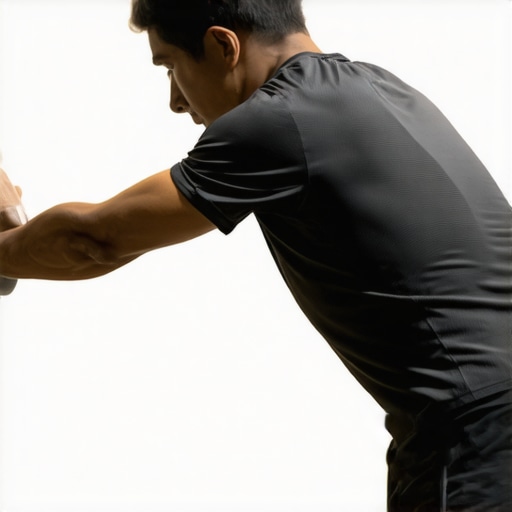
The second tool isn’t a physical object, but a mental one: the concept of ‘spinal hygiene.’ Dr. Stuart McGill, the world-renowned spine biomechanist and author of Back Mechanic, explains that back health isn’t about one big workout, but the cumulative effect of how you move every single hour. I’ve learned to apply this by treating every movement as a ‘rehab’ rep. Whether I’m picking up groceries or a heavy barbell, I focus on the correct way to brace your core for heavy carries. This internal pressure creates a ‘natural weight belt’ that protects your discs far better than any external brace ever could. If you aren’t bracing your 360-degree core—front, sides, and back—you are essentially leaving your spine to fend for itself under load.
How do I keep my back healthy without living at the clinic?
Maintenance is about consistency, not intensity. I tell my patients that ten minutes of mobility work every morning is worth more than a two-hour yoga session once a month. To stay ahead of the curve, you need to incorporate essential tips for managing back pain through healthy lifestyle choices, such as staying hydrated to keep your spinal discs plump and moving every 30 minutes to prevent ‘creep’—the physical deformation of tissues under constant load. I personally use a simple haptic feedback sensor on my upper back that vibrates when I slouch. It’s annoying, but that annoyance is exactly what’s needed to rewire the brain’s default setting for posture. This is a core part of strategic chiropractic solutions for long-term back health; we want to make good movement automatic so you don’t have to think about it.
The High-Tech Future of Watching Your Back
Looking forward, I predict we are going to see a massive shift toward wearable biofeedback technology. We are moving away from passive ‘fixes’ and toward real-time data that tells us exactly when our form is breaking down during a run or a lift. This will boost your sports rehab journey with proven chiropractic strategies by allowing us to see ‘hidden’ compensations before they turn into injuries. Imagine an app that pings your phone the moment your pelvic tilt shifts during a deadlift—that’s where we are headed. For now, your best move is to start small. **Try this today:** The next time you feel that ‘stiff-man’ sensation after a drive, don’t just stretch. Use the half-kneeling reset we discussed earlier, then immediately go for a brisk 5-minute walk. Pairing a mobility drill with active movement ‘locks in’ the new range of motion in your nervous system. If you want to dive deeper into these mechanics, we have more to cover regarding the specific way your gait influences your spine.
Lessons from a Decade of Fighting My Own Hips
I used to think my body was just ‘broken’ or that I had ‘bad genetics’ for sitting. The hardest lesson I learned is that my brain was actually trying to protect me. When I felt that intense tightness in my front hips, it wasn’t a call to stretch harder; it was a signal that my core stability was failing. I realized that if I didn’t address the neurological side of the equation, I was just spinning my wheels. Another ‘lightbulb moment’ was discovering that the science behind chiropractic adjustments for back pain relief isn’t about clicking bones—it’s about down-regulating that protective tension so your muscles can actually relax. I also found that the role of chiropractic care in effective sports injury recovery is as much about education as it is about the physical adjustment. You have to learn how to move in the ‘gaps’ between your sessions.
What I Keep Within Arm’s Reach for Daily Maintenance
#IMAGE_PLACEHOLDER_E#
To stay mobile, I’ve narrowed my toolkit down to the absolute essentials. First, I never travel without a high-density lacrosse ball; it’s the only way I’ve found to effectively manage trigger points on the go. Knowing how to use a lacrosse ball for better thoracic mobility changed the game for my mid-back stiffness. Second, I highly recommend reading Dr. Stuart McGill’s Back Mechanic—it’s the gold standard for understanding how to load your spine safely. Lastly, I advocate for essential tips for managing back pain through healthy lifestyle choices, like maintaining a high-protein diet for tissue repair and consistent hydration. These aren’t just ‘extra’ steps; they are the foundation that makes everything else work.
Your Next Drive Doesn’t Have to Be Painful
Movement is a skill, and like any skill, it gets better with practice. Don’t wait until you are crawling out of your SUV to think about your spine. Start implementing these small shifts now, and you’ll find that ‘road trip fatigue’ becomes a thing of the past. The goal is to reach a point where you aren’t constantly searching for unlocking back pain relief expert chiropractic adjustments that work because your daily habits are already doing the heavy lifting. You have the tools, the sequence, and the knowledge—now it’s time to put them into play. Your back—and your sanity—will thank you for it. What was the longest stretch you’ve driven without stopping, and how did your back feel when you finally stood up? Share your experience in the comments below!