
I remember the exact moment I realized my fitness routine was a lie. I was lying on the cold bathroom floor, staring at a basket of laundry, unable to move because my lower back had just seized up again. This was after six months of daily glute bridges. I thought I was doing everything right. I was ‘activating’ the right muscles, or so I thought, but the reality was my spine was taking a beating while my glutes were essentially taking a nap. If you have been doing your bridges but still feel like you are walking on eggshells, I have been right where you are. We are going to fix that today by looking at the real mechanics of spinal stability.
The frustrating truth about that standard bridge exercise
Most of us are taught that strong glutes are the cure-all for lumbar issues. While that is true in theory, the execution is where we stumble. Early in my journey, I used to crank out fifty reps a day, thinking volume would save me. In reality, I was just reinforcing bad habits. If you find that your lower back hurts only after you wake up or after a light workout, you might be doing exactly what I did: using your lumbar extensors to lift your hips instead of your gluteus maximus. This is a classic mistake in effective sports injury recovery where we focus on the movement rather than the muscle. We are going to stop the back-cranking today and start building real posterior strength.
Is the glute bridge actually worth the hype?
It is a fair question to ask when you are in pain. When you feel like you are doing the work but the ache persists, you start to wonder if the exercise is just a fad. The bridge is a foundational movement, but it is not a magic pill. In fact, research published in the Journal of Orthopaedic & Sports Physical Therapy suggests that without proper pelvic tilt, hip extension exercises can actually increase shear force on the lumbar spine. This is a primary reason why most core exercises actually make lower back pain worse if your form is off by even a fraction of an inch. Have you ever felt your lower back ‘tighten’ or cramp while trying to squeeze your glutes? If so, you are likely bypassing your glutes entirely.
Why your glutes are still sleeping during your workout
Here is the deal: if your brain cannot talk to your butt, your back will volunteer for the job every single time. It is called compensatory movement, and it is a hard habit to break. I spent years in a cycle of ‘activation’ that never actually reached the target. I had to learn the hip hinge secret for people with chronic lumbar issues to finally feel the difference. Today, we are going to break down exactly why your current bridge is failing you and how to rewire that connection. We will dive into why your glutes won’t fire during your workout and the specific adjustments needed to stop the cycle of chronic tension and finally get back to the activities you love.
Fix your pelvis before you lift an inch
To stop your back from taking over, you have to treat your pelvis like a bucket of water. If your bucket tilts forward, the water spills out, your back arches, and your glutes go on vacation. This is often where why most core exercises actually make lower back pain worse. Before you even think about lifting your hips, you need to perform a posterior pelvic tilt. Imagine pulling your belly button toward your chin until your lower back is glued to the floor. I remember when I first tried this; I was shocked at how much effort it took just to keep my spine flat. I realized my back had been ‘arching’ its way through life for years. By flattening the spine first, you create a rigid lever that forces the hips to do the heavy lifting rather than the lumbar joints. This simple shift is a cornerstone in effective sports injury recovery because it protects the delicate structures of the spine while loading the big muscles.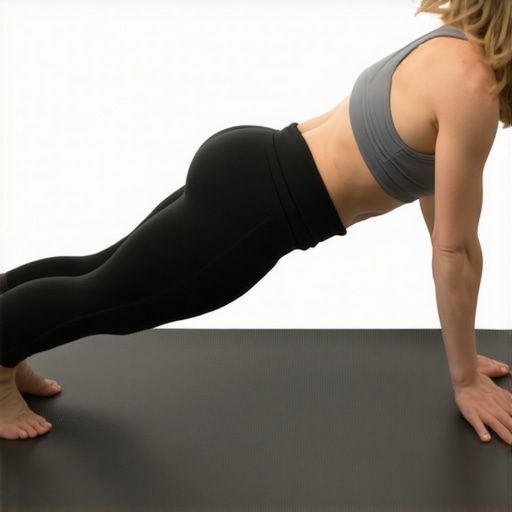
Drive through your heels to wake up the posterior chain
Most people treat the bridge like a vertical lift, but it is actually a diagonal push. If you push through your toes, your quads and hip flexors will dominate the movement, which pulls on your lower back. Instead, think about driving your heels into the ground as if you are trying to push the floor away from your head. This ‘distal’ drive is exactly why your glutes won’t fire during your workout when your foot placement is off. When I finally started focusing on heel pressure, I felt a deep, localized burn in my glutes that I had never experienced before. It was like finally finding the right key for a lock that had been stuck for years. If you struggle with this, you might also want to look into the 45-second drill to improve your ankle dorsiflexion, as stiff ankles can often force the weight onto your toes.
Stop guessing where the top of the movement is
The biggest mistake I see—and one I made for far too long—is ‘over-bridging.’ We think higher is better, so we thrust our hips toward the ceiling until our back looks like a bow. The moment your ribs flare up, you have lost your core tension and are now crushing your facet joints. You need to learn the simple test for rib flare and why it matters for your core to find your true end-range. Your ‘top’ position should be a straight line from your knees to your shoulders, no higher. I used to use a mirror to check this, and I was embarrassed to see that my ‘full’ bridge was actually a massive lumbar arch. When I shortened the range of motion to stay within my hip extension limits, the back pain vanished instantly. This is a common theme when learning how to stop your lower back from arching during presses or any other compound movement. Focus on the quality of the squeeze at the top rather than the height of the lift.
Use your breath as a natural weight belt
Your breath is the secret sauce for spinal stability. If you hold your breath in your chest, your internal pressure drops, and your spine becomes ‘floppy.’ You must learn how to breathe through your belly for instant lower back relief during the bridge. Inhale into your stomach as you lie flat, then exhale sharply through pursed lips as you drive your heels down. This exhale ‘sets’ your ribs and keeps your core braced. Last Tuesday, I was working with a client who had chronic L5-S1 issues, and simply changing their breathing timing stopped their ‘bridge-related’ back twinges in a single set. It creates an internal airbag that supports the spine from the inside out.Most people view a chiropractic adjustment as a quick fix, like a mechanic realigning a car’s tires. But here is the contrarian truth: the adjustment isn’t the cure; it’s the window of opportunity. I spent years chasing that ‘pop’ only to find the pain returned two days later. The reality is that the truth about why your adjustments don’t seem to last often comes down to what you do the moment you leave the clinic. If you don’t reinforce that new range of motion with the stability drills we just discussed, your nervous system will default back to its old, painful ‘safety’ settings. Unlocking back pain relief with expert chiropractic adjustments that work requires you to be an active participant, not a passive observer. Have you ever fallen into this trap? Let me know in the comments.
Why your adjustments don’t stick without active movement
Many athletes make the mistake of treating rehab like a buffet—they pick the adjustments but skip the ‘homework.’ This is a dangerous trap. When a joint is restricted, the surrounding muscles tighten up to protect it. An adjustment restores the joint’s motion, but it doesn’t automatically retrain the ‘guarding’ muscles. According to a study in the Journal of Manipulative and Physiological Therapeutics, patients who combined spinal manipulation with targeted exercise therapy showed significantly better long-term outcomes than those who received adjustments alone. This is exactly why the truth about no pain no gain in sports rehab is so nuanced; it’s not about pushing through agony, but about consistently loading the correct tissues after the ‘reset.’ 
Stop stretching your way into more pain
If your lower back feels tight, your first instinct is probably to stretch your hamstrings or touch your toes. But what if that ‘tightness’ is actually tension created by your nervous system to stabilize a weak spine? In this case, stretching is the worst thing you can do. I’ve seen dozens of people whose hip flexors are still tight after a year of stretching because the brain is keeping them tight for a reason. If you keep pulling on those muscles without addressing the underlying stability, you’re essentially picking a scab that refuses to heal. This is the ‘Oops’ factor in many self-rehab attempts: mistaking a stability problem for a flexibility problem.
Is your ‘stiff’ back actually a cry for more stability?
It’s an advanced question that separates the pros from the amateurs. When we look at chronic issues, we have to determine how to identify if your back pain is muscular or nerve related. Often, that ‘stiff’ feeling is the body’s way of creating a muscular ‘cast’ around a segment of the spine that it doesn’t trust. If you try to ‘break’ that cast with aggressive stretching or heat without adding the stability of the bridge and the breath we covered earlier, your body will only tighten up harder the next day. Furthermore, many people are still told to ice their back for chronic aches, but why icing your lower back might be slowing down recovery is a crucial point; cold can actually increase that protective muscle guarding. Instead, focus on the neurological connection—teach your brain that the spine is safe through movement, not just through numbing it.
Keep the engine running with these specific daily tools
I have spent thousands of dollars on gadgets that promised to fix my back, from vibrating massage chairs to complicated traction devices. Most of them are currently gathering dust in my garage. If you want to stop the cycle of recurring pain, you don’t need a high-tech gym; you need a few high-precision tools. My absolute favorite is the standard lacrosse ball. Unlike a bulky foam roller, a lacrosse ball allows you to pin down specific trigger points in the glute medius and the quadratus lumborum. I recommend learning how to use a lacrosse ball to melt away mid-back knots because it targets the fascia in a way that generalized rolling simply can’t. By applying static pressure to a ‘hot spot’ for 90 seconds while breathing deeply, you’re essentially performing a self-directed manual release.
How do I keep my back healthy without living at the clinic?
The secret to long-term success isn’t finding one magic exercise; it is about building a lifestyle that supports your structure. I used to think I could ‘cancel out’ eight hours of sitting with a twenty-minute workout. I was wrong. True maintenance comes from essential tips for managing back pain through healthy lifestyle choices, such as frequent movement breaks and optimizing your environment. For example, if you commute more than thirty minutes, you must learn how to optimize your car seat for lumbar support. According to Dr. Stuart McGill, a world-renowned spine biomechanics expert and author of ‘Back Mechanic,’ the cumulative load on your spine from poor sitting posture often outweighs the benefits of your morning stretches. We have to stop the micro-trauma before we can enjoy the long-term gains of strategic chiropractic solutions for long-term back health.
Why heat beats ice for your long-term recovery strategy
We’ve been conditioned to reach for the ice pack the moment we feel a twinge. While ice is great for a fresh ankle sprain, it’s often the wrong choice for chronic back stiffness. When your back feels like a rusty hinge, you need blood flow, not vasoconstriction. This is why you should stop icing old injuries and use heat instead to promote tissue elasticity. I personally use a moist heating pad for fifteen minutes before I do my glute bridges. It ‘pre-heats’ the muscles, making them more receptive to the movement. This synergy between temperature and movement is a core part of the science behind chiropractic adjustments for back pain relief, as it helps the nervous system relax enough to accept the new alignment.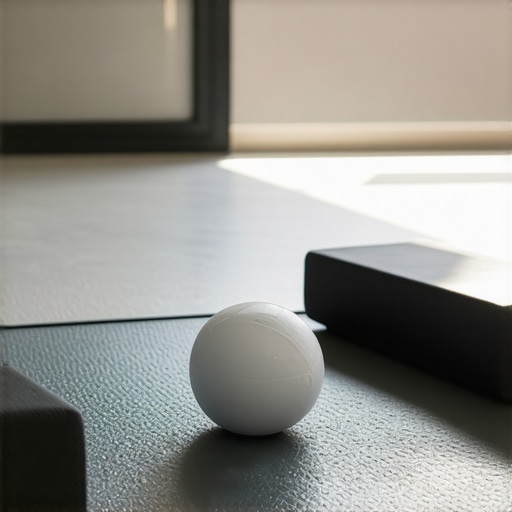
The future of spinal rehab is in your pocket
Looking ahead, I predict we are going to see a massive shift toward wearable biofeedback. We are already seeing apps that use your phone’s camera to track your squat depth and rib flare in real-time. This ‘digital coach’ approach will make it much easier to maintain your results between clinic visits. Instead of guessing if your spine is neutral, you’ll get a haptic buzz on your wrist the moment you start to slouch. This level of awareness is the ultimate goal of enhancing athletic performance with targeted chiropractic care. For today, I want you to try one advanced tip: the next time you do your bridges, place a small yoga block between your knees and squeeze it. This engages the adductors, which stabilizes the pubic symphysis and makes the glute contraction even more intense. Give it a shot and feel the difference in your stability.
Hard Truths I Learned from My Own Lumbar Failures
One of the biggest lightbulb moments for me was realizing that feeling strong in the gym did not mean I was functional in real life. You can deadlift heavy weight and still throw your back out reaching for a toothbrush if your deep stabilizers are not firing correctly. I also learned that the best way to revolutionize your rehab chiropractic techniques for faster recovery is not just about what happens in the clinic—it is about the twenty-three hours a day you spend outside of it. My biggest breakthrough came when I stopped trying to beat the pain and started listening to what my movement patterns were actually telling me. It is rarely about one single weak muscle; it is about a neurological conversation between your brain and your body that has gone mute. When you finally stop the compensatory patterns, the results follow remarkably fast.
My Go-To Kit for Maintaining Structural Integrity
If you are looking for where to focus next, I highly recommend checking out Back Mechanic by Dr. Stuart McGill. It is the gold standard for spine health and offers a profound look at how to protect your discs during daily activities. Combine that knowledge with ways to boost your sports rehab journey with proven chiropractic strategies and a quality moist heating pad to keep your tissues supple. I also swear by a firm yoga block for adductor engagement during your bridges; it is a simple tool that provides a game-changing boost for pelvic stability that most people overlook. These tools help bridge the gap between professional care and personal maintenance, ensuring you are always moving forward.
Your Journey to Lasting Stability Starts Now
Reclaiming your mobility is rarely a linear path, but every bridge you perform with a neutral spine is a deposit into your long-term health. Don’t let a bad week or a minor flare-up discourage you from the process. By understanding how chiropractic adjustments can alleviate chronic back pain and pairing those sessions with consistent, mindful movement, you can build a foundation that supports the active life you deserve. Your back is remarkably resilient once you stop fighting it and start supporting it with the right mechanics. Integrating essential tips for managing back pain through healthy lifestyle choices will ensure that the progress you make today lasts for years to come. Have you ever noticed your lower back arching during a bridge, and what specific cue finally helped you keep it flat? Let me know in the comments below.