
I remember sitting on the floor of my local box, rubbing a shoulder that felt like it had been through a meat grinder. I’d just failed a heavy overhead squat for the third time that week. It wasn’t my legs. It wasn’t my drive. It was the fact that every time I pushed that bar up, my body turned into a visceral question mark. My ribs flared, my back arched, and my shoulders screamed for mercy. I was making a classic mistake: I thought more intensity would fix a mechanical failure. It took a session with a sports-focused chiropractor to show me that I wasn’t actually mobile—I was just really good at cheating. We’re going to fix that today. I’m going to show you the one overhead mobility test that every CrossFit athlete needs to pass before they even think about adding another plate to the bar.
Stop Faking Your Overhead Positions and Start Testing Them
The biggest lie we tell ourselves in the gym is that if the bar gets from point A to point B, the movement was a success. It wasn’t. If you’re arching your lower back during presses just to get your arms vertical, you’re essentially borrowing stability from your spine to pay for a debt in your shoulders. I did this for years. I’d walk out of a WOD feeling stiff, thinking it was just part of the grind. In reality, my lack of thoracic extension was forcing my lumbar spine to do a job it wasn’t designed for. You need to know how to check your own shoulder mobility without the ego getting in the way. A study published in the British Journal of Sports Medicine notes that restricted shoulder range of motion is a primary predictor of impingement and overhead-related injuries in functional fitness athletes. It’s not just about the PR; it’s about staying in the game for the long haul.
Is This Simple Test Really Worth My Training Time?
Look, I get it. You have 60 minutes for your class. You want to lift heavy and sweat, not stand against a wall and slide your arms around. You might think your mobility is fine because you can technically lock out a bar. But are you actually stable? When I first failed the Back-to-Wall Shoulder Flexion test, I was genuinely shocked. I could snatch decent weight, but I couldn’t touch my thumbs to the wall without my ribs jumping out of my skin. That gap is exactly where injuries live. If you’ve ever wondered why your shoulder pinches during overhead presses, this test is the diagnostic tool you’ve been missing. Have you ever felt that sharp, annoying catch in your shoulder when going for a heavy rep? Today, we are going to dive into the Back-to-Wall test. It’s the gold standard because it removes your ability to cheat. No arching, no leaning, just pure, unadulterated joint range of motion. If you can’t pass this, your overhead lifts are a ticking time bomb for your rotator cuffs.
The One Drill to Expose Your Hidden Mobility Gaps
To start fixing your overhead position, you need an honest audit. The Back-to-Wall Shoulder Flexion test is that audit. It is the anatomical equivalent of a lie detector test. When I first attempted this, I was convinced my mobility was elite. I’d been hitting overhead squats for years, right? But the second my heels, glutes, and head touched that drywall, the truth came out. I couldn’t even get my arms past my ears without my lower back peeling away from the wall like a piece of old scotch tape. I realized I wasn’t lifting with my shoulders; I was lifting with my lumbar spine. This is why how spinal alignment directly impacts your athletic performance isn’t just a catchy phrase—it’s the difference between a PR and a disc herniation.
Get Your Spine Flatter Than a Pancake
Stand with your feet about six inches away from a wall, but lean your entire back against it. Your glutes, mid-back, and the back of your head must maintain contact at all times. Here is the kicker: you must eliminate the space between your lower back and the wall. Imagine there is a hundred-dollar bill behind your lumbar spine and you can’t let someone pull it out. This setup forces your thoracic spine to do the heavy lifting rather than letting your lower back take over. If you struggle to keep that contact, you likely need to learn how to stop your lower back from arching during presses before you go heavy again. 
Stop Letting Your Ribs Win the Tug of War
Once you are pinned against the wall, slowly raise your arms straight up, thumbs leading the way, until they touch the wall above your head. If your ribs start to poke out or ‘flare’ toward the ceiling, you’ve failed. This rib flare is a mechanical compensation for tight lats and a stiff mid-back. Think of your rib cage and pelvis like two bowls of water; they should stay level and facing each other. If one tips, the water spills and your core stability vanishes. You can use the simple test for rib flare and why it matters for your core to see if your breathing mechanics are the hidden culprit behind your stiff shoulders. When I finally mastered keeping my ribs down, the ‘pinch’ I always felt in my traps during snatches virtually disappeared.
Reset the Foundation for a Solid Lockout
If you failed the test, don’t panic. It means your ‘scaps’ aren’t sliding the way they should. The shoulder blade is the base of support for your entire arm. If it’s stuck, the joint has to grind to find range. Using the scapular setting trick for pain-free pull-ups can help retrain your brain to position the shoulder blade correctly before you initiate any overhead movement. Incorporating these small, intentional shifts into your warm-up can boost your sports rehab journey with proven chiropractic strategies that focus on function rather than just temporary relief. By treating your body like a precision machine rather than a blunt instrument, you stop the cycle of ‘grinding’ through pain and start building a platform for real power.Most athletes think that if something feels ‘tight,’ the solution is to stretch it until it yields. I’m here to tell you that’s often the fastest way to stay injured. In my years of clinical practice and my own training, I’ve realized that ‘tightness’ is usually a neurological defense mechanism. If your shoulder joint is unstable, your brain will ‘brake’ the system by tightening the surrounding muscles to protect the joint. If you override that brake with aggressive stretching, you’re essentially removing the only thing keeping your joint safe. This is why you might feel like your hip flexors are still tight after a year of stretching. You aren’t addressing the underlying instability; you’re just pulling on a rope that’s already at its limit.
Stop Pulling on Your Tight Muscles
When you force a joint into a range it can’t muscularly support, you’re asking for a labrum tear or a persistent impingement. We’ve been conditioned to believe in the truth about no pain no gain in sports rehab, but when it comes to mobility, forcing through a ‘pinch’ is a recipe for disaster. Instead of more stretching, you likely need more ‘centration’—the ability of the joint to stay perfectly centered while moving. If the humerus isn’t centered in the socket because your serratus anterior is sleeping on the job, no amount of doorway stretches will fix your overhead position. You need to earn that range with stability drills, not just passive hanging.
The Real Reason Your Adjustments Keep Wearing Off
One massive ‘oops’ I see is athletes using adjustments as a band-aid. They get the ‘pop,’ feel great, and then go right back to the same dysfunctional movement patterns that caused the restriction in the first place. This is a trap. An adjustment provides a ‘neurological window’—a brief period where your brain is more receptive to new, better movement patterns. If you don’t utilize that window to perform corrective exercises, you’re wasting your time. It’s a common reason why your adjustments don’t seem to last. You’re essentially rebooting your computer but then immediately opening the same corrupted file. 
Why do my adjustments feel great for an hour then disappear?
This is the million-dollar question for the advanced lifter. The answer lies in the science behind chiropractic adjustments for back pain relief and performance. According to research by Dr. Heidi Haavik published in the journal Neural Plasticity, spinal manipulation actually changes the way the pre-frontal cortex processes information. This means the adjustment is improving your brain’s map of your body (proprioception). If that map is updated but you don’t ‘save’ the changes by moving correctly, the brain defaults back to its old, safe, ‘stiff’ settings. Furthermore, if you are doing the wrong ‘prehab,’ you might be undoing the work. For instance, many people don’t realize why most core exercises actually make lower back pain worse—it’s because they prioritize global muscle tension over deep segmental stability. To make your overhead gains permanent, you have to pair the joint release with a specific motor-control challenge immediately after. Have you ever fallen into the trap of stretching the same tight spot for months with no progress? Let me know in the comments below, and let’s figure out what you’re actually missing.I don’t just carry a jump rope and chalk in my bag anymore. If you want to keep those shoulder gains, you need a specific toolkit that addresses the mechanical gaps we’ve been talking about. I personally swear by thin, 41-inch loop bands because they allow for variable tension that matches the strength curve of the rotator cuff. You need to know how to choose the right resistance band for shoulder rehab because a band that is too heavy will just force your big muscles like the lats and pecs to take over again, defeating the purpose of the drill. I also keep a pair of fat grips in my bag. Why? Because why your grip strength determines your rotator cuff health is a biological reality; a strong, active grip sends a neurological signal to the shoulder to stabilize itself. This isn’t just theory—it’s how we bridge the gap between the adjustment table and the lifting platform.
How do I keep my shoulders from locking up again?
The secret isn’t in a once-a-week ‘mobility Sunday’ session. It is about the daily maintenance of your internal environment. I tell my athletes that strategic chiropractic solutions for long-term back health are built on consistency, not intensity. Every morning, I perform the 60-second move to open up your tight chest muscles just to counteract the hours I spend at my laptop. If you let that tension accumulate, no adjustment in the world will hold for more than a few hours. Dr. Stuart McGill, a world-renowned expert in spine biomechanics and author of Back Mechanic, emphasizes that ‘proximal stiffness leads to distal mobility.’ This means your core must be a rock for your shoulders to be a whip. To achieve this, you must master how to breathe through your belly for instant lower back relief, which creates the pressure needed to keep your spine neutral during heavy overhead movements. 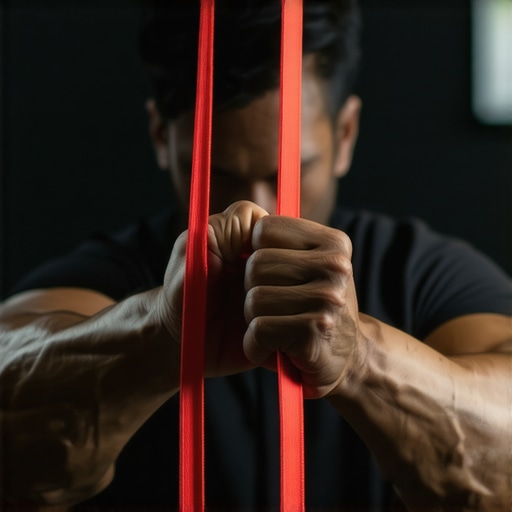
The Future of Recovery is Proactive and Data-Driven
I predict we are moving away from the ‘wait until it hurts’ model of sports medicine. We are seeing a massive shift toward using wearable tech to track joint velocity and movement quality in real-time. Soon, your watch won’t just tell you that you’ve walked 10,000 steps; it will warn you that your thoracic extension is dropping by 10% and that a shoulder pinch is imminent. This is why enhancing athletic performance with targeted chiropractic care is becoming a staple for even hobbyist athletes. By catching these micro-failures in movement before they become macro-injuries, we can keep the training volume high without the typical burnout. This proactive approach is the core of the role of chiropractic care in effective sports injury recovery. It’s about building a body that doesn’t just recover from stress but actually thrives under it. If you’ve been struggling with a plateau, try this: tonight, perform three sets of 10 slow, controlled ‘wall slides’ focusing entirely on keeping your lower back flat against the wall. Don’t worry about the reps; worry about the quality. You’ll be surprised at how much harder a ‘simple’ movement becomes when you stop cheating.
The Painful Lessons I Learned While Chasing a Heavier Snatch
I spent years thinking that a ‘good’ workout meant leaving the gym in a state of total exhaustion, regardless of how my joints felt. I eventually realized that mobility isn’t about how far you can bend; it’s about how much of that range you can actually control under load. For the longest time, I thought if I just ‘pushed through’ the stiffness, my body would eventually adapt. It didn’t. I had to unlearn the dangerous mindset that sharp pain was just a badge of honor. I finally understood the truth about no pain no gain in sports rehab—if it pinches, your body is effectively hitting the emergency brake to protect your nerves. Learning to listen to those subtle signals was the single biggest breakthrough in my training career. #IMAGE_PLACE_HOLDER_E#
My Daily Toolkit for Bulletproof Shoulders
I have trimmed my mobility bag down to the few essentials that actually move the needle for my performance. First, I always carry a set of light resistance bands; knowing how to choose the right resistance band for shoulder rehab is vital because too much tension just triggers your large prime movers to take over, which defeats the purpose of stabilizing the joint. Second, I highly recommend ‘Back Mechanic’ by Dr. Stuart McGill for anyone who wants to understand the relationship between core stiffness and limb mobility. Third, I completely stopped using a foam roller on my lumbar area after learning why you should never roll your lower back on a foam roller. These tools aren’t just for ‘fixing’ problems; they are for maintaining a high-performance machine.
Stop Surviving Your Workouts and Start Owning Your Movement
Your journey to a better overhead position is a marathon, not a sprint. Real progress happens in the quiet, intentional moments of your warm-up, not just when the clock is ticking during a high-intensity WOD. By focusing on strategic chiropractic solutions for long-term back health and prioritizing movement quality over the number on the plates, you ensure that you will still be lifting decades from now. Consistency in these small drills is what builds a resilient body. Have you ever felt that annoying ‘catch’ or pinch in your shoulder during a heavy overhead press? Let me know in the comments below, and let’s talk about how to get your range back.