
I was sitting in my home office last Tuesday, hunched over a spreadsheet, when that familiar, searing heat started crawling between my shoulder blades. It feels like a literal hot poker is being pressed against your spine, doesn’t it? For years, I did what everyone else does: I reached over, grabbed my elbow, and yanked my arm across my chest until I felt a “pop.” I thought I was fixing it. I wasn’t. In fact, I was just overstretching muscles that were already screaming for stability. I spent way too much time learning how to fix rounded shoulders from years of desk work the wrong way before I realized that the “knot” wasn’t the problem—it was the symptom. Today, I am going to show you exactly why your body is creating that fire and how we can put it out for good by addressing the root cause, not just the alarm bell. Have you ever felt like you could literally smell your own skin burning from the inside out during a long shift? I would love to hear if your pain feels more like a sharp pinch or a dull heat.
Stop stretching that burning knot right now
When that heat flares up, your first instinct is to stretch the area. I used to spend twenty minutes a day doing aggressive doorway stretches. But here is the kicker: that burning sensation is often caused by muscles that are already over-lengthened and exhausted from holding your head up. When you stretch them further, you are just pulling on a frayed rope. This is a classic case of why your upper back feels like it needs to pop constantly. Research published in the Journal of Physical Therapy Science indicates that prolonged forward-head posture places an astronomical amount of mechanical stress on the cervical-thoracic junction, leading to ischemic muscle pain—basically, your muscles are starving for blood flow because they are locked in a strained position. My biggest mistake early on was ignoring how to adjust your monitor to stop mid-back burning and instead just buying more massage gadgets. I was treating the smoke and ignoring the fire in the kitchen.
Is a chiropractor actually going to fix this long-term?
You might be skeptical. I was too. I thought, “How can clicking my back fix a muscle that feels like it’s on fire?” The reality is that if your thoracic vertebrae are stuck and immobile, the muscles attached to them have to work ten times harder just to keep you upright. It’s like trying to drive with the parking brake on. We need to look at how to tell if that knot in your back is a trigger point or a joint restriction. Once I started incorporating specific adjustments and stability work, the burning didn’t just fade—it stopped waking me up at night. We aren’t just looking for a temporary crack; we are looking to change the way your nervous system perceives threat in your upper back. If you have tried every foam roller and massage gun on the market and the fire is still there, it is time to change the strategy.
Break the cycle of frozen joints
The first step is realizing that your thoracic spine—the part of your back where your ribs attach—is designed to move, yet most of us treat it like a solid block of concrete. When these joints lock up, your muscles have to work overtime to compensate. I remember the first time I tried using a lacrosse ball to hunt down these spots. I expected a massage; instead, it felt like I was pinpointing the exact source of an electrical short circuit. You aren’t looking to ‘roll’ the muscle like dough. You are looking to find a specific spot and breathe through the pressure to encourage the joint underneath to mobilize. This is why it is vital to learn how to use a lacrosse ball for better thoracic mobility without making the inflammation worse. If you just mash the tissue, you will end up more sore than when you started. You need to pin the muscle, then move your arm through its range of motion to ‘floss’ the tissue from the inside out.

Your breath is the secret pressure valve
Most of us are ‘chest breathers.’ When you are stressed or focused, you take shallow sips of air using your neck and upper chest muscles. Do this 20,000 times a day, and it is no wonder your upper back feels like a war zone. When you shift to your diaphragm, you take the load off those tiny neck muscles and use your internal pressure to stabilize your spine. I have seen patients who thought they had a permanent injury find relief just by realizing how your breathing mechanics are sabotaging your core strength. Think of your torso like a soda can; if it is empty (no internal pressure), it crushes easily. If it is full and pressurized, it is incredibly strong. Proper breathing provides that internal support so your back muscles do not have to white-knuckle your spine all day long.
The exact way to reset your posture mid-shift
You do not need a thirty-minute routine to break the ‘hunch.’ In fact, short, frequent resets are far more effective for your nervous system than one long session. When I worked in that cramped home office, I set a timer for every forty-five minutes. I would perform the 10-second posture reset you can do at your desk by tucking my chin slightly and pulling my shoulder blades down and back—not together, but down toward my back pockets. This subtle shift turns on the lower trapezius and serratus muscles, which are the ‘brakes’ for your shoulder blades. Without them, your shoulders just drift forward into that painful, rounded position. If you are a parent, this is even more critical, especially when you need to learn the best way to carry a heavy toddler without hurting your spine without blowing out your mid-back.
Why targeted adjustments change the game
Sometimes, no matter how much you breathe or reset, the ‘fire’ persists because a segment of your spine is mechanically restricted. This is where the heavy lifting happens. By getting a specific adjustment, we are not just ‘cracking’ bones for the sound; we are restoring the neurological input to your brain. It is like rebooting a frozen computer. When the joint moves correctly, the muscles around it finally get the signal that they can stop guarding. Understanding the science behind chiropractic adjustments for back pain relief helps you realize that the relief isn’t magic—it is mechanics. When I finally combined my mobility drills with regular adjustments, my ‘hot poker’ sensation did not just lessen; it vanished because the underlying structure was finally doing its job.
One of the biggest lies we have been sold in the fitness world is that ‘tight’ always equals ‘needs stretching.’ In my years of clinical practice and personal rehab, I have found that the most stubborn burning sensations usually come from muscles that are already too long and over-fatigued. If you keep pulling on them, you trigger a protective reflex that makes them feel even tighter. It is a physiological tug-of-war you will never win. A study published in the Journal of Orthopaedic & Sports Physical Therapy highlights that what we perceive as ‘tightness’ is often neurological guarding—your brain’s way of creating a human seatbelt because it doesn’t trust your joint stability. This is exactly why your morning stretches might be making your back more sensitive instead of helping it. We need to stop trying to ‘lengthen’ everything and start asking why your brain feels the need to lock those muscles down in the first place.
The trap of chasing the audible pop
There is also a massive ‘oops’ factor when it comes to self-treatment. I see so many people who have become ‘adjustment junkies,’ constantly twisting their own spines to get that quick release. Here is the nuance: when you crack your own neck or back, you are almost always hitting the segments that are already hypermobile—the ones moving too much. You are ignoring the ‘stuck’ segments and further destabilizing the loose ones. You might think you are helping, but the truth about cracking your own neck at your desk is that you are likely creating a cycle of chronic instability. Understanding the science behind that popping sound in your joints is crucial because the goal isn’t just noise; it is specific, targeted cavitation of a restricted joint to restore proper input to the nervous system. If you aren’t hitting the right spot, you are just stretching the joint capsule and making the problem worse long-term.
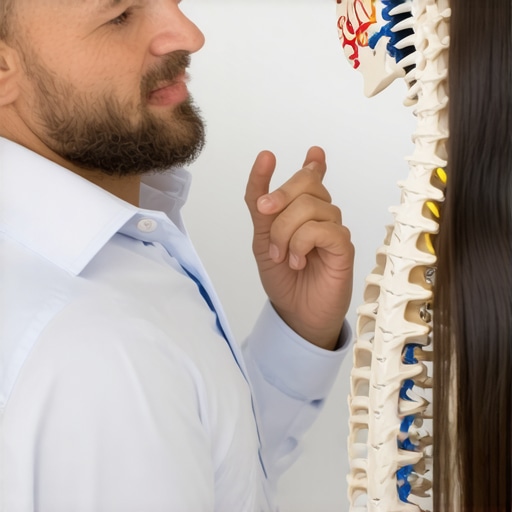
Why does the relief only last for a few hours?
If you get adjusted and feel like a million bucks for three hours, only to have the fire return by dinner, you aren’t dealing with a ‘bad’ adjustment. You are dealing with a lack of integration. The adjustment opens a ‘window of opportunity’ where the pain signal is dampened and the joint is mobile. If you don’t use that window to perform chiropractic techniques for faster recovery—like specific motor control exercises—your brain will simply revert to its old, painful software. We have to move past the ‘no pain, no gain’ mentality and realize the truth about no pain no gain in sports rehab is that pushing through the wrong type of discomfort just reinforces the injury cycle. To make the change stick, you need strategic chiropractic solutions for long-term back health that focus on building strength in that newly found range of motion. Have you ever fallen into this trap of stretching a knot only to have it come back worse the next day? Let me know in the comments.
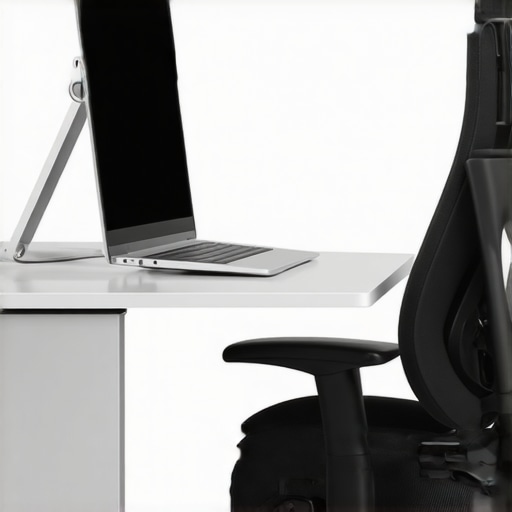
Maintaining that ‘reset’ feeling isn’t about luck; it’s about the boring stuff you do between appointments. For me, that meant finally admitting that my laptop was a torture device. I don’t use it on my lap anymore. Ever. I use a specific aluminum stand to elevate it, and if you haven’t looked into how to set up your laptop for better neck alignment, you’re fighting a losing battle. I personally use a mechanical keyboard with a split design because it prevents my shoulders from rolling inward, which is a key part of how to set up a home office in a small space without ruining your back effectively. It’s about engineering the environment so you don’t have to think about your posture every five seconds. Research by Dr. Stuart McGill in his ‘Back Fitpro’ studies emphasizes that it’s not just the absolute load on the spine, but the cumulative duration of a sustained load that causes the most significant tissue creep. This is why I treat my workspace like a high-performance lab. I predict that in the next few years, we will see a massive shift toward wearable biofeedback sensors that vibrate the second your thoracic spine loses its structural integrity—essentially a digital coach in your shirt.
The gear that keeps me at my desk without the burn
I have a rule: if a tool doesn’t provide sensory feedback, I don’t use it. I’ve thrown away those soft foam rollers that feel like marshmallows. Instead, I use a high-density therapy ball to target the specific junction where the neck meets the shoulders. This helps me maintain the gains from my last visit and continues to discover how chiropractic adjustments can alleviate chronic back pain by keeping the joints mobile. If you are sitting for more than six hours a day, your environment is either your doctor or your dealer—it’s either helping you heal or feeding your addiction to a hunched posture. This is why I’m such a stickler for monitor height; the top third of your screen should be exactly at your brow line. If it’s lower, your head drifts. If your head drifts, the fire returns.
How do I keep my back from flaring up again?
The answer is consistency over intensity. You don’t need a 90-minute gym session to fix this; you need three minutes of essential tips for managing back pain through healthy lifestyle choices woven into your day. I use what I call the ‘Load and Release’ method. Every time I get up to grab a drink, I perform one set of diaphragmatic breaths while standing in a doorway to open my chest. This keeps the nervous system from defaulting to that ‘protection’ mode we discussed. By integrating strategic chiropractic solutions for long-term back health into your routine, you move from just ‘surviving’ the day to actually enhancing athletic performance with targeted chiropractic care. You stop being the person who ‘has a bad back’ and start being the person who knows how to manage their body. If you’ve felt that recurring fire, try this today: the next time you sit down, place your feet flat on the floor and imagine a string pulling the crown of your head toward the ceiling. Hold it for 10 seconds. That subtle engagement is the first step toward long-term stability.
The Hard Truths About That Stubborn Mid-Back Burn
After years of treating patients and dealing with my own flares, I’ve realized that the most common mistake is misinterpreting the body’s alarm signals. That burning sensation is rarely a cry for more flexibility; it’s usually a desperate plea for stability. If you find yourself constantly reaching for your neck, you might want to look into why your tension headache starts in your upper traps instead of just rubbing the spot that hurts. Another ‘lightbulb moment’ for many is discovering the simple test for rib flare and why it matters for your core, because if your ribs are out of position, your upper back has no foundation to sit on. Real progress happens when you stop trying to ‘fix’ the muscle and start training the movement.
Gear and Tools I Actually Use Every Single Day
I don’t believe in cluttering your house with gadgets, but a few strategic tools make a world of difference. First, a high-density therapy ball is non-negotiable for maintaining mobility between visits. Second, never underestimate the power of a dedicated monitor stand; eye level is spine level. I also suggest looking into how a weak core actually causes chronic neck tension to understand why I prioritize a stable base even when I’m just typing. If you are a parent, please check the lifting technique for parents with chronic back issues to ensure your home life isn’t undoing your desk progress. These small environmental shifts are what make expert chiropractic adjustments that work truly last for the long haul.
Take the First Step Toward a Fire-Free Spine
Living with a constant burning sensation between your shoulder blades is exhausting, both physically and mentally. But remember, your body is incredibly resilient and capable of change once the right stimulus is applied. Whether it’s through better breathing, a smarter desk setup, or specific professional care, you don’t have to accept this as your ‘new normal.’ We are here to help you navigate this journey—don’t hesitate to contact us if you’re ready to get to the bottom of the pain. You deserve to work, play, and live without that hot poker in your back.
Did your back pain start after a specific desk setup change or a long flight? Drop a comment below and let’s troubleshoot it together.